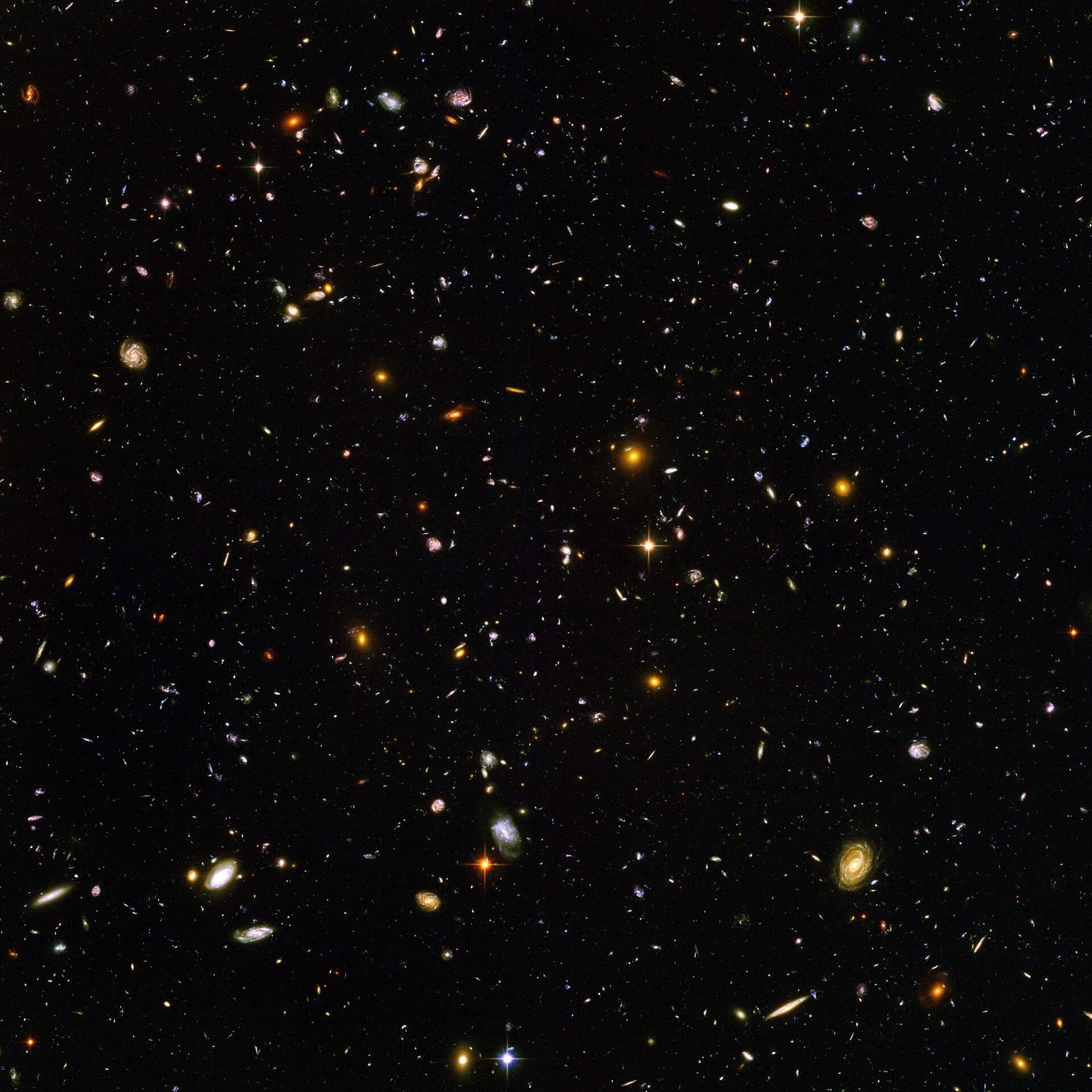
Why it matters. Between 1912 and 1917, Vesto Slipher at the Lowell Observatory in Arizona photographed the spectra of faint, fuzzy patches of light called spiral nebulae. In most of them, the dark lines in the spectrum were shifted towards the red end, which meant that the nebulae were moving away from us, some at hundreds of kilometres per second. In 1929, Edwin Hubble, using the 100-inch telescope on Mount Wilson in California, measured the distances to many of these objects and showed that they are whole galaxies far outside our own. He also found a simple pattern: the further away a galaxy is, the faster it is moving away. The universe is expanding. Run the expansion backwards, and everything began in one tiny, extremely hot and dense region. That is the Big Bang theory.
In this unit you will:
- describe the solar system and how the Sun formed;
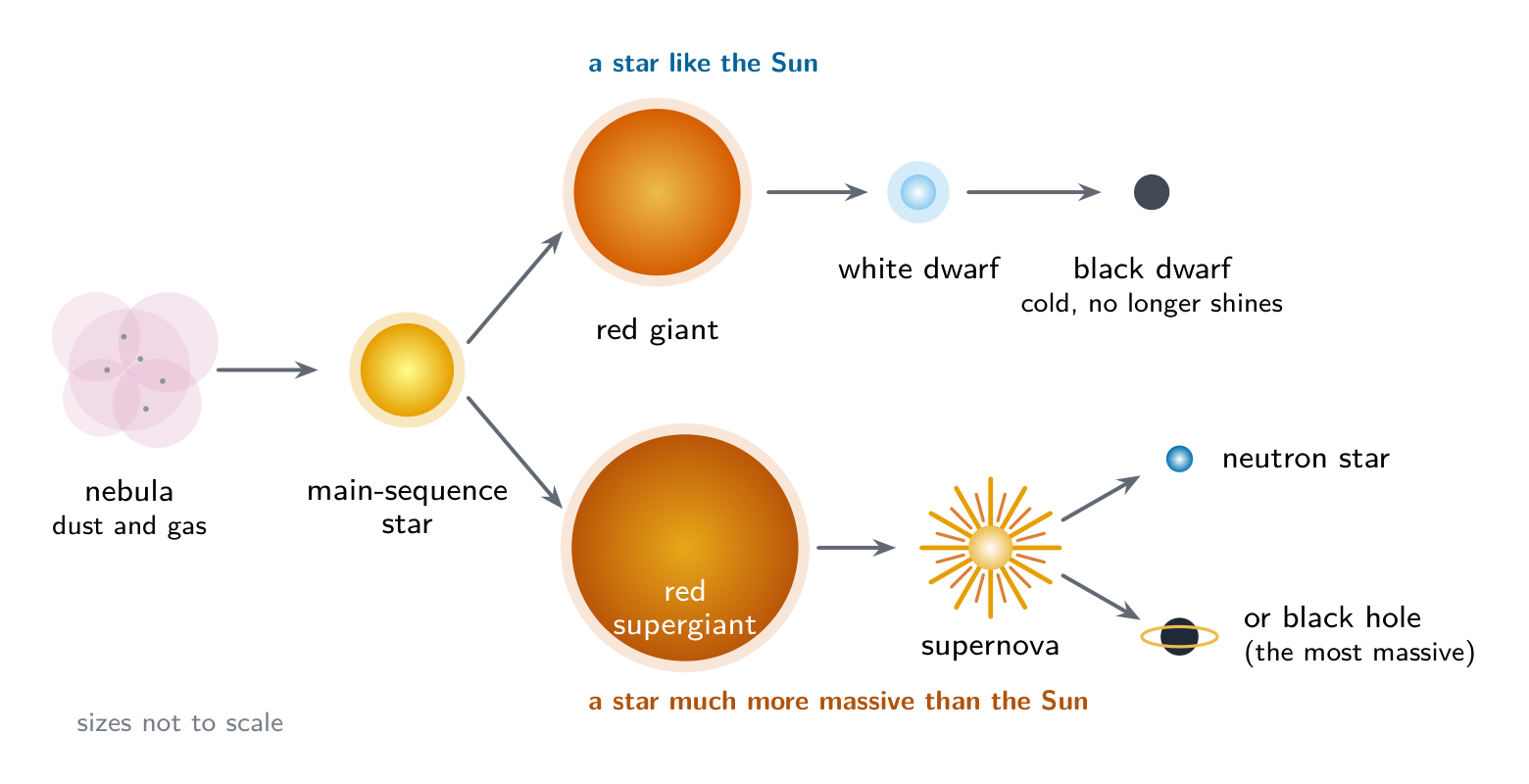
- describe the life cycles of stars, and explain where the chemical elements come from;
- explain how gravity keeps planets and satellites in orbit;
- explain how red-shift provides evidence for the Big Bang.
AQA GCSE Physics (8463), topic 4.8 Space physics, examined on Paper 2. This whole topic is in GCSE Physics only. Content marked (HT) is Higher tier only.