A battery, a stretched spring and warm water all store energy 能量. Energy can be transferred and stored, but never created or destroyed. This reference covers AQA GCSE Physics 8463, topic 4.1 Energy.
Each paper is 100 marks and 1 h 45 min; energy ideas occur across both papers.
AQA currently supplies a Physics Equations Sheet 物理公式表. Check your series’ insert; practise choosing and rearranging equations and converting units.
Show the equation, substitution and answer with units. Follow the question’s precision instructions; marks depend on the question and scheme.
A system 系统 is an object, or a group of objects, that you choose to think about. When a system changes, energy moves between energy stores 能量储存. The stores you must name are:
Store
What it means
Example
kinetic
energy of a moving object
a rolling ball
gravitational potential
energy stored by an object above the ground
water behind a dam
elastic potential
energy stored in a stretched or compressed spring
a drawn bow
thermal (internal)
energy in a hot object
warm soup
chemical
energy stored in bonds
food, petrol, batteries
nuclear
energy stored in an atomic nucleus
uranium fuel
electrostatic
energy stored by separated charges
a charged cloud
magnetic
energy associated with interacting magnets
magnets attracting or repelling
Use the store name requested, such as thermal, gravitational potential or elastic potential. The June 2024 scheme accepts certain symbols in particular parts; this is not a rule that every symbol is accepted in every naming question.
Say which store fills and which store empties.
Describing a change
Energy leaves one store and enters another. Say both halves. Practise these situations, which the specification names:
An object projected upwards: the kinetic store decreases and the gravitational potential store of the object–Earth system increases. For a vertical launch, speed is zero at the highest point.
A moving object hitting an obstacle: kinetic store empties; thermal stores of the object and the obstacle increase; sound can carry energy away.
An object accelerated by a constant force: a source store (for example, the chemical store of a battery) decreases; work transfers energy to the vehicle’s kinetic store. Electrical work is a transfer pathway, not an electrical store.
A vehicle slowing down: kinetic store empties; thermal store of the brakes fills.
Bringing water to the boil in an electric kettle: chemical energy in the power station's fuel (or another resource) ends in the thermal store of the water.
Energy can enter a system three ways: by heating 加热 (a temperature difference drives it), by work done by forces 力做的功 (a force moves something), and by work done when a current flows 电流做的功 (an electrical device transfers energy). Electricity is covered in topic 4.2.
Sankey diagrams
A Sankey diagram 桑基图 shows energy on a common scale. The width of each arrow is drawn in proportion to the energy it carries. The left arrow is the input; it splits into a useful output and wasted outputs.
Width, not length, shows the energy.
The total width out always equals the width in. Energy is conserved.
"Wasted" energy is not destroyed. It is stored in less useful ways, usually thermal.
Guided practice: naming stores and conserving energy
Starter — teacher-written. A motor transfers 60 J in 3.0 s. What is its power?
Worked reasoning. Power is the rate of energy transfer. The equation is $P=E/t$. Substituting gives $P=E/t=60\ \mathrm{J}/(3.0\ \mathrm{s})=20\ \mathrm{W}$. This means 20 joules each second; it does not establish efficiency or useful output.
Exam transfer — adapted from AQA June 2024 Paper 1H Q01.1, Q01.2 and Q06.1. Name the increasing store when water is heated, water is raised into a reservoir, and bungee cords are stretched. Try before checking: thermal/internal, gravitational potential, elastic potential. Explain each name using the temperature, height or extension change. Electrical work may transfer energy into these systems, but electrical is not an energy store.
Teacher-written motor balance. Input is 100 J and useful kinetic energy is 80 J. All the remainder reaches thermal stores. Calculate this remainder and draw proportional Sankey arrows before checking the diagram.
Worked reasoning. Conservation gives $E_{\mathrm{dissipated}}=E_{\mathrm{input}}-E_{\mathrm{useful}}$. Substitution gives $E_{\mathrm{dissipated}}=E_{\mathrm{input}}-E_{\mathrm{useful}}=100\ \mathrm{J}-80\ \mathrm{J}=20\ \mathrm{J}$. Input/useful/dissipated shaft widths have ratio 100:80:20 = 5:4:1. Energy is conserved; the dissipated part is less useful, not destroyed. Arrow lengths and arrowhead sizes do not represent energy.
work done when a current flows/wɜːk dʌn wen ə ˈkʌrənt fləʊz/
电流做的功
diàn liú zuò de gōng
Sankey diagram/ˈsæŋki ˈdaɪəɡræm/
桑基图
sāng jī tú
1.2
能量变化——动能、弹性势能与重力势能
教学大纲
Changes in energy (AQA 8463 statement 4.1.1.2).
Calculate the kinetic energy of a moving object using Ek = 0.5 m v^2.
Calculate the elastic potential energy stored in a stretched spring using Ee = 0.5 k e^2, assuming the limit of proportionality has not been exceeded.
Calculate the gravitational potential energy gained by an object raised above ground level using Ep = m g h, with the value of g given.
Chain these equations to find a transferred quantity (for example spring energy to speed, or cord energy to height).
来源:Cambridge International 教学大纲
Choose the equation for the store that changes. Use mass in kg, speed in m/s, extension and height change in m, and the question’s gravitational field strength $g$ in N/kg.
$$E_k = \tfrac{1}{2} m v^2 \qquad E_e = \tfrac{1}{2} k e^2 \qquad E_p = m g h$$
$E_k$kinetic energy 动能 in J; $m$ mass in kg; $v$ speed in m/s.
$E_e$elastic potential energy 弹性势能 in J; $k$spring constant 劲度系数 in N/m; $e$extension 伸长量 in m.
$E_p$gravitational potential energy 重力势能 in J; $h$ height increase in m; $g$gravitational field strength 重力场强度 in N/kg.
Two warnings the exam tests:
Extension is the change in length: stretched length minus original length. A "7.5 m extension" already means the extra length.
$E_e = \tfrac{1}{2}ke^2$ needs the limit of proportionality 极限伸长量 not exceeded: below it, doubling the extension quadruples the stored energy.
Teacher-written practice — extension and units. A proportional spring is 10 cm long unstretched and 22 cm long stretched, with $k=50$ N/m. Find the extension and stored energy; predict the effect of doubling this extension while the spring remains proportional.
Worked reasoning.$e=L-L_0=22\ \mathrm{cm}-10\ \mathrm{cm}=12\ \mathrm{cm}=0.12\ \mathrm{m}$. Then $E_e=\tfrac12ke^2=\tfrac12\times50\ \mathrm{N/m}\times(0.12\ \mathrm{m})^2=0.36\ \mathrm{J}$. Doubling extension gives $E_{e,2}=\tfrac12k(2e)^2=4E_e=4\times0.36\ \mathrm{J}=1.44\ \mathrm{J}$.
Teacher-written worked example. A 0.020 kg toy plane is launched horizontally by a proportional spring with $k = 50$ N/m and extension $e = 0.12$ m. The spring relaxes to its natural length. Assume no height change and all released elastic energy becomes the plane’s kinetic energy. Find the ideal launch speed.
Known: spring data and mass. At launch the elastic store empties into the kinetic store. For maximum speed, assume all of it arrives.
Why $E_k = E_e$: the stated ideal model excludes energy transferred to other stores. In a real launch, thermal transfers can leave less kinetic energy and a lower speed.
$$E_k = \tfrac{1}{2} m v^2 \quad\Rightarrow\quad v = \sqrt{\frac{2 E_k}{m}} = \sqrt{\frac{2 \times 0.36\ \text{J}}{0.020\ \text{kg}}} = 6.0\ \text{m/s}$$
Check: unit is m/s because $\sqrt{\text{J}/\text{kg}} = \sqrt{\text{m}^2/\text{s}^2}$.
Exam transfer: two cords and height
Adapted from AQA June 2024 Paper 1H Q06.2–06.3. A 240 kg pod is released upwards by two cords behaving as springs, each with $k=735$ N/m and extension 8.0 m. Calculate the ideal height gain ($g=9.8$ N/kg), assuming all initial elastic energy becomes gravitational potential energy. Explain why the actual height is lower.
Known: two identical cords, so the stored energy doubles.
In this ideal model all initial elastic energy becomes gravitational potential energy at the highest point, where vertical speed is zero:
$$E_p = m g h \quad\Rightarrow\quad h = \frac{E_p}{m g} = \frac{47\,040\ \mathrm{J}}{240\ \mathrm{kg}\times9.8\ \mathrm{N/kg}} = 20\ \text{m}$$
Air resistance opposes the upward motion. Some initial elastic energy is transferred to the surroundings instead of increasing gravitational potential energy, so the actual height gain is smaller. “Energy is wasted” alone does not explain the transfer; energy is conserved.
Keep the physical assumption and each calculation stage visible; the allocation of marks depends on the particular question.
Warm an object and its thermal store grows. The energy needed depends on the mass, the material, and the temperature rise:
$$\Delta E = m\, c\, \Delta\theta$$
$\Delta E$ change in thermal energy in J; $m$ mass in kg; $\Delta\theta$ temperature change in °C.
$c$specific heat capacity 比热容 in J/kg °C: the energy needed to raise the temperature of one kilogram of a substance by one degree Celsius.
For equal masses gaining equal thermal energy, a material with higher $c$ has a smaller temperature rise. Water has $c$ about 4200 J/kg °C; copper about 385 J/kg °C. A spoon’s heating rate also depends on its mass and energy transfer through contact; specific heat capacity alone does not establish the rate.
Teacher-written worked example. A 2.0 kg metal block gains 26 kJ (26 000 J) of thermal energy. The block's temperature rises from 22 °C to 50 °C. Find $c$.
Known: energy, mass, and temperatures. The temperature change is what enters the equation: $\Delta\theta = 50 - 22 = 28$ °C.
Keep units consistent: 10.5 kJ must become 10 500 J; a time in minutes must become seconds; a mass in grams must become kg; a power in kW must become W. Write the conversion as its own line.
Exam transfer: rearranging for temperature change
Adapted from AQA June 2024 Paper 1H Q08.3. Air gains 0.0130 J; its mass is $2.60\times10^{-8}$ kg and $c=1.01$ kJ/kg °C. Find the temperature change before checking.
This is the rise, not the final reading; finding final temperature also needs the initial temperature.
Required practical 1: specific heat capacity
You must know this investigation from memory — the exam asks you to describe or evaluate it at a desk.
The block is lagged to reduce transfer to the surroundings; supplied electrical energy is not automatically all gained by the block.
Method:
Measure the mass $m$ of the metal block with a balance.
Put a little water in the thermometer hole for good thermal contact, and insert the heater and thermometer.
Record the starting temperature. Switch on the power supply.
Record the current $I$ and potential difference $V$, and the time $t$ for which the heater runs. The heater power is $P = VI$ (given in topic 4.2; some questions just give you $P$).
The energy supplied is $\Delta E = P t$.
Record temperature at regular intervals and calculate supplied energy for each time. Plot temperature against supplied energy; the initial part may curve because of thermal lag.
Calculate $c = \dfrac{\Delta E}{m\Delta\theta}$.
Measurement reasoning:
Insulate the block (lagging) to reduce energy transferred to the surroundings. If some supplied energy heats the surroundings, using all the supplied energy as the block’s thermal-energy increase overestimates $c$.
Wait for the thermometer to settle before reading the starting temperature (thermal contact takes time).
Use the straight region of temperature against supplied energy after the initial thermal lag. In the ideal model its gradient is $1/(mc)$. Repeats help assess variation but do not remove systematic heat loss.
State how the error changes the measured energy, mass or temperature rise. Poor thermometer contact alone does not establish an error direction; an underestimated temperature rise gives an overestimated $c$ if energy and mass are unchanged.
RP1 error check: calculate before predicting
Teacher-written. A 1.0 kg block gains 6000 J and warms by 12 °C. Calculate its $c$. A student records only a 10 °C rise with the same energy and mass. Calculate the resulting estimate and explain the direction of the error.
The smaller recorded rise gives a smaller denominator and an overestimate of $c$. Diagnose the recorded temperature change; do not assign an error direction from “poor contact” alone.
Two motors can lift the same load through the same height. The faster one is more powerful 功率强的. Power 功率 is the rate of energy transfer, or the rate of doing work:
$$P = \frac{E}{t} \qquad P = \frac{W}{t}$$
$P$ power in W; $E$ energy transferred in J; $W$work done 做的功 in J; $t$ time in s.
An energy transfer of 1 J per second is a power of 1 watt 瓦特, W.
Conversions to keep at hand: 1 kW = 1000 W, 1 MW = $10^6$ W, 1 GW = $10^9$ W, 1 kJ = 1000 J, 1 MJ = $10^6$ J.
Teacher-written worked example. A 60.0 kg athlete climbs a vertical height of 175 cm in 1.40 s ($g$ = 9.8 N/kg). Find the average useful power associated with gravitational potential gain.
Known: mass, height, time. Height must be converted: $175\ \text{cm} = 1.75\ \text{m}$.
Her gain of gravitational potential energy is the useful energy transferred.
$$E_p = m g h = 60.0\ \mathrm{kg} \times 9.8\ \mathrm{N/kg} \times 1.75\ \mathrm{m} = 1029\ \text{J}$$
Check: this is the rate of gravitational potential gain, not total chemical-energy transfer. Heating and other transfers mean more chemical energy is transferred than the useful gain.
An energy transfer stated per second is already a power: 0.343 J of gravitational potential energy gained each second is 0.343 W of useful power. A value per second is not automatically useful output; read which transfer is described.
Power comparison and exam transfer
Teacher-written practice. Motors A and B each lift 20 kg through 2.0 m ($g=10$ N/kg). A takes 2.0 s; B takes 4.0 s. Find their useful power outputs before checking.
A transfers the same useful energy in half the time: twice the useful power. Efficiency cannot be compared without input data.
Adapted from AQA June 2024 Paper 1H Q02.2–02.3. A power station has output 500 MW. Find its energy output in 3600 s, in joules. Here $P=500\ \mathrm{MW}=5.00\times10^8\ \mathrm{W}$, and $P=E/t$ rearranges to $E=Pt$.
Energy can be transferred usefully, stored, or dissipated 耗散, but never created or destroyed. Dissipated energy is stored in less useful ways. It is often called "wasted", but it still exists — usually spread into thermal stores of the surroundings.
For this energy balance, a closed system 封闭系统 exchanges no energy with its outside, so its total energy does not change. Name the objects included: gravitational potential energy belongs to the object–Earth interaction, not the ball alone. An ideal fall with negligible resistance transfers gravitational potential energy to kinetic energy; a vacuum by itself does not define the system boundary.
Follow energy through a fall and impact
Teacher-written model. Include a ball, Earth, floor and nearby surroundings. Assume no energy crosses this system’s boundary and ignore air resistance during the fall. The ball starts at rest with 20 J of gravitational potential energy relative to the floor. When that store is 5 J, what is the kinetic energy? After impact and settling, where is the energy?
Stage
Gravitational / J
Kinetic / J
Thermal gain / J
Start
20
0
0
During fall
5
15
0
After settling
0
0
20
Each row totals 20 J. After impact, energy is spread into thermal stores in this simplified model; sound may carry energy within the chosen surroundings before dissipating. Counting the ball alone gives a different system, which can exchange energy with the Earth and floor. Energy that leaves one object has not disappeared.
Explaining a "lower than calculated" answer
Exam questions love this shape: "the real height/speed/temperature is lower than your answer. Explain why." The credited reasoning:
Name the cause: air resistance, friction between moving parts, or energy transferred to the surroundings by heating.
State the consequence: some energy from the input store is dissipated into thermal stores instead of the intended store.
Conclude: so less energy arrives in the useful store.
Reducing unwanted energy transfers
Lubrication 润滑 reduces friction between moving parts, so less energy is dissipated by heating.
Thermal insulation 热绝缘 reduces energy transfer by heating. Thick walls, walls made of a material with low thermal conductivity 热导率, or cavity insulation all slow the cooling of a building.
Compare one factor at a time. With equal wall area, thickness and temperature difference, a higher thermal conductivity gives faster transfer by conduction. With the same material and other conditions, a thicker wall reduces this rate. If both thickness and conductivity change in opposing directions, their descriptions alone do not establish the ranking.
Replotted from the AQA practical handbook’s technician data (PDF page 12, printed page 11). Initial readings are 85 °C for zero layers and 86 °C for the covered runs; check temperature falls and comparison limits.
Investigate the effectiveness of different materials as thermal insulators:
Put a fixed volume of hot water in a beaker with a lid.
Wrap the beaker in one material (bubble wrap, newspaper, foil, cotton wool).
Record the temperature as it cools for a fixed time (or the time to fall by a fixed amount).
Repeat for equal measured thicknesses and covered areas of different materials; equal layer counts need not give equal thicknesses.
Part 2: repeat for different thicknesses (layers) of one material.
Controls: same water volume, starting temperature, beaker, lid, surroundings, covered area and measurement times. Repeat to judge variation. A smaller temperature fall over a fixed time indicates less cooling under those conditions. Keep material fixed when investigating thickness; keep thickness fixed when comparing materials.
RP2: interpret recorded readings
The figure uses the AQA practical handbook, PDF page 12. Points are recorded values joined by lines, not a fitted cooling law. In 15 min, the zero-layer run changes from 85 to 57 °C, two layers from 86 to 62 °C, and six layers from 86 to 66 °C. Calculate the falls before checking.
Six layers cool 4 °C less than two layers over the same time, from the same initial temperature. This supports less cooling with greater newspaper thickness here. The zero-layer run starts 1 °C cooler. Subtracting initial temperatures does not remove all effects of unequal starting conditions; standardise them in a fresh investigation. These runs compare thickness, not different materials.
Teacher-written evaluation. Water in a beaker covered with 20 mm of cotton starts at 90 °C and finishes at 75 °C after 10 min. Water in a beaker covered with 2 mm of foil starts at 80 °C and finishes at 70 °C. Which material is the better insulator? Explain the limits and improve the method before checking.
Reasoning. Cotton falls $90-75=15$ °C; foil falls $80-70=10$ °C. Material, thickness and initial temperature all differ, so neither final readings nor temperature falls isolate the material effect. Use equal measured thickness and covered area, the same starting temperature, water volume, apparatus and surroundings; record at the same times and repeat. Conclude for the tested conditions, taking variation into account.
The fraction of input energy that ends up somewhere useful is the efficiency 效率:
$$\text{efficiency} = \frac{\text{useful output energy transfer}}{\text{total input energy transfer}} \qquad \text{efficiency} = \frac{\text{useful power output}}{\text{total power input}}$$
Efficiency can be a decimal (0 to 1) or a percentage (0 % to 100 %). The exam may ask for either; a decimal above 1 or a percentage above 100 % is impossible — check your answer against this.
Teacher-written worked example. A lamp takes 4.0 W of electrical power and is 0.85 efficient for useful light transfer. Find its useful light power and the remaining power.
Known: total input and efficiency as a decimal. Rearrange before substituting.
The remainder is $P_{\mathrm{other}}=P_{\mathrm{input}}-P_{\mathrm{useful}}=4.0\ \mathrm{W}-3.4\ \mathrm{W}=0.6\ \mathrm{W}$. Outputs add to input; no energy is destroyed. Efficiency is a ratio without a unit.
Exam transfer — adapted from AQA June 2024 Paper 1H Q01.3. Method A heats water by 80 °C, storing 33 600 kJ per 100 kg, and wastes 40%; installation is possible anywhere in the question. Method B pumps water uphill by 500 m, storing 490 kJ per 100 kg, wastes 25%, and requires high mountains. Compare useful fractions, useful energy and practical constraints before checking.
Method B has useful fraction $f_B=1-0.25=0.75$ and useful energy $E_{\mathrm{useful,B}}=f_BE_B=0.75\times490\ \mathrm{kJ}=367.5\ \mathrm{kJ}$. It is more efficient than A (75% versus 60%), but A provides much more useful energy per 100 kg (20 160 kJ versus 367.5 kJ). Explain both quantities, the stated location restriction and the need to insulate heated water. Use numerical evidence alongside the stated constraints.
Efficiency: compare a clearly defined useful transfer
Teacher-written. Lifting devices A and B each take 2000 W of electrical input. Their useful mechanical outputs are 1700 W and 1500 W. Find both efficiencies and their difference in percentage points.
The gap is $85\%-75\%=10$ percentage points. A transfers a greater fraction to useful lifting; the ratio’s units cancel. Do not confuse a percentage-point difference with a relative percentage change.
Higher Tier reasoning. Lubrication reduces frictional dissipation in a lifting motor; insulation reduces unwanted thermal transfer from hot-water storage. At fixed input, reduced unwanted transfers can leave more useful output and a greater efficiency. At fixed useful output, $E_{\mathrm{input}}=E_{\mathrm{useful}}/\eta$, so greater efficiency means less required input. “Useful” depends on the intended task: heating is useful for warming a room and may be unwanted in a lifting motor.
The main energy resources are fossil fuels 化石燃料 (coal, oil, gas), nuclear fuel 核燃料, bio-fuel, wind, hydroelectricity, geothermal, tides, the Sun and water waves.
A renewable 可再生的 resource is replenished as it is used. Fossil and nuclear fuels are non-renewable 不可再生的 on a human timescale. Replenishment, availability when needed, and environmental impact are different questions. Renewable does not mean continuous or harmless. Compare uses in transport, electricity generation and heating. Descriptions of generating machinery are not required here.
Fuel resources: uses and trade-offs
Coal, oil and gas: electricity or heating; oil-derived fuels are widely used in transport. Generation depends on fuel supply and maintenance. Combustion releases carbon dioxide; sulfur in fuel can produce sulfur dioxide, contributing to acid rain.
Nuclear fuel: electricity, using a finite fuel. Maintenance and outages affect availability. There is no fuel-combustion CO$_2$ during generation, but radioactive waste needs safe management.
Bio-fuel: transport, heating or electricity. Its biological source can be replaced, but production takes land and time. Burning releases CO$_2$. Regrowth can absorb CO$_2$, but the overall balance also depends on cultivation, processing and land-use change; carbon neutrality is not automatic.
Six other renewable resources
Resource
Availability / example use
wind
electricity; variable wind
Sun
electricity or heating; daylight and clouds matter
hydroelectricity
electricity; stored water helps, but supply is limited
geothermal
heating or electricity; suitable sites matter
tides
electricity; predictable timing, variable output
water waves
electricity; variable sea conditions
Wind turbines can affect wildlife and cause noise; solar installations need space and materials. Reservoirs can flood land and alter river habitats. Geothermal development involves local drilling. Tidal and wave installations can affect marine habitats and are costly to build and maintain. Distinguish environmental impacts from technical constraints and economic costs. Claims about no fuel-combustion emissions during operation do not mean zero impact over manufacture, construction and disposal.
Worked example: actual operating time
AQA GCSE Physics June 2024 Paper 1H Q02.5 gives one nuclear station generating for 92% of a 365-day year. With $f$ the generating fraction:
About 336 days (this question's scheme accepts 335 or 336). The station did not generate all year; do not generalise its percentage to every station. This time fraction alone gives neither electrical energy output nor efficiency.
Interpret a trend: attempt, then check
Teacher-written fictional data, with only two categories contributing to each total:
Period
Fossil / TWh
Renewable / TWh
A
80
20
B
90
60
TWh is an energy unit. Find each total and fossil-fuel share. Did the amount of fossil energy fall?
The share fell by 20 percentage points, but fossil energy rose by 10 TWh. A decreasing share alone cannot establish decreasing emissions.
Make a decision with evidence
Teacher-written task: a clinic needs electricity all night. Solar panels produce no output at night; a maintained gas generator can run when fuel is supplied. Solar generation has no fuel-combustion CO$_2$; gas combustion releases CO$_2$. Explain the trade-off, propose a possible supply and identify missing evidence.
Check: solar alone does not meet the night-time requirement. Solar with charged storage or another backup could work if power and stored energy meet demand. Gas can supply power at night, with fuel and maintenance, but releases CO$_2$. Check demand, storage capacity, charging conditions, fuel supply, costs and the site before choosing. Funding is an economic constraint; access to reliable care is a social concern. Planning rules are political constraints, and sharing costs and benefits fairly raises ethical questions. Science identifies and measures problems; decisions also depend on these constraints. A conclusion should follow the evidence and stated priorities; no stock final sentence guarantees credit.
Teacher-written: a motor takes 5.0 J in 2.0 s. It starts a 0.50 kg cart from rest on a level track. The cart gains 4.0 J of kinetic energy; the remainder heats the system and surroundings. Find final speed, efficiency for accelerating the cart, mean input power, and the remaining energy transfer. Attempt before checking.
Check: because the initial speed is zero, final kinetic energy is 4.0 J.
That 1.0 J is transferred by heating. Energy is conserved.
Retrieval 2: diagnose three claims
RP1: all heater input is used as the block's energy gain, though some heats the room. With mass and measured temperature rise fixed, what happens to calculated specific heat capacity?
RP2: both insulation layers and water volume change. Why is the conclusion about layers insecure? State controls.
Solar panels are called a guaranteed night-time supply because solar is renewable. What is wrong and what extra provision is needed?
Check:
$c=E_{\rm gained}/(m\Delta\theta)$. Using the larger input overestimates $c$ in the stated case.
Two changed variables confound the result. Keep volume, container, starting temperature, timing and surroundings fixed; repeat measurements and compare temperature falls over the same time.
Replenishment does not ensure power when needed. Adequate charged storage or another supply is required at night.
Use the terms requested, show equations and units, and follow the question's precision instruction. A cause and its physical consequence are more useful than a memorised checklist.
Press a switch and a lamp lights. Behind that instant is a chain: charge pushed by a potential difference, through wires and components, transferring energy from power station to bulb. This reference covers AQA GCSE Physics 8463, topic 4.2 Electricity.
Start with a simple question: a cell, switch and lamp form a series loop. Why does opening the switch stop sustained current? When it is closed, does the lamp use up charge?
The switch must complete a conducting path, and the cell provides a potential difference 电势差. In a steady series loop the current is the same before and after the lamp. The lamp transfers energy; charge is not consumed. Later calculations link $Q=It$, $E=QV$, $P=VI$ and $E=Pt$.
This reference uses standard circuit symbols 电路符号 and the Physics Equations Sheet 物理公式表 when supplied for the examination. Use the sheet issued for your examination series; practise choosing and rearranging equations rather than assuming every future paper has the same support. AQA uses “potential difference” in questions and accepts correct use of “voltage”. Static electricity and electric fields are physics-only content.
Circuit symbols, electrical charge and current (AQA 8463 statements 4.2.1.1-4.2.1.2).
Draw and interpret circuit diagrams using standard symbols.
State that electric charge flows only when a circuit is closed and includes a source of potential difference.
Use charge flow = current x time (Q = It), with time in seconds.
Recall that electric current is a flow of charge and that the current is the same at every point in a single closed loop.
来源:Cambridge International 教学大纲
A circuit diagram uses standard symbols. Know these: cell, battery, switch (open, closed), lamp, resistor, variable resistor, ammeter, voltmeter, diode, LED, thermistor, LDR and fuse. Ammeters sit in series 串联; voltmeters sit in parallel 并联 across the component.
Use repeated long/short plate pairs for a battery; light arrows enter an LDR and leave an LED.
For charge to flow, the circuit must be closed and include a source of potential difference. Electric current 电流 is a flow of electrical charge 电荷, and its size is the rate of flow:
$$Q = It$$
$Q$ charge flow in coulombs, C; $I$ current in amperes, A; $t$ time in seconds, s.
Current has the same value at every point of a single series loop.
Conventional current flows from + to −; electrons flow the opposite way.
Worked reasoning: charge is not current
Teacher-written: 4.0 C passes a point in 2.0 s in a steady series circuit. Current is charge flow per second:
One ampere means one coulomb per second. The same 4.0 C passes another point of that steady loop in the same 2.0 s. If the same charge takes 4.0 s instead:
Doubling the time for the same charge halves the current.
Charge-flow practice: attempt before checking
Teacher-written: a charger supplies a constant 0.90 A for 25 minutes. Find charge in coulombs, then predict the effect of doubling the time at the same current.
Check: use seconds, because amperes measure coulombs per second.
This agrees with the official scheme. Teacher extension: treating 400 ms as 400 s would make the denominator 1000 times too large and current 1000 times too small. Check the time unit before substituting.
Required practical 3: resistance of a wire and resistor combinations
Attach a resistance wire (nichrome or constantan) along a metre rule. Measure the selected length between the actual contact points of a fixed clip and a movable clip. The ammeter is in series with that length; the voltmeter is connected across the same two contact points.
Use a low potential difference and switch off between readings to limit heating. Change length only: keep the wire material, cross-sectional area and temperature constant. For each length record the measured potential difference and current, then calculate $R = V/I$. Repeat readings and investigate inconsistent results.
For example, these teacher-written ideal data illustrate the calculation; they are not experimental measurements:
Length / cm
Potential difference / V
Current / A
Resistance / Ω
20
0.60
0.30
2.0
40
0.80
0.20
4.0
60
0.90
0.15
6.0
At constant temperature, for the same material and cross-sectional area, resistance is directly proportional to wire length. Plot calculated resistance against length; a straight line through the origin supports this relationship. The measured potential difference need not be identical at each length, so calculate each resistance from its own paired readings.
A non-zero intercept needs investigation. Check that length was measured between the contact points; contact and lead resistance can also affect results. Do not force the graph through the origin or subtract every intercept as a zero error without identifying its cause.
In the second part of this practical, connect two equal resistors in series, then in parallel. With the ammeter measuring total current and the voltmeter across the whole combination, measure total potential difference and current and calculate total resistance. Compare with one resistor: series has greater total resistance; parallel has smaller total resistance. For two identical 10 Ω resistors, ideal totals are 20 Ω in series and 5 Ω in parallel. The parallel result can be explained from the doubled total current at the same potential difference, without needing a reciprocal-resistance formula.
Required practical 4 measures current through a resistor, filament lamp and diode at a range of measured potential differences across each component. Connect an ammeter in series and a voltmeter in parallel with the component. Vary the pd using a variable dc supply, or a variable resistor in series. Start at zero and stay within component ratings. Record paired readings across a suitable range; repeat and investigate inconsistent readings. Switch off before reversing the supply connections to obtain negative values, using meters that can read the reversed polarity. Plot current vertically against potential difference horizontally.
For the lamp investigation in AQA June 2023 8463/1H Q06.1, Figure 6 covers −6 V to +6 V with readings at 1 V intervals. Collect positive values, then reverse the supply to obtain the negative values; these settings belong to that lamp investigation, rather than every possible component.
For a diode, use a suitable protective resistor in series to limit current and a milliammeter to measure the small current. The protective resistor, not the milliammeter, protects the diode. Measure pd across the diode alone, excluding the protective resistor. Keep the ohmic resistor near constant temperature; the lamp's changing filament temperature is part of the effect being investigated.
Qualitative shapes, not numerical measurement graphs. Current is the vertical axis in all three panels.
Ohmic conductor 欧姆导体 (fixed resistor at constant temperature): current is directly proportional to potential difference; resistance is constant. Straight line through the origin.
Filament lamp 白炽灯: resistance increases as its filament temperature rises. The current increases less than proportionally with pd, so the I–V curve flattens away from the origin in both directions.
Diode 二极管: conducts in the forward direction; reverse current is negligible in this model, so reverse resistance is very high. Do not assume every diode has exactly the same forward voltage.
At a chosen operating point, calculate resistance using $R=V/I$. On a current-against-voltage graph, resistance is not the gradient. For a straight line through the origin, the gradient is $I/V=1/R$; for a curved characteristic use the coordinates of the chosen point, rather than a tangent gradient.
Worked example, adapted from AQA June 2023 8463/1H Q06.2. At +3.0 V, the official lamp graph gives approximately 0.16 A:
The larger resistance is consistent with a hotter filament: increased lattice vibrations make electron motion more difficult. Current still increases, but by a smaller proportion than pd.
Thermistor 热敏电阻: in the type required here, resistance falls as temperature rises — used as a temperature sensor in a thermostat.
LDR 光敏电阻: resistance falls as light intensity rises — used as a light sensor in an automatic lighting circuit.
These are resistance-versus-environment graphs, not I–V characteristics.
A sensor does not by itself specify when an appliance switches on. For example, a controller set to switch a lamp on when LDR resistance is high will turn it on in darkness. A cooling controller can be arranged to switch on as thermistor resistance falls with rising temperature. State the given controller rule and trace the change through it. Only for the same pd across the sensor does falling resistance imply rising current by $I=V/R$; a fixed supply does not guarantee fixed sensor pd in a series circuit.
In series, the components share one unbranched loop. In parallel, components are connected on separate branches between the same two junctions. Trace these paths in the diagram before applying the current and potential-difference rules.
Same components, very different rules.
For components in series:
the current is the same through each component;
the supply potential difference is shared between components;
total resistance is the sum: $R_{total} = R_1 + R_2$.
For components in parallel:
the potential difference across each component is the same;
the total current is the sum of the branch currents;
the total resistance of two resistors is less than the smallest single one.
You must explain both directions: adding resistors in series puts extra opposition in the same unbranched conducting path, so total resistance rises; in parallel each resistor opens an extra path for charge, so more current flows for the same potential difference and the total resistance falls.
You are not required to calculate the combined resistance of two parallel resistors — only to compare and explain.
Worked example. A 6.0 V battery drives a lamp in series with a variable resistor set to 6.0 Ω. The lamp has a resistance of 12 Ω at this operating point.
Known: supply pd and both resistances at this operating point. Keep the unrounded current when finding the voltage shares.
The shares add to 6.0 V. Equal shares occur only for equal resistances at the operating point; series components do not always share voltage equally.
Teacher-written comparison with fixed resistors. Two 8.0 Ω resistors are connected to an ideal 12 V supply. In series, $R_{total}=R_1+R_2=16\ \Omega$ and $I=V/R_{total}=0.75\ \text{A}$; each resistor has $V=IR=6.0\ \text{V}$. In parallel, each branch has 12 V, so each branch current is $I=V/R=1.5\ \text{A}$ and $I_{total}=I_1+I_2=3.0\ \text{A}$. Adding another parallel resistor gives another current path and increases total current at the same supply pd. No reciprocal-resistance formula is needed here.
For independent parallel branches on an ideal fixed-pd supply, opening one branch stops current in that branch; the other branch still has the same pd. Opening the only series path stops current through both components. If the supply pd changes under load, do not assume the other branch's current is unchanged.
Integrated worked example, adapted from AQA June 2024 8463/1H Q05.5. At 20 °C the question's thermistor graph gives about 80 Ω. It is in series with a 400 Ω resistor across 12 V. Find the pd across the thermistor.
The fixed resistor has the remaining 10 V. This example uses the graph reading supplied above; the complete exam question also requires reading that resistance from the graph. A fixed supply pd does not make the thermistor pd equal to the supply pd.
2.5
家庭用电与安全
教学大纲
家庭用途与安全(AQA 8463 陈述 4.2.3)。
说明市电是频率为 50 Hz、电势差约为 230 V 的交流电源(英国标准)。
解释直流电势差与交流电势差的区别。
根据绝缘层颜色识别火线、零线和地线,并说明每根线的功能。
解释为何即使市电电路中的开关断开,火线仍可能具有危险性。
解释在火线与地线之间建立任何连接的危险性。
来源:Cambridge International 教学大纲
The UK mains supply is alternating 交流 (ac): the potential difference repeatedly changes direction. Frequency 50 Hz, potential difference about 230 V. Batteries give direct 直流 (dc) potential difference — one direction only.
Brown live, blue neutral, green/yellow earth.
A three-core cable connects appliances to the mains:
Wire
Insulation colour
Job
live
brown
carries the alternating potential difference from the supply
neutral
blue
completes the circuit, at or near 0 V
earth
green and yellow stripes
safety wire, 0 V, carries current only in a fault
Explain the dangers the exam asks for:
A live wire is dangerous even when the switch is open: the live side is still at about 230 V relative to earth, and a person touching it completes a circuit to earth.
Any connection between live and earth is dangerous: a very low resistance path lets a large current flow — through a person or causing a fire. The fuse protects against exactly this.
The power rating on an appliance label tells you the energy transferred each second at its working potential difference.
2.7
国家电网
教学大纲
国家电网(AQA 8463 陈述 4.2.4.3)。
将国家电网描述为由电缆和变压器组成的系统,用于连接发电站与用户。
说明升压变压器提高传输电势差,降压变压器降低电势差以供家庭使用。
利用 P = VI 和电缆功率损耗 P = I^2 R 解释国家电网为何是一种高效的能量传输方式。
来源:Cambridge International 教学大纲
The National Grid 国家电网 is the system of cables and transformers linking power stations to consumers.
High potential difference for transmission, low for safe use.
A step-up transformer 升压变压器 raises the potential difference for the transmission cables, so the current is low.
A step-down transformer 降压变压器 lowers it again for homes.
Why this is efficient: for the same delivered power $P = VI$, a higher potential difference means a smaller current. The power wasted by heating the cables is $P = I^2R$ — halving the current wastes a quarter of the power. So transmitting at very high potential difference keeps the cables' losses small.
(The construction and operation of transformers is Higher Tier, physics only — covered with magnetism in topic 4.7.)
When two insulating materials are rubbed together, electrons — negative charges — are rubbed off one and onto the other:
the material gaining electrons becomes negatively charged;
the material losing electrons is left with an equal positive charge.
Charged objects exert forces without contact: like charges repel; unlike charges attract — a non-contact force. A spark jumps when the force is strong enough to make air conduct.
A charged object creates an electric field 电场 around itself: a region where another charge feels a force.
Electrons move; the field tells the force. The field is strongest close to the object and weaker further away.
You must draw the field pattern for an isolated charged sphere: straight radial lines pointing away from a positive charge (or towards a negative one), spaced wider as they get further from the sphere.
Why does a metal spoon sink while a huge ship floats? Why does sweat cool you down? Both answers live in the particle model. This reference covers AQA GCSE Physics 8463, topic 4.3 Particle model of matter.
How the exam treats this topic:
Paper 1 (4.1–4.4) carries this topic. The equations $\rho = m/V$, $\Delta E = mc\Delta\theta$, $E = mL$ and $pV = \text{constant}$ are all printed on the enclosed sheet.
Pressure in gases and doing work on a gas are physics only (work on a gas also Higher Tier).
You must interpret heating and cooling graphs that include changes of state.
You must distinguish specific heat capacity from specific latent heat — a favourite one-mark check.
3.1
材料的密度
教学大纲
Density of materials (AQA 8463 statement 4.3.1.1).
Use density = mass / volume with the units kg/m3 and g/cm3, converting between them.
Use the particle model to explain the different states of matter and the differences in density between them.
Recognise and draw simple diagrams that model solids, liquids and gases.
Required practical 5: determine the densities of regular and irregular solid objects and liquids, using dimensions, a balance and a displacement technique.
来源:Cambridge International 教学大纲
$$\rho = \frac{m}{V}$$
$\rho$density 密度 in kg/m³; $m$ mass in kg; $V$ volume in m³.
Common trap: g/cm³ must become kg/m³ before substituting. $1\ \text{g/cm}^3 = 1000\ \text{kg/m}^3$ (multiply by 1000: a cm³ is a millionth of a m³ and a gram is a thousandth of a kg).
The particle model explains the states of matter:
Pattern, contact, spacing.
State
Particle arrangement
Particle motion
Density trend
solid
packed in a fixed pattern, touching
vibrate about fixed positions
highest
liquid
touching, but free to slide past each other
random motion, no fixed shape
slightly lower than solid
gas
far apart, random
fast, random, straight lines between collisions
much lower
Solids and liquids have similar densities because their particles are similarly packed; a gas is mostly empty space.
Ice is unusual: water expands on freezing, so ice is slightly less dense than water.
Worked example. A ring has mass 9.46 g and volume 0.44 cm³. Find its density in kg/m³.
Regular shapes from dimensions; irregular shapes by displacement.
Regular solid: measure length, width and thickness with a ruler (or micrometer/Vernier callipers), multiply for $V$; find $m$ on a balance; $\rho = m/V$.
Irregular solid: fill a displacement (eureka) can to the spout, wait for dripping to stop, lower the object in on thin string; the volume of water collected in a measuring cylinder equals the object's volume.
Liquid: find the mass of an empty measuring cylinder, then the mass with a known volume inside; subtract for $m$.
Accuracy points: read the measuring cylinder at eye level on a flat surface (avoid parallax); use thin string so it displaces almost no water; repeat and average.
When a substance melts, freezes, boils, evaporates, condenses or sublimates 升华:
Mass is conserved — the number of particles does not change.
Changes of state are physical changes 物理变化: reverse the change and the material recovers its original properties. (A chemical change makes new substances; melting does not.)
Internal energy 内能 is the total kinetic and potential energy of all the particles that make up a system. Heating a system increases the particles' energy, and that energy goes one of two ways:
it raises the temperature — the particles' kinetic energy grows;
it produces a change of state — the particles' potential energy grows as bonds break; the temperature stays constant.
While the temperature changes, the energy needed follows (also met in topic 1):
$$\Delta E = m\,c\,\Delta\theta$$
Specific heat capacity 比热容 $c$ (J/kg °C) is the energy needed to raise the temperature of one kilogram by one degree Celsius. It measures how hard it is to warm the substance — from the particle view, how much energy its particles store per degree of kinetic energy rise.
Worked example. 0.030 kg of olive oil ($c = 1800$ J/kg °C) warms from 21 °C to 96 °C.
Temperature change first: $\Delta\theta = 96 - 21 = 75$ °C.
While a substance changes state, its temperature stops rising even though energy keeps flowing in. The energy needed is called latent heat 潜热:
$$E = mL$$
$E$ energy for the change of state in J; $m$ mass that changes state in kg; $L$specific latent heat 比潜热 in J/kg.
Specific latent heat is the energy needed to change the state of one kilogram of a substance with no change of temperature.
Fusion 熔化: solid to liquid. Vaporisation 汽化: liquid to vapour. Vaporisation is much larger than fusion — breaking free of the liquid completely takes more energy than loosening a solid.
Read the plateaus as changes of state.
Reading the graph:
Rising sections: energy goes into kinetic energy — the temperature climbs ($\Delta E = mc\Delta\theta$).
Flat sections: energy goes into potential energy — the state is changing ($E = mL$). The longer the plateau, the more mass changed state.
Cooling graphs are the mirror image: flat while the substance freezes or condenses, releasing latent heat.
Distinguishing the two (a credited 1–2 mark check): specific heat capacity involves a temperature change; specific latent heat involves a change of state at constant temperature.
Worked example. A heater supplies 0.0075 kW... (keep units honest) — a 30 W heater runs for 11 minutes and boils off $6.6\times10^{-3}$ kg of water. Find $L$.
The molecules of a gas are in constant random motion. Its temperature is related to the average kinetic energy of the molecules: hotter gas, faster particles.
Gaseous pressure from the particle model (each clause earns credit):
Collisions at right angles to the wall.
the moving molecules collide with the container walls;
each collision exerts a force at right angles to the wall;
pressure is force per unit area — the total of many tiny collisions spread over the wall.
Temperature up (constant volume) → pressure up: the molecules move faster on average, so they hit the walls more often and harder (larger force each impact), so the force per unit area rises.
3.6
气体压强与对气体做功(仅物理)
教学大纲
气体压强及对气体做功,仅限物理学科(AQA 8463 陈述 4.3.3.2-4.3.3.3)。
对于质量固定的气体,在恒定温度下应用压强×体积=常数。
当压强或体积发生变化时,计算新的压强或体积值。
利用粒子模型解释增大气体体积为何会降低其压强。
(仅高阶)解释对气体做功如何增加其内能并可能升高温度,例如在自行车气筒中。
来源:Cambridge International 教学大纲
A gas can be compressed or expanded by pressure changes. For a fixed mass of gas at constant temperature:
$$pV = \text{constant}$$
$p$ pressure in pascals, Pa; $V$ volume in m³.
Before/after form: $p_1V_1 = p_2V_2$.
The particle explanation of each direction:
Volume up → pressure down (constant temperature): the same number of molecules spread over a larger wall area collide less often, so force per unit area falls.
Volume down → pressure up: molecules hit a smaller area more often.
Worked example. A syringe holds 50 cm³ of air at 100 kPa. It is compressed to 20 cm³ at constant temperature.
Convert or keep consistent: volumes in cm³ cancel; pressures must be consistent.
Work is the transfer of energy by a force. Compressing a gas — doing work on it — increases the gas's internal energy, which can raise its temperature.
The credited chain (bicycle pump): pushing the pump's handle does work on the trapped gas → energy is transferred to the gas's particles → their average kinetic energy rises → the temperature of the gas increases (the pump feels warm).
The reverse is true too: a gas expanding does work on its surroundings and cools.
3.6
Checklist before you call this topic done
Convert g/cm³ to kg/m³, and cm³ to m³, before using $\rho = m/V$.
Describe RP5 for regular solids, displacement and liquids, with accuracy points.
State that mass is conserved in changes of state and that they are physical changes.
Define internal energy as total kinetic plus potential energy of the particles.
Choose between $\Delta E = mc\Delta\theta$ (temperature changes) and $E = mL$ (state changes).
Radioactivity is over a century old, yet it still treats cancer, powers grids and demands strict safety rules. This reference covers AQA GCSE Physics 8463, topic 4.4 Atomic structure.
How the exam treats this topic:
Paper 1 (4.1–4.4) carries this topic. No equation sheet entries beyond energy; the work is notation, balancing and reasoning.
Background radiation, half-life hazards, uses and fission/fusion are physics only.
Net-decline ratios after several half-lives are Higher Tier.
You must write balanced nuclear equations for single alpha and beta decay (balance atomic numbers and mass numbers; daughter naming not required).
4.1
原子结构、质量数与同位素
教学大纲
原子结构;质量数与同位素(AQA 8463 陈述 4.4.1.1-4.4.1.2)。
描述原子结构:由带正电的原子核(含质子和中子)构成,外层电子分布在不同能级上。
记住原子半径的数量级,以及原子核直径小于其 1/10 000,却集中了绝大部分质量。
利用原子序数和质量数确定质子、中子和电子的数量。
定义同位素为具有不同中子数的同一元素原子,并解释正离子是失去外层电子的原子。
来源:Cambridge International 教学大纲
An atom is very small: radius about $1\times10^{-10}$ m. Its structure:
a positively charged nucleus containing protons and neutrons, surrounded by negatively charged electrons;
the nucleus's radius is less than 1/10 000 of the atom's radius, yet it holds most of the mass;
electrons sit at different distances (energy levels); absorbing electromagnetic radiation moves an electron further from the nucleus (higher level), emitting radiation moves it closer.
Notation: $\ ^{A}_{Z}X$ where $Z$ = atomic number (protons) and $A$ = mass number (protons + neutrons). In a neutral atom, electrons = protons; atoms have no overall charge.
Isotopes 同位素: atoms of the same element (same $Z$) with different numbers of neutrons (different $A$).
Neutrons in the nucleus = $A - Z$.
Atoms that lose one or more outer electrons become positive ions.
New experimental evidence can change or replace a scientific model:
Before the electron's discovery: atoms were tiny spheres that could not be divided.
Electron discovered → the plum pudding model: a ball of positive charge with negative electrons embedded in it.
Alpha scattering (Rutherford): most alpha particles passed straight through, a few bounced back → the mass and positive charge must be concentrated in a tiny centre → the nuclear model replaced the plum pudding model.
Bohr adapted it: electrons orbit at specific distances; his calculations agreed with observations.
Further work showed the positive charge comes in whole-number units — the proton; Chadwick's experiments (about 20 years later) proved the neutron.
Why the scattering changed the model (each clause a mark): if the pudding were right, alpha particles should all pass through with small deflections (B1); some bounced almost straight back (B1), which is only possible if the mass and positive charge sit in a tiny, dense, positive nucleus (B1).
4.3
放射性衰变与核辐射
教学大纲
放射性衰变与核辐射(AQA 8463 陈述 4.4.2.1)。
描述放射性衰变为一种随机过程,即不稳定的原子核释放辐射。
定义活度(贝克勒尔)和计数率。
说明α、β、γ和中子辐射的性质,包括穿透能力、在空气中的射程及电离能力。
运用这些性质为特定用途选择最佳放射源。
来源:Cambridge International 教学大纲
Some nuclei are unstable. They give out radiation as they change to become more stable — a random process called radioactive decay 放射性衰变.
Activity 放射性活度: the rate at which a source decays; unit becquerel 贝克勒尔 (Bq).
Count-rate 计数率: decays per second recorded by a detector (e.g. a Geiger–Muller tube).
Radiation
What it is
Ionising power
Range in air
Stopped by
alpha (α)
2 protons + 2 neutrons (helium nucleus)
strongly ionising
a few cm
paper, skin
beta (β)
high-speed electron from the nucleus (a neutron → proton)
moderately
tens of cm
a few mm of aluminium
gamma (γ)
electromagnetic radiation from the nucleus
weakly
many metres
several cm of lead / thick concrete
neutron (n)
a neutron from the nucleus
(varies)
far
thick concrete / water
Choose a source for a use by matching these properties: alpha for smoke alarms (stopped by smoke, safe when sealed); beta for thickness control of thin sheets (passes through and is partially absorbed); gamma for tracing and sterilising (penetrates the body).
Check both rows balance ✓ (the daughter's name is not required).
4.4
核方程、半衰期与随机衰变
教学大纲
Nuclear equations, half-lives and the random nature of decay (AQA 8463 statements 4.4.2.2-4.4.2.3).
Write balanced nuclear equations for single alpha and beta decay, balancing atomic and mass numbers.
Define half-life as the time for the number of nuclei or the count rate to halve.
Determine half-life from given information or a graph.
(HT only) Calculate the net decline, expressed as a ratio, after a given number of half-lives.
来源:Cambridge International 教学大纲
Decay is random: it cannot be predicted for any one nucleus; only the average behaviour of many is predictable.
Half-life 半衰期: the time for (a) the number of nuclei of the isotope in a sample to halve, or (b) the count rate / activity to fall to half its initial level.
From a graph: read the time for the count rate to halve — repeat over several halvings and average.
After $n$ half-lives, the fraction remaining is $1/2^n$ (HT: express as a ratio).
Worked example. A sample's count rate falls from 800 Bq to 200 Bq in 12 years.
Contamination 污染: unwanted radioactive atoms on an object. The hazard lasts as long as the atoms are there, decaying on or in the body.
Irradiation 辐照: exposing an object to radiation. The irradiated object does not become radioactive.
Comparing the hazards (a credited pair): contamination gives a longer-lasting dose because the atoms stay and decay inside or on you, so the type of radiation matters (alpha is most dangerous inside the body); irradiation stops the moment the source is removed or shielded.
Precautions: hold sources with tongs, keep them at a distance, limit time near them, point them away from people, store in lead-lined boxes. Findings on radiation effects are published and peer-reviewed so they can be checked.
Half-life and hazard: a very long half-life stays active for thousands of years (waste storage problem); a very short half-life is intensely active while it lasts. Choose sources to match: medical tracers need short half-lives (the dose ends quickly); smoke alarms use a long half-life source so the alarm works for years.
Medical uses (each = exploration or destruction):
Exploration: a gamma-emitting tracer (e.g. technetium-99m) injected so organs show on a scan; gamma escapes the body; short half-life limits dose.
Destruction: focused gamma beams or implanted sources kill cancer cells (radiotherapy); beta for skin conditions.
Evaluating risk: compare the dose and consequence of the procedure against the risk of the illness — with numbers from the question.
4.7
核裂变与核聚变(仅物理)
教学大纲
Nuclear fission and fusion (AQA 8463 statements 4.4.4.1-4.4.4.2, physics only).
Describe nuclear fission: a neutron absorbed by a large unstable nucleus, the products, and the released energy.
Explain chain reactions and the difference between controlled (reactor) and uncontrolled (weapon) versions.
Draw and interpret diagrams representing fission and chain reactions.
Describe nuclear fusion as the joining of two light nuclei with mass converting to radiation energy.
来源:Cambridge International 教学大纲
Fission 核裂变: the splitting of a large, unstable nucleus (uranium-235, plutonium-239).
Spontaneous fission is rare: the nucleus usually absorbs a neutron first.
It splits into two smaller nuclei of roughly equal size, releasing two or three neutrons and gamma rays; energy is released and all products carry kinetic energy.
The released neutrons can cause further fissions — a chain reaction. A reactor controls it (control rods absorb neutrons); a weapon's explosion is an uncontrolled chain.
You must draw or interpret the diagram: neutron in → two fragments + neutrons out → branching chain.
Fusion 核聚变: two light nuclei join to form a heavier nucleus; some mass converts into the energy of radiation. Fusion releases more energy per kilogram than fission with no long-lived waste, but needs extreme temperature and pressure — why reactors are hard to build.
A bridge, a brake, a bungee cord, a planet in orbit: engineers analyse them all with forces. This reference covers AQA GCSE Physics 8463, topic 4.5 Forces — the largest topic of Paper 2.
How the exam treats this topic:
Paper 2 (4.5–4.8) carries this topic, and it may also draw on energy and electricity ideas. The equations $W = mg$, $W = Fs$, $F = ke$, $M = Fd$, $p = F/A$, $s = vt$, $a = \Delta v/t$, $v^2 - u^2 = 2as$, $F = ma$ and $p = mv$ are on the enclosed sheet.
Moments, levers and gears, pressure in fluids, terminal-velocity graphs and momentum calculations are physics only; momentum itself is Higher Tier.
Free-body diagrams, vector diagrams (scale drawing) and resolution of forces are HT only.
Required practicals: RP6 (force–extension of a spring) and RP7 (force and mass effect on acceleration).
5.1
标量、矢量、力的种类与合力
教学大纲
Scalars, vectors, contact forces and weight (AQA 8463 statements 4.5.1.1-4.5.1.4).
Distinguish scalar and vector quantities, with examples of each.
Represent vectors as arrows with length for magnitude.
Classify contact and non-contact forces with examples.
Use weight = mass x gravitational field strength, recall the centre of mass and the newtonmeter.
Calculate the resultant of collinear forces; (HT) use free-body diagrams, resolve forces and find resultants by scale drawing.
来源:Cambridge International 教学大纲
Scalar 标量: magnitude only — distance, speed, mass, energy. Vector 矢量: magnitude and direction — displacement, velocity, force, weight, momentum. A vector is drawn as an arrow: length = magnitude, direction = direction.
A force is a push or pull from the interaction with another object:
contact 接触 forces (touching): friction, air resistance, tension, normal contact force;
Gravity: weight 重力 is the force on an object due to gravity; it acts at the centre of mass 质心 and is measured with a calibrated spring-balance (newtonmeter):
$$W = mg$$
$W$ weight in N; $m$ mass in kg; $g$ gravitational field strength in N/kg (given, usually 9.8 near Earth).
Weight and mass are directly proportional ($W \propto m$).
Resultant force 合力: the single force replacing several forces with the same effect. Collinear: add same-direction forces, subtract opposite ones. (HT) Use free-body diagrams 自由体图 (only the forces on the chosen object), resolve a force into perpendicular components, and find resultants by scale drawing.
Worked example. A 65 kg person stands on Mars where $g = 3.7$ N/kg.
Forces and elasticity (AQA 8463 statement 4.5.3, RP6).
Explain why more than one force is needed to stretch, bend or compress a stationary object.
Distinguish elastic and inelastic deformation.
Use force = spring constant x extension and E = 0.5 k e squared below the limit of proportionality.
Interpret force-extension data and graphs; calculate a spring constant as the gradient.
Required practical 6: investigate the relationship between force and extension for a spring.
来源:Cambridge International 教学大纲
More than one force is needed to stretch, bend or compress a stationary object (a single force would just move it). Elastic deformation 弹性形变 is recovered when the forces are removed; inelastic 非弹性 is not.
Below the limit of proportionality:
$$F = ke \qquad E_e = \tfrac12 ke^2$$
$k$ spring constant in N/m (stiff spring → large $k$); $e$ extension = stretched length − original length (or compression).
Work done on the spring = elastic energy stored (if not inelastically deformed).
Required practical 6: hang masses on a spring, measure extension for each (ruler at eye level), plot force against extension. The linear section's gradient is $k$; beyond the limit of proportionality the line curves. Hooke's-law reasoning: doubling the force doubles the extension only below the limit.
Moments, levers and gears, physics only (AQA 8463 statement 4.5.4).
Use moment of a force = force x perpendicular distance from the pivot.
Apply the balance of clockwise and anticlockwise moments.
Explain how levers and gears transmit the rotational effects of forces.
来源:Cambridge International 教学大纲
$$M = Fd$$
$M$ moment 力矩 in N·m; $d$ is the perpendicular distance from the pivot to the line of action of the force.
Balance: total clockwise moment = total anticlockwise moment.
Levers and gears transmit the rotational effect of a force: a long lever or a large gear multiplies the moment — force × distance trade-off (small force, long arm → big moment).
$p$ pressure in Pa; $F$ force normal to the surface; $A$ area in m².
(HT) $h$ column height in m, $\rho$ liquid density in kg/m³. Pressure grows with depth and density.
A submerged object feels greater pressure on its bottom than its top → a resultant upthrust 浮力. Floating: upthrust = weight; sinking: upthrust < weight (density-dependent).
Atmospheric pressure decreases with height: fewer air molecules above a surface as you climb, so less weight of air; the atmosphere gets less dense with altitude.
Terminal velocity 末速度: a falling object accelerates (weight > drag 空气阻力); as speed grows, drag grows until resultant force = 0 — constant speed = terminal velocity. Skydiver: fast terminal before the chute, slow after; interpret the v–t curve shape.
First law: zero resultant force → stationary stays stationary; moving keeps the same velocity. Steady speed means driving force = resistive forces. (HT) Inertia 惯性: the tendency to keep the state of motion.
Second law: $a \propto F$, $a \propto 1/m$, so:
$$F = ma$$
(HT) Inertial mass = force ÷ acceleration — resistance to change of velocity.
Required practical 7: trolley on a runway — vary the force (masses on a hanger over a pulley) at constant trolley mass, then vary the trolley mass at constant force; measure acceleration with light gates; plot $a$ against $F$ (linear) and $a$ against $1/m$.
Third law: two interacting objects exert equal and opposite forces on each other — same type, opposite directions, on different objects.
Thinking (reaction) distance = reaction time × speed. Reaction time 0.2–0.9 s typically; affected by tiredness, drugs, alcohol, distractions. Measure it: drop a ruler between a partner's fingers — distance fallen → time from $s = \tfrac12 at^2$ (or electronic timers).
Braking distance: grows with speed (for a given braking force); wet or icy roads, worn brakes or tyres lengthen it.
Braking physics: friction between brake and wheel does work on the kinetic energy store; the brakes' temperature rises; a higher speed or shorter stop → larger force needed → larger deceleration → overheating brakes, loss of control. (HT) Estimate deceleration forces with $F = ma$.
Worked example. A 1500 kg car brakes from 30 m/s to rest in 60 m.
Braking force: $F = ma = 1500 \times 7.5 = 11\,250 \approx 11\,000$ N.
5.9
动量(仅高阶)
教学大纲
动量,仅限高中物理(AQA 8463 陈述 4.5.7)。
使用公式:动量 = 质量 × 速度。
将动量守恒定律应用于封闭系统中的碰撞。
使用公式:力 = 动量变化量 / 时间。
通过延长作用时间来减小力的原理,解释安全装置的作用。
来源:Cambridge International 教学大纲
$$p = mv \qquad F = \frac{m\Delta v}{\Delta t}$$
$p$ momentum in kg m/s (a vector); conservation: in a closed system, total momentum before = total momentum after an event (collisions).
$F = m\Delta v/\Delta t$: force = rate of change of momentum (this is $F = ma$ restated).
Safety features explained by it: air bags, seat belts, crash mats, cycle helmets, cushioned playgrounds — all increase the time over which momentum changes, so $\Delta v/\Delta t$ falls and the force falls.
Worked example. A 1000 kg car at 20 m/s hits a barrier and stops in 0.25 s.
Momentum change: $\Delta p = m\Delta v = 1000 \times 20 = 20\,000$ kg m/s.
Force: $F = \Delta p / \Delta t = 20\,000/0.25 = 80\,000$ N. With a crumple zone ($t = 0.5$ s) the force halves to 40 000 N.
Ripples on a pond, the sound of a voice, the light of a distant star — all are waves carrying energy from a source to an absorber. This reference covers AQA GCSE Physics 8463, topic 4.6 Waves.
How the exam treats this topic:
Paper 2 carries this topic. $T = 1/f$, $v = f\lambda$ and magnification are on the enclosed sheet.
Reflection (RP9), sound, detection waves, lenses, visible light and black-body radiation are physics only; sound and detection are also HT only; parts of EM properties are HT only.
Required practicals: RP8 (wave speed in a ripple tank and a solid) and RP9 (reflection and refraction, physics only).
You must construct ray diagrams for reflection, refraction and lenses.
6.1
横波与纵波;波的性质
教学大纲
Waves in air, fluids and solids (AQA 8463 statements 4.6.1.1-4.6.1.2, RP8).
Describe the difference between transverse and longitudinal waves with examples.
Describe evidence that the wave, not the material, travels.
Use amplitude, wavelength, frequency and period; apply period = 1/frequency and wave speed = frequency x wavelength.
Describe methods to measure the speed of sound in air and of ripples on water.
Required practical 8: measure frequency, wavelength and speed in a ripple tank and in a solid.
(Physics only) Relate velocity, frequency and wavelength changes when sound passes between media.
来源:Cambridge International 教学大纲
Type
Vibration direction
Examples
transverse 横波
across the travel direction
water ripples, all electromagnetic waves
longitudinal 纵波
along the travel direction
sound in air
Longitudinal waves show compressions 密部 (particles squashed) and rarefactions 疏部 (particles spread).
Evidence that the wave travels, not the material: a ripple moves across a pond but the water itself just bobs up and down (a ball on the surface stays put); sound reaches you but the air does not travel from source to ear.
Ripples: darkened ripple tank, straight-bar motor makes continuous waves; photograph/measure the wavelength with a ruler on the screen, count waves passing a point in 10 s for frequency; $v = f\lambda$.
Waves in a solid: a vibration generator sends waves along a stretched string; adjust the frequency until a clear whole number of loops appears — measure the length and count loops for $\lambda$; $f$ is read from the signal generator.
Speed of sound: stand a known distance from a wall, clap and time the echo for many claps, divide (or use two people with a stopwatch over a large distance; electronic timing is better).
(Physics only) Sound changing medium: if speed changes, either frequency or wavelength (or both) change with it — $v = f\lambda$ links all three.
Reflection, sound and detection waves, physics only (AQA 8463 statements 4.6.1.3-4.6.1.5, RP9).
Construct ray diagrams for reflection at a surface; describe absorption and transmission at interfaces.
Required practical 9: investigate reflection by different surfaces and refraction by different substances.
(HT) Describe sound conversion to vibrations of solids, the ear, and the 20 Hz to 20 kHz human hearing range.
(HT) Explain ultrasound imaging by partial reflection at boundaries, and seismic P-wave/S-wave exploration.
来源:Cambridge International 教学大纲
At a boundary a wave may be reflected, absorbed or transmitted:
specular reflection 镜面反射: from a smooth surface, one direction;
diffuse reflection 漫反射: from a rough surface, scattered;
absorption: energy stays in the material; transmission: passes through.
Construct the reflection ray diagram: the normal at right angles to the surface at the point of incidence; the angle of incidence equals the angle of reflection — both measured from the normal.
RP9: shine a ray box at plane mirror / rough surfaces; trace incident and reflected rays with a pencil, measure angles with a protractor; for refraction, pass light through a glass block and trace the bent path at each boundary.
Reflection, sound and detection waves, physics only (AQA 8463 statements 4.6.1.3-4.6.1.5, RP9).
Construct ray diagrams for reflection at a surface; describe absorption and transmission at interfaces.
Required practical 9: investigate reflection by different surfaces and refraction by different substances.
(HT) Describe sound conversion to vibrations of solids, the ear, and the 20 Hz to 20 kHz human hearing range.
(HT) Explain ultrasound imaging by partial reflection at boundaries, and seismic P-wave/S-wave exploration.
来源:Cambridge International 教学大纲
Sound travels through solids as vibrations. In the ear, sound waves vibrate the ear drum and other parts — the sensation of sound is vibration converted. This works only over a limited frequency range: human hearing spans 20 Hz to 20 kHz. Examples of conversion: a microphone's diaphragm, a drum skin, windows rattling near a bass speaker.
6.2
反射、声音与探测用波(仅物理)
教学大纲
Reflection, sound and detection waves, physics only (AQA 8463 statements 4.6.1.3-4.6.1.5, RP9).
Construct ray diagrams for reflection at a surface; describe absorption and transmission at interfaces.
Required practical 9: investigate reflection by different surfaces and refraction by different substances.
(HT) Describe sound conversion to vibrations of solids, the ear, and the 20 Hz to 20 kHz human hearing range.
(HT) Explain ultrasound imaging by partial reflection at boundaries, and seismic P-wave/S-wave exploration.
来源:Cambridge International 教学大纲
Ultrasound: frequency above 20 kHz; partially reflected at boundaries between media; the echo time gives the distance to a boundary ($s = vt$, with the path often there-and-back). Uses: medical prenatal scanning (safe, non-ionising), industrial flaw detection.
Seismic waves: earthquakes produce P-waves (longitudinal) and S-waves (transverse), travelling at different speeds through the Earth; P-waves pass through liquids, S-waves do not — the shadow zones reveal the Earth's layered structure. Echo sounding with ultrasound/sound pulses maps seabeds.
Describe EM waves as transverse, forming a continuous spectrum, all at the same speed in vacuum or air.
Recite the order of the spectrum from radio to gamma in wavelength and frequency.
Give uses of each band and (HT) explain their suitability.
State the hazards of ultraviolet, X-rays and gamma rays; interpret radiation dose data.
(HT) Explain how substances absorb, transmit, refract or reflect EM waves differently with wavelength; construct refraction ray and wavefront diagrams.
来源:Cambridge International 教学大纲
All EM waves are transverse, transferring energy from source to absorber. They form a continuous spectrum and all travel at the same speed in vacuum or air ($3\times10^8$ m/s). From long to short wavelength:
long wavelength, diffracts around hills; (HT) produced by oscillations in circuits, absorbed to induce matching alternating currents
microwave
satellite TV, cooking
passes through the atmosphere; absorbed by water in food
infrared
heaters, night vision, remote controls
emitted by warm bodies; absorbed as heat
visible
vision, fibre optics, photography
detected by eyes and cameras
ultraviolet
fluorescence lamps, tanning, sterilising
energises chemicals;
X-ray
medical imaging of bones
penetrates flesh, absorbed by bone
gamma
sterilising medical equipment, cancer treatment
kills bacteria and cells
Hazards: UV ages skin prematurely and raises skin-cancer risk; X-rays and gamma rays are ionising — they can mutate genes and cause cancer. Radiation dose in sieverts measures the risk of harm (1000 mSv = 1 Sv; recall of the unit not required). Draw conclusions from dose data.
(HT) Substances absorb, transmit, refract or reflect EM waves in ways that vary with wavelength; refraction comes from the change of speed between substances. Show refraction on a ray diagram (bending towards the normal when slowing) and on wavefront diagrams (wavefronts closer together in the slower medium).
6.4
透镜与可见光(仅物理)
教学大纲
Lenses and visible light, physics only (AQA 8463 statements 4.6.2.5-4.6.2.6).
Construct ray diagrams for convex and concave lenses; distinguish real and virtual images.
Use magnification = image height / object height as a unitless ratio.
Explain colour by differential reflection and absorption; filters by transmission; specular vs diffuse reflection.
来源:Cambridge International 教学大纲
A lens forms an image by refracting light:
convex 凸透镜: parallel rays converge at the principal focus; focal length = lens-to-focus distance; images real or virtual.
concave 凹透镜: rays spread; image always virtual.
Ray-diagram rules (two rays locate the image): a ray parallel to the axis refracts through the focus (convex) or appears to come from it (concave); a ray through the centre of the lens goes straight on.
Lenses and visible light, physics only (AQA 8463 statements 4.6.2.5-4.6.2.6).
Construct ray diagrams for convex and concave lenses; distinguish real and virtual images.
Use magnification = image height / object height as a unitless ratio.
Explain colour by differential reflection and absorption; filters by transmission; specular vs diffuse reflection.
来源:Cambridge International 教学大纲
Each colour is its own narrow band of wavelength (red longest, violet shortest in the visible band).
Filters absorb some wavelengths and transmit others (a red filter transmits red).
An opaque object's colour = the wavelengths it strongly reflects; the rest are absorbed. All reflected → white; all absorbed → black.
Transparent/translucent objects transmit light.
Specular vs diffuse reflection (from the reflection section) explains why a smooth red surface looks glossy but paper looks matt.
6.5
黑体辐射(仅物理)
教学大纲
Black body radiation, physics only (AQA 8463 statements 4.6.3.1-4.6.3.2).
State that all bodies emit and absorb infrared radiation, more when hotter.
Define a perfect black body as complete absorber and best emitter.
Relate intensity and wavelength distribution of emission to temperature.
(HT) Explain constant temperature as balanced absorption and emission, and apply to the Earth's temperature factors.
来源:Cambridge International 教学大纲
All bodies, at any temperature, emit and absorb infrared. The hotter the body, the more radiation it emits per second.
A perfect black body absorbs all incident radiation — no reflection, no transmission — and (good absorber = good emitter) is also the best possible emitter.
The intensity and wavelength distribution of the emitted radiation depend on the body's temperature: hotter → more intense, and the peak shifts to shorter wavelength.
(HT) A body at constant temperature absorbs at the same rate as it emits.
Absorbing faster than emitting → temperature rises. The Earth's temperature depends on the balance of absorbed and emitted radiation and on reflection back to space — use it to explain warming and ice-albedo style examples, and read the standard diagram.
6.5
Checklist before you call this topic done
Define amplitude, wavelength, frequency, period; use $T = 1/f$ and $v = f\lambda$ with prefixes.
Describe RP8 in a ripple tank and on a string; describe a speed-of-sound method.
(physics only) Draw reflection and refraction ray diagrams with the normal; RP9.
Recite the EM spectrum order; match uses and hazards with reasons; compare dose data.
(physics only) Draw lens ray diagrams (convex/concave); magnification as a unitless ratio.
(physics only) Explain colour by reflection, filters by transmission.
(physics only) Black-body emission, absorption and the Earth's radiation balance (HT).
Magnetism and electromagnetism: movement from current
A moving magnet can make current; a current can make movement. Every motor, generator, power station and loudspeaker lives in this topic. This reference covers AQA GCSE Physics 8463, topic 4.7 Magnetism and electromagnetism.
How the exam treats this topic:
Paper 2 carries this topic. $F = BIl$ and the two transformer equations are on the enclosed sheet.
Fleming's left-hand rule, motors, loudspeakers, the generator effect, alternators/dynamos, microphones and transformers are HT only; everything from 4.7.3 onwards is also physics only.
You must draw field patterns: bar magnet, straight wire, solenoid.
7.1
永磁与感应磁、磁场
教学大纲
Permanent and induced magnetism, magnetic forces and fields (AQA 8463 statement 4.7.1).
Describe attraction and repulsion between permanent magnet poles as a non-contact force.
Distinguish permanent from induced magnets, and recall that induced magnetism always causes attraction.
Describe the magnetic field and its direction; recall the four magnetic materials.
Explain how a plotting compass shows field directions, and the compass evidence for the Earth's field.
来源:Cambridge International 教学大纲
Poles 磁极: where the magnetic force is strongest.
Like poles repel; unlike poles attract — a non-contact force.
A permanent magnet 永磁体 produces its own field. An induced magnet 感磁体 becomes a magnet only while in a field — and induced magnetism always attracts (it loses its magnetism when removed).
The magnetic field 磁场 is the region where a force acts on another magnet or magnetic material (iron, steel, cobalt, nickel). A magnet always attracts magnetic material.
Field is strongest at the poles; direction = the force on a north pole at that point. Field lines run north → south.
A compass is a small bar magnet; it points along the Earth's field — evidence the Earth has a magnetic field (its core behaves like a giant magnet).
Plotting a field: put a small plotting compass near the magnet, mark the needle's ends, move the compass so the tail sits on the last mark, repeat and join the dots. Iron filings show the whole pattern at once.
A current-carrying wire has a magnetic field around it (concentric circles; right hand grip — thumb with the current, fingers curl with the field). The field is stronger with more current and weaker further from the wire.
Bending the wire into a solenoid 螺线管:
the fields of the loops add — the field inside is strong and uniform;
outside, the shape matches a bar magnet's;
adding an iron core increases the strength further — this is an electromagnet 电磁铁.
An electromagnet can be switched on and off and its strength changed with the current — that is why it beats a permanent magnet in scrapyards and relays.
A conductor carrying a current in a magnetic field feels a force (the motor effect — the field, the magnet and the conductor push on each other).
Fleming's left-hand rule: thumb = force, first finger = field (N→S), second finger = current — all three at right angles.
$$F = BIl$$
$F$ force in N; $B$magnetic flux density 磁感应强度 in tesla, T; $I$ current in A; $l$ length of conductor in the field, in m.
Bigger force with: stronger field (larger $B$), larger current, longer conductor in the field. Maximum force when the conductor is at right angles to the field.
Electric motor: a current-carrying coil in a field rotates because the two sides feel forces in opposite directions.
A split-ring commutator reverses the current each half-turn so rotation continues.
Loudspeaker (physics only): an alternating current through a coil in a field makes the coil vibrate in and out; the cone pushes the air into pressure variations — sound waves whose frequency matches the signal's.
If a conductor moves relative to a magnetic field, or the field around it changes, a potential difference is induced; if the circuit is complete, a current flows — the generator effect.
The induced current's own field opposes the change that made it.
Bigger induced pd with: faster movement, stronger field, more turns of wire. Reversed direction with: reversed movement or reversed field polarity.
Alternator (ac generator): a coil rotates in a field — the induced pd reverses direction every half-turn, so the pd–time graph is a repeating wave crossing zero.
Dynamo (dc): a split-ring commutator flips the connections each half-turn, so the output stays on one side of zero (a bumping, always-positive graph).
Microphone: the reverse of a loudspeaker — sound pressure variations move a coil in a field, inducing a varying current that mirrors the sound.
7.3
感应电势、发电机效应与变压器(仅物理,高阶)
教学大纲
感应电动势、变压器与国家电网,仅限物理及高中物理(AQA 8463 陈述 4.7.3)。
陈述发电机效应的条件,以及影响感应电动势大小和方向的因素。
解释交流发电机和直流发电机,并解读其电动势-时间图像。
解释动圈式麦克风如何将声音转换为电流变化。
使用变压器匝数比和功率方程;解释线圈间的互感及高压输电的优势。
来源:Cambridge International 教学大纲
A transformer 变压器: primary and secondary coils wound on an iron core (easily magnetised; laminations not required).
An alternating current in the primary makes a changing magnetic field in the core; that changing field induces an alternating pd in the secondary.
Worked example (power). That transformer supplies 50 mA at 4000 V.
Power out: $P = V_sI_s = 4000 \times 0.050 = 200$ W.
Input current: $I_p = P/V_p = 200/230 = 0.87$ A.
The National Grid story closes the loop: step-up before transmission (smaller current → $P = I^2R$ losses collapse), step-down for homes (see topic 2.7).
State the pole rules; distinguish permanent from induced magnets.
Draw bar-magnet, straight-wire and solenoid field patterns with directions; explain the compass/Earth link.
(HT) Use Fleming's left-hand rule and $F = BIl$; explain the motor and the commutator.
(physics only, HT) State the generator-effect conditions and the opposing induced field; distinguish alternator and dynamo graphs; explain the microphone.
(physics only, HT) Use both transformer equations; explain induction between coils and the Grid advantage.


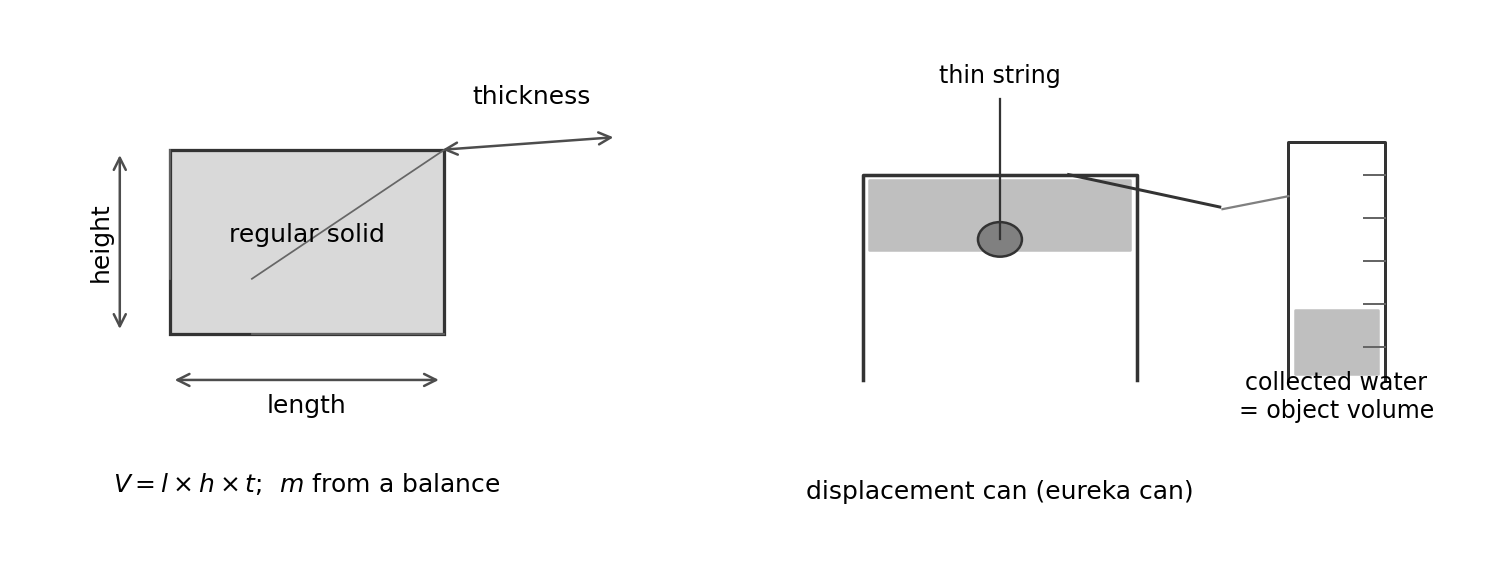


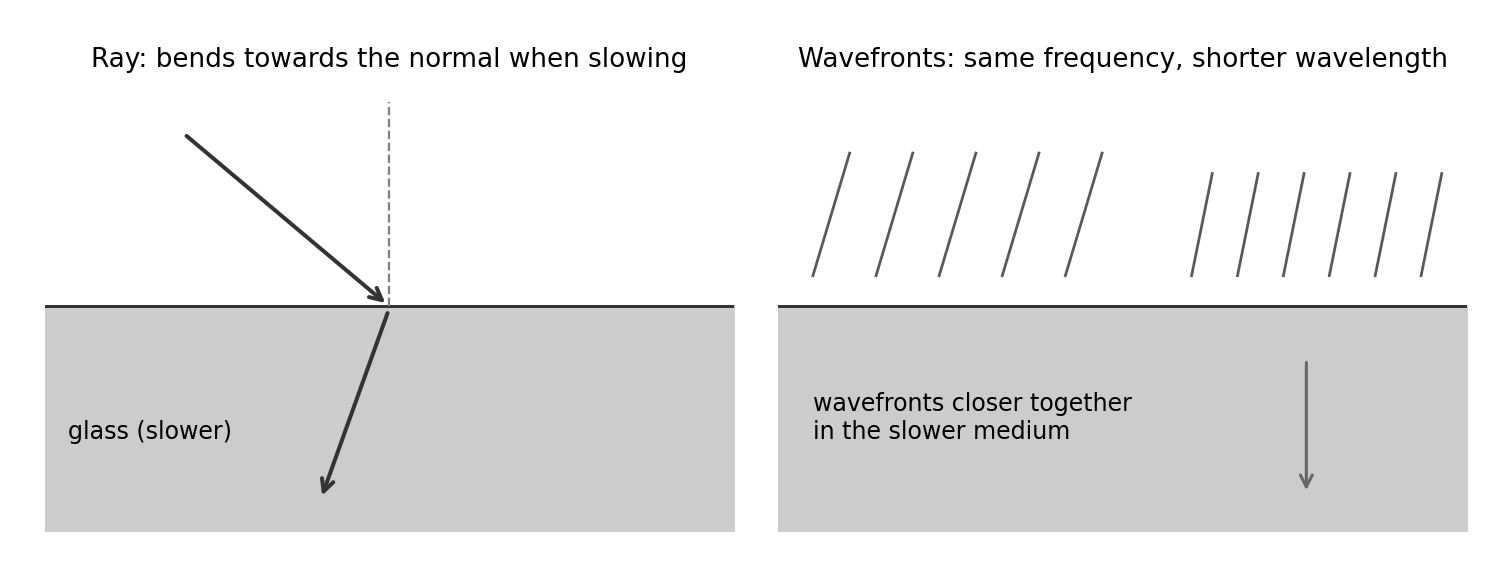


 A split-ring commutator reverses the current each half-turn so rotation continues.