跳到主要内容

计算的影响

AP 计算机科学原理 · 第 5 主题

训练
讲义 词汇表
5.1

有益与有害的影响

大纲
Enduring UnderstandingLearning ObjectiveEssential Knowledge

IOC-1
While computing innovations are typically designed to achieve a specific purpose, they may have unintended consequences.

IOC-1.A
Explain how an effect of a computing innovation can be both beneficial and harmful. [Skill 5.C]

  • IOC-1.A.1 People create computing innovations.
  • IOC-1.A.2 The way people complete tasks often changes to incorporate new computing innovations.
  • IOC-1.A.3 Not every effect of a computing innovation is anticipated in advance.
  • IOC-1.A.4 A single effect can be viewed as both beneficial and harmful by different people, or even by the same person.
  • IOC-1.A.5 Advances in computing have generated and increased creativity in other fields, such as medicine, engineering, communications, and the arts.

IOC-1.B
Explain how a computing innovation can have an impact beyond its intended purpose. [Skill 5.C]

  • IOC-1.B.1 Computing innovations can be used in ways that their creators had not originally intended:
    • The World Wide Web was originally intended only for rapid and easy exchange of information within the scientific community.
    • Targeted advertising is used to help businesses, but it can be misused at both individual and aggregate levels.
    • Machine learning and data mining have enabled innovation in medicine, business, and science, but information discovered in this way has also been used to discriminate against groups of individuals.
  • IOC-1.B.2 Some of the ways computing innovations can be used may have a harmful impact on society, the economy, or culture.
  • IOC-1.B.3 Responsible programmers try to consider the unintended ways their computing innovations can be used and the potential beneficial and harmful effects of these new uses.
  • IOC-1.B.4 It is not possible for a programmer to consider all the ways a computing innovation can be used.
  • IOC-1.B.5 Computing innovations have often had unintended beneficial effects by leading to advances in other fields.
  • IOC-1.B.6 Rapid sharing of a program or running a program with a large number of users can result in significant impacts beyond the intended purpose or control of the programmer.

来源:美国大学理事会 AP 课程与考试说明

每个计算创新都能以帮助的方式和伤害的方式被使用——常常同一个技术两者都做。一个社交网络连接人们并且能传播错误信息;自动化提高生产率并且能除去工作。效应频繁是意料之外的:创造者不能预见每一种使用。当你评价一个计算创新时,权衡它对人们和社会的好处和害处,并记住害处不总是故意的。

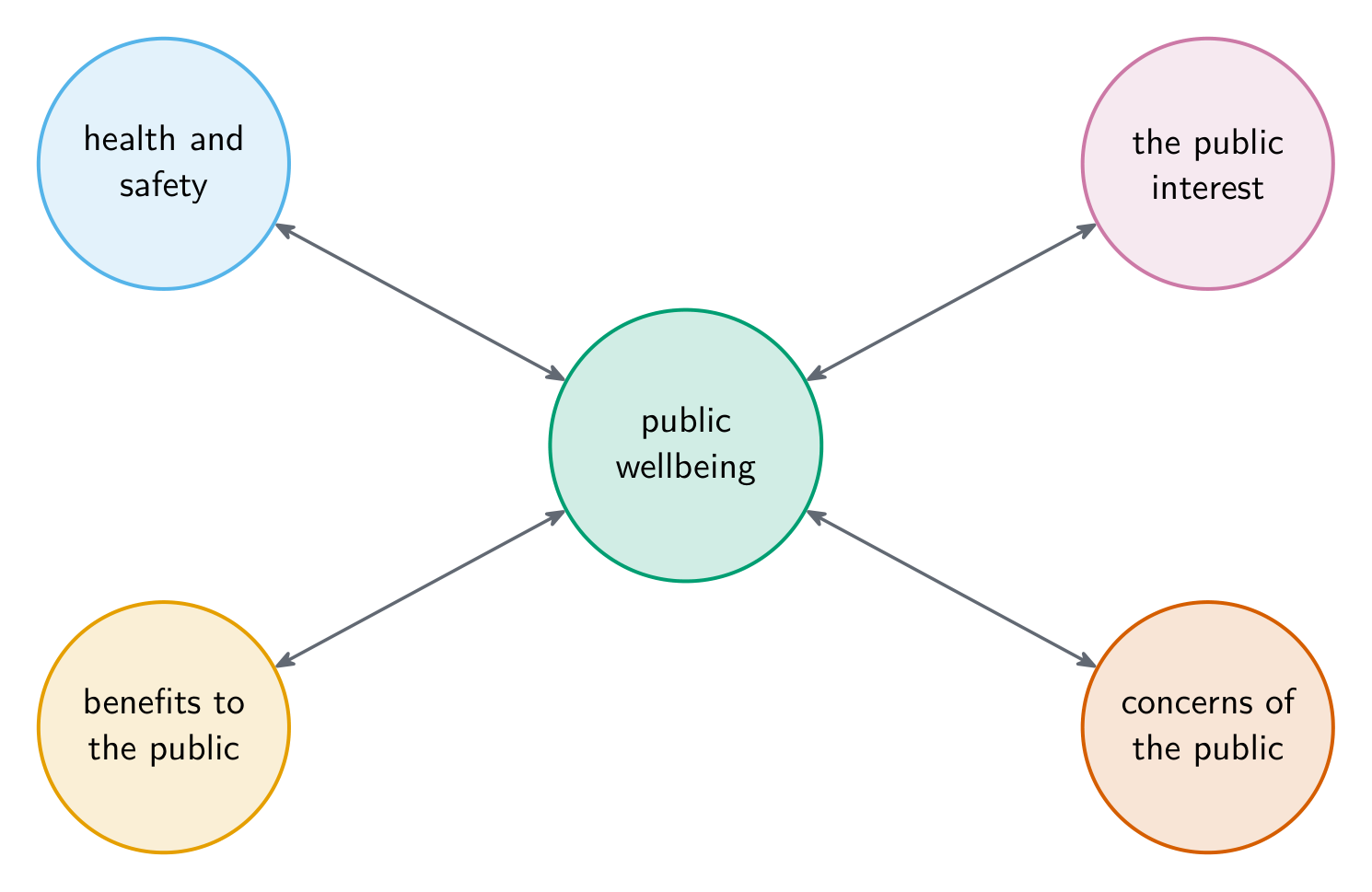
计算以几种方式影响公众的福祉
计算以几种方式影响公众的福祉
5.2

数字鸿沟

大纲
Enduring UnderstandingLearning ObjectiveEssential Knowledge

IOC-1
While computing innovations are typically designed to achieve a specific purpose, they may have unintended consequences.

IOC-1.C
Describe issues that contribute to the digital divide. [Skill 5.C]

  • IOC-1.C.1 Internet access varies between socioeconomic, geographic, and demographic characteristics, as well as between countries.
  • IOC-1.C.2 The "digital divide" refers to differing access to computing devices and the Internet, based on socioeconomic, geographic, or demographic characteristics.
  • IOC-1.C.3 The digital divide can affect both groups and individuals.
  • IOC-1.C.4 The digital divide raises issues of equity, access, and influence, both globally and locally.
  • IOC-1.C.5 The digital divide is affected by the actions of individuals, organizations, and governments.

来源:美国大学理事会 AP 课程与考试说明

数字鸿沟(digital divide)是跨群体——按收入、地理、年龄或国家——对计算和互联网的不平等访问。那些有访问的获得教育、工作和服务;那些没有的进一步落后。这个鸿沟由经济、社会和地理因素塑造,而弥合它的努力(可负担的设备、公共访问、基础设施)旨在使计算的好处更公平。
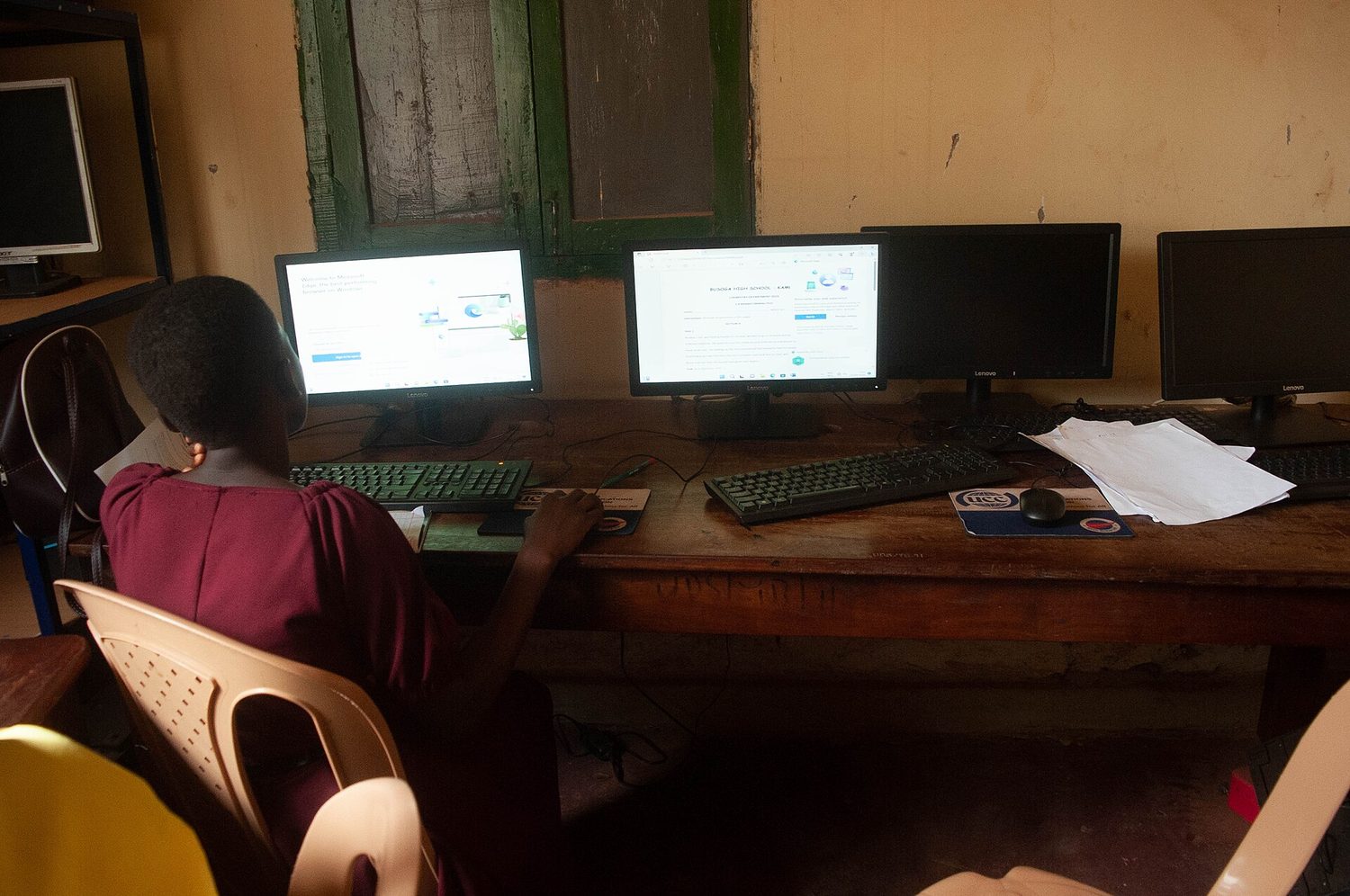
Public library computers: digital divide is about unequal access to devices, connectivity and skills
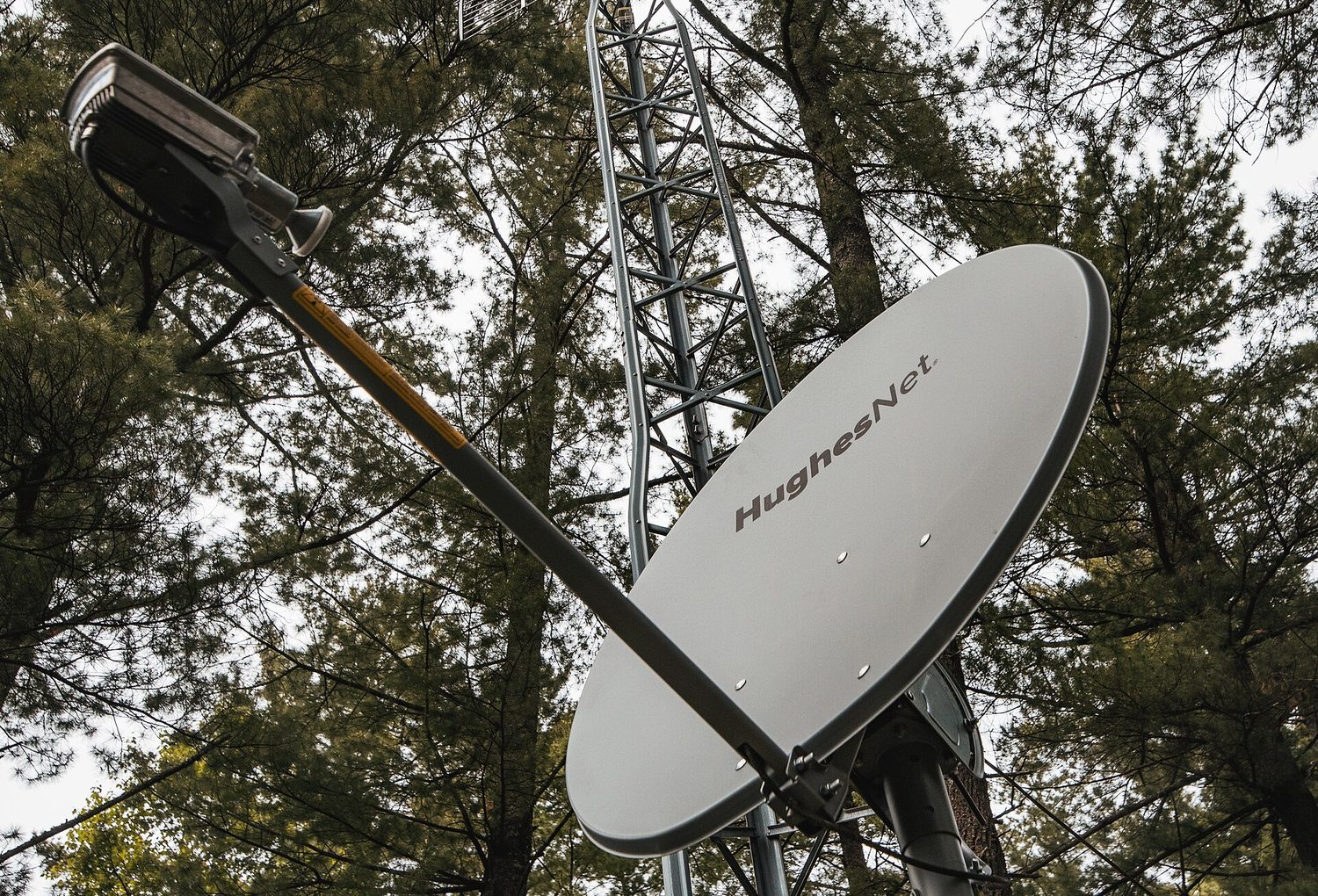
A rural satellite dish: geography still shapes who gets fast internet and who waits
词汇表 训练
英文 中文 拼音
digital divide 数字鸿沟 shù zì hóng gōu
5.3

计算偏见

大纲
Enduring UnderstandingLearning ObjectiveEssential Knowledge

IOC-1
While computing innovations are typically designed to achieve a specific purpose, they may have unintended consequences.

IOC-1.D
Explain how bias exists in computing innovations. [Skill 5.E]

  • IOC-1.D.1 Computing innovations can reflect existing human biases because of biases written into the algorithms or biases in the data used by the innovation.
  • IOC-1.D.2 Programmers should take action to reduce bias in algorithms used for computing innovations as a way of combating existing human biases.
  • IOC-1.D.3 Biases can be embedded at all levels of software development.

来源:美国大学理事会 AP 课程与考试说明

偏见(bias)能被建入计算系统——常常无意地。若用来构建一个系统的数据反映现存的偏见,或若设计者的假设是片面的,系统能产生不公平的结果(例如,一个偏爱一个群体的招聘工具)。偏见能在每个阶段进入——数据收集、设计和使用——所以系统应当被跨不同群体测试公平性。认识到"计算机这么说的"不等于"公平"是一个重要的习惯。

词汇表 训练
英文 中文 拼音
Bias 偏见 piān jiàn
5.4

众包

大纲
Enduring UnderstandingLearning ObjectiveEssential Knowledge

IOC-1
While computing innovations are typically designed to achieve a specific purpose, they may have unintended consequences.

IOC-1.E
Explain how people participate in problem-solving processes at scale. [Skill 1.C]

  • IOC-1.E.1 Widespread access to information and public data facilitates the identification of problems, development of solutions, and dissemination of results.
  • IOC-1.E.2 Science has been affected by using distributed and "citizen science" to solve scientific problems.
  • IOC-1.E.3 Citizen science is scientific research conducted in whole or part by distributed individuals, many of whom may not be scientists, who contribute relevant data to research using their own computing devices.
  • IOC-1.E.4 Crowdsourcing is the practice of obtaining input or information from a large number of people via the Internet.
  • IOC-1.E.5 Human capabilities can be enhanced by collaboration via computing.
  • IOC-1.E.6 Crowdsourcing offers new models for collaboration, such as connecting businesses or social causes with funding.

来源:美国大学理事会 AP 课程与考试说明

众包(crowdsourcing)从一大群人——通常在网上——获得输入、想法或资金。它利用许多人的知识和努力——地图项目、产品评论、公民科学,和众筹(crowdfunding)都依赖它。互联网使众包以一个前所未有可达到的规模和速度成为可能,让一个项目借助全世界的贡献者。

A Wikipedia edit-a-thon: crowdsourcing pools many people's work into a shared resource
词汇表 训练
英文 中文 拼音
Crowdsourcing 众包 zhòng bāo
5.5

法律与伦理问题

大纲
Enduring UnderstandingLearning ObjectiveEssential Knowledge

IOC-1
While computing innovations are typically designed to achieve a specific purpose, they may have unintended consequences.

IOC-1.F
Explain how the use of computing can raise legal and ethical concerns. [Skill 5.E]

  • IOC-1.F.1 Material created on a computer is the intellectual property of the creator or an organization.
  • IOC-1.F.2 Ease of access and distribution of digitized information raises intellectual property concerns regarding ownership, value, and use.
  • IOC-1.F.3 Measures should be taken to safeguard intellectual property.
  • IOC-1.F.4 The use of material created by someone else without permission and presented as one's own is plagiarism and may have legal consequences.
  • IOC-1.F.5 Some examples of legal ways to use materials created by someone else include:
    • Creative Commons—a public copyright license that enables the free distribution of an otherwise copyrighted work. This is used when the content creator wants to give others the right to share, use, and build upon the work they have created.
    • open source—programs that are made freely available and may be redistributed and modified
    • open access—online research output free of any and all restrictions on access and free of many restrictions on use, such as copyright or license restrictions
  • IOC-1.F.6 The use of material created by someone other than you should always be cited.
  • IOC-1.F.7 Creative Commons, open source, and open access have enabled broad access to digital information.
  • IOC-1.F.8 As with any technology or medium, using computing to harm individuals or groups of people raises legal and ethical concerns.
  • IOC-1.F.9 Computing can play a role in social and political issues, which in turn often raises legal and ethical concerns.
  • IOC-1.F.10 The digital divide raises ethical concerns around computing.
  • IOC-1.F.11 Computing innovations can raise legal and ethical concerns. Some examples of these include:
    • the development of software that allows access to digital media downloads and streaming
    • the development of algorithms that include bias
    • the existence of computing devices that collect and analyze data by continuously monitoring activities

来源:美国大学理事会 AP 课程与考试说明

计算提出法律和道德的问题:

  • 知识产权(intellectual property)和版权(copyright)保护创造者的作品;使用它可能需要许可或一个许可证。开源(open-source)和知识共享(Creative Commons)许可证让创造者在陈述的条款下分享作品。
  • 抄袭(plagiarism)——把其他人的作品当作你自己的——是不道德的且常常是非法的。
  • 收集和使用个人数据引发关于同意和误用的隐私问题。

仅仅因为某事在技术上可能不使它合法或道德。

词汇表 训练
英文 中文 拼音
Intellectual property 知识产权 zhī shí chǎn quán
copyright 版权 bǎn quán
Open-source 开源 kāi yuán
Plagiarism 抄袭 chāo xí
5.6

安全计算

大纲
Enduring UnderstandingLearning ObjectiveEssential Knowledge

IOC-2
The use of computing innovations may involve risks to personal safety and identity.

IOC-2.A
Describe the risks to privacy from collecting and storing personal data on a computer system. [Skill 5.D]

  • IOC-2.A.1 Personally identifiable information (PII) is information about an individual that identifies, links, relates, or describes them. Examples of PII include:
    • Social Security number
    • age
    • race
    • phone number(s)
    • medical information
    • financial information
    • biometric data
  • IOC-2.A.2 Search engines can record and maintain a history of searches made by users.
  • IOC-2.A.3 Websites can record and maintain a history of individuals who have viewed their pages.
  • IOC-2.A.4 Devices, websites, and networks can collect information about a user's location.
  • IOC-2.A.5 Technology enables the collection, use, and exploitation of information about, by, and for individuals, groups, and institutions.
  • IOC-2.A.6 Search engines can use search history to suggest websites or for targeted marketing.
  • IOC-2.A.7 Disparate personal data, such as geolocation, cookies, and browsing history, can be aggregated to create knowledge about an individual.
  • IOC-2.A.8 PII and other information placed online can be used to enhance a user's online experiences.
  • IOC-2.A.9 PII stored online can be used to simplify making online purchases.
  • IOC-2.A.10 Commercial and governmental curation of information may be exploited if privacy and other protections are ignored.
  • IOC-2.A.11 Information placed online can be used in ways that were not intended and that may have a harmful impact. For example, an email message may be forwarded, tweets can be retweeted, and social media posts can be viewed by potential employers.
  • IOC-2.A.12 PII can be used to stalk or steal the identity of a person or to aid in the planning of other criminal acts.
  • IOC-2.A.13 Once information is placed online, it is difficult to delete.
  • IOC-2.A.14 Programs can collect your location and record where you have been, how you got there, and how long you were at a given location.
  • IOC-2.A.15 Information posted to social media services can be used by others. Combining information posted on social media and other sources can be used to deduce private information about you.

IOC-2.B
Explain how computing resources can be protected and can be misused. [Skill 5.E]

  • IOC-2.B.1 Authentication measures protect devices and information from unauthorized access. Examples of authentication measures include strong passwords and multifactor authentication.
  • IOC-2.B.2 A strong password is something that is easy for a user to remember but would be difficult for someone else to guess based on knowledge of that user.
  • IOC-2.B.3 Multifactor authentication is a method of computer access control in which a user is only granted access after successfully presenting several separate pieces of evidence to an authentication mechanism, typically in at least two of the following categories: knowledge (something they know), possession (something they have), and inherence (something they are).
  • IOC-2.B.4 Multifactor authentication requires at least two steps to unlock protected information; each step adds a new layer of security that must be broken to gain unauthorized access.
  • IOC-2.B.5 Encryption is the process of encoding data to prevent unauthorized access. Decryption is the process of decoding the data. Two common encryption approaches are:
    • Symmetric key encryption involves one key for both encryption and decryption.
    • Public key encryption pairs a public key for encryption and a private key for decryption. The sender does not need the receiver's private key to encrypt a message, but the receiver's private key is required to decrypt the message.
    • Exclusion statement (EK IOC-2.B.5): Specific mathematical procedures for encryption and decryption are beyond the scope of this course and the AP Exam.
  • IOC-2.B.6 Certificate authorities issue digital certificates that validate the ownership of encryption keys used in secure communications and are based on a trust model.
  • IOC-2.B.7 Computer virus and malware scanning software can help protect a computing system against infection.
  • IOC-2.B.8 A computer virus is a malicious program that can copy itself and gain access to a computer in an unauthorized way. Computer viruses often attach themselves to legitimate programs and start running independently on a computer.
  • IOC-2.B.9 Malware is software intended to damage a computing system or to take partial control over its operation.
  • IOC-2.B.10 All real-world systems have errors or design flaws that can be exploited to compromise them. Regular software updates help fix errors that could compromise a computing system.
  • IOC-2.B.11 Users can control the permissions programs have for collecting user information. Users should review the permission settings of programs to protect their privacy.

IOC-2.C
Explain how unauthorized access to computing resources is gained. [Skill 5.E]

  • IOC-2.C.1 Phishing is a technique that attempts to trick a user into providing personal information. That personal information can then be used to access sensitive online resources, such as bank accounts and emails.
  • IOC-2.C.2 Keylogging is the use of a program to record every keystroke made by a computer user in order to gain fraudulent access to passwords and other confidential information.
  • IOC-2.C.3 Data sent over public networks can be intercepted, analyzed, and modified. One way that this can happen is through a rogue access point.
  • IOC-2.C.4 A rogue access point is a wireless access point that gives unauthorized access to secure networks.
  • IOC-2.C.5 A malicious link can be disguised on a web page or in an email message.
  • IOC-2.C.6 Unsolicited emails, attachments, links, and forms in emails can be used to compromise the security of a computing system. These can come from unknown senders or from known senders whose security has been compromised.
  • IOC-2.C.7 Untrustworthy (often free) downloads from freeware or shareware sites can contain malware.

来源:美国大学理事会 AP 课程与考试说明

保护个人数据是一个共同的责任。关键思想:

加密用一个密钥打乱明文;只有密钥能解密它
  • 个人身份信息(PII)(personally identifiable information)(名字、地址、ID 号码)应当被小心地分享,因为它能被误用于身份盗窃(identity theft)。
  • 威胁包括网络钓鱼(phishing)(诱骗你透露信息)、恶意软件(malware),和弱密码。
  • 防御包括强的、唯一的密码(passwords)、多因素认证(multi-factor authentication)、加密(encryption)(打乱数据,以便只有授权的人能读它),和保持软件更新。

加密是保持数据在传输和存储中私密的核心工具。作为一个负责任的计算机用户意味着保护你自己和其他人的信息。

考试技能: 能够辨别一个给定创新的有益和有害效应、解释一个隐私或安全风险,并命名一个应对它的安全计算做法。

Worked example. 一个招聘算法用一家公司过去的雇员(大多来自一个群体)训练,然后它拒绝了其他群体中合格的申请者。说出问题和它的原因:这是计算偏见,由有偏的训练数据引起——模型学到了历史格局而不是一个公平的规则。一个满分考试答案要说出危害(合格的人被不公平地拒绝)并且它的原因(偏见来自数据,而不是代码)。

探索

Scramble a message with encryption

Encryption protects data by scrambling it with a key; only someone with the key can read it back. This simple Caesar cipher shifts each letter — real encryption uses the same idea with far stronger keys to keep passwords and messages safe.

词汇表 训练
英文 中文 拼音
Personally identifiable information (PII) 个人身份信息 gè rén shēn fèn xìn xī
identity theft 身份盗窃 shēn fèn dào qiè
phishing 网络钓鱼 wǎng luò diào yú
malware 恶意软件 è yì ruǎn jiàn
multi-factor authentication 多因素认证 duō yīn sù rèn zhèng
encryption 加密 jiā mì
5.6

考试技巧

  • 论证一个计算创新的两个有益和有害效应——一个平衡的答案得分最好。
  • 对数据顾虑使用正确的术语:PII、隐私、安全,和算法偏见
  • 解释众包和大数据集如何创造价值并引发新的风险。
  • 数字鸿沟(访问)与偏见(公平)区分开并给出每个的一个具体例子。
  • 把每个主张与一个具体的创新和效应联系起来,正如书面回答所要求。

本主题的互动课程

逐步学习,并即时检测练习。

AP 计算机科学原理历年真题

AP 计算机科学原理的更多主题

登录或创建账号

IGCSE, A-Level & AP