A-Level Physics: all words
637 words in 25 lists. Listen, read the examples, then train a list.
1 Physical quantities and units
78 words Train this list PDF- physical quantity /ˈfɪzɪkl ˈkwɒntɪti/ A numerical magnitude together with a unit. Length is a physical quantity because we can measure it.
- magnitude /ˈmæɡnɪtjuːd/ The size or numerical value of a quantity. The force has a magnitude of 20 N.
- unit /ˈjuːnɪt/ Agreed reference quantities used to express measurements or counts. The metre is the unit of length.
- estimate /ˈestɪmət/ To find an approximate value using available information or simplifying assumptions. Estimate the height of the door before you measure it.
- mass /mæs/ A measure of an object’s inertia, measured in kilograms. The mass of this bag of rice is 5 kg.
- weight /weɪt/ The gravitational force acting on an object. Your weight is the pull of the Earth on you.
- vacuum /ˈvækjuːm/ A region containing no matter in an ideal model, or very little matter in practice. There is no air in a vacuum, so sound cannot travel through it.
- acceleration /əkˌseləˈreɪʃn/ The rate of change of velocity. The car speeds up quickly, so its acceleration is large.
- free fall /friː fɔːl/ Motion under gravity alone, with other forces neglected. A stone dropped from a bridge is in free fall.
- density /ˈdensɪti/ Mass per unit volume. Iron has a higher density than wood, so it sinks in water.
- atmospheric pressure /ˌætməsˈferɪk ˈpreʃə/ The pressure exerted by the atmosphere due to the motion and weight of its gas particles. Atmospheric pressure is the push of the air around us.
- order of magnitude /ˈɔːdə ɒv ˈmæɡnɪtjuːd/ A scale of size expressed in powers of ten. A car is about 1000 kg, so its mass has an order of magnitude of 1000 kg.
- SI units /ˌes ˈaɪ ˈjuːnɪts/ The international system of units built from seven base units such as the metre, kilogram and second. Metres, kilograms and seconds are SI units.
- base quantity /beɪs ˈkwɒntɪti/ One of the seven fundamental quantities - length, mass, time, current, temperature, amount of substance, luminous intensity - from which all others are derived. Length is a base quantity, but speed is not.
- length /leŋθ/ The distance between two points. Measure the length of the table with a ruler.
- current /ˈkʌrənt/ The rate of flow of electric charge. The current in the lamp is 0.5 A.
- ampere /ˈæmpeə/ The SI unit of electric current, equivalent to one coulomb of charge passing per second. The ampere is the unit of electric current.
- temperature /ˈtemprɪtʃə/ A measure of how hot or cold something is. The thermometer shows the water's temperature.
- kelvin /ˈkelvɪn/ The SI unit of thermodynamic temperature, with zero at absolute zero. Water freezes at 273 kelvin.
- mole /məʊl/ The SI unit of amount of substance, containing exactly 6.02214076 times ten to the power 23 specified entities. One mole of carbon has a mass of 12 g.
- derived unit /dɪˈraɪvd ˈjuːnɪt/ A unit formed from combinations of base units. The metre per second is a derived unit.
- speed /spiːd/ The distance travelled per unit time. The bus moves at a speed of 15 m/s.
- velocity /vəˈlɒsɪti/ The rate of change of displacement. The ball's velocity is 5 m/s to the left.
- force /fɔːs/ An interaction that can change an object’s motion or shape. You use a force to push a door open.
- newton /ˈnjuːtn/ The unit of force equal to one kilogram metre per second squared. The newton is the unit of force.
- work /wɜːk/ Energy transferred by a force acting through a displacement. You do work when you push a box across the floor.
- energy /ˈenədʒi/ The capacity to do work or cause change. Food gives your body the energy it needs to move.
- joule /dʒuːl/ The SI unit of energy and work. Lifting an apple by one metre takes about one joule of energy.
- power /ˈpaʊə/ The rate of energy transfer or work done. A 60 W lamp has a power of 60 watts.
- watt /wɒt/ The SI unit of power, equal to one joule per second. One watt means one joule every second.
- pressure /ˈpreʃə/ Force acting normally per unit area. A sharp knife puts a large pressure on the bread.
- stress /stres/ The internal force per unit cross-sectional area in a material. The stress in the wire is the force divided by its area.
- pascal /ˈpæskl/ The SI unit of pressure, equal to one newton per square metre. The pascal is the unit of pressure.
- homogeneous /ˌhɒməˈdʒiːniəs/ Describing an equation whose terms have matching physical dimensions. Both sides of the equation have the same units, so it is homogeneous.
- prefix /ˈpriːfɪks/ A letter put in front of a unit to make it bigger or smaller by powers of ten. The prefix "kilo" means one thousand.
- measurement /ˈmeʒəmənt/ Finding a quantity by comparing it with a standard unit. Repeat each measurement three times.
- uncertainty /ʌnˈsɜːtənti/ An estimate of the possible range of error in a measurement. The length is 25.0 cm with an uncertainty of 0.1 cm.
- systematic error /ˌsɪstəˈmætɪk ˈerə/ A consistent measurement bias caused by the method or instrument. A scale that reads too high gives a systematic error.
- zero error /ˈzɪərəʊ ˈerə/ An instrument reading that is nonzero when the true quantity is zero. The meter shows 0.2 V with nothing connected: a zero error.
- calibration /ˌkælɪˈbreɪʃn/ Comparing and, where appropriate, adjusting a measuring instrument against a known reference. Calibration checks a thermometer against known temperatures.
- parallax /ˈpærəlæks/ The apparent change in an object's position when viewed from different locations or angles. Look straight at the scale to avoid parallax errors.
- accuracy /ˈækjʊrəsi/ How close a measurement is to the true value. Accuracy tells you how close a result is to the true value.
- precision /prɪˈsɪʒn/ How closely repeated measurements agree. Readings with high precision are all very close to each other.
- random error /ˈrændəm ˈerə/ Unpredictable variation between repeated measurements. Small changes in your reaction time cause a random error.
- instrument /ˈɪnstrəmənt/ A device used to make a measurement, such as a ruler, micrometer or multimeter. A ruler is a simple measuring instrument.
- mean /miːn/ The sum of a set of values divided by the number of values. Add the three readings and divide by three to find the mean.
- intercept /ˌɪntəˈsept/ The coordinate at which a graph crosses a specified coordinate axis. The line crosses the y-axis at the intercept.
- division /dɪˈvɪʒn/ One marked interval on an instrument scale; readings are estimated to a fraction of a division. One division on this ruler is 1 mm.
- reaction time /rɪˈækʃn taɪm/ The delay between a stimulus and a response. Your reaction time is the delay before you press the stopwatch.
- half the range /hɑːf ðə reɪndʒ/ An estimate of uncertainty in repeated readings: (largest - smallest)/2. Take half the range of the readings as the uncertainty.
- absolute uncertainty /ˈæbsəluːt ʌnˈsɜːtənti/ The range within which the true value is expected to lie, in the units of the quantity. The absolute uncertainty in 25.0 ± 0.1 cm is 0.1 cm.
- percentage uncertainty /pəˈsentɪdʒ ʌnˈsɜːtənti/ The absolute uncertainty divided by the value, multiplied by 100%. 0.1 cm out of 25.0 cm is a percentage uncertainty of 0.4%.
- derived quantity /dɪˈraɪvd ˈkwɒntɪti/ A quantity defined by combining base quantities, such as speed (length/time) or force (mass x acceleration). Speed is a derived quantity, found from distance and time.
- diameter /daɪˈæmɪtə/ A straight line through a circle's centre joining two points on its circumference, or the length of that line. Measure the diameter of the wire with a micrometer.
- volume /ˈvɒljuːm/ The amount of three-dimensional space occupied. The volume of the box is 2 m × 1 m × 1 m = 2 m³.
- percentage difference /pəˈsentɪdʒ ˈdɪfrəns/ The difference between two values divided by a reference value, times 100%. The two answers have a percentage difference of 5%.
- significant figures /sɪɡˈnɪfɪkənt ˈfɪɡəz/ The meaningful digits in a measured or rounded number, beginning with its first non-zero digit. The number 0.0450 has three significant figures.
- same number of significant figures /seɪm ˈnʌmbə ɒv sɪɡˈnɪfɪkənt ˈfɪɡəz/ A reporting rule: a result should be quoted to the same precision as the least precise measurement used. Give the answer to the same number of significant figures as the data.
- error bar /ˈerə bɑː/ A line through a plotted point showing the uncertainty interval of the measurement. Each point on the graph has an error bar to show its uncertainty.
- line of best fit /laɪn ɒv best fɪt/ A smooth straight line or curve drawn through the trend of plotted points, balancing points above and below it. Draw a line of best fit through the points.
- worst acceptable line /wɜːst əkˈseptəbl laɪn/ The line of greatest or least gradient that still passes through every error bar; used to find uncertainty in a gradient. The worst acceptable line still passes through all the error bars.
- independent variable /ˌɪndɪˈpendənt ˈveərɪəbl/ An input or factor whose value is chosen or varied to examine its effect on another quantity. The independent variable is the one you change.
- dependent variable /dɪˈpendənt ˈveərɪəbl/ The measured or calculated outcome whose response to changes in another variable is studied. The dependent variable is the one you measure.
- control variables /kənˈtrəʊl ˈveərɪəblz/ Factors kept the same in an investigation so that the effect of the independent variable can be assessed. Keep the control variables, such as the temperature, the same.
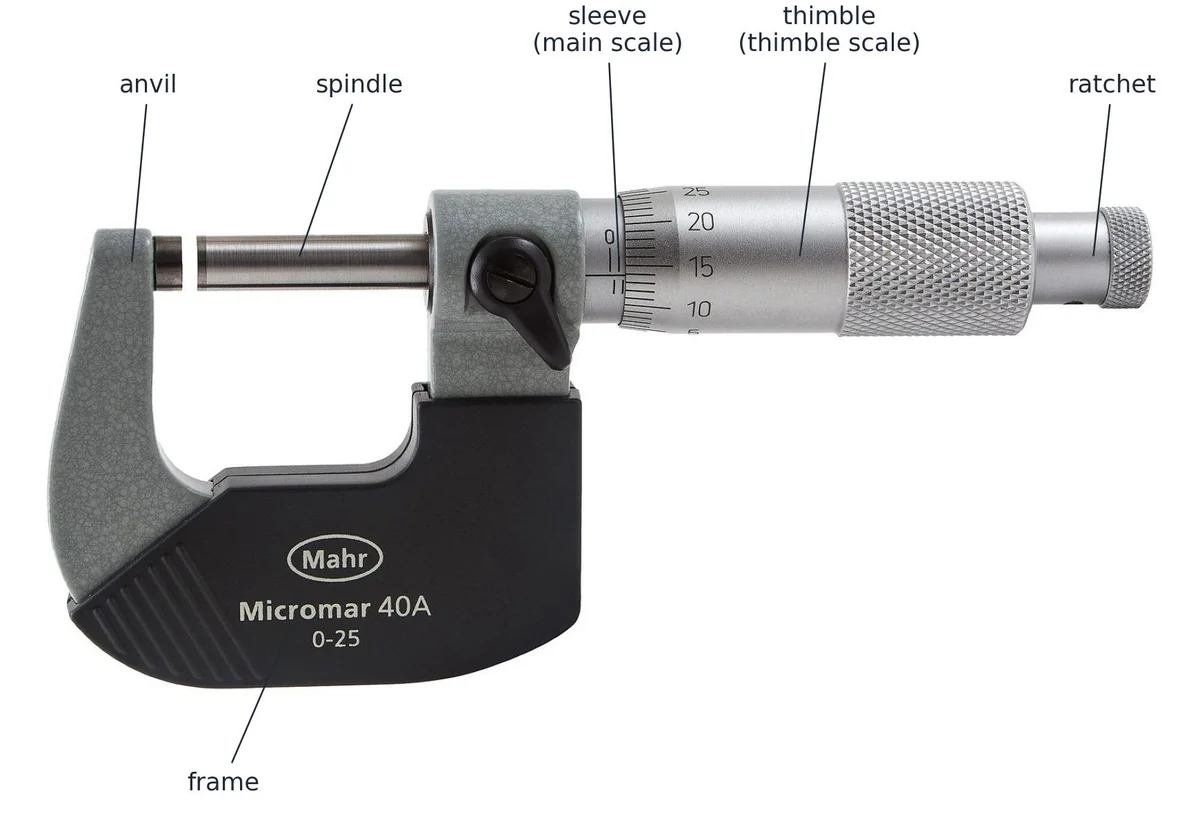
- micrometer /maɪˈkrɒmɪtə/ Use a micrometer to measure the thickness of a coin.
- scalar /ˈskeɪlə/ A quantity described by magnitude alone, with no direction. Mass is a scalar because it has no direction.
- vector /ˈvektə/ A quantity with both magnitude and direction. Velocity is a vector because it has a direction.
- electric charge /ɪˈlektrɪk tʃɑːdʒ/ A physical property responsible for electric forces and interactions, occurring with positive or negative sign. A rubbed balloon has an electric charge.
- displacement /dɪˈspleɪsmənt/ The straight-line change in position, including direction. After walking 3 km east, your displacement is 3 km east.
- momentum /məʊˈmentəm/ The product of mass and velocity. A heavy truck has a lot of momentum.
- coplanar /ˌkəʊˈpleɪnə/ Lying in the same plane; coplanar forces can be drawn in one vector diagram. All three forces lie on the same flat page: they are coplanar.
- resultant /rɪˈzʌltənt/ The single vector equal to the sum of two or more vectors. The resultant of 3 N and 4 N at right angles is 5 N.
- scale drawing /skeɪl ˈdrɔːɪŋ/ An accurate drawing where lengths represent vector magnitudes at a stated ratio, used to add forces graphically. In the scale drawing, 1 cm stands for 10 N.
- perpendicular /ˌpɜːpənˈdɪkjʊlə/ Meeting at a right angle of 90 degrees. The wall is perpendicular to the floor.
- component /kəmˈpəʊnənt/ The part of a vector acting in a specified direction. Find the vertical component of the ball's velocity.
- horizontal /ˌhɒrɪˈzɒntl/ Parallel to the horizon or perpendicular to the local vertical direction. The floor is horizontal.
- vertical /ˈvɜːtɪkl/ Along the local direction of gravity, or perpendicular to a horizontal reference. A falling stone moves in a vertical line.
- inclined plane /ɪnˈklaɪnd pleɪn/ A flat surface set at an angle to the horizontal. A box slides down an inclined plane.




2 Kinematics
21 words Train this list PDF- projectile /prəˈdʒektaɪl/ An object moving after being launched, typically modelled under gravity with air resistance neglected. A thrown ball is a projectile.
- distance /ˈdɪstəns/ The total length of a path travelled. The distance from home to school is 2 km.
- kinematics /ˌkɪnɪˈmætɪks/ The description of motion using quantities such as position, velocity and acceleration without analysing its causes. Kinematics describes how things move.
- uniform acceleration /ˈjuːnɪfɔːm əkˌseləˈreɪʃn/ Acceleration that is constant in magnitude and direction. A car with uniform acceleration gains the same speed every second.
- acceleration of free fall /əkˌseləˈreɪʃn ɒv friː fɔːl/ The acceleration caused by gravity when other forces are negligible. The acceleration of free fall on Earth is 9.81 m/s².
- uniform gravitational field /ˈjuːnɪfɔːm ˌɡrævɪˈteɪʃənl fiːld/ A gravitational field with the same strength and direction everywhere, a good model near the Earth’s surface. Near the ground, the Earth's field is a uniform gravitational field.
- air resistance /eə rɪˈzɪstəns/ A drag force opposing motion through air. Air resistance slows down a falling leaf.
- negligible /ˈneɡlɪdʒəbl/ Small enough to leave out without significantly affecting the result being considered. For a heavy stone, air resistance is negligible.
- deceleration /dɪˌseləˈreɪʃn/ Acceleration opposite to an object's velocity, causing its speed to decrease. The car brakes with a deceleration of 4 m/s².
- graphical methods /ˈɡræfɪkl ˈmeθədz/ Finding results from graphs: gradients, intercepts and areas under curves. We can solve the problem with graphical methods, using a graph.
- gradient /ˈɡreɪdɪənt/ The change in the vertical coordinate divided by the change in the horizontal coordinate. The gradient of a distance-time graph gives the speed.
- tangent /ˈtændʒənt/ A straight line that touches a curve at a point and has the same direction there. Draw a tangent to the curve to find the gradient at one point.
- trapezium /trəˈpiːzɪəm/ A quadrilateral with a pair of parallel sides, using the British convention. Split the area under the graph into a trapezium and a triangle.
- parabola /pəˈræbələ/ The curve formed by points equally distant from a fixed point and a fixed straight line. A thrown ball follows a parabola.
- gravity /ˈɡrævɪti/ The attractive interaction between objects with mass. Gravity pulls the ball back down.
- symmetric /sɪˈmetrɪk/ Having corresponding parts or relationships that remain equivalent under a specified transformation or interchange. The path of the ball is symmetric: it goes up and comes down the same way.
- terminal velocity /ˈtɜːmɪnl vəˈlɒsɪti/ A constant falling velocity reached when weight is balanced by resistance. A skydiver falling at a steady speed has reached terminal velocity.
- range /reɪndʒ/ The horizontal distance travelled by a projectile between its launch and a specified landing level or point. The range of the ball is how far it lands from where it started.
- light gates /laɪt ɡeɪts/ A timing sensor that detects an object interrupting a beam of light.
- light gate /laɪt ɡeɪt/ A timing sensor that detects an object interrupting a beam of light. A light gate measures the time when a card passes through it.
- reaction-time /rɪˈækʃn taɪm/ The delay between a stimulus and a response, a source of uncertainty in timing experiments. A reaction-time test uses a falling ruler.

3 Dynamics
34 words Train this list PDF- linear momentum /ˈlɪnɪə məʊˈmentəm/ the vector m v, conserved when the system boundary keeps external impulses out Linear momentum is mass times velocity.
- resultant force /rɪˈzʌltənt fɔːs/ The single force equivalent to all the forces acting together. If the resultant force is zero, the speed does not change.
- impulse /ˈɪmpʌls/ The change in momentum, equal to force multiplied by its duration for a constant force. A kick gives the ball an impulse.
- collision /kəˈlɪʒn/ An interaction in which objects or particles strike or exert large forces on one another over a short time. Two cars stopped after a collision.
- kinetic energy /kɪˈnetɪk ˈenədʒi/ The energy an object has because of its motion. A fast car has a lot of kinetic energy.
- driving force /ˈdraɪvɪŋ fɔːs/ An external force applied to make or maintain a system's motion or oscillation. The engine gives the car a driving force.
- drag /dræɡ/ A resistive force exerted by a fluid on an object moving relative to it. Drag slows down a boat in the water.
- thrust /θrʌst/ A driving force that pushes or propels an object, for example from an engine or expelled fluid. The rocket engine gives an upward thrust.
- external force /ekˈstɜːnl fɔːs/ A force exerted on a chosen system by something outside that system. No external force acts, so the total momentum stays the same.
- friction /ˈfrɪkʃn/ A force that opposes relative motion between contacting surfaces. Friction between the tyres and the road stops the car sliding.
- normal contact force /ˈnɔːml ˈkɒntækt fɔːs/ A contact force exerted perpendicular to the surfaces touching each other. The table pushes up on the book with a normal contact force.
- electrostatic /ɪˌlektrəʊˈstætɪk/ Relating to electric charges at rest and the fields and forces they produce. Two charged balls push apart with an electrostatic force.
- gravitational field /ˌɡrævɪˈteɪʃənl fiːld/ A region in which a mass experiences gravitational force, described locally by force per unit mass. The Moon is in the Earth's gravitational field.
- viscous /ˈvɪskəs/ Describing a fluid that resists relative motion between neighbouring layers. Honey is more viscous than water: it flows slowly.
- fluid /ˈfluːɪd/ A substance that can flow, including liquids and gases. Air and water are both a fluid.
- coefficient /ˌkəʊɪˈfɪʃənt/ A numerical or constant factor multiplying a term in an expression. The number in front of the letter is the coefficient.
- viscosity /vɪˈskɒsɪti/ A measure of a fluid's resistance to flow or to relative motion between adjacent layers. Oil has a higher viscosity than water.
- cross-sectional area /krɒs ˈsekʃənl ˈeərɪə/ The area exposed by a cut through an object perpendicular to a specified axis or direction. A thick wire has a large cross-sectional area.
- thermal energy /ˈθɜːml ˈenədʒi/ Energy associated with the random motion and interactions of particles in a substance. Rubbing your hands turns work into thermal energy.
- upthrust /ˈʌpθrʌst/ The upward buoyant force exerted by a fluid on an object immersed in it. Upthrust from the water holds up a boat.
- hydrostatic pressure /ˌhaɪdrəˈstætɪk ˈpreʃə/ The pressure in a fluid at rest due to its weight: p = rho*g*h. Hydrostatic pressure gets larger as you dive deeper.
- parachutist /ˈpærətʃuːtɪst/ A person descending by parachute; a standard example of terminal velocity and changing air resistance. A parachutist falls slowly after the parachute opens.
- gravitational potential energy /ˌɡrævɪˈteɪʃənl pəˈtenʃl ˈenədʒi/ Energy stored because of an object’s position in a gravitational field. A book on a high shelf has more gravitational potential energy.
- conservation of momentum /ˌkɒnsəˈveɪʃn ɒv məʊˈmentəm/ Total momentum remains constant when no resultant external force acts. Conservation of momentum means the total momentum stays the same.
- explosion /ekˈspləʊʒn/ A rapid release of stored energy that can cause an object or system to separate into parts moving apart. In an explosion, the pieces fly apart in opposite directions.
- recoil /rɪˈkɔɪl/ The backward motion of an object when it ejects or launches something, associated with conservation of momentum. A gun moves back when it fires; we call this recoil.
- inelastic collision /ɪnɪˈlæstɪk kəˈlɪʒn/ A collision in which the total kinetic energy of the colliding objects is not conserved. Two cars that stick together have an inelastic collision.
- elastic collision /ɪˈlæstɪk kəˈlɪʒn/ A collision in which total kinetic energy and momentum are conserved. In an elastic collision, no kinetic energy is lost.
- relative speed /ˈrelətɪv spiːd/ The speed of one object as measured from another moving object. Two cars at 20 m/s and 30 m/s in opposite directions have a relative speed of 50 m/s.
- deformation /ˌdiːfɔːˈmeɪʃn/ A change in an object's shape or dimensions caused by forces. The dent in the car is a deformation.
- head-on /hed ɒn/ Describes a collision where both objects move along the same straight line toward each other. The two balls meet in a head-on collision.
- stationary /ˈsteɪʃənəri/ Not moving; zero velocity. The car is stationary at the traffic lights.
- alpha particle /ˈælfə ˈpɑːtɪkl/ A helium nucleus (2 protons + 2 neutrons) emitted in alpha decay; strongly ionising but weakly penetrating. An alpha particle has two protons and two neutrons.
- mass-flow rate /mæs fləʊ reɪt/ The mass of fluid passing a point per unit time, in kg/s. The mass-flow rate is 2 kg of water every second.


4 Forces, density and pressure
30 words Train this list PDF- principle of moments /ˈprɪnsɪpl ɒv ˈməʊmənts/ For rotational equilibrium, total clockwise moment equals total anticlockwise moment. The see-saw balances, as the principle of moments says.
- moment /ˈməʊmənt/ The turning effect of a force about a pivot. A long spanner gives a larger moment.
- centre of gravity /ˈsentə ɒv ˈɡrævɪti/ The point through which an object’s resultant weight acts. A bus tips over if its centre of gravity is too high.
- centre of mass /ˈsentə ɒv mæs/ The point representing an object's or system's mass-weighted average position. The centre of mass of a ruler is in its middle.
- free-body diagram /friː ˈbɒdi ˈdaɪəɡræm/ A diagram showing all external forces acting on a selected object. Draw a free-body diagram with an arrow for each force.
- equilibrium /ˌiːkwɪˈlɪbrɪəm/ A state with no resultant force or resultant moment. The book is in equilibrium because the forces balance.
- plumb line /plʌm laɪn/ A cord with a hanging weight that indicates the vertical direction under gravity. A plumb line hangs straight down.
- line of action /laɪn ɒv ˈækʃn/ The straight line passing through a force's point of application in the direction of that force. The line of action of the weight passes through the centre of gravity.
- pivot /ˈpɪvət/ A fixed point about which an object can turn. The see-saw turns about its pivot.
- torque /tɔːk/ The turning effect of a couple, equal to one of its forces multiplied by the perpendicular distance between the two lines of action. Turning a tap needs a small torque.
- non-uniform /nɒn ˈjuːnɪfɔːm/ Not constant; varying from place to place or time to time, as a non-uniform acceleration. A non-uniform rod is heavier at one end.
- perpendicular distance /ˌpɜːpənˈdɪkjʊlə ˈdɪstəns/ The shortest distance from a point to a line or plane, measured at right angles to it. Measure the perpendicular distance from the pivot to the force.
- lever arm /ˈliːvə ɑːm/ The perpendicular distance from a pivot or axis to a force's line of action. A longer lever arm makes the door easier to open.
- clockwise /ˈklɒkwaɪz/ Moving or turning in the same direction as the hands of a clock when viewed from the specified side. The hands of a clock turn clockwise.
- anticlockwise /ˌæntɪˈklɒkwaɪz/ In the direction opposite to the movement of a clock's hands. Turn the lid anticlockwise to open the jar.
- couple /ˈkʌpl/ Two equal and opposite parallel forces acting along different lines, producing a turning effect without a resultant force. Your two hands on a steering wheel make a couple.
- translation /trænˈsleɪʃn/ Motion in which every point of a body moves in the same direction, without rotation. In translation, every part of the object moves the same way.
- angular acceleration /ˈæŋɡjʊlə əkˌseləˈreɪʃn/ The rate of change of angular velocity with time. A wheel that spins faster and faster has an angular acceleration.
- tension /ˈtenʃn/ A pulling force transmitted through a stretched string, cable or similar object. The tension in the rope holds up the lamp.
- vector triangle /ˈvektə ˈtraɪæŋɡl/ A head-to-tail triangle showing the addition of two vectors and their resultant. Draw the three forces head to tail to make a vector triangle.
- closed vector triangle /kləʊzd ˈvektə ˈtraɪæŋɡl/ A triangle of vectors drawn tip-to-tail whose sides join into a closed loop, showing the resultant is zero. The forces balance, so they form a closed vector triangle.
- sine rule /saɪn ruːl/ The rule that each side of a triangle divided by the sine of its opposite angle has the same value. Use the sine rule to find the missing side.
- cosine rule /ˈkəʊsaɪn ruːl/ The rule relating a triangle's sides and an angle: one side squared equals the sum of the other two sides squared minus twice their product times the cosine of the included angle. Use the cosine rule when you know two sides and the angle between them.
- floating /ˈfləʊtɪŋ/ Staying at the surface of a fluid when upthrust equals the object’s weight. A floating boat has upthrust equal to its weight.
- depth /depθ/ The vertical distance below a surface. The pressure grows with depth under water.
- Archimedes' principle /ˌɑːkɪˈmiːdiːz ˈprɪnsɪpl/ The buoyant force on an object equals the weight of the fluid it displaces. Archimedes' principle says upthrust equals the weight of water pushed away.
- submerged /səbˈmɜːdʒd/ Below the surface of a liquid. The stone is fully submerged in the water.
- displaced /dɪˈspleɪst/ Moved out of a region, as fluid is pushed aside by an object entering it. The stone displaced 50 cm³ of water.
- newton meter /ˈnjuːtn ˈmiːtə/ A spring balance that measures force in newtons. Hang the mass on a newton meter to read its weight.
- incompressible /ˌɪnkəmˈpresəbl/ Describes a fluid whose volume barely changes under pressure, so it transmits force through pistons. Water is almost incompressible: you cannot squash it.


5 Work, energy and power
14 words Train this list PDF- electrical /ɪˈlektrɪkl/ Relating to electric charge, electric current or the transfer of electrical energy. A kettle is an electrical device.
- electrical energy /ɪˈlektrɪkl ˈenədʒi/ Energy transferred by moving charges; converted in components to heat, light and other forms. A battery gives electrical energy to the lamp.
- frictionless /ˈfrɪkʃənləs/ Describing a model in which the frictional force is neglected. On a frictionless surface, the block keeps sliding.
- conservation of energy /ˌkɒnsəˈveɪʃn ɒv ˈenədʒi/ The principle that energy cannot be created or destroyed, only transferred or transformed. Conservation of energy means energy is never made or destroyed.
- closed system /kləʊzd ˈsɪstəm/ A system that does not exchange matter with its surroundings, although energy may be transferred. In a closed system, no energy goes in or out.
- elastic potential energy /ɪˈlæstɪk pəˈtenʃl ˈenədʒi/ Energy stored when an elastic object is stretched or compressed. A stretched spring stores elastic potential energy.
- chemical energy /ˈkemɪkl ˈenədʒi/ Energy associated with a substance's chemical arrangement, transferred during chemical reactions. Food and fuel store chemical energy.
- ramp /ræmp/ A sloped surface; objects accelerate down it as a component of weight acts along the slope. The trolley rolls down a ramp.
- spring /sprɪŋ/ An elastic object whose extension is proportional to the applied force up to its limit of proportionality. The spring stretches when you hang a mass on it.
- compression /kəmˈpreʃn/ Squeezing an object or substance so that its size or volume decreases. The compression of the spring is 3 cm.
- efficiency /ɪˈfɪʃənsi/ The fraction of total energy or power input converted to useful output. A lamp with 20% efficiency turns only a fifth of its energy into light.
- voltage /ˈvəʊltɪdʒ/ The energy transferred per unit electric charge. The battery has a voltage of 1.5 V.
- spring constant /sprɪŋ ˈkɒnstənt/ The force required per unit extension of a spring in its linear range. A stiff spring has a large spring constant.
- bungee jumper /ˈbʌndʒiː ˈdʒʌmpə/ A person jumping with an elastic cord; a standard example of kinetic, gravitational and elastic energy transfers. A bungee jumper falls until the rope stretches.
6 Deformation of solids
16 words Train this list PDF- Hooke's law /hʊks lɔː/ The rule that extension is proportional to applied force while a spring remains within its limit of proportionality. Hooke's law says the extension is proportional to the force.
- elastic /ɪˈlæstɪk/ Describing a material or object that returns to its original shape or size after a deforming force is removed, within its elastic limit. A rubber band is elastic: it goes back to its shape.
- elastic limit /ɪˈlæstɪk ˈlɪmɪt/ The greatest stress or deformation a material can experience and still return to its original shape when unloaded. Past its elastic limit, the spring stays longer.
- tensile /ˈtensaɪl/ Relating to forces that stretch a material. A rope pulled at both ends has a tensile force on it.
- extension /ekˈstenʃn/ The increase in length of an object. The extension of the spring is 4 cm.
- load /ləʊd/ An object or force supported by a system, or an electrical component that draws energy from a supply. Hang a 2 N load on the wire.
- limit of proportionality /ˈlɪmɪt ɒv prəˌpɔːʃəˈnælɪti/ The point beyond which extension is no longer directly proportional to applied force. After the limit of proportionality, the graph is no longer straight.
- plastic /ˈplæstɪk/ Describing deformation that remains after the deforming force is removed. Modelling clay is plastic: it keeps its new shape.
- series /ˈsɪəriːz/ Components connected one after another along a single path, such as springs or circuit components. Springs in series stretch more than one spring.
- parallel /ˈpærəlel/ Components connected side by side; in a circuit, they share the same potential difference. Two springs side by side, in parallel, are stiffer.
- strain /streɪn/ The fractional change in a dimension, such as extension divided by original length. Strain is the extension divided by the original length.
- Young modulus /jʌŋ ˈmɒdjʊləs/ The ratio of tensile stress to tensile strain in the region where they are proportional. Steel has a high Young modulus, so it is hard to stretch.
- pulley /ˈpʊli/ A wheel over which a rope or belt runs, used to change the direction of a force or transmit motion. The rope passes over a pulley.
- rubber band /ˈrʌbə bænd/ An elastic band that stores elastic potential energy when stretched; it shows hysteresis when released. A rubber band stretches easily.
- elastic hysteresis /ɪˈlæstɪk ˌhɪstəˈriːsɪs/ The loop between loading and unloading curves of rubber; its area is the energy dissipated as heat. Elastic hysteresis means the rubber warms up as it stretches and relaxes.
- trapezia /trəˈpiːzɪə/ Plural of trapezium; the area under a curve can be estimated by adding trapezium strips. The area is made of two trapezia.


7 Waves
44 words Train this list PDF- progressive wave /prəˈɡresɪv weɪv/ A travelling disturbance that transfers energy from one place to another without net transport of the medium as a whole. A progressive wave carries energy from one place to another.
- wave /weɪv/ A disturbance or oscillation that transfers energy without a net transfer of matter over the full cycle. A wave moves across the water.
- frequency /ˈfriːkwənsi/ The number of complete cycles per unit time. A frequency of 50 Hz means 50 waves every second.
- phase difference /feɪz ˈdɪfrəns/ The difference in position within an oscillation cycle between two oscillations or points on waves. The two waves have a phase difference of half a cycle.
- medium /ˈmiːdɪəm/ The material or environment through which a wave or other physical influence is transmitted. Sound needs a medium, such as air, to travel.
- oscillate /ˈɒsɪleɪt/ Move or vary repeatedly about an equilibrium position or value. The particles oscillate about a fixed point.
- propagates /ˈprɒpəɡeɪts/ Travels onward through a medium or space, as a wave does.
- propagate /ˈprɒpəɡeɪt/ To travel onward through a medium or space, as a wave does. Sound waves propagate through air.
- transverse wave /trænsˈvɜːs weɪv/ A wave whose oscillations are perpendicular to its direction of energy transfer. Light is a transverse wave.
- longitudinal wave /ˌlɒŋɡɪˈtjuːdɪnl weɪv/ A wave whose oscillations are parallel to its direction of energy transfer. Sound is a longitudinal wave.
- Wave motion /weɪv ˈməʊʃn/ The transfer of energy through oscillations without net movement of the medium. Wave motion carries energy without carrying matter.
- ripple tank /ˈrɪpl tæŋk/ A shallow transparent water tank used to produce and study surface waves. We watch water waves in a ripple tank.
- amplitude /ˈæmplɪtjuːd/ The maximum displacement from an equilibrium position. A loud sound has a large amplitude.
- wavelength /ˈweɪvleŋθ/ The distance between corresponding points on successive waves. The wavelength is the distance from one crest to the next.
- in phase /ɪn feɪz/ Describing oscillations that reach corresponding stages of their cycles at the same time. The two points move up and down together: they are in phase.
- crest /krest/ The highest point of a transverse wave relative to its equilibrium position. The crest is the top of the wave.
- period /ˈpɪərɪəd/ The time taken for one complete oscillation or cycle. The period of the wave is 0.02 s.
- hertz /hɜːts/ The unit of frequency equal to one cycle per second. One hertz means one wave every second.
- radian /ˈreɪdɪən/ The angle subtended at a circle's centre by an arc equal in length to its radius. One full turn is an angle of 2π radians.
- cathode-ray oscilloscope /ˈkæθəʊd reɪ ɒˈsɪləskəʊp/ An instrument that uses an electron beam and a screen to display how an electrical signal changes, commonly with time. A cathode-ray oscilloscope shows the wave on a screen.
- time-base /taɪm beɪs/ A circuit or setting that provides the controlled horizontal sweep used to represent time on an oscilloscope. The time-base sets the time for each square across the screen.
- y-gain /waɪ ɡeɪn/ The volts-per-division setting of an oscilloscope’s vertical input. The y-gain sets the voltage for each square up the screen.
- intensity /ɪnˈtensɪti/ The power carried by a wave per unit area perpendicular to its direction of propagation. The intensity of light is less far from the lamp.
- point source /pɔɪnt sɔːs/ A source whose size can be treated as negligible compared with the distances being considered. A small lamp acts as a point source of light.
- source /sɔːs/ The object or region that produces a wave. The speaker is the source of the sound.
- wavefront /ˈweɪvfrʌnt/ A line or surface joining points of a wave that are in phase. Each wavefront joins points on the same crest.
- electromagnetic waves /ɪˌlektrəʊməɡˈnetɪk weɪvz/ Waves of coupled electric and magnetic fields that transfer energy and can travel through a vacuum.
- electromagnetic wave /ɪˌlektrəʊməɡˈnetɪk weɪv/ Waves of coupled electric and magnetic fields that transfer energy and can travel through a vacuum. Light is an electromagnetic wave.
- sine curve /saɪn kɜːv/ The smooth wave-shaped graph of y = sin x; the shape of a simple wave. The graph of the wave is a sine curve.
- rarefaction /ˌreərɪˈfækʃn/ Regions of lower pressure or particle density in a longitudinal wave. A rarefaction is where the air particles are far apart.
- Doppler effect /ˈdɒplə ɪˈfekt/ A change in observed wave frequency caused by relative motion between a source and an observer. The Doppler effect makes a passing car's sound change pitch.
- observer /ɒbˈzɜːvə/ A person or measuring system relative to which an event or motion is described. The observer hears a higher sound as the car comes closer.
- electromagnetic spectrum /ɪˌlektrəʊməɡˈnetɪk ˈspektrəm/ The complete range of electromagnetic radiation, ordered by frequency or wavelength. Radio waves and X-rays are both in the electromagnetic spectrum.
- microwaves /ˈmaɪkrəʊweɪvz/ Electromagnetic radiation in the microwave region, between radio waves of longer wavelength and infrared radiation. Microwaves heat food in a few minutes.
- infrared /ˌɪnfrəˈred/ Electromagnetic radiation with wavelengths longer than visible red light and shorter than microwaves. A TV remote uses infrared light.
- ultraviolet /ˌʊltrəˈvaɪəlɪt/ Electromagnetic radiation with wavelengths shorter than visible violet light and longer than X-rays. Ultraviolet light from the Sun can burn your skin.
- X-rays /eks reɪz/ High-frequency electromagnetic waves used for imaging; ionising. Doctors use X-rays to see broken bones.
- polarisation /ˌpəʊləraɪˈzeɪʃn/ Here, linear polarisation: transverse oscillations are restricted to one direction perpendicular to propagation; for light, this describes the electric field. Polarisation shows that light is a transverse wave.
- polarising filter /ˈpəʊləraɪzɪŋ ˈfɪltə/ A filter that transmits a selected direction of transverse light oscillation. Polarising filter sunglasses cut glare from water.
- Malus's law /ˈmæləsɪz lɔː/ The transmitted intensity of linearly polarised light through an ideal analyser equals its incident intensity times the square of the cosine of the angle between their polarisation axes. Malus's law tells us how much light passes through two filters.
- plane-polarised /pleɪn ˈpəʊləraɪzd/ Describes a transverse wave whose oscillations lie in one plane only; evidence that light is transverse. After the filter, the light is plane-polarised.
- transmission axis /trænˈsmɪʃn ˈæksɪs/ The direction of light's electric-field oscillation that a linear polarising filter transmits. Light passes through when it lines up with the filter's transmission axis.
- γ-rays /ˈɡæmə reɪz/ Gamma rays: the highest-frequency electromagnetic waves, emitted by unstable nuclei. γ-rays come from the nucleus of an atom.
- gamma-rays /ˈɡæmə reɪz/ Gamma rays: the highest-frequency electromagnetic waves, emitted by unstable nuclei. Gamma-rays can pass through thick metal.


8 Superposition
30 words Train this list PDF- principle of superposition /ˈprɪnsɪpl ɒv ˌsuːpəpəˈzɪʃn/ When two or more waves meet at a point, the resultant displacement is the sum of the displacements of the individual waves. The principle of superposition says we add the two waves.
- superposition /ˌsuːpəpəˈzɪʃn/ The principle that, in a linear system, the combined effect of independent contributions equals the sum of their separate effects. When two waves meet, superposition adds them together.
- waves /weɪvz/ A disturbance or oscillation that transfers energy without a net transfer of matter over the full cycle.
- vector sum /ˈvektə sʌm/ The resultant obtained by adding vectors while accounting for their magnitudes and directions. The resultant is the vector sum of the two forces.
- coherent /kəʊˈhɪərənt/ A constant phase difference; the sources may be permanently out of step. Two waves from one laser are coherent.
- constructive interference /kənˈstrʌktɪv ˌɪntəˈfɪərəns/ Superposition where waves meet in phase, giving a larger amplitude. Two crests meet and give constructive interference.
- interference /ˌɪntəˈfɪərəns/ The superposition of waves, producing a combined displacement that depends on their relative phase. Interference makes loud and quiet places in a room.
- trough /trɒf/ The lowest point of a wave. The trough is the lowest point of the wave.
- destructive interference /dɪˈstrʌktɪv ˌɪntəˈfɪərəns/ Superposition where waves meet in antiphase, cancelling to a smaller or zero amplitude. A crest and a trough meet and give destructive interference.
- antiphase /ˌæntɪˈfeɪz/ Having a phase difference of half a cycle, so corresponding oscillations are opposite. The two waves are in antiphase: one goes up as the other goes down.
- node /nəʊd/ A point in a stationary wave where the displacement amplitude is zero. A node on the string does not move.
- progressive waves /prəˈɡresɪv weɪvz/ A travelling disturbance that transfers energy from one place to another without net transport of the medium as a whole.
- stationary wave /ˈsteɪʃənəri weɪv/ The pattern formed when two progressive waves of the same frequency and speed travel in opposite directions and superpose, with nodes and antinodes that do not move. A guitar string makes a stationary wave.
- reflected /rɪˈflektɪd/ Bounced back from a surface or boundary, as light by a mirror or a wave by a barrier. The wave is reflected at the end of the string.
- maximum /ˈmæksɪməm/ A point of greatest amplitude in an interference pattern, where the path difference is a whole number of wavelengths. The sound is loudest at a maximum.
- antinode /ˌæntɪˈnəʊd/ A position of maximum oscillation amplitude in a standing wave. The string moves most at an antinode.
- fundamental /ˌfʌndəˈmentl/ The lowest-frequency standing-wave mode of a vibrating string or air column. The fundamental is the lowest note the string can play.
- resonance tube /ˈrezənəns tjuːb/ A tube whose air column length is adjusted until it resonates with a vibrating source, used to measure the speed of sound. The sound is loudest when the resonance tube is the right length.
- minimum /ˈmɪnɪməm/ A point of smallest amplitude in an interference pattern, where waves cancel. The sound is quietest at a minimum.
- diffraction /dɪˈfrækʃn/ The spreading or redistribution of waves as they pass an edge or aperture. Diffraction lets you hear sound around a corner.
- obstacle /ˈɒbstəkl/ An object that blocks a path or affects the passage of a wave or moving object. The waves spread out behind the obstacle.
- slit /slɪt/ Light passes through a narrow slit.
- double-slit /ˈdʌbl slɪt/ Two narrow close slits that split a wave into two coherent sources producing an interference pattern. A double-slit experiment shows bright and dark lines.
- fringe /frɪndʒ/ A band of greater or lesser intensity in an interference or diffraction pattern. Each bright fringe is a place where the waves add.
- path difference /pæθ ˈdɪfrəns/ The difference between the distances travelled by two waves from their sources to a point. The path difference is one wavelength, so the waves add.
- fringe spacing /frɪndʒ ˈspeɪsɪŋ/ The distance between the centres of two adjacent bright (or dark) fringes. The fringe spacing is the distance between two bright lines.
- diffraction grating /dɪˈfrækʃn ˈɡreɪtɪŋ/ An optical component with many equally spaced slits or grooves that produces interference maxima at particular angles. A diffraction grating splits white light into colours.
- normal /ˈnɔːml/ A line perpendicular to a surface at a given point. The normal is a line at 90° to the surface.
- slit spacing /slɪt ˈspeɪsɪŋ/ The distance between the centres of two slits; fringe spacing grows when slit spacing shrinks. The slit spacing is the distance between two slits.
- order /ˈɔːdə/ An integer identifying a particular interference or diffraction maximum relative to the central maximum. The second-order bright line is further from the centre.


9 Electricity
32 words Train this list PDF- electric current /ɪˈlektrɪk ˈkʌrənt/ The rate of flow of electric charge. An electric current flows when the switch is closed.
- charge carrier /tʃɑːdʒ ˈkærɪə/ A particle that transports electric charge, such as an electron or a mobile ion. In a metal wire, each charge carrier is an electron.
- electron /ɪˈlektrɒn/ A negatively charged subatomic particle found outside an atom's nucleus. An electron has a negative charge.
- electrolyte /ɪˈlektrəlaɪt/ A substance that conducts electricity when molten or dissolved because it contains mobile ions. Salt water is an electrolyte: ions carry the current.
- ion /ˈaɪɒn/ An atom or group of atoms with a net electric charge from losing or gaining electrons. An ion is an atom that has gained or lost electrons.
- semiconductor /ˌsemɪkənˈdʌktə/ A material whose electrical conductivity can be controlled and is generally between that of a conductor and an insulator. Silicon is a semiconductor.
- holes /həʊlz/ An unoccupied electron state in a semiconductor that behaves as a positive charge carrier.
- hole /həʊl/ An unoccupied electron state in a semiconductor that behaves as a positive charge carrier. A hole acts like a positive charge in a semiconductor.
- conventional current /kənˈvenʃənl ˈkʌrənt/ Electric current defined in the direction that positive charge would move. Conventional current flows from + to −.
- quantised /ˈkwɒntaɪzd/ Restricted to particular discrete values rather than any value in a continuous range. Charge is quantised: it comes in small fixed amounts.
- elementary charge /ˌelɪˈmentəri tʃɑːdʒ/ The magnitude of the electric charge carried by a proton, equal in magnitude to the charge of an electron. The charge on one electron is the elementary charge.
- coulomb /ˈkuːlɒm/ The SI unit of electric charge, equal to the charge transferred by a current of one ampere in one second. The coulomb is the unit of charge.
- drift velocity /drɪft vəˈlɒsɪti/ The average velocity of charge carriers due to an applied electric field. The electrons move slowly along the wire at the drift velocity.
- number density /ˈnʌmbə ˈdensɪti/ The number of charge carriers per unit volume of the conductor. Copper has a high number density of free electrons.
- potential difference /pəˈtenʃl ˈdɪfrəns/ The energy transferred per unit charge between two points. The potential difference across the lamp is 6 V.
- volt /vəʊlt/ The SI unit of potential difference, equal to one joule of energy transferred per coulomb of charge. The volt is the unit of potential difference.
- electromotive force /ɪˌlektrəʊˈməʊtɪv fɔːs/ The energy supplied by a source per unit charge passing through it. The battery has an electromotive force of 9 V.
- ohm /əʊm/ Units of electrical resistance, with one ohm equal to one volt per ampere. The ohm is the unit of resistance.
- Ohm's law /əʊmz lɔː/ The rule that current is proportional to potential difference across an ohmic conductor when physical conditions such as temperature are constant. Ohm's law says current is proportional to voltage.
- resistance /rɪˈzɪstəns/ The ratio of potential difference to electric current. A thin wire has a high resistance.
- thermistor /ˈθɜːmɪstə/ A resistor whose resistance changes strongly with temperature, commonly decreasing as temperature rises. The thermistor's resistance falls when it gets hot.
- filament lamp /ˈfɪləmənt læmp/ A lamp that produces light by heating a thin conducting filament with an electric current. A filament lamp gets hot when it lights up.
- semiconductor diode /ˌsemɪkənˈdʌktə ˈdaɪəʊd/ A component that conducts easily in one direction only, made from doped semiconductor material. A semiconductor diode lets current flow one way only.
- diode /ˈdaɪəʊd/ An electronic component that allows current to flow much more readily in one direction than in the other. The diode stops current flowing the wrong way.
- resistivity /ˌriːzɪˈstɪvəti/ A material property relating resistance to length and cross-sectional area at a specified temperature. Copper has a low resistivity, so it makes good wires.
- insulator /ˈɪnsjuːleɪtə/ A material in which electric charge does not move readily under ordinary conditions. Plastic is an insulator.
- lattice vibration /ˈlætɪs vaɪˈbreɪʃn/ Oscillation of ions about their fixed sites in a solid; it increases with temperature and scatters electrons. Hot metal has more lattice vibration, so its resistance rises.
- scatters /ˈskætəz/ Deflects particles or waves in various directions, as lattice ions scatter conduction electrons. The metal scatters the moving electrons.
- light-dependent resistor /laɪt dɪˈpendənt rɪˈzɪstə/ A resistor whose resistance generally decreases as the intensity of incident light increases. A light-dependent resistor has a low resistance in bright light.
- light intensity /laɪt ɪnˈtensɪti/ The power of light arriving per unit area; it controls the rate of photoelectron emission, not their energy. The light intensity is greater near the window.
- negative temperature coefficient /ˈneɡətɪv ˈtemprɪtʃə ˌkəʊɪˈfɪʃənt/ Describes a component, such as a thermistor, whose resistance falls as temperature rises. A negative temperature coefficient thermistor conducts better when hot.
- potential divider /pəˈtenʃl dɪˈvaɪdə/ A circuit arrangement that uses series resistances or impedances to obtain a fraction of an applied potential difference. Two resistors in a potential divider share the voltage.


10 D.C. circuits
29 words Train this list PDF- breadboard /ˈbredbɔːd/ A board with internal connector strips for building prototype circuits without soldering. Build the circuit on a breadboard.
- multimeter /ˌmʌltɪˈmiːtə/ A meter that can measure voltage, current and resistance. Use a multimeter to measure the voltage.
- internal resistance /ɪnˈtɜːnl rɪˈzɪstəns/ The effective resistance within a source of electrical energy that causes its terminal voltage to change when current flows. The battery's internal resistance makes it warm.
- cell /sel/ A device that converts chemical energy into electrical energy. One cell gives 1.5 V.
- terminal p.d. /ˈtɜːmɪnl ˌpiː ˈdiː/ The potential difference across a supply’s terminals when delivering current; less than the emf because of internal resistance. The terminal p.d. falls when a large current flows.
- open circuit /ˈəʊpən ˈsɜːkɪt/ A circuit with a break, so no current flows. With the switch open, it is an open circuit.
- short circuit /ʃɔːt ˈsɜːkɪt/ An unintended low-resistance path that bypasses part of a circuit and can carry a large current. A wire across the battery makes a short circuit.
- ammeter /ˈæmiːtə/ An instrument connected in series to measure electric current. Connect the ammeter in series.
- voltmeter /ˈvəʊltmiːtə/ An instrument connected across two points to measure their potential difference. Connect the voltmeter across the lamp.
- LED /ˌel iː ˈdiː/ Light-emitting diode: a diode that emits light when forward current flows. The LED lights up when current flows.
- capacitor /kəˈpæsɪtə/ A component that stores separated electric charge and energy in an electric field. A capacitor stores charge.
- fuse /fjuːz/ A safety device whose thin wire melts and breaks the circuit when the current exceeds its rating. The fuse melts if the current is too big.
- junction /ˈdʒʌŋkʃn/ A point in an electrical circuit where branches meet and current can split or combine. At a junction, the current splits.
- conservation of charge /ˌkɒnsəˈveɪʃn ɒv tʃɑːdʒ/ The principle that total electric charge remains constant in an isolated system. Conservation of charge means charge is never lost.
- closed loop /kləʊzd luːp/ A complete conducting path around which current can flow. Current flows only round a closed loop.
- Kirchhoff's first law /ˈkɜːkhɒfs fɜːst lɔː/ The sum of the currents into a junction is equal to the sum of the currents out of the junction (conservation of charge). Kirchhoff's first law says the current in equals the current out.
- Kirchhoff's second law /ˈkɜːkhɒfs ˈsekənd lɔː/ For a circuit loop with all sources of emf accounted for, the total voltage rise equals the total voltage drop. Kirchhoff's second law says the voltages round a loop add up.
- potentiometer /pəˌtentɪˈɒmɪtə/ A uniform resistance wire with a sliding contact, used to compare p.d.s by finding the length at which a galvanometer reads zero. A potentiometer compares two voltages.
- rheostat /ˈriːəstæt/ A variable resistor used to control the current in a circuit. Turn the rheostat to change the current.
- sensor /ˈsensə/ Devices that detect physical quantities and produce signals representing their measurements. A light sensor turns on the street lamp at night.
- transistor /trænˈzɪstə/ A semiconductor device that switches or amplifies current; a small base current controls a larger collector current. A transistor works as a switch.
- comparator /kəmˈpæreɪtə/ A circuit that compares two input voltages and switches its output high or low accordingly. The comparator checks which voltage is bigger.
- threshold /ˈθreʃəʊld/ A boundary value at which a specified effect begins or a decision changes. The alarm goes off above a threshold temperature.
- jockey /ˈdʒɒki/ The sliding contact moved along a potentiometer wire to tap a chosen potential difference. Slide the jockey along the wire.
- galvanometer /ˌɡælvəˈnɒmɪtə/ An instrument for detecting or measuring small electric currents. The galvanometer shows zero when the circuit balances.
- balance length /ˈbæləns leŋθ/ The length of potentiometer wire between one end and the sliding contact when the galvanometer reads zero. The balance length is where the galvanometer reads zero.
- null method /nʌl ˈmeθəd/ A measurement made by adjusting a circuit until a meter reads zero, so no current is drawn from the component being measured. A null method looks for a zero reading.
- driver cell /ˈdraɪvə sel/ The cell that drives a steady current through a potentiometer wire. The driver cell sends current along the wire.
- loop /luːp/ A closed path in a circuit or conducting wire through which current can circulate. Add the voltages round each loop.


11 Particle physics
36 words Train this list PDF- alpha particles /ˈælfə ˈpɑːtɪklz/ Helium nuclei (2 protons + 2 neutrons) emitted in alpha decay; strongly ionising, weakly penetrating.
- deflection /dɪˈflekʃn/ A change in direction or displacement from an original path or position. The needle shows a large deflection.
- nucleus /ˈnjuːklɪəs/ The small, dense central part of an atom, containing protons and usually neutrons. The nucleus is at the centre of an atom.
- proton /ˈprəʊtɒn/ A positively charged subatomic particle found in an atom's nucleus. A proton has a positive charge.
- neutron /ˈnjuːtrɒn/ An electrically neutral subatomic particle found in most atomic nuclei. A neutron has no charge.
- nuclide /ˈnjuːklaɪd/ An atomic species identified by its numbers of protons and neutrons. Carbon-14 is a nuclide.
- nucleon number /ˈnjuːklɪən ˈnʌmbə/ The total number of protons and neutrons in an atomic nucleus. The nucleon number counts protons and neutrons.
- nucleon /ˈnjuːklɪən/ A proton or neutron in an atomic nucleus. A proton or a neutron is a nucleon.
- proton number /ˈprəʊtɒn ˈnʌmbə/ The number of protons in an atomic nucleus, which identifies its element. Carbon has a proton number of 6.
- isotopes /ˈaɪsətəʊps/ Atoms with the same proton number but different neutron numbers.
- isotope /ˈaɪsətəʊp/ An atom of an element with the same proton number but a different neutron number from another atom of that element. Carbon-14 is an isotope of carbon.
- quark /kwɑːk/ A fundamental particle. A proton is made of three quarks; each quark has a small charge.
- unified atomic mass unit /ˈjuːnɪfaɪd əˈtɒmɪk mæs ˈjuːnɪt/ One twelfth of the mass of an atom of carbon-12. A proton has a mass of about one unified atomic mass unit.
- radioactive /ˌreɪdɪəʊˈæktɪv/ Describes a substance whose unstable nuclei emit ionising radiation. Radioactive material gives out radiation.
- radiation /ˌreɪdɪˈeɪʃn/ The emission or transmission of energy through electromagnetic waves or particles. Radiation from the source can damage cells.
- ionising /ˈaɪənaɪzɪŋ/ Able to remove electrons from atoms or molecules and thereby form ions. Alpha radiation is very ionising.
- discrete /dɪˈskriːt/ Consisting of separate, distinct values rather than a continuous range. The number of people in a room is discrete: it can be 3 or 4, but not 3.5.
- cloud chamber /klaʊd ˈtʃeɪmbə/ A chamber of supersaturated vapour in which ionising radiation leaves visible tracks. We see the tracks of particles in a cloud chamber.
- beta particle /ˈbiːtə ˈpɑːtɪkl/ An electron or positron emitted in beta decay. A beta particle is a fast electron.
- positron /ˈpɒzɪtrɒn/ The positively charged antiparticle of the electron, with the same mass. A positron is like an electron with a positive charge.
- antiparticle /ˌæntɪˈpɑːtɪkl/ A particle with the same mass as its corresponding particle and opposite values of applicable quantum numbers such as electric charge. The positron is the antiparticle of the electron.
- continuous /kənˈtɪnjuːəs/ Changing without a break or jump, or taking every value within an interval. The beta particles have a continuous range of energies.
- photon /ˈfəʊtɒn/ A quantum of electromagnetic radiation with energy equal to Planck's constant multiplied by its frequency. A photon is a small packet of light energy.
- attenuated /əˈtenjuːeɪtɪd/ Reduced in intensity while passing through matter, as radiation is absorbed or scattered. The X-rays are attenuated as they pass through the body.
- gamma ray /ˈɡæmə reɪ/ A high-energy electromagnetic wave emitted from an unstable nucleus. A gamma ray has no charge and no mass.
- daughter nucleus /ˈdɔːtə ˈnjuːklɪəs/ The nucleus remaining after a radioactive decay of the parent nucleus. The new nucleus after a decay is the daughter nucleus.
- excited state /ekˈsaɪtɪd steɪt/ States of a system with energy above its ground-state energy. An atom in an excited state has extra energy.
- neutrino /njuːˈtriːnəʊ/ An electrically neutral, very light elementary particle that interacts mainly through the weak interaction and gravity. A neutrino has almost no mass.
- antineutrino /ˌæntɪnjuːˈtriːnəʊ/ An almost massless neutral particle emitted alongside the electron in beta-minus decay. Beta-minus decay also gives out an antineutrino.
- fundamental particles /ˌfʌndəˈmentl ˈpɑːtɪklz/ Particles that have no known smaller constituents. Quarks and electrons are fundamental particles.
- flavours /ˈfleɪvəz/ The different types within a particle family, such as the six types of quark. Quarks come in six flavours, such as up and down.
- antiquark /ˈæntɪkwɑːk/ The antiparticle of a quark, with the same mass and opposite electric charge. An antiquark has the opposite charge to its quark.
- hadrons /ˈhædrɒnz/ Particles composed of quarks or antiquarks and bound by the strong interaction. Protons and neutrons are hadrons.
- baryons /ˈbæriɒnz/ Hadrons whose basic quark structure contains three quarks, such as protons and neutrons. Protons and neutrons are baryons, made of three quarks.
- mesons /ˈmiːzɒnz/ Hadrons described in the basic quark model as a quark paired with an antiquark. Mesons are made of a quark and an antiquark.
- leptons /ˈleptɒnz/ Fundamental particles that do not participate in the strong interaction, including electrons and neutrinos. Electrons and neutrinos are leptons.
12 Motion in a circle
17 words Train this list PDF- arc /ɑːk/ A continuous portion of a curved line, such as part of a circle's circumference. The arc is part of the edge of a circle.
- angular speed /ˈæŋɡjʊlə spiːd/ The rate at which angular position changes, measured as angle per unit time. The wheel turns with an angular speed of 2 radians per second.
- angular displacement /ˈæŋɡjʊlə dɪˈspleɪsmənt/ The change in an object's angular position about a reference axis. After a quarter turn, the angular displacement is 90°.
- revolution /ˌrevəˈluːʃn/ One complete turn around a circle or orbit. The wheel makes one revolution every second.
- circumference /sɜːˈkʌmfrəns/ The distance around a circle: 2πr. The circumference of the wheel is 2 m.
- tangential /tænˈdʒenʃl/ Directed along the tangent to a curve or circular path at a particular point. The stone flies off in a tangential direction.
- centripetal acceleration /senˈtrɪpɪtl əkˌseləˈreɪʃn/ The acceleration towards the centre of a circular path, caused by the changing direction of velocity. A car turning a corner has a centripetal acceleration.
- centripetal force /senˈtrɪpɪtl fɔːs/ The resultant force towards the centre of a circular path. The string gives the centripetal force to the spinning ball.
- latitude /ˈlætɪtjuːd/ The angular distance of a place north or south of the equator. Beijing has a latitude of 40° north.
- Banked corner /bæŋkt ˈkɔːnə/ A road or track corner tilted to help provide the inward force for turning. A Banked corner helps cars turn at speed.
- banked /bæŋkt/ Describing a curved road or track tilted so that the outside edge is higher than the inside edge. The race track is banked at the corners.
- satellite /ˈsætəlaɪt/ An object that orbits a larger body under gravity, whether natural or artificial. The satellite goes round the Earth.
- orbit /ˈɔːbɪt/ The path of an object moving around another body under a force such as gravity. The Moon's orbit takes about 27 days.
- gravitational attraction /ˌɡrævɪˈteɪʃənl əˈtrækʃn/ The force of attraction between any two masses. Gravitational attraction keeps the Moon near the Earth.
- conical pendulum /ˈkɒnɪkl ˈpendjʊləm/ A pendulum whose bob moves in a horizontal circle while its string sweeps out a cone. A ball on a string swinging in a circle is a conical pendulum.
- magnetic field /mæɡˈnetɪk fiːld/ A region in which magnetic materials, moving charges or currents experience magnetic forces. A magnet has a magnetic field around it.
- radial /ˈreɪdɪəl/ Directed along a line towards or away from a specified centre. The field lines are radial: they point straight out from the centre.


13 Gravitational fields
14 words Train this list PDF- gravitational field strength /ˌɡrævɪˈteɪʃənl fiːld streŋθ/ The gravitational force per unit mass at a point. The gravitational field strength on Earth is 9.81 N/kg.
- test mass /test mæs/ A small mass used to investigate a gravitational field without significantly altering it. Put a small test mass in the field to measure it.
- field line /fiːld laɪn/ An imaginary curve whose tangent at each point indicates the direction of a field. Each field line shows the direction of the force.
- field lines /fiːld laɪnz/ Imaginary curves whose tangents show a field's direction and whose spacing can indicate its relative strength.
- point mass /pɔɪnt mæs/ An idealised object whose mass is treated as concentrated at a single point. Treat the planet as a point mass at its centre.
- uniform field /ˈjuːnɪfɔːm fiːld/ A field with the same magnitude and direction at every point in the region considered. In a uniform field, the field lines are parallel and evenly spaced.
- Newton's law of gravitation /ˈnjuːtnz lɔː ɒv ˌɡrævɪˈteɪʃn/ The gravitational force between two point masses is proportional to the product of their masses and inversely proportional to the square of their separation. Newton's law of gravitation gives the pull between two masses.
- universal gravitational constant /ˌjuːnɪˈvɜːsl ˌɡrævɪˈteɪʃənl ˈkɒnstənt/ The constant G in Newton’s law F = Gm1m2/r^2, about 6.67e-11 N m^2 kg^-2. G is the universal gravitational constant.
- gravitational potential /ˌɡrævɪˈteɪʃənl pəˈtenʃl/ Potential energy per unit mass at a point in a gravitational field, relative to a specified reference. The gravitational potential is zero far from the Earth.
- Kepler's third law /ˈkepləz θɜːd lɔː/ For bodies orbiting the same central mass, the square of orbital period is proportional to the cube of the orbit's semi-major axis. Kepler's third law links a planet's orbit time to its distance.
- geostationary /ˌdʒiːəʊˈsteɪʃənəri/ Describes an orbit above the equator with a 24-hour period, so the satellite stays over one point. A geostationary satellite stays above the same place.
- equator /ɪˈkweɪtə/ The circle around Earth halfway between the poles, defining zero degrees latitude. The equator goes round the middle of the Earth.
- infinity /ɪnˈfɪnɪti/ An idealised limit at an unbounded distance, often used as a reference in field models. Far away, at infinity, the field is zero.
- escape velocity /eˈskeɪp vəˈlɒsɪti/ The minimum initial speed needed to escape a body's gravitational field without further propulsion, for specified starting conditions. A rocket needs the escape velocity to leave the Earth.

14 Temperature
22 words Train this list PDF- thermal equilibrium /ˈθɜːml ˌiːkwɪˈlɪbrɪəm/ A condition in which bodies have the same temperature and no net heat flows between them. The tea and the cup reach thermal equilibrium at the same temperature.
- heat /hiːt/ Energy transferred between systems because of a temperature difference. Heat flows from hot tea to the cold cup.
- thermometer /θɜːˈmɒmɪtə/ An instrument used to measure temperature. Put the thermometer in the water.
- capillary /kəˈpɪləri/ A narrow tube, such as that containing the liquid in a thermometer. The liquid rises up the thin capillary tube.
- absolute temperature /ˈæbsəluːt ˈtemprɪtʃə/ Temperature measured in kelvin from absolute zero; T/K = θ/°C + 273.15. Absolute temperature is measured in kelvin.
- thermocouple /ˈθɜːməkʌpl/ A temperature sensor that uses the voltage generated by junctions of two different conductors at different temperatures. A thermocouple measures the temperature of a flame.
- fixed points /fɪkst pɔɪnts/ Accurately reproducible temperatures used to calibrate a thermometer's scale. Ice and boiling water give two fixed points.
- thermodynamic temperature /ˌθɜːməʊdaɪˈnæmɪk ˈtemprɪtʃə/ Temperature measured on an absolute scale, in kelvin, with zero corresponding to absolute zero. Thermodynamic temperature starts at absolute zero.
- absolute zero /ˈæbsəluːt ˈzɪərəʊ/ The lowest temperature on the thermodynamic temperature scale, equal to zero kelvin. Nothing can be colder than absolute zero.
- internal energy /ɪnˈtɜːnl ˈenədʒi/ The total microscopic kinetic and potential energy of a system's particles, excluding its overall motion and position as a whole. Heating the gas raises its internal energy.
- Celsius /ˈselsɪəs/ A temperature scale on which a change of one degree equals a change of one kelvin, with zero degrees equal to 273.15 kelvin. Water boils at 100 degrees Celsius.
- triple point /ˈtrɪpl pɔɪnt/ The unique temperature and pressure where solid, liquid and gas coexist; for water, 273.16 K. At the triple point, ice, water and steam are all present.
- specific heat capacity /spəˈsɪfɪk hiːt kəˈpæsɪti/ The energy needed to raise the temperature of one kilogram of a substance by one kelvin or one degree Celsius. Water has a high specific heat capacity, so it warms up slowly.
- insulation /ˌɪnsjuːˈleɪʃn/ Material or a method that reduces heat transfer. Insulation keeps the heat in the house.
- specific latent heat /spəˈsɪfɪk ˈleɪtənt hiːt/ The energy required per unit mass to change the state of a substance without a change of temperature. The specific latent heat is the energy to melt or boil 1 kg.
- latent heat /ˈleɪtənt hiːt/ Energy transferred during a change of state without a temperature change. Ice takes in latent heat as it melts.
- fusion /ˈfjuːʒn/ The change of state from solid to liquid. Fusion is another word for melting.
- vaporisation /ˌveɪpəraɪˈzeɪʃn/ The change of state from liquid to gas. Vaporisation turns water into steam.
- specific latent heat of fusion /spəˈsɪfɪk ˈleɪtənt hiːt ɒv ˈfjuːʒn/ The specific latent heat for the change from solid to liquid. The specific latent heat of fusion of ice is 334 kJ/kg.
- specific latent heat of vaporisation /spəˈsɪfɪk ˈleɪtənt hiːt ɒv ˌveɪpəraɪˈzeɪʃn/ The specific latent heat for the change from liquid to gas. The specific latent heat of vaporisation of water is 2260 kJ/kg.
- phase change /feɪz tʃeɪndʒ/ A transition between physical phases, such as melting, boiling or condensation. Melting is a phase change.
- intermolecular /ˌɪntəməˈlekjʊlə/ Occurring or acting between molecules. Intermolecular forces hold the water molecules together.

15 Ideal gases
21 words Train this list PDF- amount of substance /əˈmaʊnt ɒv ˈsʌbstəns/ A quantity proportional to the number of specified elementary entities in a sample, measured in moles. The amount of substance is measured in moles.
- Avogadro constant /ˌævəˈɡædrəʊ ˈkɒnstənt/ The number of specified elementary entities in one mole, exactly 6.02214076 times ten to the power 23 per mole. The Avogadro constant is the number of particles in one mole.
- atom /ˈætəm/ The smallest unit of an element that retains its chemical identity, consisting of a nucleus and electrons. An atom has a nucleus and electrons.
- monatomic /ˌmɒnəˈtɒmɪk/ Consisting of individual atoms rather than molecules containing several atoms. Helium is a monatomic gas: its particles are single atoms.
- molecules /ˈmɒlɪkjuːlz/ Groups of atoms joined by covalent bonds that can exist as discrete particles.
- molecule /ˈmɒlɪkjuːl/ A discrete group of atoms joined by covalent bonds. A water molecule has two hydrogen atoms and one oxygen atom.
- molar mass /ˈməʊlə mæs/ The mass of one mole of a substance. The molar mass of water is 18 g/mol.
- equation of state /ɪˈkweɪʒn ɒv steɪt/ An equation relating the state variables of a system, such as its pressure, volume and temperature. pV = nRT is the equation of state for an ideal gas.
- ideal gas /aɪˈdɪəl ɡæs/ A model of a gas with point particles that exert no intermolecular forces except during perfectly elastic collisions. An ideal gas follows pV = nRT exactly.
- molar gas constant /ˈməʊlə ɡæs ˈkɒnstənt/ The constant R in the ideal-gas equation pV = nRT. R is the molar gas constant.
- Boltzmann constant /ˈbɒltsmən ˈkɒnstənt/ The constant k that relates temperature to energy on the scale of individual particles. k is the Boltzmann constant.
- mean-square speed /miːn skweə spiːd/ The average of the squares of particles' speeds. Square each speed, then take the average: this is the mean-square speed.
- Boyle's law /bɔɪlz lɔː/ For a fixed amount of gas at constant temperature, pressure is inversely proportional to volume in the ideal-gas approximation. Boyle's law says pressure doubles when the volume halves.
- Charles's law /ˈtʃɑːlzɪz lɔː/ For a fixed amount of ideal gas at constant pressure, volume is directly proportional to absolute temperature. Charles's law says a gas expands when it gets hotter.
- pressure law /ˈpreʃə lɔː/ For a fixed amount of ideal gas at constant volume, pressure is directly proportional to absolute temperature. The pressure law says pressure rises with temperature.
- kinetic theory /kɪˈnetɪk ˈθɪəri/ A model that explains properties of matter through the motion and interactions of its particles. Kinetic theory says gas particles move all the time.
- random motion /ˈrændəm ˈməʊʃn/ Motion whose direction and speed change without an orderly predictable pattern. Smoke particles show random motion.
- mean square /miːn skweə/ The average of the squared values; the mean square speed links gas temperature to particle energy. Take the mean square of the speeds.
- root-mean-square /ruːt miːn skweə/ The square root of the mean of the squares of a set of values or a varying quantity. The root-mean-square speed is the square root of the mean-square speed.
- average translational kinetic energy /ˈævrɪdʒ trænˈsleɪʃənl kɪˈnetɪk ˈenədʒi/ The mean kinetic energy of particles' motion through space, excluding rotation and vibration. Hotter gas particles have more average translational kinetic energy.
- translational kinetic energy /trænˈsleɪʃənl kɪˈnetɪk ˈenədʒi/ The kinetic energy of movement from place to place, (1/2)mv^2, as opposed to rotation or vibration. A moving particle has translational kinetic energy.


16 Thermodynamics
9 words Train this list PDF- translational /trænˈsleɪʃənl/ Relating to motion from place to place rather than rotation or internal vibration. Translational motion means moving from place to place.
- rotational /rəʊˈteɪʃənl/ Relating to motion about an axis. A spinning wheel has rotational energy.
- vibrational /vaɪˈbreɪʃənl/ Relating to repeated motion about an equilibrium arrangement. Atoms in a solid have vibrational energy.
- ideal-gas /aɪˈdɪəl ɡæs/ A model gas whose particles are point masses with no forces except during elastic collisions, obeying pV = nRT exactly. The ideal-gas equation is pV = nRT.
- piston /ˈpɪstn/ A sliding plug in a cylinder that compresses or is driven by a gas. The gas pushes the piston out.
- first law of thermodynamics /fɜːst lɔː ɒv ˌθɜːməʊdaɪˈnæmɪks/ Energy is conserved: a system's internal energy changes through heat transfer and work, with signs determined by the chosen convention. The first law of thermodynamics is about heat, work and internal energy.
- isothermal /ˌaɪsəˈθɜːml/ Taking place at constant temperature. In an isothermal change, the temperature stays the same.
- adiabatic /ˌædiəˈbætɪk/ Taking place without heat transfer between a system and its surroundings. In an adiabatic change, no heat goes in or out.
- heat capacity /hiːt kəˈpæsɪti/ The energy needed to raise an object’s temperature by 1 K, in J/K. A big pot has a larger heat capacity than a small one.
17 Oscillations
12 words Train this list PDF- simple harmonic motion /ˈsɪmpl hɑːˈmɒnɪk ˈməʊʃn/ Oscillation in which acceleration is proportional to displacement from equilibrium and directed towards equilibrium. A mass on a spring moves with simple harmonic motion.
- pendulum /ˈpendjʊləm/ A suspended object that swings back and forth. A pendulum swings back and forth.
- angular frequency /ˈæŋɡjʊlə ˈfriːkwənsi/ The rate of change of phase in radians per second, equal to two pi times frequency. The angular frequency is 2π times the frequency.
- damping /ˈdæmpɪŋ/ The reduction of oscillation amplitude caused by energy transfer out of the oscillating system. Damping makes the swing slowly stop.
- light damping /laɪt ˈdæmpɪŋ/ A wave whose size dies away smoothly; critical damping returns quickly with no overshoot; heavy damping returns slowly. With light damping, the swing dies away slowly.
- natural frequency /ˈnætʃərəl ˈfriːkwənsi/ A frequency at which a system oscillates freely after being disturbed. A swing has its own natural frequency.
- critical damping /ˈkrɪtɪkl ˈdæmpɪŋ/ The fastest return without oscillation; heavy damping is slower. Critical damping stops the motion as fast as possible.
- heavy damping /ˈhevi ˈdæmpɪŋ/ Strong resistive forces that make an oscillator return slowly to equilibrium without oscillating. With heavy damping, the mass returns very slowly.
- forced oscillation /fɔːst ˌɒsɪˈleɪʃn/ Oscillation driven by a continuous external periodic force. Pushing a swing again and again makes a forced oscillation.
- resonance /ˈrezənəns/ In the trial method, overlap with the complementary function requires extra factors of x. An undamped system forced at its natural frequency can have a growing response. Resonance makes the swing go very high.
- driving frequency /ˈdraɪvɪŋ ˈfriːkwənsi/ The frequency of the external influence acting on an oscillating system. The driving frequency is how often you push.
- resonance curve /ˈrezənəns kɜːv/ The graph of driven-oscillation amplitude against driving frequency, peaking near the natural frequency. The resonance curve has a peak at the natural frequency.


18 Electric fields
18 words Train this list PDF- electric field /ɪˈlektrɪk fiːld/ A region in which an electric charge experiences an electric force. A charged ball has an electric field around it.
- electric field strength /ɪˈlektrɪk fiːld streŋθ/ The electric force per unit positive charge at a point. Near the charged ball, the electric field strength is 500 N/C.
- test charge /test tʃɑːdʒ/ A small hypothetical charge used to probe an electric field without significantly changing that field. A small positive test charge feels a force in the field.
- conductor /kənˈdʌktə/ A material through which electric charge or thermal energy can pass readily. Copper is a good conductor of electricity.
- point charge /pɔɪnt tʃɑːdʒ/ An idealised electric charge treated as concentrated at a single point. Treat the small ball as a point charge.
- dipole /ˈdaɪpəʊl/ A pair of equal and opposite electric charges separated by a distance. A dipole has a positive end and a negative end.
- isolated /ˈaɪsəleɪtɪd/ In field models, sufficiently far from other bodies for their influence to be neglected. The isolated sphere has no other charges near it.
- potential gradient /pəˈtenʃl ˈɡreɪdɪənt/ The rate of change of potential with position. The potential gradient is the change in potential per metre.
- parabolic /ˌpærəˈbɒlɪk/ Shaped like a parabola, the path of a projectile under constant gravity without air resistance. The electron follows a parabolic path between the plates.
- cathode-ray tube /ˈkæθəʊd reɪ tjuːb/ A vacuum tube in which an electron beam is deflected by electric or magnetic fields onto a screen. An old TV uses a cathode-ray tube.
- Coulomb's law /ˈkuːlɒmz lɔː/ The rule that the electrostatic force between point charges is proportional to their charge product and inversely proportional to the square of their separation. Coulomb's law gives the force between two charges.
- permittivity of free space /ˌpɜːmɪˈtɪvəti ɒv friː speɪs/ The electric constant that relates electric displacement to electric field in a vacuum. ε₀ is the permittivity of free space.
- equipotential /ˌiːkwɪpəˈtenʃl/ A surface or set of points that all have the same electric or gravitational potential. Every point on an equipotential has the same potential.
- electric potential /ɪˈlektrɪk pəˈtenʃl/ Electric potential energy per unit positive charge at a point, relative to a chosen reference. The electric potential is high near a positive charge.
- negative potential gradient /ˈneɡətɪv pəˈtenʃl ˈɡreɪdɪənt/ Minus the rate of potential change along a direction, giving that electric field component. The field strength equals the negative potential gradient.
- electric potential energy /ɪˈlektrɪk pəˈtenʃl ˈenədʒi/ Energy associated with the position or arrangement of electric charges in an electric field. Two charges close together have electric potential energy.
- bound /baʊnd/ Held within a system so that energy must be supplied to remove it. The electron is bound to the atom.
- ionise /ˈaɪənaɪz/ To remove or add electrons to an atom, turning it into an ion. X-rays can ionise atoms.

19 Capacitance
25 words Train this list PDF- dielectric /ˌdaɪɪˈlektrɪk/ An electrical insulator that can become polarised in an electric field. A dielectric is the insulator between the plates.
- terminal /ˈtɜːmɪnl/ A connection point of a cell or component where external wires attach. Connect the wire to the positive terminal.
- neutral /ˈnjuːtrəl/ Having zero net electric charge. A neutral object has no overall charge.
- e.m.f. The energy supplied by a source per unit charge passing through it. The battery has an e.m.f. of 1.5 V.
- capacitance /kəˈpæsɪtəns/ Stored electric charge per unit potential difference between conductors. A large capacitor has a large capacitance.
- parallel-plate capacitor /ˈpærəlel pleɪt kəˈpæsɪtə/ A capacitor made from two parallel conducting plates separated by an insulator. A parallel-plate capacitor has two metal plates facing each other.
- farad /ˈfæræd/ The SI unit of capacitance, equal to one coulomb of stored charge per volt of potential difference. The farad is the unit of capacitance.
- inversely proportional /ɪnˈvɜːsli prəˈpɔːʃənl/ Describing two quantities whose product remains constant. Pressure is inversely proportional to volume.
- separation /ˌsepəˈreɪʃn/ The distance between two objects, such as a capacitor's plates. Increase the separation of the plates.
- discharge /dɪsˈtʃɑːdʒ/ Release stored electric charge, for example through a resistor connected across a capacitor. The capacitor will discharge through the resistor.
- earth /ɜːθ/ Connect a conducting object to Earth so that charge can flow to or from it. Earth the metal case to make it safe.
- in parallel /ɪn ˈpærəlel/ Connected across the same two points, so each component has the same potential difference. Two capacitors in parallel store more charge.
- in series /ɪn ˈsɪəriːz/ Connected one after another; initially uncharged capacitors acquire equal charge magnitudes. The lamps are connected in series.
- dissipated /ˈdɪsɪpeɪtɪd/ Spread out uselessly into the surroundings as heat; energy is conserved but no longer useful. Energy is dissipated as heat in the resistor.
- spark /spɑːk/ A brief electric discharge through a gas, producing light. A spark jumps across the gap.
- electromagnetic radiation /ɪˌlektrəʊməɡˈnetɪk ˌreɪdɪˈeɪʃn/ Energy transmitted by electromagnetic waves, including radio waves, light and X-rays. Light is electromagnetic radiation.
- resistor /rɪˈzɪstə/ A component designed to have a set resistance, limiting current and dissipating energy as heat. The resistor limits the current.
- exponential decay /ˌekspəˈnenʃl dɪˈkeɪ/ A decrease in which a quantity is multiplied by the same factor, between zero and one, over equal intervals. The charge falls by exponential decay.
- time constant /taɪm ˈkɒnstənt/ The characteristic time for an exponential process to change by a factor of e; in decay, the quantity falls to one over e of its starting value. The time constant is RC.
- logarithm /ˈlɒɡərɪθəm/ The exponent to which a specified base must be raised to produce a given positive number. Take the logarithm of both sides.
- rectifier /ˈrektɪfaɪə/ A circuit that converts alternating current into direct current. A rectifier changes a.c. into d.c.
- alternating voltage /ˈɔːltəneɪtɪŋ ˈvəʊltɪdʒ/ A potential difference whose polarity reverses repeatedly. The mains supply is an alternating voltage.
- smooth /smuːð/ Reduce variations in a signal, such as a rectifier's output voltage. The capacitor helps to smooth the output.
- peak /piːk/ The maximum value of an alternating waveform from its zero level. The peak voltage is 325 V.
- ripple /ˈrɪpl/ A periodic variation remaining in a nominally steady electrical voltage or current, such as after rectification. The output still has a small ripple.

20 Magnetic fields
30 words Train this list PDF- bar magnet /bɑː ˈmæɡnɪt/ A straight permanent magnet with north and south poles at its ends. A bar magnet has a north pole and a south pole.
- permanent magnet /ˈpɜːmənənt ˈmæɡnɪt/ An object that retains its magnetisation and produces a magnetic field without an external current or field being maintained. A fridge magnet is a permanent magnet.
- right-hand grip rule /raɪt hænd ɡrɪp ruːl/ A right-hand rule linking current and magnetic field: around a straight wire the thumb follows current and the curled fingers follow the magnetic field. Use the right-hand grip rule to find the field direction.
- coil /kɔɪl/ A wire arranged in one or more loops or turns. Wrap the wire into a coil.
- long solenoid /lɒŋ ˈsəʊlənɔɪd/ The field inside is nearly uniform along the axis, like a stretched bar magnet. The field inside a long solenoid is uniform.
- solenoid /ˈsəʊlənɔɪd/ A coil of wire that produces a magnetic field when an electric current flows through it. A solenoid is a long coil of wire.
- iron core /ˈaɪən kɔː/ A piece of iron placed inside a coil or magnetic device to guide and strengthen its magnetic field. An iron core makes the electromagnet stronger.
- electromagnet /ɪˌlektrəʊˈmæɡnɪt/ A magnet produced by an electric current, often using a coil around an iron core. An electromagnet picks up scrap iron.
- transformer /trænsˈfɔːmə/ A device that changes alternating potential difference using electromagnetic induction between coils. A transformer changes the voltage.
- ferrous /ˈferəs/ Describing a material that contains iron. Iron and steel are ferrous metals.
- magnetised /ˈmæɡnɪtaɪzd/ Made into a magnet, with magnetic domains aligned. The nail is magnetised by the coil.
- magnetic flux density /mæɡˈnetɪk flʌks ˈdensɪti/ The force per unit current per unit length on a straight conductor placed at right angles to the field. The magnetic flux density is measured in tesla.
- magnetic flux /mæɡˈnetɪk flʌks/ A measure of the magnetic field passing through a surface, accounting for field strength, area and orientation. Magnetic flux is the flux density times the area.
- tesla /ˈteslə/ The unit of magnetic flux density, equal to one weber per square metre. The tesla is the unit of magnetic flux density.
- Fleming's left-hand rule /ˈflemɪŋz left hænd ruːl/ A rule linking conventional current, magnetic field and force directions. Use Fleming's left-hand rule to find the force on the wire.
- velocity selector /vəˈlɒsɪti sɪˈlektə/ A device using crossed electric and magnetic fields to allow particles of a selected speed to pass undeflected. A velocity selector lets through particles of one speed.
- helix /ˈhiːlɪks/ A coil-shaped curve, like the path of a charged particle spiralling in a magnetic field. The electron moves in a helix, like a spring.
- positrons /ˈpɒzɪtrɒnz/ The positively charged antiparticle of the electron, with the same mass. Positrons curve the opposite way to electrons.
- Hall effect /hɔːl ɪˈfekt/ The development of a transverse voltage when a magnetic field deflects moving charge carriers in a current-carrying material. The Hall effect gives a small voltage across the metal.
- Hall voltage /hɔːl ˈvəʊltɪdʒ/ The transverse potential difference produced by the Hall effect in a current-carrying material in a magnetic field. The Hall voltage grows with the field strength.
- Hall probe /hɔːl prəʊb/ A sensor that uses the Hall effect to measure a magnetic field. Use a Hall probe to measure the field.
- calibrate /ˈkælɪbreɪt/ To adjust or mark an instrument against known standards so its readings are accurate. Calibrate the probe before you use it.
- velocity selection /vəˈlɒsɪti sɪˈlekʃn/ Using crossed electric and magnetic fields so only particles with v = E/B pass undeflected. Velocity selection keeps only the particles at one speed.
- electromagnetic induction /ɪˌlektrəʊməɡˈnetɪk ɪnˈdʌkʃn/ The production of an electromotive force when magnetic flux linkage changes. Moving a magnet in a coil causes electromagnetic induction.
- weber /ˈveɪbə/ One tesla metre squared. The weber is the unit of magnetic flux.
- flux linkage /flʌks ˈlɪŋkɪdʒ/ The sum of magnetic fluxes through the turns of a coil; for identical turns it is the flux per turn multiplied by the number of turns. Flux linkage is the flux times the number of turns.
- Lenz's law /ˈlentsɪz lɔː/ An induced current or electromotive force acts in a direction that opposes the change in magnetic flux that produces it. Lenz's law says the current opposes the change.
- Faraday's law /ˈfærədeɪz lɔː/ The induced electromotive force equals the negative rate of change of magnetic flux linkage. Faraday's law says faster change gives a bigger e.m.f.
- wingspan /ˈwɪŋspæn/ The distance from wingtip to wingtip of an aircraft or bird; a large wingspan cutting field lines induces an emf. The plane's wingspan is 30 m.
- eddy currents /ˈedi ˈkʌrənts/ Currents induced in bulk metal by changing magnetic flux; they cause heating and braking effects. Eddy currents heat the metal plate.


21 Alternating currents
13 words Train this list PDF- alternating current /ˈɔːltəneɪtɪŋ ˈkʌrənt/ An electric current whose direction reverses repeatedly. The mains gives alternating current.
- peak value /piːk ˈvæljuː/ The maximum value of the current or voltage in a cycle. The peak value of the current is 2 A.
- peak-to-peak value /piːk tə piːk ˈvæljuː/ The difference between the highest and lowest values of an alternating waveform. The peak-to-peak value is twice the peak value.
- radians /ˈreɪdɪənz/ Units of angle defined by arc length divided by radius; one full turn equals two pi of these units. Half a turn is π radians.
- square wave /skweə weɪv/ A waveform alternating between two fixed levels with abrupt changes. A square wave jumps between two values.
- rectification /ˌrektɪfɪˈkeɪʃn/ The conversion of an alternating current into a direct (one-direction) current. Rectification turns a.c. into d.c.
- diodes /ˈdaɪəʊdz/ An electronic component that allows current to flow much more readily in one direction than in the other.
- forward-biased /ˈfɔːwəd ˈbaɪəst/ Describing a diode connected with a polarity that lowers its junction barrier and favours conduction. A forward-biased diode lets current flow.
- reverse-biased /rɪˈvɜːs ˈbaɪəst/ Describing a diode connected with a polarity that raises its junction barrier and normally restricts current. A reverse-biased diode stops the current.
- half-wave rectification /hɑːf weɪv ˌrektɪfɪˈkeɪʃn/ Only one half of each cycle is passed to the output; the other half is blocked. Half-wave rectification keeps only one half of each cycle.
- smoothing /ˈsmuːðɪŋ/ Using a capacitor across the load to reduce the variation (ripple) of a rectified output. A smoothing capacitor makes the output steadier.
- full-wave rectification /fʊl weɪv ˌrektɪfɪˈkeɪʃn/ Both halves of each cycle appear at the output in the same direction. Full-wave rectification uses both halves of each cycle.
- bridge rectifier /brɪdʒ ˈrektɪfaɪə/ A four-diode circuit that converts both halves of an alternating input into an output of one polarity. A bridge rectifier has four diodes.


22 Quantum physics
23 words Train this list PDF- quanta /ˈkwɒntə/ Plural of quantum: the smallest discrete packets of energy, such as photons of light. Light energy comes in small packets called quanta.
- particulate nature /pəˈtɪkjʊleɪt ˈneɪtʃə/ The description of matter or radiation in terms of discrete particles. The photoelectric effect shows the particulate nature of light.
- Planck constant /plæŋk ˈkɒnstənt/ The constant relating a photon's energy to its frequency and setting the scale of quantum effects. h is the Planck constant.
- electronvolt /ɪˈlektrɒnvəʊlt/ A unit of energy equal to the energy gained by one elementary charge moving through a potential difference of one volt. One electronvolt is a very small amount of energy.
- work function /wɜːk ˈfʌŋkʃn/ The minimum energy needed to remove an electron from a material's surface. A metal's work function is the energy needed to free an electron.
- energy level /ˈenədʒi ˈlevl/ An allowed value of energy that a quantum system can have. The electron jumps to a higher energy level.
- Radiation pressure /ˌreɪdɪˈeɪʃn ˈpreʃə/ Force equals the number of photons arriving per second times the change in momentum of each. Radiation pressure from sunlight can push a light sail.
- photoelectric effect /ˌfəʊtəʊɪˈlektrɪk ɪˈfekt/ The emission of electrons from a material when it absorbs electromagnetic radiation of sufficiently high frequency. In the photoelectric effect, light knocks electrons out of a metal.
- photoelectron /ˌfəʊtəʊɪˈlektrɒn/ An electron emitted from a metal surface when it absorbs a photon with enough energy. A photoelectron leaves the metal surface.
- threshold frequency /ˈθreʃəʊld ˈfriːkwənsi/ The lowest light frequency that can release photoelectrons from a specified surface. Below the threshold frequency, no electrons come out.
- threshold wavelength /ˈθreʃəʊld ˈweɪvleŋθ/ The longest light wavelength that can release photoelectrons from a specified surface. Light longer than the threshold wavelength frees no electrons.
- stopping potential /ˈstɒpɪŋ pəˈtenʃl/ The magnitude of the retarding potential difference needed to stop even the most energetic emitted photoelectrons. The stopping potential stops even the fastest electrons.
- wave–particle duality /weɪv ˈpɑːtɪkl djuːˈælɪti/ Radiation and matter show both wave properties (diffraction, interference) and particle properties (photoelectric effect, discrete collisions). Wave–particle duality means light acts as a wave and as a particle.
- electron diffraction /ɪˈlektrɒn dɪˈfrækʃn/ The spreading and interference of electron waves when they encounter structures such as a crystal lattice. Electron diffraction shows that electrons act as waves.
- de Broglie wavelength /də ˈbrəʊli ˈweɪvleŋθ/ The wavelength associated with a particle's momentum, equal to the Planck constant divided by that momentum. A fast electron has a short de Broglie wavelength.
- crystal lattice /ˈkrɪstl ˈlætɪs/ A regular repeating three-dimensional arrangement of positions describing a crystalline solid. The atoms sit in a regular crystal lattice.
- polycrystalline /ˌpɒlɪˈkrɪstəlaɪn/ Made of many small crystals with different orientations. Polycrystalline graphite has many small crystals.
- ground state /ɡraʊnd steɪt/ The lowest-energy state available to an atom, particle or other quantum system. The ground state is the lowest energy level.
- excited states /ekˈsaɪtɪd steɪts/ States of a system with energy above its ground-state energy.
- transition /trænˈsɪʃn/ A change between allowed energy states of an atom or another quantum system. A transition to a lower level gives out a photon.
- emission spectrum /ɪˈmɪʃn ˈspektrəm/ A set of sharp bright lines on a dark background, one line per transition. A hot gas gives a bright-line emission spectrum.
- absorption spectrum /əbˈsɔːpʃn ˈspektrəm/ The pattern of wavelengths absorbed by a substance, often seen as missing bands or lines in transmitted light. An absorption spectrum has dark lines.
- annihilate /əˈnaɪəleɪt/ To interact as a particle-antiparticle pair so that their rest energy is converted into other particles or radiation. An electron and a positron annihilate each other.


23 Nuclear physics
22 words Train this list PDF- mass-energy equivalence /mæs ˈenədʒi ɪˈkwɪvələns/ The relationship between mass and rest energy expressed by E = mc squared. Mass-energy equivalence says E = mc².
- nuclear fusion /ˈnjuːklɪə ˈfjuːʒn/ The joining of light atomic nuclei to form a heavier nucleus, releasing energy. Nuclear fusion powers the Sun.
- luminosity /ˌluːmɪˈnɒsɪti/ The total energy a star or other source emits as radiation per unit time. The luminosity of a star is its total power.
- nuclear reaction /ˈnjuːklɪə rɪˈækʃn/ A process that changes an atomic nucleus or the arrangement of its nucleons. A nuclear reaction changes one nucleus into another.
- mass defect /mæs ˈdiːfekt/ The difference between the total mass of the separate nucleons and the mass of the nucleus. The mass defect is the mass lost when a nucleus forms.
- binding energy /ˈbaɪndɪŋ ˈenədʒi/ The energy required to separate a bound system into specified free constituents. The binding energy holds the nucleus together.
- binding energy per nucleon /ˈbaɪndɪŋ ˈenədʒi pɜː ˈnjuːklɪən/ A nucleus's total binding energy divided by its number of protons and neutrons. Iron has the highest binding energy per nucleon.
- nuclear fission /ˈnjuːklɪə ˈfɪʃn/ The splitting of a heavy atomic nucleus into smaller nuclei, usually releasing energy and neutrons. Nuclear fission splits a big nucleus into two.
- strong nuclear force /strɒŋ ˈnjuːklɪə fɔːs/ The residual strong interaction that binds protons and neutrons together in nuclei. The strong nuclear force holds protons and neutrons together.
- chain reaction /tʃeɪn rɪˈækʃn/ A process in which products of one reaction trigger further reactions of the same kind, as neutrons can do in nuclear fission. Each fission starts more fissions in a chain reaction.
- critical mass /ˈkrɪtɪkl mæs/ The minimum amount of fissile material needed to sustain a nuclear chain reaction under specified conditions. Above the critical mass, the chain reaction keeps going.
- half-life /hɑːf laɪf/ The time for the number of undecayed nuclei in a radioactive sample to halve. After one half-life, half the nuclei have decayed.
- decay constant /dɪˈkeɪ ˈkɒnstənt/ The probability per unit time that a nucleus decays. A large decay constant means fast decay.
- activity /ækˈtɪvɪti/ The number of radioactive decays per unit time, measured in becquerels. The activity is the number of decays each second.
- random /ˈrændəm/ Describing outcomes governed by chance rather than being individually predictable with certainty. Decay is random: we cannot say which nucleus decays next.
- spontaneous /spɒnˈteɪnɪəs/ It happens with no outside trigger, and the rate is not changed by temperature, pressure or chemical state. Decay is spontaneous: nothing outside makes it happen.
- count rate /kaʊnt reɪt/ The number of events registered by a detector per unit time. The count rate is 120 counts per minute.
- Geiger counter /ˈɡaɪɡə ˈkaʊntə/ A detector that registers ionising radiation as audible clicks or counts using a Geiger-Müller tube. A Geiger counter clicks when radiation arrives.
- radionuclide /ˌreɪdiəʊˈnjuːklaɪd/ A nuclide with an unstable nucleus that undergoes radioactive decay. A radionuclide has an unstable nucleus.
- becquerel /ˈbekwərəl/ The SI unit of radioactive activity, equal to one nuclear decay per second. One becquerel is one decay per second.
- background radiation /ˈbækɡraʊnd ˌreɪdɪˈeɪʃn/ Ionising radiation present in the surroundings from natural and artificial sources. Background radiation is all around us.
- tracers /ˈtreɪsəz/ Radioactive substances tracked through a system, such as the body, by the radiation they emit. Doctors use tracers to follow blood in the body.


24 Medical physics
28 words Train this list PDF- ultrasound /ˌʊltrəˈsaʊnd/ Sound with a frequency above the upper limit of normal human hearing, conventionally above 20 kilohertz. Ultrasound is sound too high for us to hear.
- piezo-electric /piˌeɪtsəʊ ɪˈlektrɪk/ Describing a material that develops electric charge when deformed and can deform when an electric field is applied. A piezo-electric crystal makes a voltage when it is squeezed.
- transducer /trænsˈdjuːsə/ A device that converts a signal or energy from one form into another. The transducer sends and receives ultrasound.
- longitudinal /ˌlɒŋɡɪˈtjuːdɪnl/ Describing a wave in which particle oscillations are parallel to the direction of energy transfer. Sound waves are longitudinal.
- pulse-echo /pʌls ˈekəʊ/ An ultrasound imaging method: a pulse is sent and its echoes from internal boundaries are timed. A pulse-echo scan times how long the echo takes.
- coupling gel /ˈkʌplɪŋ dʒel/ A gel between an ultrasound probe and the skin that removes the air gap so the waves enter the body. Coupling gel keeps air out between the probe and the skin.
- resolution /ˌrezəˈluːʃn/ The ability to distinguish fine detail or closely separated features. High resolution shows small details.
- specific acoustic impedance /spəˈsɪfɪk əˈkuːstɪk ɪmˈpiːdəns/ For a travelling plane sound wave, the ratio of acoustic pressure to particle velocity; in a uniform medium it equals density times sound speed. Bone has a higher specific acoustic impedance than muscle.
- intensity reflection coefficient /ɪnˈtensɪti rɪˈflekʃn ˌkəʊɪˈfɪʃənt/ The ratio of reflected wave intensity to incident wave intensity at a boundary. The intensity reflection coefficient tells us how much ultrasound bounces back.
- attenuation coefficient /əˌtenjuːˈeɪʃn ˌkəʊɪˈfɪʃənt/ The constant describing how quickly radiation intensity falls per unit depth in a material. Bone has a large attenuation coefficient for X-rays.
- X-ray tube /eks reɪ tjuːb/ A vacuum tube producing X-rays by firing fast electrons into a metal target. An X-ray tube makes X-rays.
- cathode /ˈkæθəʊd/ The negative electrode emitting electrons in the X-ray tube taught here. Electrons leave the hot cathode.
- thermionic emission /ˌθɜːmɪˈɒnɪk ɪˈmɪʃn/ The release of electrons from a heated material. A hot wire gives out electrons by thermionic emission.
- target /ˈtɑːɡɪt/ The material or object struck by an incident beam of particles or radiation. The electrons hit the metal target.
- anode /ˈænəʊd/ The positive electrode attracting electrons to an X-ray tube's target. The anode is the positive electrode.
- tungsten /ˈtʌŋstn/ A metal element with the symbol W and a very high melting point. The target is made of tungsten.
- Bremsstrahlung /ˈbremʃtrɑːlʊŋ/ Radiation emitted when a charged particle is accelerated or decelerated, such as when an electron is deflected near a nucleus. Slowing electrons give out Bremsstrahlung X-rays.
- characteristic /ˌkærɪktəˈrɪstɪk/ Features or qualities that describe or distinguish an organism, object or group. Each metal gives its own characteristic X-ray lines.
- hardness /ˈhɑːdnəs/ The penetrating ability of X-rays, related to their photon energies. X-rays with more hardness go deeper into the body.
- attenuate /əˈtenjuːeɪt/ To reduce the intensity of a wave or radiation as it passes through matter. Bones attenuate X-rays more than muscle does.
- contrast /ˈkɒntræst/ Differences in image intensity that make structures distinguishable. Good contrast makes the bone easy to see.
- contrast medium /ˈkɒntræst ˈmiːdɪəm/ A substance used in medical imaging to make particular tissues, organs or spaces easier to distinguish. A contrast medium makes the stomach show up on an X-ray.
- sharpness /ˈʃɑːpnəs/ How well defined the edges of structures are in an image. Better sharpness gives clear edges in the image.
- half-value thickness /hɑːf ˈvæljuː ˈθɪknəs/ The thickness of an absorber that reduces a beam's intensity to half its incident value under the stated conditions. The half-value thickness halves the X-ray intensity.
- computed tomography /kəmˈpjuːtɪd təˈmɒɡrəfi/ An imaging method that uses X-ray measurements from multiple angles and computer processing to reconstruct cross-sectional images. Computed tomography builds a 3D image from many X-rays.
- tracer /ˈtreɪsə/ A detectable substance used to follow movement or a process; radioactive tracers emit measurable radiation. The tracer collects in the part of the body being studied.
- metabolism /məˈtæbəlɪzəm/ The chemical reactions that maintain an organism's life processes. The scan shows where metabolism is fast.
- positron emission tomography /ˈpɒzɪtrɒn ɪˈmɪʃn təˈmɒɡrəfi/ An imaging method that maps a positron-emitting tracer by detecting pairs of photons produced when positrons annihilate with electrons. Positron emission tomography uses a tracer that gives out positrons.


25 Astronomy and cosmology
19 words Train this list PDF- radiant flux intensity /ˈreɪdɪənt flʌks ɪnˈtensɪti/ Radiant power received or transmitted per unit area. The radiant flux intensity falls with distance from the star.
- inverse-square law /ɪnˈvɜːs skweə lɔː/ A relationship in which a quantity is proportional to the reciprocal of the square of the distance from a source. The inverse-square law says double the distance gives a quarter of the intensity.
- standard candle /ˈstændəd ˈkændl/ An object whose luminosity is known from its type. A standard candle is a star of known brightness.
- Cepheid variables /ˈsefiɪd ˈveərɪəblz/ Pulsating stars whose brightness varies with a period related to their luminosity, allowing astronomers to estimate their distances. Cepheid variables help us measure distances to galaxies.
- Type Ia supernovae /taɪp wʌn ˈeɪ ˌsuːpəˈnəʊviː/ White-dwarf explosions whose standardised peak luminosities can be used to estimate distances. Type Ia supernovae all have about the same peak brightness.
- light years /laɪt jɪəz/ The distance light travels in one year, about 9.46e15 m; a unit for astronomical distances. The star is 4 light years away.
- blackbody /ˈblækbɒdi/ An ideal object that absorbs all incident electromagnetic radiation and emits the maximum thermal radiation possible at its temperature. A blackbody absorbs all the light that hits it.
- Wien's displacement law /viːnz dɪˈspleɪsmənt lɔː/ For a blackbody, the wavelength of peak emission per unit wavelength is inversely proportional to its absolute temperature. Wien's displacement law says hotter stars look bluer.
- Stefan–Boltzmann constant /ˈstefən ˈbɒltsmən ˈkɒnstənt/ The constant σ in the radiation law L = σAT^4, about 5.67e-8 W m^-2 K^-4. σ is the Stefan–Boltzmann constant.
- Stefan–Boltzmann law /ˈstefən ˈbɒltsmən lɔː/ For a blackbody, emitted power per unit area is proportional to absolute temperature to the fourth power. The Stefan–Boltzmann law gives the power of a star.
- spectral lines /ˈspektrəl laɪnz/ Bright or dark lines at specific wavelengths in a spectrum, unique to each element. Spectral lines show which elements are in the star.
- redshift /ˈredʃɪft/ A shift of observed spectral features towards longer wavelengths. The redshift shows the galaxy is moving away.
- recession /rɪˈseʃn/ Motion away from an observer, as when a galaxy becomes more distant. The galaxy's speed of recession is 2000 km/s.
- blueshifted /ˈbluːʃɪftɪd/ Shifted towards shorter wavelengths compared with the emitted spectrum. Light from a galaxy coming towards us is blueshifted.
- Hubble's law /ˈhʌblz lɔː/ For sufficiently nearby galaxies in the general cosmic expansion, recession speed is approximately proportional to distance. Hubble's law says far galaxies move away faster.
- Hubble constant /ˈhʌbl ˈkɒnstənt/ The present-day expansion rate of the universe, relating a distant galaxy's recession speed to its distance in the Hubble-Lemaitre law. The Hubble constant links a galaxy's speed to its distance.
- Big Bang /bɪɡ bæŋ/ The model in which the universe evolved from an early hot, dense state and has expanded and cooled over time. The universe began with the Big Bang.
- cosmic microwave background /ˈkɒzmɪk ˈmaɪkrəʊweɪv ˈbækɡraʊnd/ Microwave radiation observed throughout space that is a remnant of the early hot universe. The cosmic microwave background is left over from the Big Bang.
- supernovae /ˌsuːpəˈnəʊviː/ Powerful stellar explosions, including different types with different physical origins. Supernovae are huge star explosions.


