Your learning plan · Continue · Review →
要是 … ,就 … (if — spoken)
Đã giới thiệuVị trí đã lưu của bạn vẫn giữ nguyên trong trình duyệt này. Tiếp tục sẽ không hoàn thành bài học hay trả lời câu hỏi của nó.
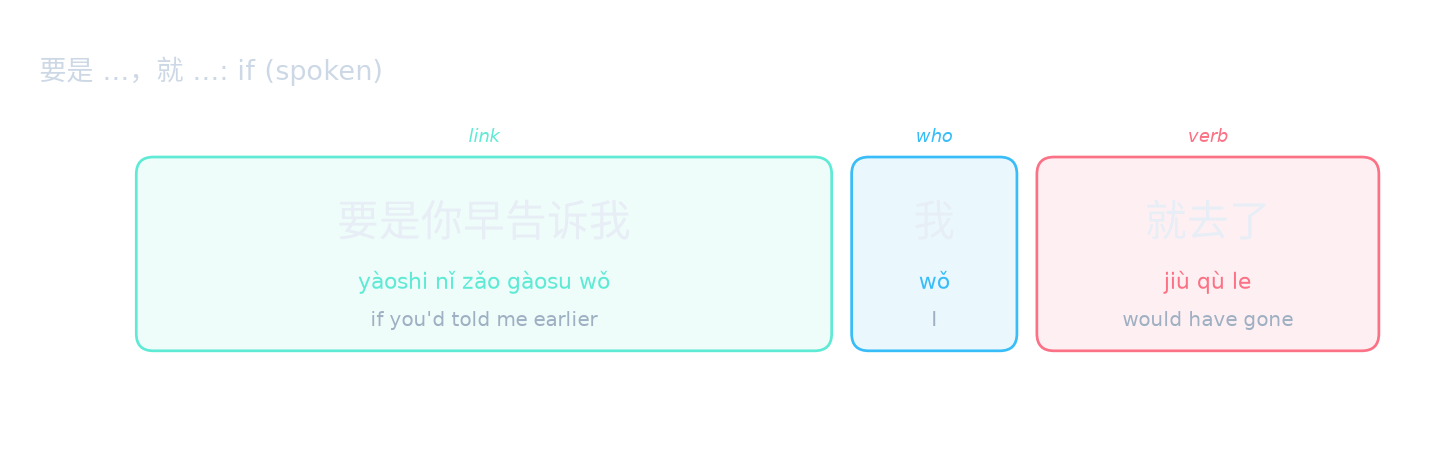
If I'd known
- Your friend didn't tell you about the party, and you would have loved to go.
- if要是you你earlier早to tell告诉I我,I我then就to go去(completed / change)了。 — "If you'd told me earlier, I would have gone."
if要是 A,(Subject) then就 B
- if要是 = "if", the spoken partner of if如果. The result clause takes then就 after its subject.
- if (coming after a…的话 can close the condition: if要是you你are free有空if (coming after a…的话,then就come来(suggestion)吧.
if要是you你are free有空,then就come来吧。
Complete (spoken): “If you're tired, have a rest.” ____你累了,就休息一下。
Độ khó 1/5 · 100 xu + một phần thưởng nhỏ cho lần hoàn thành đầu tiên trong ngày
要是 + condition, 就 + result.
Real and unreal conditions
- Possible: if要是tomorrow明天不下雨,we / us我们then就to go去to climb a mountain爬山。 — "If it doesn't rain tomorrow, we'll go hiking."
- Past, unreal: if要是I我earlier早a bit点儿left出门,then就wouldn't不会be late迟到(completed / change)了。 — "If I'd left earlier, I wouldn't have been late."
if要是I我earlier早a bit点儿left出门,then就wouldn't不会be late迟到了。
Build: “If I'd left earlier, I wouldn't have been late.”
Độ khó 3/5 · 200 xu + một phần thưởng nhỏ cho lần hoàn thành đầu tiên trong ngày
要是 + condition, 就不会…了.
then就 after the subject
- Subject first, then then就: I我then就to go去, not then就I我to go去.
- if要是 is spoken; in an essay, if如果 or if假如 sounds better.
Which sentence is correct?
Độ khó 1/5 · 100 xu + một phần thưởng nhỏ cho lần hoàn thành đầu tiên trong ngày
要是下雨,我们就不去 is right: in the result clause, 就 comes after the subject 我们 and before the verb phrase.
if要是 versus if如果 and if only只要
- if如果 is neutral and written: if如果there are有questions问题,please请contact联系I我.
- if only只要…then就 = as long as (the condition is enough): if only只要are free有空,I我then就come来.
if如果there are有questions问题,please请contact联系me我。
如果 suits formal writing better than 要是.
Độ khó 1/5 · 100 xu + một phần thưởng nhỏ cho lần hoàn thành đầu tiên trong ngày
要是 is spoken; 如果 is neutral and written.
Recap
- if要是 A (if (coming after a…的话),Subject + then就 B = if A, then B (spoken).
- Also for unreal past conditions (then就wouldn't不会…(completed / change)了); if如果 is the neutral/written form.
Read the full reference: HSK 4 grammar — "If" statements.
Your friend didn't tell you about the party, and you would have loved to go. Close the examples. Say a Mandarin response, then write it in Chinese. Explain briefly in English what the lesson’s pattern adds. Compare with the model, then change one detail and try again.
This is supported productive practice. Compare meaning and structure; your answer need not copy the model. A partner or teacher must hear the spoken response to comment on pronunciation.