Trade and the World Economy
Đã giới thiệu| English | Ý nghĩa |
|---|---|
| comparative advantage/kəmˈpærətɪv ədˈvæntɪdʒ/ | Lợi thế so sánh |
| trade blocs/treɪd blɒks/ | Khối thương mại |
| free trade/friː treɪd/ | Thương mại tự do |
| global supply chain/ˈɡləʊbl səˈplaɪ tʃeɪn/ | chuỗi cung ứng toàn cầu |
Why countries trade
- Countries are linked by trade, which reshapes development.
- Comparative advantage 比较优势 means each country gains by specialising.
- It makes what it produces most efficiently and trades for the rest.
The idea that a country gains by specialising in what it makes most efficiently is...
Độ khó 1/5 · 100 xu + một phần thưởng nhỏ cho lần hoàn thành đầu tiên trong ngày
Comparative advantage drives specialisation and trade.
Trade blocs and organisations
- Free trade 自由贸易 removes barriers so goods flow more easily.
- Trade blocs 贸易集团 (the EU, USMCA) group countries for easier trade.
- The WTO sets global trade rules between nations.
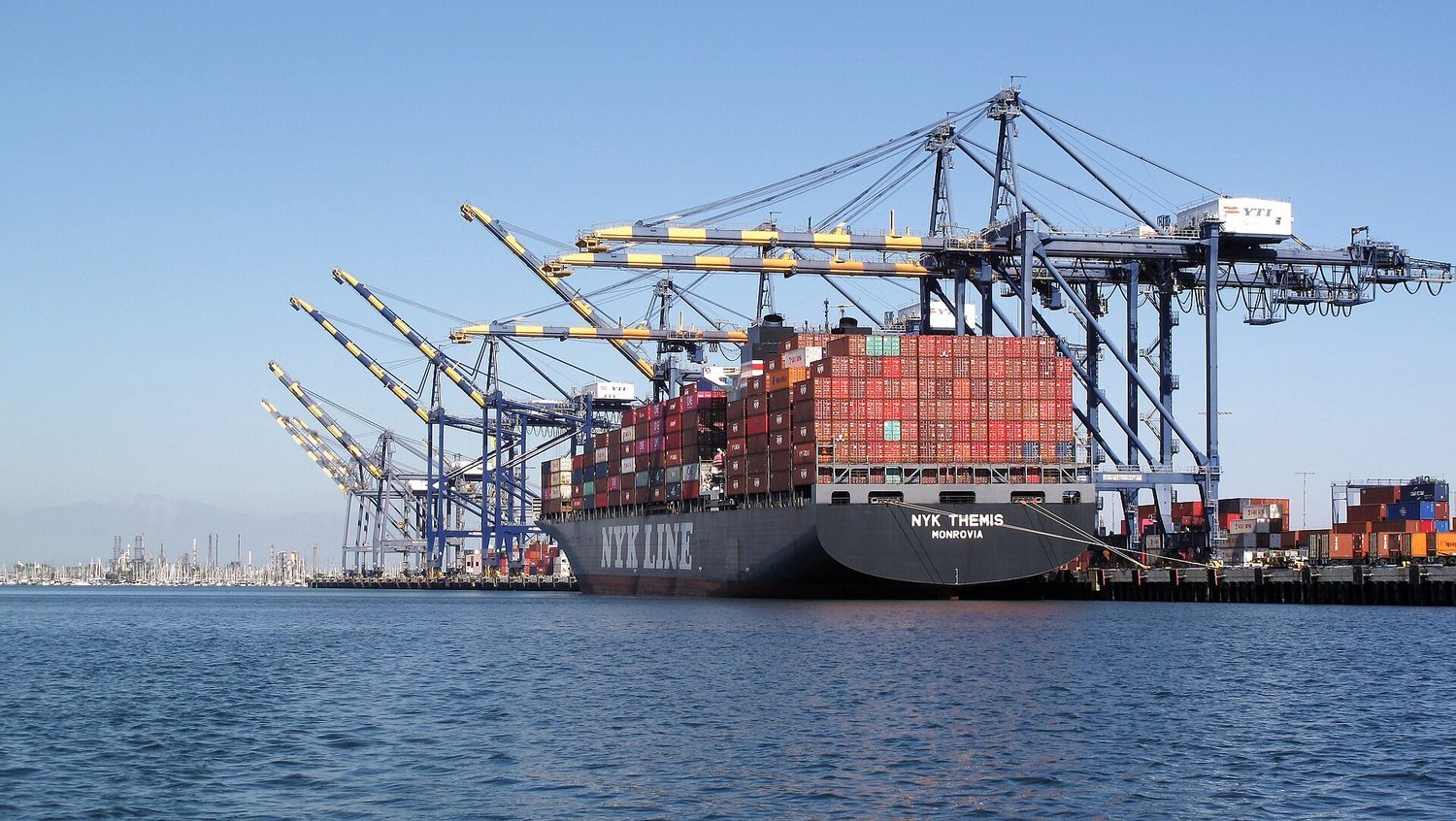
Repeated port photograph: visible infrastructure does not establish capital or information flows
Trade concept?
Match each example to the trade concept it shows.
Groups of countries like the EU or USMCA that lower trade barriers are trade ____.
Độ khó 1/5 · 100 xu + một phần thưởng nhỏ cho lần hoàn thành đầu tiên trong ngày
Trade blocs group countries for easier trade.
Select all things that deepen global economic links.
Độ khó 2/5 · 140 xu + một phần thưởng nhỏ cho lần hoàn thành đầu tiên trong ngày
Free trade, blocs, and supply chains deepen links; closing borders cuts them.
Match each term to its meaning.
Độ khó 2/5 · 140 xu + một phần thưởng nhỏ cho lần hoàn thành đầu tiên trong ngày
Comparative advantage = specialise; bloc = group; supply chain = spread production.
Global supply chains
- Globalization spreads production across a global supply chain 全球供应链.
- A single product may be designed, made, and assembled in several countries.
- This deepens the links — and the dependencies — between economies.
Free trade grows total output but does not necessarily share it evenly.
Độ khó 1/5 · 100 xu + một phần thưởng nhỏ cho lần hoàn thành đầu tiên trong ngày
Trade creates winners and losers even as it grows the total pie.
Free trade grows the total pie, but does not share it evenly. Comparative advantage raises overall output, yet specialisation can trap a poor country in low-value raw materials while rich countries keep the high-value stages. Trade creates winners and losers.
A smartphone is designed in one country, its chips made in another, and it is assembled in a third before selling worldwide — a global supply chain. Each country specialises by comparative advantage, but the high-value design work usually stays in the rich core.
Comparative advantage means countries gain by specialising and trading. Free trade, trade blocs, and the WTO deepen these links, forming global supply chains. Trade grows total output but shares it unevenly, creating winners and losers.
Write from six members of a trade bloc
- Six countries abolish tariffs on goods traded among themselves.
- They keep a tariff on the same goods from everyone else.
What trade arrangement is this?
A bloc prefers its members over outsiders.
What are these six countries?
Độ khó 1/5 · 100 xu + một phần thưởng nhỏ cho lần hoàn thành đầu tiên trong ngày
Free trade inside and a tariff outside is a bloc.