Cultural Landscapes
Đã giới thiệu| English | Ý nghĩa |
|---|---|
| cultural landscape/ˈkʌltʃərəl ˈlændskeɪp/ | Phong cảnh văn hóa |
| sequent occupance/ˈsiːkwənt ˈɒkjʊpəns/ | sự chiếm hữu nối tiếp |
| ethnic enclaves/ˈeθnɪk ˈeŋkleɪvz/ | khu dân cư dân tộc |
| sense of place/sens ɒv pleɪs/ | cảm nhận về nơi chốn |
| placelessness/ˈpleɪsləsnəs/ | tính vô nơi chốn |
The land tells a story
- The cultural landscape 文化景观 is the visible human imprint on the land.
- Buildings, farms, roads, and signs all record a culture's values.
- Reading the landscape is like reading a culture's diary.
The visible human imprint on the land is the cultural...
Độ khó 1/5 · 100 xu + một phần thưởng nhỏ cho lần hoàn thành đầu tiên trong ngày
The cultural landscape records a culture's values on the land.
Layers of history
- Sequent occupance 承继占用 is the idea that each group leaves a layer on the landscape.
- So a place shows its whole history, from the oldest group to the newest.
- Ethnic enclaves 族裔聚居区 (like a Chinatown) are visible cultural clues.
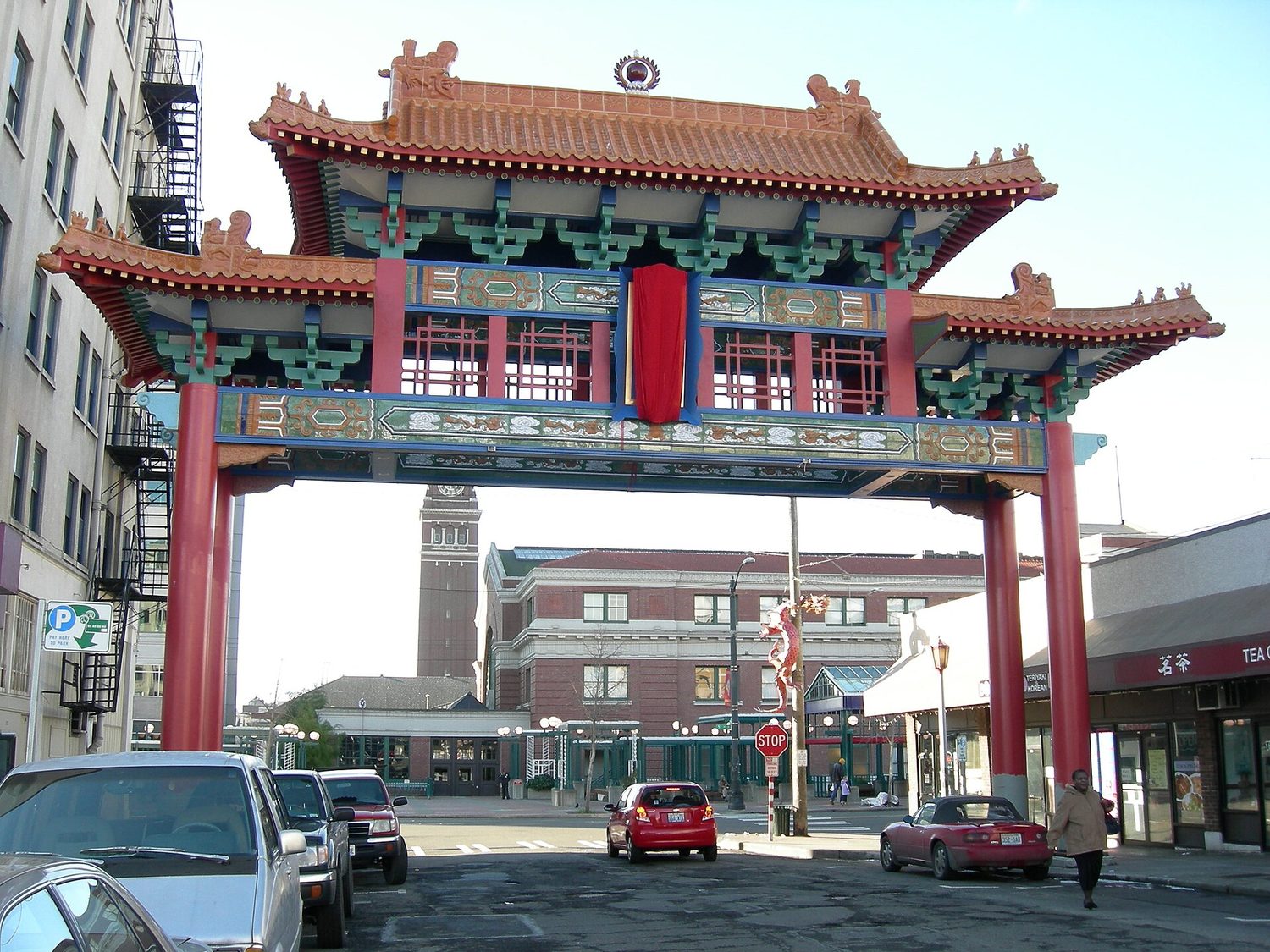
A Chinatown gate in Seattle: the architecture and bilingual signs mark an ethnic enclave, a clear imprint of one group on the cultural landscape
Sequent occupance means each group that lives in a place leaves a layer on the landscape.
Độ khó 1/5 · 100 xu + một phần thưởng nhỏ cho lần hoàn thành đầu tiên trong ngày
Yes — the landscape shows its whole history, layer by layer.
Select all visible clues in a cultural landscape.
Độ khó 2/5 · 140 xu + một phần thưởng nhỏ cho lần hoàn thành đầu tiên trong ngày
Buildings, names, and worship sites are visible; private thoughts are not.
How a place feels
- Sense of place 地方感 is the unique meaning and feeling people attach to a location.
- Placelessness 无地方性 is when landscapes look the same everywhere (identical malls, chains).
- Globalisation can spread placelessness, erasing local character.
Sense of place or placelessness?
Sort each landscape as showing a strong sense of place or placelessness.
When landscapes look identical everywhere, losing local character, it is called ____.
Độ khó 1/5 · 100 xu + một phần thưởng nhỏ cho lần hoàn thành đầu tiên trong ngày
Placelessness spreads through globalisation and chain landscapes.
Match each term to its meaning.
Độ khó 2/5 · 140 xu + một phần thưởng nhỏ cho lần hoàn thành đầu tiên trong ngày
Sequent occupance = layers; sense of place = unique feeling; placelessness = sameness.
The cultural landscape is not just "scenery". Every farm boundary, street name, and place of worship is evidence of who lives there and what they value. On the exam, read the landscape as data, not decoration.
Walk through a city and you might see an old church, then a newer mosque, then a Chinatown gate. That layering is sequent occupance — each group left its mark. But if the high street is just identical global chains, that is placelessness.
The cultural landscape is the visible human mark on the land. Sequent occupance layers each group's imprint over time; ethnic enclaves are visible clues. Sense of place is a location's unique feeling; placelessness is when everywhere looks the same.
Write from sequent occupance
- An older church still stands on a square.
- A later community built a mosque beside it, and both are used.
What geographic idea do the two buildings show?
Sequent occupance is the layered imprint of successive groups.
What do the church and the later mosque show together?
Độ khó 1/5 · 100 xu + một phần thưởng nhỏ cho lần hoàn thành đầu tiên trong ngày
Two eras left visible marks in one place.