Human Impacts on Wetlands and Mangroves
Đã giới thiệu| English | Ý nghĩa |
|---|---|
| Wetlands/ˈwetləndz/ | vùng đất ngập nước |
| Mangroves/ˈmæŋɡrəʊvz/ | rừng ngập mặn |
| filters/ˈfɪltəz/ | bộ lọc |
| drain/dreɪn/ | thoát nước |
The most valuable land nobody wants
- Wetlands 湿地 are lands soaked or covered with water.
- Mangroves 红树林 are salt-tolerant forests along tropical coasts.
- For centuries people saw them as useless swamps.
- In truth, they are among the most valuable ecosystems on Earth.
What they do for us
- Wetlands act like natural filters 过滤器, cleaning water.
- They soak up floodwater, protecting towns downstream.
- Mangroves shield coasts from storms and rising seas.
- Both are nurseries where young fish shelter and grow.
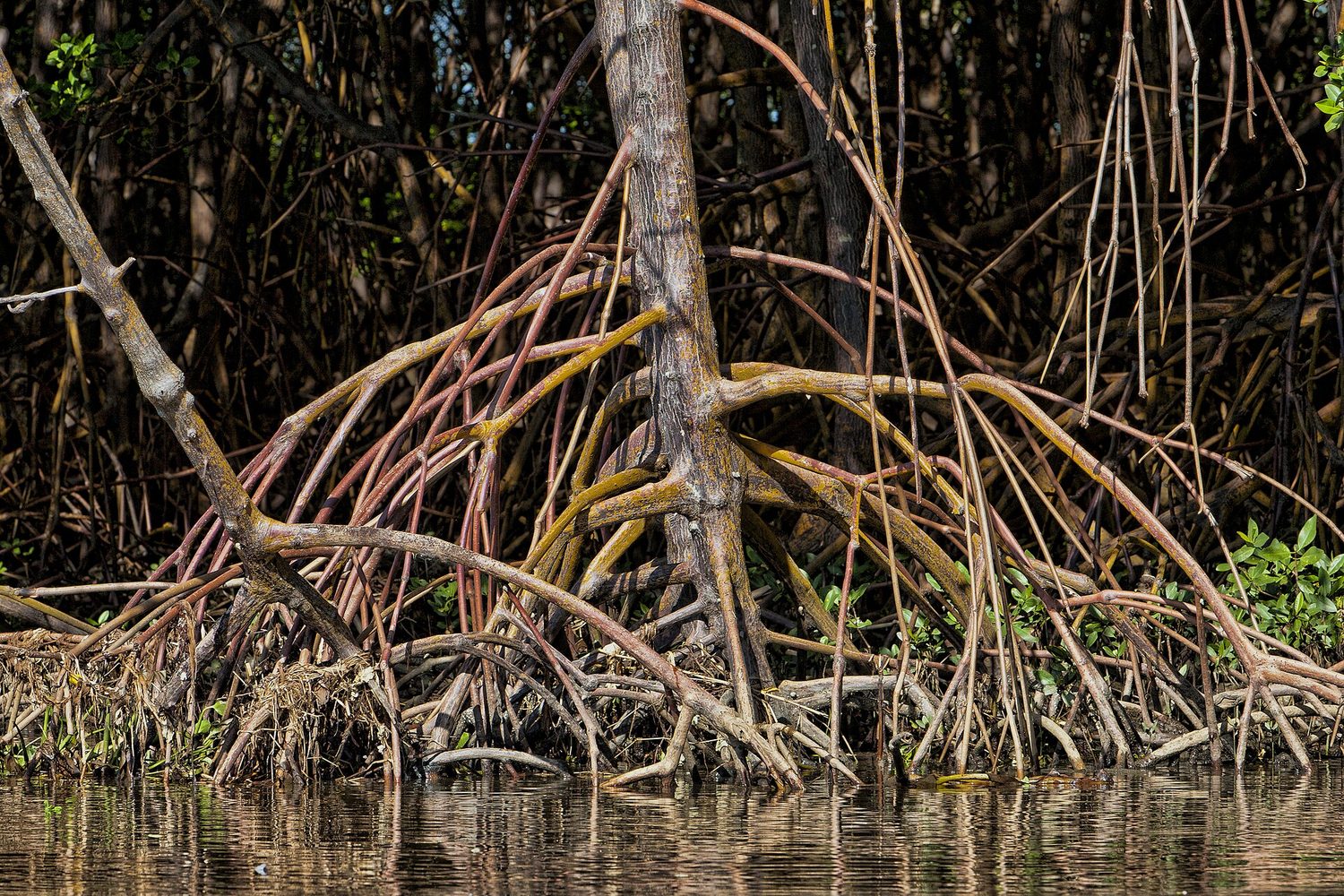
Mangrove roots: this tangle traps sediment, calms waves, and shelters young fish, all services lost when mangroves are cleared
A wetland is land that…
Độ khó 1/5 · 100 xu + một phần thưởng nhỏ cho lần hoàn thành đầu tiên trong ngày
A wetland is land soaked or covered with water — marshes, swamps, and bogs.
How we harm them
- We drain 排干 wetlands to make farmland and building sites.
- We fill them in for ports, roads, and housing.
- Mangroves are cleared to make shrimp and fish farms.
- Pollution and runoff poison what is left.
A benefit wetlands give, or a harm we do them?
Sort each item into a benefit wetlands provide or a way humans damage them.
Mangroves are coastal forests that…
Độ khó 1/5 · 100 xu + một phần thưởng nhỏ cho lần hoàn thành đầu tiên trong ngày
Mangroves guard coasts from storms and are nurseries where young fish shelter.
Wetlands act as natural ____, trapping pollutants and cleaning water.
Độ khó 1/5 · 100 xu + một phần thưởng nhỏ cho lần hoàn thành đầu tiên trong ngày
Wetlands work like natural filters, trapping sediment and pollutants as water passes through.
What we lose
- Draining a wetland removes its flood protection.
- Towns downstream flood more badly without that sponge.
- Cutting mangroves leaves coasts exposed to storms.
- And the fish nurseries vanish, so fisheries collapse.
Draining wetlands reduces flooding downstream.
Độ khó 1/5 · 100 xu + một phần thưởng nhỏ cho lần hoàn thành đầu tiên trong ngày
False. Wetlands soak up and slowly release floodwater; drain them and that water rushes downstream instead, making floods worse.
Select all benefits that wetlands and mangroves provide.
Độ khó 2/5 · 140 xu + một phần thưởng nhỏ cho lần hoàn thành đầu tiên trong ngày
Wetlands clean water, buffer floods and storms, and shelter young fish. They reduce, not add, pollution.
Wetlands and mangroves are a textbook case of undervalued nature. Their services — water filtering, flood control, storm protection, fish nurseries — are free and invisible, so they get drained for farms or shrimp ponds that earn quick cash. Only after a flood or a fishery collapse does the true value show. Protecting them is far cheaper than the disasters their loss causes.
A cleared mangrove coast:
- A stretch of mangrove is cut down to build shrimp farms — quick profit.
- Then a big storm hits. Without the mangroves' buffer, the waves surge inland and flood the villages.
- The fish that once bred among the roots are gone too, so local fishing collapses — losses far greater than the shrimp farms ever earned.
Wetlands and mangroves provide huge free services — acting as filters for clean water, soaking up floods, protecting coasts from storms, and serving as fish nurseries. Humans harm them by draining wetlands for farmland and clearing mangroves for shrimp farms. Because their value is hidden, they are destroyed cheaply — but their loss causes floods and fishery collapse.