K khoảng cách số
Đã giới thiệu| English | Ý nghĩa |
|---|---|
| access/ˈækses/ | Truy cập |
| digital divide/ˈdɪdʒɪtl dɪˈvaɪd/ | Khoảng cách số |
| equity/ˈekwɪti/ | Công bằng |
The gap in access
- The digital divide 数字鸿沟 is the gap between people with good access 访问 to computing and the Internet and those without.
- It is not just about owning a device.
- It includes a fast, reliable, affordable connection.
- That gap shapes who can take part in a digital world.
K khoảng cách số là:
Độ khó 1/5 · 100 xu + một phần thưởng nhỏ cho lần hoàn thành đầu tiên trong ngày
Nó bao gồm kết nối nhanh, ổn định và giá cả phải chăng, không chỉ là sở hữu thiết bị.
What shapes it
- Income: hardware and data plans cost money.
- Geography: rural areas often lack fast networks.
- Age: older people may have less experience or training.
- These factors overlap, so the divide can run deep.
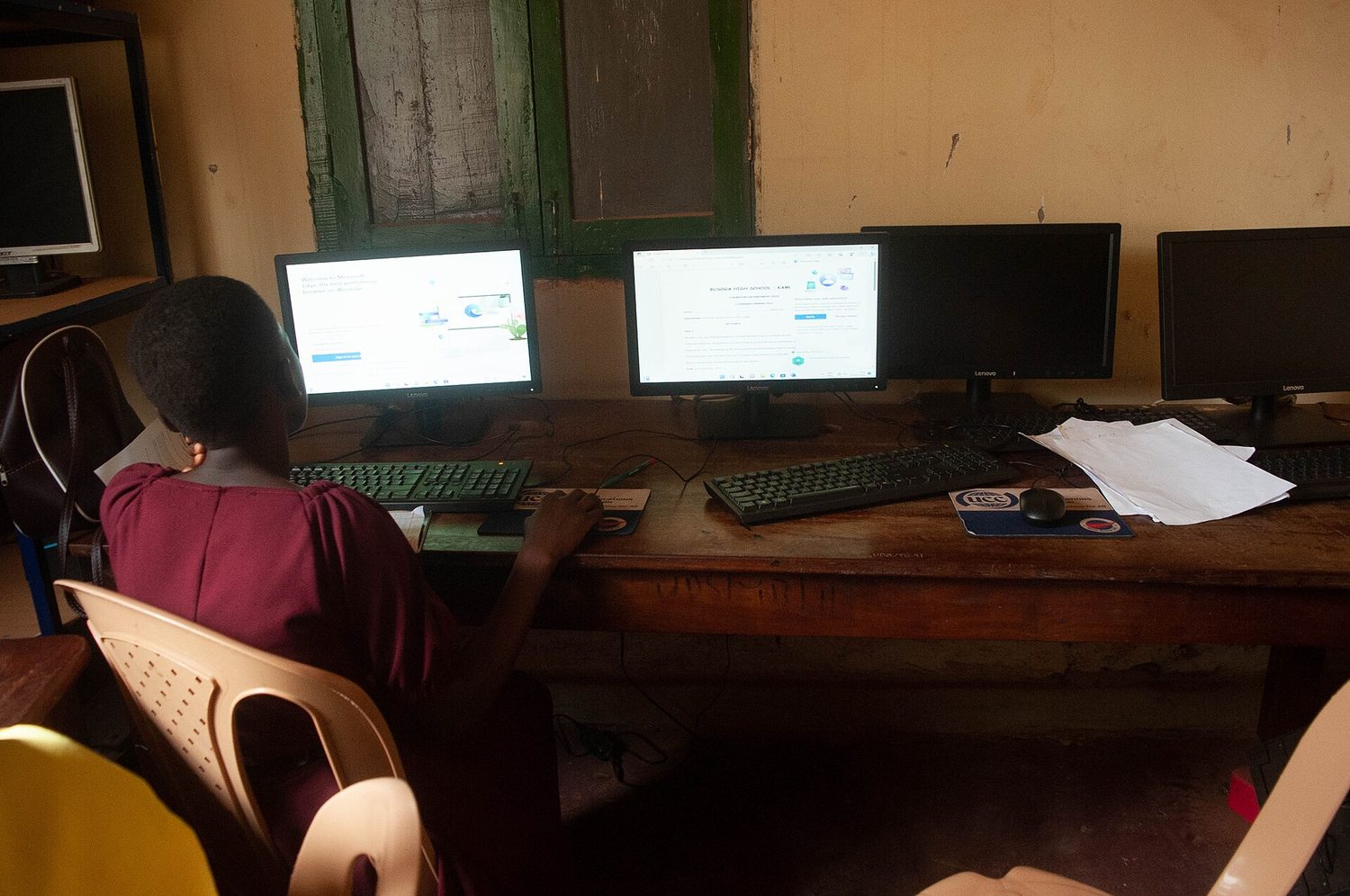
Public library computers: digital divide is about unequal access to devices, connectivity and skills
Lâ rộng hay thu hẹp khoảng cách?
Các quyết định chính sách có thể mở rộng khoảng cách số (để lại những người không có kết nối) hoặc thu hẹp nó (qua việc hỗ trợ cước internet tốc độ cao, Wi-Fi công cộng) nhằm hướng tới sự công bằng lớn hơn.
Yếu tố nào định hình K khoảng cách số? (Chọn tất cả các đáp án đúng)
Độ khó 2/5 · 140 xu + một phần thưởng nhỏ cho lần hoàn thành đầu tiên trong ngày
Thu nhập, vị trí địa lý và độ tuổi đều ảnh hưởng đến khả năng truy cập.
Tiếp cận công bằng hơn vào máy tính cho mọi người là mục tiêu của sự bình đẳng ______.
Độ khó 1/5 · 100 xu + một phần thưởng nhỏ cho lần hoàn thành đầu tiên trong ngày
Nhiều chương trình nhằm thu hẹp khoảng cách hướng tới bình đẳng.
Quyền truy cập hạn chế có thể làm giảm cơ hội của một người trong giáo dục và việc làm.
Độ khó 1/5 · 100 xu + một phần thưởng nhỏ cho lần hoàn thành đầu tiên trong ngày
Nhiều dịch vụ hơn đang sống trực tuyến, do đó quyền truy cập định hình cơ hội.
Why it matters
- Limited access cuts a person's opportunities in education, work, and services that increasingly live online.
- A student without good access falls behind through no fault of their own.
- The goal of many programs is greater equity 公平 — fairer access for everyone.
- Closing the divide is about fairness, not just technology.
Hành động nào sẽ thu hẹp khoảng cách số?
Độ khó 1/5 · 100 xu + một phần thưởng nhỏ cho lần hoàn thành đầu tiên trong ngày
Mở rộng quyền truy cập giúp thu hẹp khoảng cách.
Widen or narrow
- Decisions by governments and companies can widen the divide or narrow it.
- Leaving poor regions unconnected widens it; subsidised broadband and public Wi-Fi narrow it.
Same homework, unequal access. One student has home broadband and a laptop; another shares one phone with a weak signal and walks to a library for Wi-Fi. The second spends longer and may miss the work — not from lack of effort, but from unequal access. Multiply this by millions and the divide quietly widens gaps in education and income.
The digital divide is the gap in access to computing and reliable Internet, shaped by income, geography, and age. It matters because access shapes opportunities, so many programs aim for equity. Policy choices can widen the divide (leaving regions unconnected) or narrow it (subsidised broadband, public Wi-Fi).