แผนการเรียนรู้ของคุณ · ดำเนินต่อ · ทบทวน →
起初 vs 当初 (at first / back then)
แนะนำใหม่ตำแหน่งที่คุณบันทึกจะคงอยู่ในเบราว์เซอร์นี้ การต่อจากตำแหน่งจะไม่ทำให้บทเรียนเสร็จสิ้นหรือตอบคำถามในบทเรียน
At first I didn't like it
- A classmate asks how you feel about the city you moved to two years ago.
- at first起初I我not不too太used to it习惯,later后来slowly慢慢to like喜欢up / on / last; to get on, attend上(completed / change)了it here这里。 — "At first I wasn't used to it, but later I grew to like it here."
- Goal: describe how things changed with at first起初 (at first), and look back at a past decision with back then当初 (back then).
at first起初 …,later后来 …
- at first起初 (qǐchū) = "at first, in the beginning". It marks the start of a process that later changed, so later后来 or now现在 usually follows.
- at first起初everyone大家all / both都to oppose反对,later后来only then / not until才slowly慢慢to accept接受(completed / change)了。 — "At first everyone was against it; only later did they slowly accept it."
at first起初I我not very不太used to it习惯,later后来slowly慢慢grew to like喜欢上了it here这里。
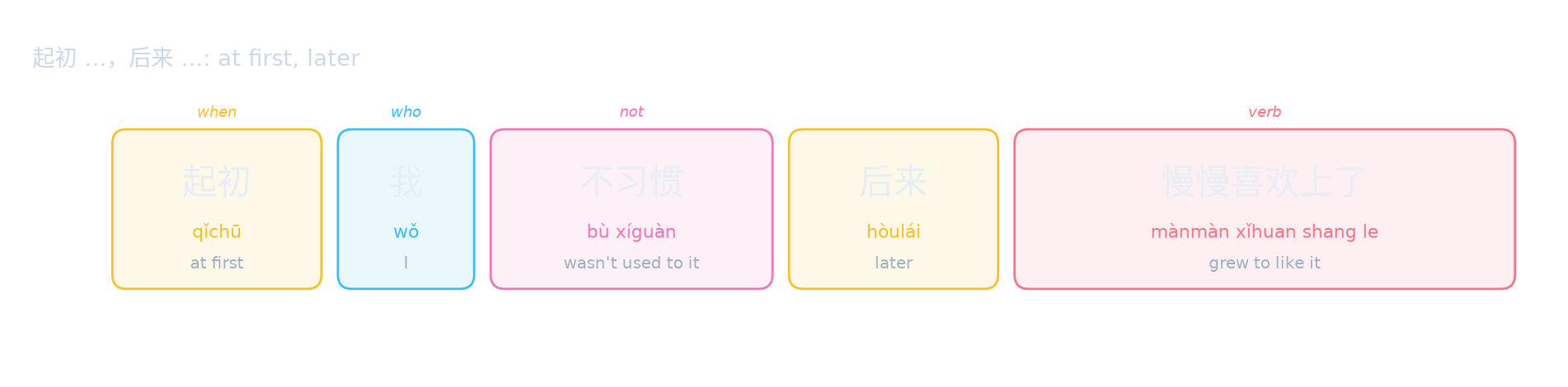
Complete: “At first I wasn't used to it, but later I grew to like it here.” ____我不太习惯,后来慢慢喜欢上了这里。
ความยาก 1/5 · 100 เหรียญ + บอนัสน้อยๆ เมื่อทำสำเร็จครั้งแรกในวันนี้
The first stage of a change — 起初.
Build: “It was hard at first, then it got easier.”
ความยาก 3/5 · 200 เหรียญ + บอนัสน้อยๆ เมื่อทำสำเร็จครั้งแรกในวันนี้
起初 … 后来 … shows the change.
back then当初: back then, at that moment
- back then当初 (dāngchū) = "back then, in the first place". It looks back at an earlier time, often when something was decided or began, to compare with now or to regret: back then当初it here这里or / still还是一片farmland农田。 — "Back then this was all farmland."
- back then当初I我(really)就should have应该listened to听you你(modifier / structural particle)的。 — "I should have listened to you back then."
back then当初I我(really)就should have应该listened to听you你的。
Complete: “I should have listened to you back then.” ____我就应该听你的。
ความยาก 1/5 · 100 เหรียญ + บอนัสน้อยๆ เมื่อทำสำเร็จครั้งแรกในวันนี้
Looking back at a past decision — 当初.
Process or one moment?
- For the first stage of a change, use at first起初: at first起初很难,later后来(really)就easy容易(completed / change)了。 — "It was hard at first, then it got easier."
- For the moment of a decision you look back on, use back then当初: you你back then当初why?为什么to choose选this这个major (subject); professional专业? — "Why did you choose this major in the first place?" The saying 早知今日,why bother何必back then当初 means "if I'd known it would end like this, I wouldn't have done it."
“Why did you choose this major in the first place?” 你____为什么选这个专业?
ความยาก 1/5 · 100 เหรียญ + บอนัสน้อยๆ เมื่อทำสำเร็จครั้งแรกในวันนี้
The moment of a decision, looked back on — 当初.
早知今日,何必当初 expresses regret about an earlier choice.
ความยาก 1/5 · 100 เหรียญ + บอนัสน้อยๆ เมื่อทำสำเร็จครั้งแรกในวันนี้
If I'd known it would end like this, I wouldn't have done it.
at first起初, back then当初 and to start开始
- at first起初 = at first (written); to start开始 / one / a一to start开始 = at first (everyday).
- back then当初 = back then, when it was decided; it often comes with regret or a comparison with now.
Recap
- at first起初 …,later后来 / now现在 … = at first …, later ….
- back then当初 = back then, in the first place (looking back at a decision).
Read the full reference: HSK 6 grammar — Adverbs.
Talk about a hobby or subject you chose. Say how you felt at first (起初) and how you see your decision now (当初).
Your answer need not copy the model. A partner or teacher must hear the spoken response to comment on pronunciation.