แผนการเรียนรู้ของคุณ · ดำเนินต่อ · ทบทวน →
何必 (ทำไมต้อง / ไม่ต้อง)
แนะนำใหม่ตำแหน่งที่คุณบันทึกจะคงอยู่ในเบราว์เซอร์นี้ การต่อจากตำแหน่งจะไม่ทำให้บทเรียนเสร็จสิ้นหรือตอบคำถามในบทเรียน
 7:59
HSK 6 Grammar 1: คำวิเศษณ์แห่งการตัดสินและขอบเขต
ในการพูด คำว่า 倒 หลัง 得 จะทำให้ความหมายของคำคุณศัพท์เปลี่ยนไปเป็นเชิงลบ คนหนึ่งบอกว่างานนี้ทำง่าย แต่คุณรู้ว่ามันไม่ใช่: 你说得倒容易,真正上台演示的人是我。 Saying it's easy is simple for you; I'm the one actually presenting.
คำอธิบายภาษาอังกฤษ + ตัวอย่างภาษา mandarins · คำบรรยายตามข้อความที่พูด
ในบทเรียนนี้
No need to go to the trouble
- Your friend is about to take a taxi across town to return a cheap pen you lent him.
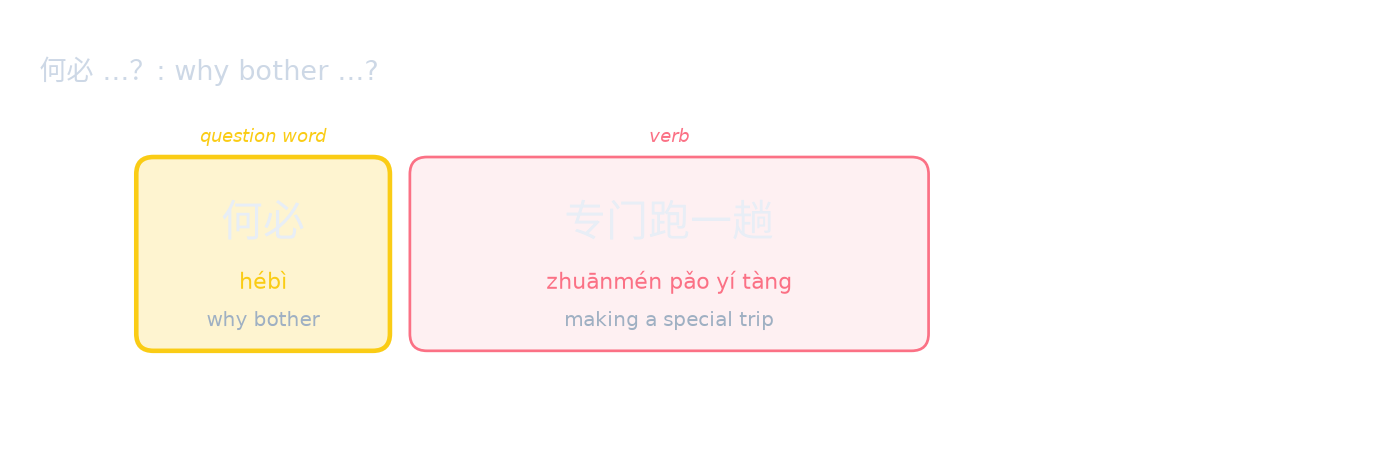
- why bother何必specially专门to run跑一趟?next time下次to meet见面again / then / (再…也) however再to / for / give给I / me我就行了。 — "Why bother making a special trip? Just give it back next time we meet."
- Goal: say "why bother, there's no need" with why bother何必 in a rhetorical question.
why bother何必 + verb ((and …? / softener)呢)? = why bother, there's no need to
- why bother何必 asks a rhetorical question meaning "there's no need to …": why bother何必getting angry生气(and …? / softener)呢? — "Why get angry?"
- It gently advises against something unnecessary.
why bother何必over为this这little点儿matter小事getting angry生气呢?
Complete: “Why get angry over such a small thing?” ____为这点儿小事生气呢?
ความยาก 1/5 · 100 เหรียญ + บอนัสน้อยๆ เมื่อทำสำเร็จครั้งแรกในวันนี้
何必 = why bother (rhetorical).
Advice and comfort
- you你why bother何必so much这么polite客气? — "No need to be so polite."
- since既然he他doesn't不like it喜欢,you你(then)又why bother何必force勉强he他? — "Since he doesn't like it, why force him?"
since既然he他doesn't不like it喜欢,you你(then)又why何必force勉强him他?
Build: “Since he doesn't like it, why force him?”
ความยาก 3/5 · 200 เหรียญ + บอนัสน้อยๆ เมื่อทำสำเร็จครั้งแรกในวันนี้
Reason, then 何必 + verb.
A rhetorical question, not a real one
- why bother何必 does not ask for a reason; it means "you don't need to". The answer is built in.
- (and …? / softener)呢 often ends the question: why bother何必(and …? / softener)呢? — "Why bother?"
- needn't不必 states it plainly; why bother何必 asks a rhetorical question: you你needn't不必worry担心。 — "You needn't worry." you你why bother何必worry担心(and …? / softener)呢? — "Why worry?"
What does 何必呢? mean?
ความยาก 1/5 · 100 เหรียญ + บอนัสน้อยๆ เมื่อทำสำเร็จครั้งแรกในวันนี้
It is rhetorical advice, not a request for a reason.
why bother何必 versus needn't不必
- needn't不必 states it plainly: you你needn't不必worry担心 — "You needn't worry."
- why bother何必 says the same as a rhetorical question, softer and more persuasive.
you你needn't不必worry担心。
你不必担心 states plainly what 你何必担心呢 suggests.
ความยาก 1/5 · 100 เหรียญ + บอนัสน้อยๆ เมื่อทำสำเร็จครั้งแรกในวันนี้
不必 is the plain statement.
Recap
- why bother何必 + verb ((and …? / softener)呢)? = why bother / there's no need to (rhetorical advice).
- Plain statement = needn't不必.
Read the full reference: HSK 6 grammar — Adverbs.
Your friend is about to take a taxi across town to return a cheap pen you lent him. Close the examples. Say a Mandarin response, then write it in Chinese. Explain briefly in English what the lesson’s pattern adds. Compare with the model, then change one detail and try again.
This is supported productive practice. Compare meaning and structure; your answer need not copy the model. A partner or teacher must hear the spoken response to comment on pronunciation.