แผนการเรียนรู้ของคุณ · ดำเนินต่อ · ทบทวน →
常常 vs 往往 (บ่อย vs มีแนวโน้ม)
แนะนำใหม่ตำแหน่งที่คุณบันทึกจะคงอยู่ในเบราว์เซอร์นี้ การต่อจากตำแหน่งจะไม่ทำให้บทเรียนเสร็จสิ้นหรือตอบคำถามในบทเรียน
 3:03
HSK 4 ไวยากรณ์ 27: เปรียบเทียบคำกริยาที่เหมือนกัน
แปลเหมือนกัน แต่หน้าที่ต่างกัน สอง "เดิม", สอง "มัก", สอง "เพียง": แต่ละคู่ซ่อนความแตกต่างที่ชัดเจนหนึ่งอย่าง และการหาความแตกต่างนั้นจะจบความสับสน The…
คำอธิบายภาษาอังกฤษ + ตัวอย่างภาษา mandarins · คำบรรยายตามข้อความที่พูด
In this lesson
Rainy Mondays
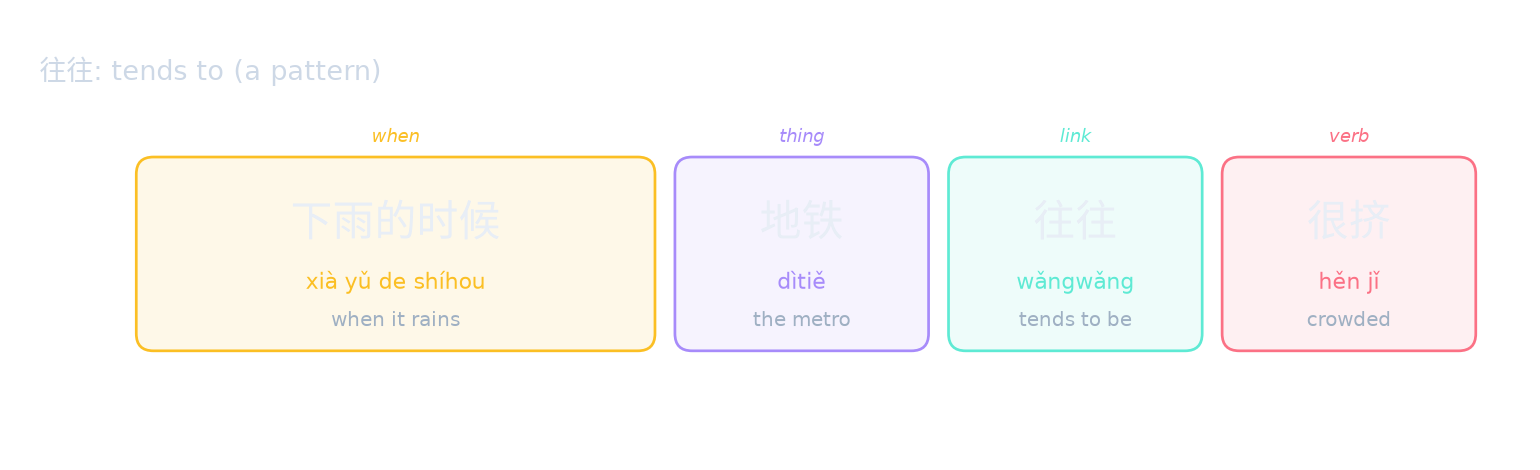
- You notice a pattern: the subway is always more crowded when it rains.
- to rain下雨(modifier / structural particle)的when时候,underground railway地铁tend to往往很挤。 — "When it rains, the subway tends to be crowded."
- Goal: choose between often常常 (often) and tend to往往 (tends to, under certain conditions).
often常常 = often (a frequency)
- often常常 says something happens often: I我often常常go to去the library图书馆 ("I often go to the library"). It can describe the future: after / from now on以后I我can / will会often常常to come来 — "I'll come often from now on."
- It needs no special condition.
I我often常常go to去the library图书馆。
tend to往往 = tends to (under a condition)
- tend to往往 describes a regular pattern found under certain conditions: at weekends周末(modifier / structural particle)的supermarkets超市tend to往往people人be many很多。 — "Supermarkets tend to be crowded at weekends."
- The condition (time, situation) is usually stated.
at weekends周末的supermarkets超市tend to往往people人be many很多。
Complete: “At weekends, parks tend to be full of people.” 周末公园里____人很多。
ความยาก 1/5 · 100 เหรียญ + บอนัสน้อยๆ เมื่อทำสำเร็จครั้งแรกในวันนี้
A pattern under a condition (weekends) takes 往往.
Where tend to往往 does not fit
- tend to往往 is not for wishes or the future: after / from now on以后I我can / will会often常常to come来, not after / from now on以后I我can / will会tend to往往to come来.
- tend to往往 sounds best with the situation in which it happens: he / him他下雨天tend to往往to arrive late迟到. For a plain habit, often常常 is simpler: he / him他often常常to arrive late迟到.
“I'll come and visit you often in future.” Which fits? 以后我会____来看你。
ความยาก 1/5 · 100 เหรียญ + บอนัสน้อยๆ เมื่อทำสำเร็จครั้งแรกในวันนี้
Future and wishes take 常常.
往往 works well for future plans.
ความยาก 1/5 · 100 เหรียญ + บอนัสน้อยๆ เมื่อทำสำเร็จครั้งแรกในวันนี้
False. 往往 states what tends to happen from past experience and cannot describe future plans. For plans use 常常: 以后我会常常来看你.
Side by side
- I我often常常drink喝coffee咖啡 — "I often drink coffee" (frequency).
- I我stay up late熬夜(modifier / structural particle)的when时候tend to往往drink喝coffee咖啡 — "When I stay up late, I tend to drink coffee" (a pattern under a condition).
I我stay up late熬夜的when时候tend to往往drink喝coffee咖啡。
Build: “When I stay up late, I tend to drink coffee.”
ความยาก 3/5 · 200 เหรียญ + บอนัสน้อยๆ เมื่อทำสำเร็จครั้งแรกในวันนี้
Condition + 往往 + verb.
Recap
- often常常 = often (any time, including the future). tend to往往 = tends to, under a stated condition.
- tend to往往 is not for wishes or future plans.
Read the full reference: HSK 4 grammar — Comparing similar adverbs.
You notice a pattern: the subway is always more crowded when it rains. Close the examples. Say a Mandarin response, then write it in Chinese. Explain briefly in English what the lesson’s pattern adds. Compare with the model, then change one detail and try again.
This is supported productive practice. Compare meaning and structure; your answer need not copy the model. A partner or teacher must hear the spoken response to comment on pronunciation.