แผนการเรียนรู้ของคุณ · ดำเนินต่อ · ทบทวน →
只好 (ไม่มีทางเลือกอื่นนอกจาก)
แนะนำใหม่ตำแหน่งที่คุณบันทึกจะคงอยู่ในเบราว์เซอร์นี้ การต่อจากตำแหน่งจะไม่ทำให้บทเรียนเสร็จสิ้นหรือตอบคำถามในบทเรียน
 4:49
HSK 4Grammar 02: คำวิเศษณ์
ห้าหน้าที่ของคำกริยาในบทเรียนเดียว คำกริยาระดับ HSK 4 ใช้วัด, ตัดสิน, เพิ่มความเข้มแข็ง, ย้ำคำถาม และแนะนำ: การสอบทดสอบตำแหน่งและการจับคู่ ไม่ใช่คำศัพท์ Whether 都…
คำอธิบายภาษาอังกฤษ + ตัวอย่างภาษา mandarins · คำบรรยายตามข้อความที่พูด
ในบทเรียนนี้
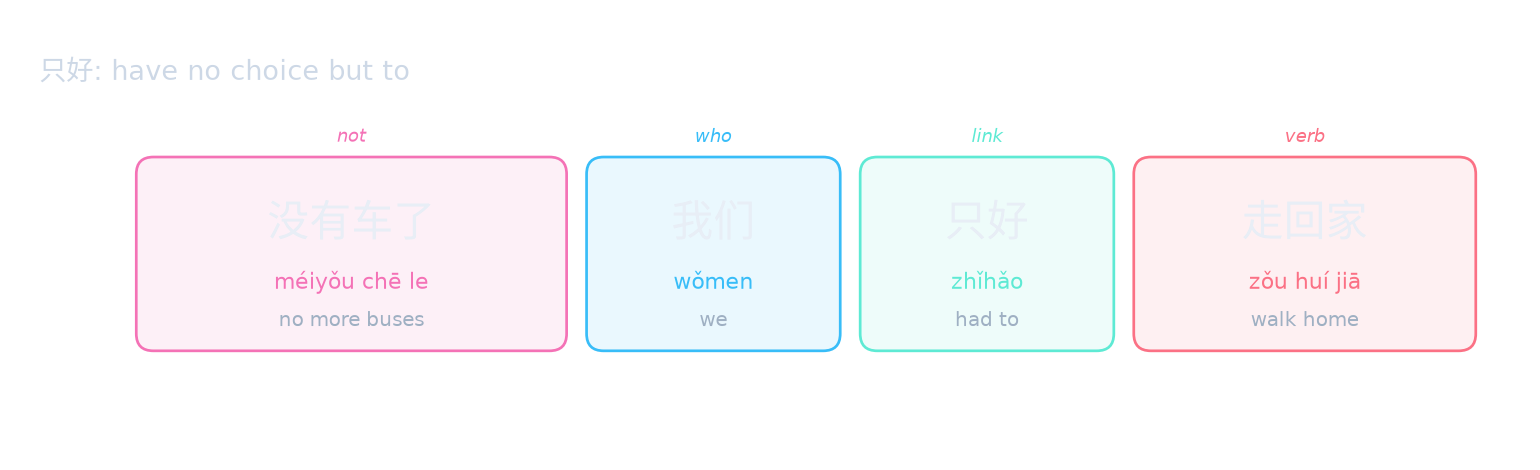
The last bus has gone
- You leave a party at midnight and the last bus left ten minutes ago. Taxis are all taken.
- not have / haven't没有car车(completed / change)了,we / us我们had to只好to walk / to leave走to return home回家。 — "There's no transport left, so we have no choice but to walk home."
- Goal: say you had no choice but to do something with had to只好, after giving the reason.
Obstacle,Subject + had to只好 + Verb
- had to只好 = "have no choice but to, can only": the action is the only option left.
- The reason comes first; had to只好 goes after the subject of the result: I我had to只好….
fall下heavy rain大雨了,the match比赛had to只好be cancelled取消。
Complete: “The lift is broken, so we have to take the stairs.” 电梯坏了,我们____走楼梯。
ความยาก 1/5 · 100 เหรียญ + บอนัสน้อยๆ เมื่อทำสำเร็จครั้งแรกในวันนี้
Obstacle, then subject + 只好 + verb.
Accepting a second-best choice
- the shop商店closed关门(completed / change)了,I我had to只好tomorrow明天again再come来。 — "The shop was closed, so I'll have to come back tomorrow."
- he他won't / can't不会to prepare a meal做饭,had to只好every day每天to eat吃instant noodles方便面。 — "He can't cook, so he has to eat instant noodles every day."
the shop商店closed关门了,I我had to只好tomorrow明天again再come来。
Build: “He can't cook, so he has to eat instant noodles.”
ความยาก 3/5 · 200 เหรียญ + บอนัสน้อยๆ เมื่อทำสำเร็จครั้งแรกในวันนี้
Reason + 只好 + verb phrase.
Reason first, had to只好 after the subject
- The obstacle usually comes before had to只好: elevator电梯bad / broken坏(completed / change)了,we / us我们had to只好to walk / to leave走stair楼梯.
- Place had to只好 after the subject: I我had to只好to walk走路, not had to只好I我to walk走路 in most speech.
Which sentence is natural?
ความยาก 1/5 · 100 เหรียญ + บอนัสน้อยๆ เมื่อทำสำเร็จครั้งแรกในวันนี้
Reason first, then subject + 只好 + verb.
had to只好 versus had to不得不
- had to不得不 is stronger and a little more formal: forced by duty or pressure: he他ill病(completed / change)了,I我had to不得不for替he他teach上课 — "He was sick, so I had to teach his class for him."
- had to只好 sounds more resigned: "Oh well, I'll just have to …".
he他ill病了,I我had to不得不for替him他teach上课。
不得不 sounds stronger than 只好.
ความยาก 1/5 · 100 เหรียญ + บอนัสน้อยๆ เมื่อทำสำเร็จครั้งแรกในวันนี้
不得不 stresses being forced; 只好 sounds resigned.
Recap
- Obstacle,Subject + had to只好 + Verb = have no choice but to.
- had to只好 is resigned; had to不得不 is stronger and more formal.
Read the full reference: HSK 4 grammar — Adverbs.
You leave a party at midnight and the last bus left ten minutes ago. Taxis are all taken. Close the examples. Say a Mandarin response, then write it in Chinese. Explain briefly in English what the lesson’s pattern adds. Compare with the model, then change one detail and try again.
This is supported productive practice. Compare meaning and structure; your answer need not copy the model. A partner or teacher must hear the spoken response to comment on pronunciation.
เกิดปัญหาอะไรขึ้น? เฉพาะทีมเว็บไซต์เท่านั้นที่เห็นข้อมูลนี้