Impact of computing
Computing changes the world
- Computing affects almost every part of life: school, work, health, money, and friends.
- The same tool can bring benefits (good effects) and harms (bad effects).
- A good computer scientist thinks about both sides, not just the cool features.
การคำนวณเปลี่ยนแปลงโลก
- การคำนวณส่งผลต่อเกือบทุกด้านของชีวิต: โรงเรียน, การทำงาน, สุขภาพ, การเงิน, และเพื่อน
- เครื่องมือเดียวกันสามารถ带来 benefits (ประโยชน์) (ผลกระทบที่ดี) และ harms (อันตราย) (ผลกระทบที่แย่)
- นักวิทยาศาสตร์คอมพิวเตอร์ที่ดีควรพิจารณา both (ทั้งสอง) ด้าน ไม่ใช่แค่ฟีเจอร์ที่น่าสนใจเท่านั้น
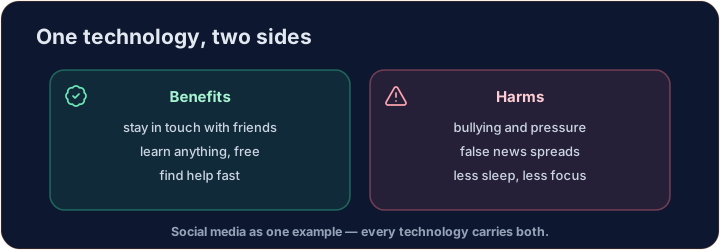
One technology, two sides:

  Social media
    Benefit: stay in touch, share, learn
    Harm:    bullying, false news, less sleep
Benefits and harms together
- A benefit for one group can be a harm for another.
- Example: an app that suggests videos keeps you watching (benefit for the company) but can waste your time (harm for you).
- Always ask: who gains, who loses, and what could go wrong?
ประโยชน์และความเสียหายร่วมกัน
- ประโยชน์สำหรับกลุ่มหนึ่งอาจเป็นความเสียหายสำหรับอีกกลุ่มหนึ่ง
- ตัวอย่าง: แอปพลิเคชันที่แนะนำวิดีโอทำให้คุณดูต่อเนื่อง (ประโยชน์สำหรับบริษัท) แต่อาจเสียเวลาของคุณ (ความเสียหายสำหรับคุณ)
- ต้องถามเสมอว่า: ใครได้เปรียบ, ใครเสียเปรียบ, และอะไรอาจผิดพลาดได้?
The digital divide
- The digital divide is the gap between people who have good access to computing and those who do not.
- Causes include money, where you live (no fast Internet), and not having training.
- This is unfair: people without access miss out on school, jobs, and information.
The digital divide (ช่องว่างดิจิทัล)
- The digital divide (ช่องว่างดิจิทัล) คือช่องว่างระหว่างผู้ที่มีโอกาสเข้าถึงการคำนวณที่ดีและผู้ที่ไม่ได้
- สาเหตุรวมถึงเงิน, สถานที่อยู่ (ไม่มีอินเทอร์เน็ตความเร็วสูง), และการขาดการฝึกฝน
- สิ่งนี้ไม่ยุติธรรม: ผู้ที่ไม่มีการเข้าถึงพลาดโอกาสในเรื่องโรงเรียน, การทำงาน, และข้อมูล
Bias in computing
- Bias means an unfair result that favors one group over another.
- Software learns from data. If the data is unfair or incomplete, the results can be unfair too.
- Example: a face tool trained mostly on one kind of face may work badly for other people.
Bias in computing (อคติในการคำนวณ)
- Bias (อคติ) หมายถึงผลลัพธ์ที่ไม่เป็นธรรมซึ่งเอื้อประโยชน์กลุ่มหนึ่งเหนืออีกกลุ่มหนึ่ง
- ซอฟต์แวร์เรียนรู้จาก data (ข้อมูล). หากข้อมูลไม่เป็นธรรมหรือไม่ครบถ้วน ผลลัพธ์อาจไม่เป็นธรรมเช่นกัน
- ตัวอย่าง: เครื่องมือหน้าตาที่ฝึกด้วยข้อมูลใบหน้ารูปแบบใดรูปแบบหนึ่งอาจทำงานได้ไม่ดีกับผู้อื่น
Biased data  ->  biased results

  Training data:  mostly group A faces
  Result:         works well for A, poorly for B
Intellectual property and licensing
- Intellectual property (IP) is creative work people make: code, music, art, writing.
- A license is the rules for how others may use that work. Using work without permission can break the law.
- Open source software shares its code so others may read and reuse it; Creative Commons licenses let creators say "you may share this, with these conditions".
ทรัพย์สินทางปัญญาและการอนุญาตใช้
- ทรัพย์สินทางปัญญา (IP) คือผลงานสร้างสรรค์ที่มนุษย์สร้างขึ้น เช่น โค้ด, เพลง, ศิลปะ, การเขียน
- ใบอนุญาต (license) คือกฎเกณฑ์ที่กำหนดว่าผู้อื่นจะนำผลงานนั้นไปใช้ได้อย่างไร การใช้โดยไม่ได้รับอนุญาตอาจผิดกฎหมาย
- ซอฟต์แวร์ โอเพนซอร์ส (open source) จะเปิดโค้ดให้คนอื่นอ่านและนำไปใช้ต่อได้ ส่วนใบอนุญาตแบบ ครีเอทีฟคอมมอนส์ (Creative Commons) ช่วยให้ผู้สร้างระบุได้ว่า "คุณสามารถแชร์งานนี้ได้ ภายใต้เงื่อนไขดังนี้"
Privacy and PII
- PII means Personally Identifiable Information: data that points to a real person.
- Examples: full name, home address, phone number, ID number, exact location.
- Once data is online it is hard to take back, and apps may collect more than you expect. Share carefully.
ความเป็นส่วนตัวและข้อมูลส่วนบุคคล
- PII ย่อมาจาก Personally Identifiable Information: ข้อมูลที่สามารถระบุตัวบุคคลจริงได้
- ตัวอย่าง: ชื่อ-นามสกุล, ที่อยู่บ้าน, เบอร์โทรศัพท์, เลขประจำตัวประชาชน, พิกัดตำแหน่งที่แน่นอน
- เมื่อข้อมูลขึ้นออนไลน์แล้วจะยากที่จะดึงกลับมา และแอปพลิเคชันอาจเก็บข้อมูลมากกว่าที่คุณคาดไว้ ควรแบ่งปันอย่างระมัดระวัง
Safe computing
- Use a strong, unique password for important accounts (long, mixed, not reused).
- Watch out for phishing: fake messages that trick you into giving passwords or money. Check the sender; do not click strange links.
- Keep software updated, and think before you post personal data.
การคำนวณที่ปลอดภัย
- ใช้รหัสผ่านที่ แข็งแรงและไม่ซ้ำกับบัญชีอื่น (มีความยาวสูง, ผสมหลายประเภท, ไม่ใช้ซ้ำ)
- ระวังการ หลอกลวงทางอินเทอร์เน็ต (phishing): ข้อความปลอมที่พยายามหลอกให้คุณให้รหัสผ่านหรือเงิน ตรวจสอบผู้ส่ง และอย่าคลิกลิงก์แปลกๆ
- อัปเดตซอฟต์แวร์ให้ใหม่เสมอ และคิดก่อนโพสต์ข้อมูลส่วนตัว
Key words
- Digital divide: the gap in access to computing.
- Bias: an unfair result, often from unfair data.
- Intellectual property / license: who owns creative work and how it may be used.
- PII / privacy: personal data, and protecting it.
- Phishing: fake messages that try to steal your information.
คำศัพท์สำคัญ
- ช่องว่างทางดิจิทัล (digital divide): ความแตกต่างในการเข้าถึงเทคโนโลยี
- อคติ (bias): ผลลัพธ์ที่ไม่เป็นธรรม ซึ่งมักเกิดจากข้อมูลที่ไม่มีความเป็นกลาง
- ทรัพย์สินทางปัญญา / ใบอนุญาต: ผู้เป็นเจ้าของผลงานสร้างสรรค์คือใคร และการนำไป使用该อย่างไร
- PII / ความเป็นส่วนตัว: ข้อมูลส่วนบุคคล และการปกป้องข้อมูลเหล่านั้น
- การหลอกลวงทางอินเทอร์เน็ต (phishing): ข้อความปลอมที่พยายามขโมยข้อมูลของคุณ
Common mistakes
- Weigh both the benefits and the harms (bias, privacy, unequal access).
- The digital divide is the gap in access to technology.
ข้อผิดพลาดที่พบบ่อย
- พิจารณาทั้งประโยชน์และความเสียหาย (เช่น อคติ, ความเป็นส่วนตัว, การเข้าถึงที่ไม่เท่าเทียม)
- ช่องว่างทางดิจิทัลคือความแตกต่างในการเข้าถึงเทคโนโลยี
Now you try
- These tasks turn the ideas above into code: PII, bias, and password safety.
- Press Check answer to test your code.
ลองดูเลย
- งานเหล่านี้จะเปลี่ยนแนวคิดข้างต้นให้เป็นโค้ด: PII, อคติ, และความปลอดภัยของรหัสผ่าน
- กด Check answer เพื่อทดสอบโค้ดของคุณ
PII is data that points to a real person. You are given a record fields (a dict like {"name": ..., "color": ..., "phone": ...}) and a set pii_names of PII field names. Write count_pii(fields, pii_names) that returns how many of the record's keys are PII. · PII คือข้อมูลที่ระบุถึงบุคคลจริง คุณได้รับ fields (dict คล้ายกับ {"name": ..., "color": ..., "phone": ...}) และเซต pii_names ของชื่อฟิลด์ PII เขียน count_pii(fields, pii_names) ที่คืนจำนวนคีย์ในบันทึกที่เป็น PII
Click Run to see the output here. · คลิก Run เพื่อดูผลลัพธ์ที่นี่
Software can be biased if it works better for one group than another. Write accuracy_gap(correct_a, total_a, correct_b, total_b) that returns group A's accuracy minus group B's accuracy, as a decimal. Example: accuracy_gap(90, 100, 60, 100) is 0.3. · ซอฟต์แวร์อาจมี ความลำเอียง หากทำงานได้ดีกว่าสำหรับกลุ่มหนึ่งเมื่อเทียบกับอีกกลุ่มหนึ่ง เขียน accuracy_gap(correct_a, total_a, correct_b, total_b) ที่คืนค่าความแม่นยำของ กลุ่ม A ลบด้วย ความแม่นยำของ กลุ่ม B ในรูปทศนิยม ตัวอย่าง: accuracy_gap(90, 100, 60, 100) คือ 0.3
Click Run to see the output here. · คลิก Run เพื่อดูผลลัพธ์ที่นี่
A password is strong when it is at least 12 characters and is not in the list of common passwords. Write is_strong(password, common) returning True or False. Example: with common = ["password", "123456"], is_strong("correcthorsebattery", common) is True. · รหัสผ่านถือว่า แข็งแรง เมื่อมีอย่างน้อย 12 ตัวอักษร และ ไม่อยู่ในรายการรหัสผ่านที่พบบ่อย เขียน is_strong(password, common) ที่คืนค่า True หรือ False ตัวอย่าง: ด้วย common = ["password", "123456"], is_strong("correcthorsebattery", common) คือ True
Click Run to see the output here. · คลิก Run เพื่อดูผลลัพธ์ที่นี่