Ваш учебный план · Продолжить · Обзор →
总 (always / keep on)
ВведеноВаше сохранённое положение остаётся в этом браузере. Возобновление не завершает урок и не отвечает на его вопросы.
 12:09
HSK 5 Грамматика 2: Наречия — акцент и оценка
Поздний вечер в рабочем кабинете. Часы показывают одиннадцать сорок, название проекта написано неверно, сегодня присоединился новый коллега, и вы едва не пропустили последний поезд.…
Английские объяснения + примеры на мандаринском · субтитры следуют за звучащим текстом
The same teammate keeps arriving late
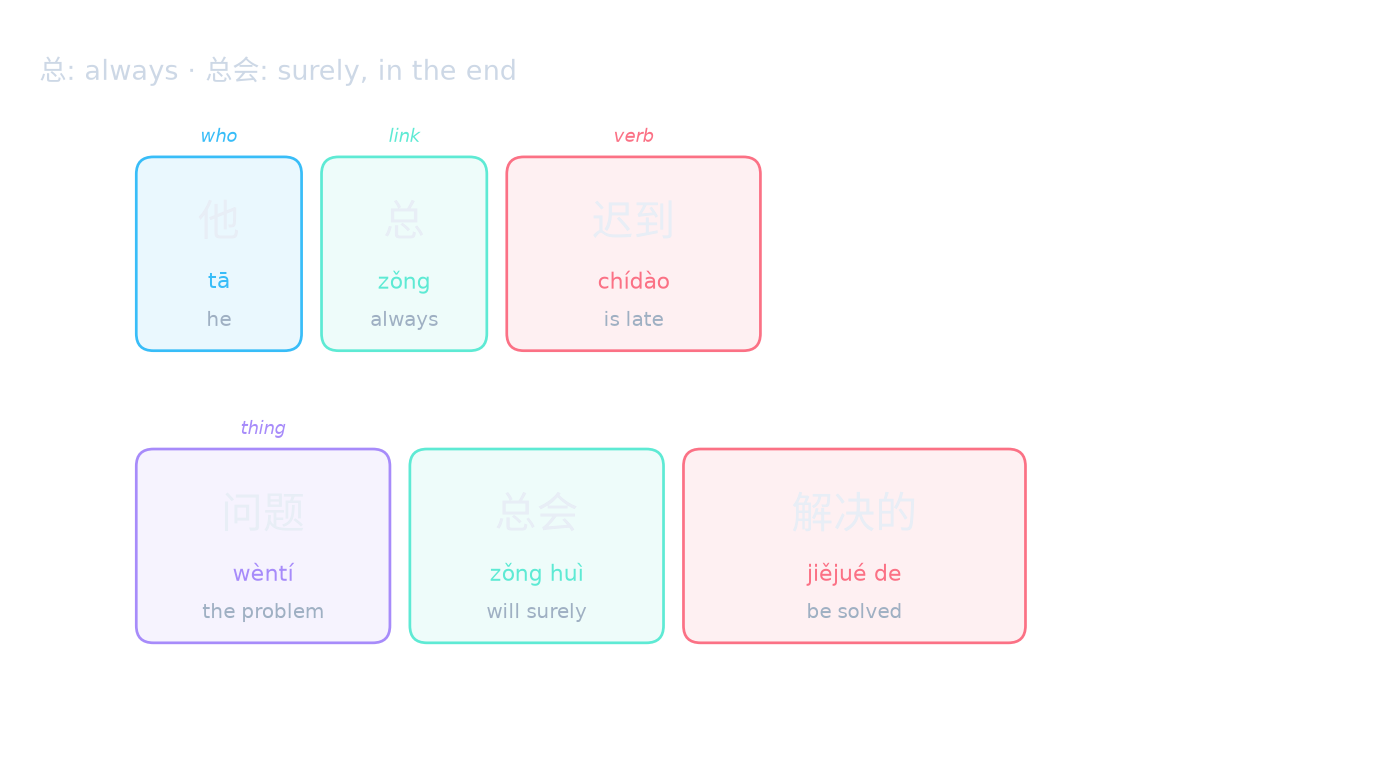
- Your teammate was late on Monday, Wednesday and again today. You sigh: he他always总is late迟到。 — "He's always late."
- Goal: use always总 for something that keeps happening, and will eventually总会 for "sooner or later, surely".
1 · always总 + verb = always, keeps doing
- Subject + always总 + verb: the action happens again and again. always总 = always总是 in this use.
- weekend周末he他always总to sleep睡to / arrive / (result: get)到noon中午。 — "At weekends he always sleeps until noon." you你how / why怎么keep playing总玩mobile phone手机? — "Why are you always on your phone?"
he他always总is late迟到。
Your roommate forgets the keys again and again. Complain: 你怎么____忘带钥匙?
Сложность 1/5 · 100 монет + небольшой бонус за первое завершение сегодня
总 + verb = keeps doing it.
Often a complaint, not always
- With bad habits, always总 sounds annoyed: you你how / why怎么always总忘带key钥匙? It is the speaker's feeling, so it can exaggerate.
- With good habits it is praise: she / her她always总help帮助other people别人。 — "She is always helping others."
她总帮助别人 is a complaint.
Сложность 1/5 · 100 монет + небольшой бонус за первое завершение сегодня
总 only says it happens again and again. With a good habit it is praise.
2 · will eventually总会 + verb = surely, sooner or later
- will eventually总会 + verb (+ (modifier / structural particle)的): the speaker is sure it will happen in the end. Used to comfort someone.
- 别难过,will eventually总会good / become better好(modifier / structural particle)的。 — "Don't be sad; things will get better in the end." question / problem问题will eventually总会to solve解决(modifier / structural particle)的。 — "The problem will be solved sooner or later."
Повторяющаяся закономерность или ожидаемый исход?
Различайте значения в полных контекстных примерах, а не механически проверяйте правильность или отвергайте изолированные фразы.
Your friend failed an exam and is sad. What does 别难过,总会好的 tell them?
Сложность 1/5 · 100 монет + небольшой бонус за первое завершение сегодня
总会 + verb = surely, sooner or later.
always总 or often经常? One time or many?
- always总 is stronger than often经常: ✓ he他always总is late迟到。 (every time, it feels like) ✓ he他often经常is late迟到。 — "He's often late."
- always总 is for a habit, not one event: ✗ he他yesterday昨天always总is late迟到. ✓ he他yesterday昨天is late迟到(completed / change)了。 — "He was late yesterday."
Which sentence is wrong?
Сложность 1/5 · 100 монет + небольшой бонус за первое завершение сегодня
总 describes a habit over many times, not one day's event. Say 他昨天迟到了。
Match each sentence to its meaning.
Сложность 2/5 · 140 монет + небольшой бонус за первое завершение сегодня
总 is stronger than 经常; 总会 looks to the future.
Recap
- always总 + verb = always, keeps doing (often a complaint): he他always总is late迟到.
- will eventually总会 + verb (+ (modifier / structural particle)的) = surely, sooner or later: will eventually总会good / become better好(modifier / structural particle)的. often经常 = often (weaker than always总).
Read the full reference: HSK 5 grammar — Adverbs.
Your little brother keeps losing his phone, and now he is upset. Complain about the habit with 总, then comfort him with 总会.
Your answer need not copy the model. A partner or teacher must hear the spoken response to comment on pronunciation.