Разрушение стратосферного озона
Введено| English | Значение |
|---|---|
| ozone layer/ˈəʊzəʊn ˈleɪə/ | озоновый слой |
| ultraviolet/ˌʊltrəˈvaɪəlɪt/ | ультрафиолетовый |
| CFCs/ˌsiː ef ˈsiːz/ | ХФУ (хлорфторуглероды) |
| chlorine/ˈklɔːriːn/ | хлор |
Earth's sunscreen
- High in the atmosphere sits the ozone layer 臭氧层.
- It absorbs most of the sun's harmful ultraviolet 紫外线 rays.
- Without it, that UV would damage life on the surface.
- In the 20th century, we accidentally started destroying it.
The culprit: CFCs
- CFCs 氯氟烃 were chemicals used in fridges and spray cans.
- They seemed safe — stable, cheap, and non-toxic.
- But when they leak, they drift slowly up into the atmosphere.
- It takes years for them to reach the ozone layer.
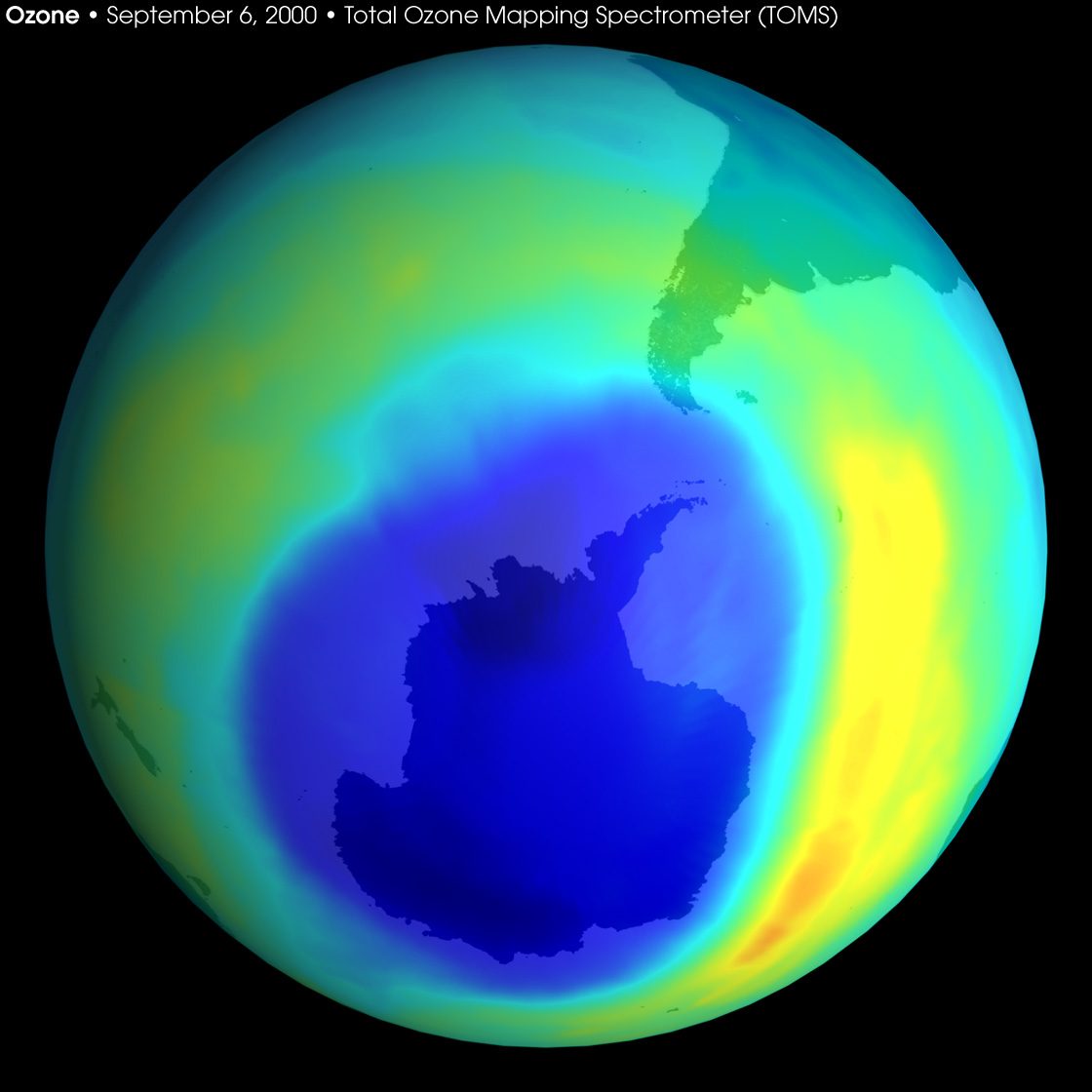
The ozone hole over Antarctica (dark blue) on a NASA satellite map: this is where the ozone layer has thinned the most
Озоновый слой высоко в атмосфере важен, потому что он…
Сложность 1/5 · 100 монет + небольшой бонус за первое выполнение сегодня
Озоновый слой поглощает большую часть вредного УФ-излучения солнца, защищая жизнь на Земле.
How they destroy ozone
- High up, the sun's UV breaks a CFC apart.
- This frees a chlorine 氯 atom.
- The chlorine atom rips apart ozone molecules.
- Worse, it keeps going — one atom destroys thousands.
Как ХФУ разрушают озоновый слой
Проследите путь ХФУ из аэрозольного баллончика до стратосферы, где они уничтожают озон.
Разрушение озона было вызвано преимущественно ХФУ, химическими веществами, которые раньше использовались в…
Сложность 1/5 · 100 монет + небольшой бонус за первое выполнение сегодня
ХФУ (хлорфторуглероды) применялись в системах охлаждения и аэрозолях до тех пор, пока не выяснилось, что они разрушают озон.
Более тонкий озоновый слой пропускает больше вредной ____ радиации к поверхности.
Сложность 1/5 · 100 монет + небольшой бонус за первое выполнение сегодня
Меньше озона означает больше УФ-излучения, достигающего нас, что повышает риск рака кожи и повреждения глаз.
The ozone hole
- Over Antarctica, so much ozone was lost it became a "hole".
- A thinner layer lets more UV reach the ground.
- More UV means more skin cancer and eye damage.
- It also harms crops and the ocean's plankton.
Один атом хлора может уничтожить десятки тысяч молекул озона.
Сложность 1/5 · 100 монет + небольшой бонус за первое выполнение сегодня
Хлор действует как катализатор — он многократно разрушает озон, сам при этом не расходуясь.
Выберите все последствия истощения озонового слоя.
Сложность 2/5 · 140 монет + небольшой бонус за первое выполнение сегодня
Больше УФ-излучения приводит к раку кожи, повреждению глаз и ущербу для растений и планктона. Оно не укрепляет кости.
Don't confuse this with the greenhouse effect — they are different problems. Ozone depletion is about a thinning shield high up that lets harmful UV through (a radiation problem). The greenhouse effect is about gases trapping heat (a warming problem). A common exam trap is to mix them up. Also note: the ozone that shields us is high up (good); ground-level ozone in smog is a pollutant (bad).
The chlorine chain reaction:
- A CFC from an old fridge finally reaches the stratosphere after drifting up for years.
- The sun's UV splits it, freeing a chlorine atom.
- That one atom destroys an ozone molecule, then breaks free and destroys another, and another — thousands in all.
- Multiply by the billions of CFC molecules released, and the ozone layer thins into a hole.
The ozone layer shields Earth by absorbing the sun's harmful UV rays. CFCs from fridges and sprays drift up to the stratosphere, where UV frees a chlorine atom that destroys thousands of ozone molecules each. The thinning layer lets more UV through, causing skin cancer, eye damage, and harm to crops and plankton. (This is separate from the greenhouse effect.)