Indoor Air Pollutants
Введено| English | Значение |
|---|---|
| Carbon monoxide/ˈkɑːbən mʌˈnɒksaɪd/ | угарный газ |
| Radon/ˈreɪdɒn/ | радон |
| Asbestos/æsˈbestəs/ | асбест |
| ventilation/ˌventɪˈleɪʃn/ | вентиляция |
The air inside can be worse
- We spend most of our lives indoors.
- Indoor air can be more polluted than the air outside.
- Pollutants come from stoves, materials, and the ground.
- With windows shut, they build up and cannot escape.
From burning indoors
- Carbon monoxide 一氧化碳 comes from stoves and heaters.
- It is invisible and odourless — but deadly.
- Tobacco smoke fills a room with harmful particles.
- Cooking and heating fires add smoke, especially in poorer homes.
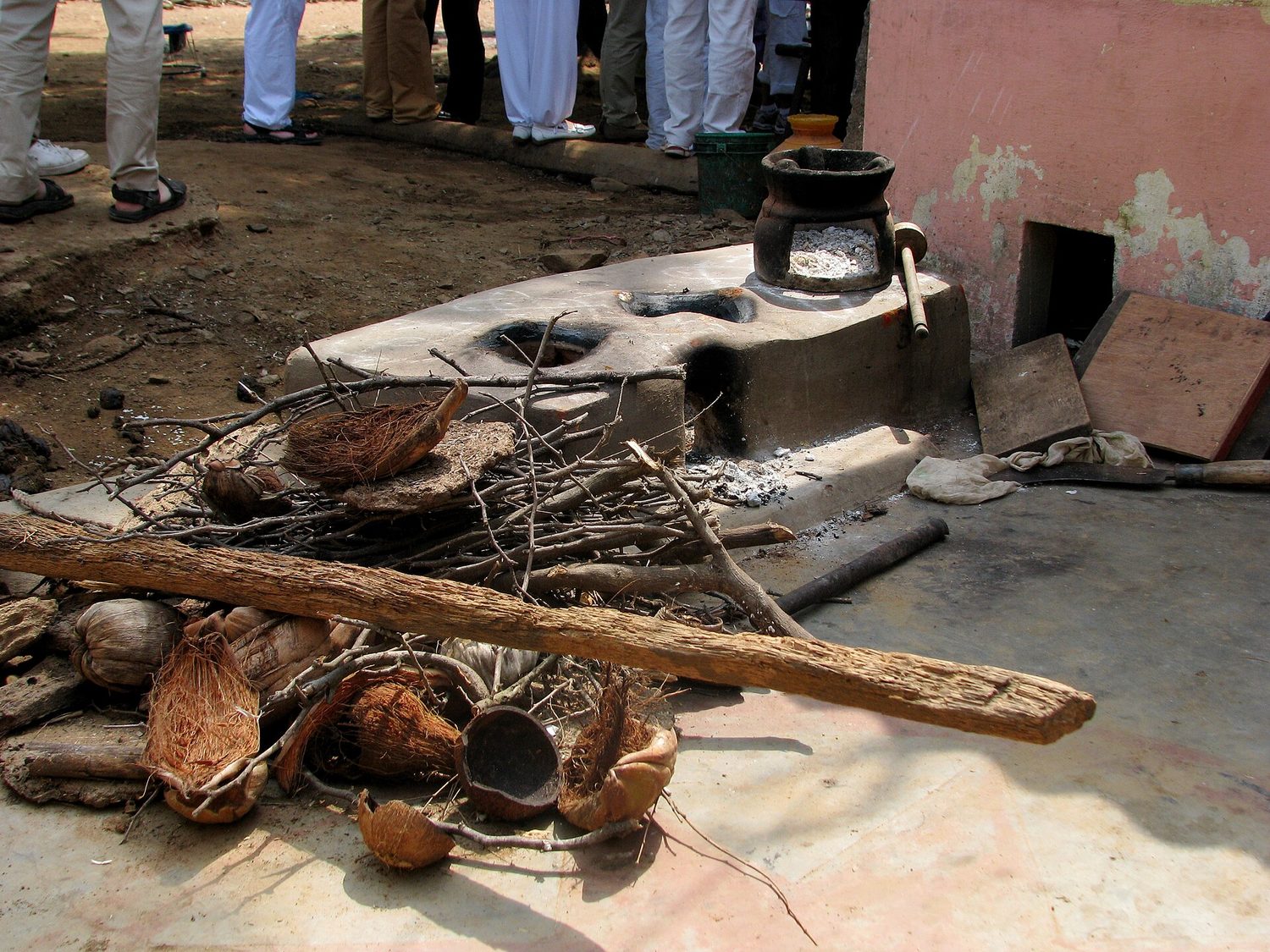
An indoor cookstove: biomass smoke is a major indoor air pollutant in many homes worldwide
Carbon monoxide is especially dangerous indoors because it…
Сложность 1/5 · 100 монет + небольшой бонус за первое выполнение сегодня
Carbon monoxide cannot be seen or smelled, so it can build up and kill without warning.
From the ground and materials
- Radon 氡 is a radioactive gas that seeps up from rock.
- It collects in basements and can cause lung cancer.
- Asbestos 石棉 fibres come from old insulation.
- New furniture, paint, and carpet give off chemical vapours.
Where does each indoor pollutant come from?
Sort each indoor pollutant by whether it comes from burning or from materials and the ground.
Radon is a pollutant that…
Сложность 1/5 · 100 монет + небольшой бонус за первое выполнение сегодня
Radon is a radioactive gas that rises from rock and soil and collects in basements.
Good ____ (fresh air flow) is the simplest way to lower indoor pollution.
Сложность 1/5 · 100 монет + небольшой бонус за первое выполнение сегодня
Good ventilation flushes pollutants out and brings fresh air in.
The simple fix: fresh air
- Good ventilation 通风 flushes pollutants out.
- Opening windows brings clean air in.
- A carbon-monoxide detector warns of the invisible gas.
- Sealed, airtight buildings trap pollution — fresh air is the cure.
Sealing a building tightly always makes indoor air cleaner than outdoor air.
Сложность 1/5 · 100 монет + небольшой бонус за первое выполнение сегодня
False. Without ventilation, pollutants from cooking, furniture and radon build up indoors, sometimes to levels higher than outside.
Select все common indoor air pollutants.
Сложность 2/5 · 140 монет + небольшой бонус за первое выполнение сегодня
Carbon monoxide, radon, and tobacco smoke are all indoor pollutants. Fresh air is the cure, not a pollutant.
There's a modern twist: making buildings airtight to save energy can trap indoor pollutants and make the air worse. Insulation and sealed windows cut heating bills, but without deliberate ventilation the carbon monoxide, radon, and vapours have nowhere to go. Energy efficiency and clean indoor air have to be balanced.
A sealed winter home:
- To save heat, every window is shut tight and gaps are sealed.
- A slightly faulty gas heater releases a trickle of invisible carbon monoxide, while radon seeps up from the rock below.
- With no fresh air coming in, both build up — until a detector beeps, or someone opens a window and the danger clears.
Indoor air can be more polluted than outdoor air. Sources include burning (carbon monoxide from heaters, tobacco smoke) and materials/ground (radon from rock, asbestos from old insulation, vapours from new products). The simple fix is ventilation — but airtight, energy-saving buildings can trap pollutants unless fresh air is let in.