Effect of Density on Populations
Введено| English | Значение |
|---|---|
| population density/ˌpɒpjʊˈleɪʃn ˈdensɪti/ | непрерывная изменчивость |
| density-dependent/ˈdensɪti dɪˈpendənt/ | непрерывная изменчивость |
| density-independent/ˈdensɪti ˌɪndɪˈpendənt/ | непрерывная изменчивость |
When crowding matters
- A population near its carrying capacity is crowded.
- Crowding changes how strongly some things limit the population.
- Other limits ignore crowding entirely.
- Sorting the two kinds explains how populations are kept in check.
Population density
- Population density 种群密度 is how many individuals live in a given area.
- A dense population is crowded; a sparse one is spread out.
- Density changes as a population grows toward carrying capacity.
- Some limiting factors respond to density; some do not.
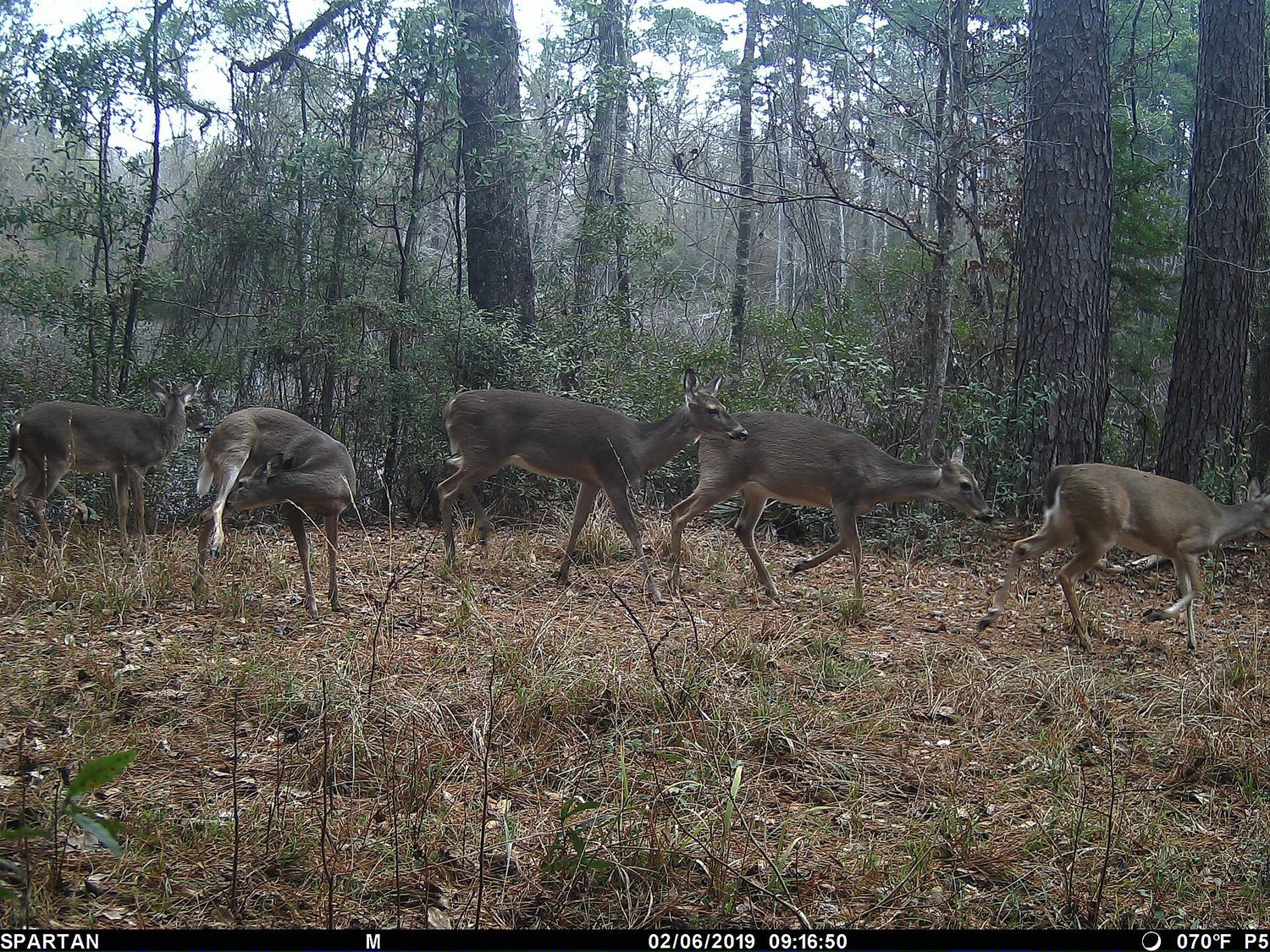
A dense deer herd: density-dependent 密度制约 factors such as disease and food competition intensify as numbers rise
Population density measures…
Сложность 1/5 · 100 монет + небольшой бонус за первое выполнение сегодня
Population density is the number of individuals per unit area or volume.
Density-dependent factors
- A density-dependent factor gets stronger as crowding increases.
- Disease spreads faster when individuals are packed together.
- Competition for food and space grows fiercer in a dense population.
- Predators, too, find crowded prey more easily.
A density-dependent factor is one whose effect…
Сложность 1/5 · 100 монет + небольшой бонус за первое выполнение сегодня
A density-dependent factor (disease, competition, predation) hits harder in a crowded population.
A factor like a harsh winter, whose effect does not change with crowding, is density-____.
Сложность 1/5 · 100 монет + небольшой бонус за первое выполнение сегодня
A density-independent factor (weather, disaster) affects a population the same at any density.
Density-independent factors
- A density-independent 非密度制约 factor has the same effect at any density.
- A harsh winter, a flood, or a fire strikes crowded and sparse populations alike.
- These factors do not care how many individuals there are.
- They can cut a population no matter its size.
Density-dependent or not?
Sort each limiting factor by whether its effect gets stronger as the population becomes more crowded.
Density-dependent factors become weaker as a population grows.
Сложность 1/5 · 100 монет + небольшой бонус за первое выполнение сегодня
False. Density-dependent factors such as competition and disease strengthen as a population grows, pushing it back toward carrying capacity.
Select все true statements about density.
Сложность 2/5 · 140 монет + небольшой бонус за первое выполнение сегодня
Density-independent factors do not get stronger with crowding. The other three are correct.
The difference is whether crowding changes the effect. A density-dependent factor hits harder as the population grows — that is what pulls it back toward carrying capacity. A density-independent factor (like weather) hits the same regardless. Match each factor to the right type.
Disease in a crowded population:
- When a population is sparse, a disease spreads slowly — individuals rarely meet.
- As the population grows dense, contact becomes frequent and the disease spreads fast.
- The disease is density-dependent: it grows stronger exactly when the population is largest, checking its growth.
Population density is individuals per area. A density-dependent factor (disease, competition, predation) gets stronger as crowding increases, helping hold the population near carrying capacity. A density-independent factor (weather, disaster) affects the population the same at any density.
Write from a density-independent flood
- A flood kills about the same fraction of a population whether the population is crowded or sparse.
- The flood is not a disease.
Is this density-dependent or density-independent?
Abiotic disasters often strike regardless of density.
What kind of factor is this flood?
Сложность 1/5 · 100 монет + небольшой бонус за первое выполнение сегодня
The death fraction does not rise with crowding.