Criptografia
Introduzido| English | Significado |
|---|---|
| encryption/enˈkrɪpʃn/ | criptografia |
| intercepted/ˌɪntəˈseptɪd/ | interceptado |
| plaintext/ˈpleɪntekst/ | texto claro |
| ciphertext/ˈsaɪfətekst/ | texto cifrado |
| symmetric/sɪˈmetrɪk/ | simétrica |
| asymmetric/ˌeɪsɪˈmetrɪk/ | assimétrica |
| key/kiː/ | chave |
| public key/ˈpʌblɪk kiː/ | chave pública |
| private key/ˈpraɪvət kiː/ | chave privada |
Scrambling a message
- Encryption 加密 scrambles data so it can't be understood if it is intercepted 拦截.
- Readable data is plaintext 明文; scrambled data is ciphertext 密文.
- There are two kinds: symmetric 对称 and asymmetric 非对称.
What encryption does (and doesn't)
- Encryption uses a key 密钥 to turn plaintext into ciphertext, and back again to decrypt.
- It does not stop data from being intercepted — it only stops the intercepted data from being understood.
What does encryption achieve?
Dificuldade 1/5 · Moedas 100 + pequeno bônus na primeira conclusão hoje
Encryption scrambles data so interception is useless — it does not prevent the interception itself.
Symmetric encryption
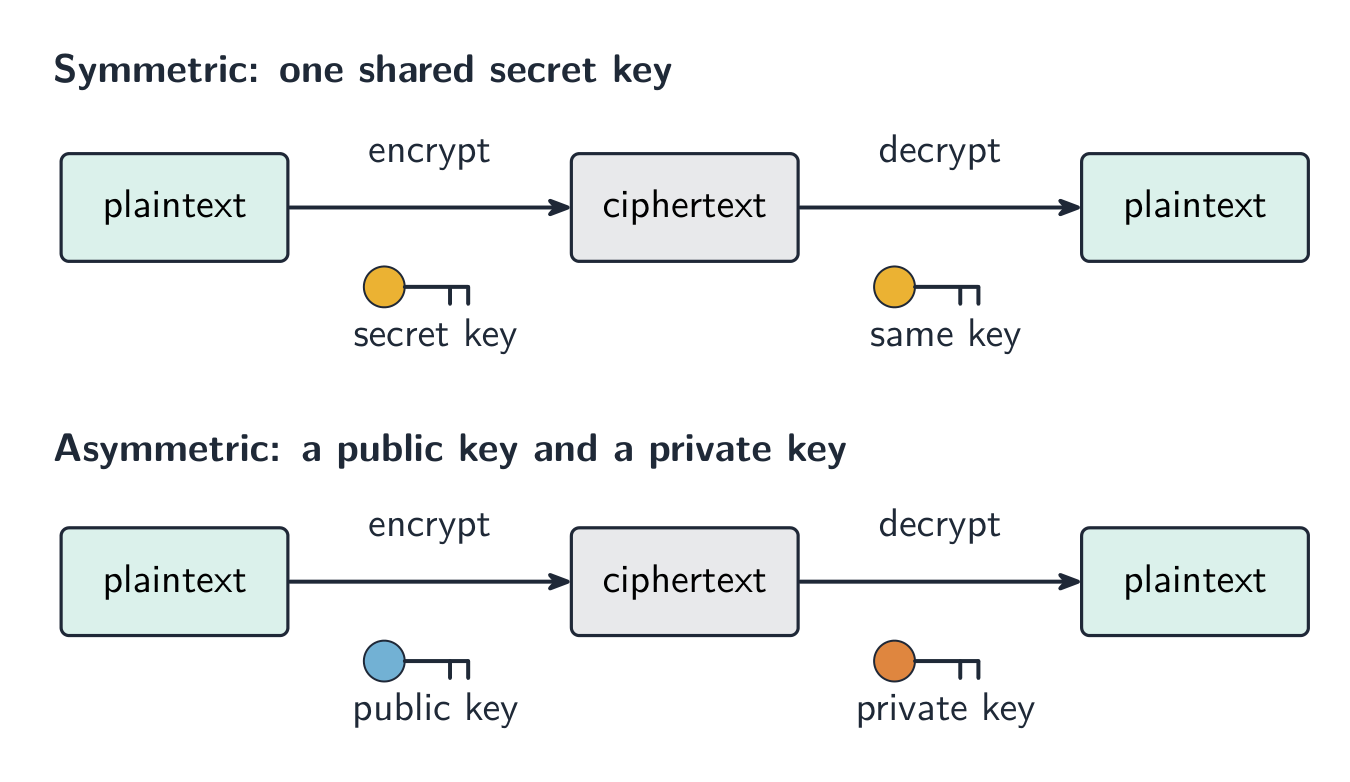
- Symmetric encryption uses a single key to both encrypt and decrypt.
- The sender and receiver must share this same secret key.
- The risk: the key itself could be stolen while being shared.
A shift cipher (symmetric key)
Caesar's cipher shifts every letter forward by a fixed key. The SAME key encrypts and decrypts — that is what symmetric means. Slide the key and try to read it without knowing the shift.
Match each encryption term to its meaning.
Dificuldade 2/5 · Moedas 140 + pequeno bônus na primeira conclusão hoje
Plaintext → (key) → ciphertext; symmetric shares one key, asymmetric uses a public/private pair.
Symmetric encryption uses:
Dificuldade 1/5 · Moedas 100 + pequeno bônus na primeira conclusão hoje
Symmetric uses one secret key that both sides must share — the risk is that key being stolen.
Asymmetric encryption
- Asymmetric encryption uses two keys: a public key (anyone can have it, used to encrypt) and a private key (kept secret, used to decrypt).
- Data encrypted with the public key can only be decrypted with the matching private key.
- The secret key never has to be shared, so it is safer than symmetric.
In asymmetric encryption, data is encrypted with the ____ key and decrypted with the ____ key.
Dificuldade 1/5 · Moedas 100 + pequeno bônus na primeira conclusão hoje
The public key encrypts; only the matching private key can decrypt — so the secret key is never shared.
Asymmetric encryption needs the private key to be sent to everyone who wants to encrypt data for you.
Dificuldade 1/5 · Moedas 100 + pequeno bônus na primeira conclusão hoje
False. Only the public key is shared; senders encrypt with it, and the private key that decrypts never leaves the owner. Symmetric encryption is the kind where the one key must be shared.
Worked example: Ana writes to Ben
Ana wants to send Ben a secret message using asymmetric encryption. Which key is used at each stage, and why can't Eve, who intercepts it, read it?
- Ben gives his public key to anyone. Ana encrypts the plaintext with Ben's public key, and the ciphertext travels across the internet. Ben decrypts it with his private key, which never leaves his computer.
- Eve can copy the ciphertext, and she may even have Ben's public key, but the public key cannot decrypt. Without Ben's private key the message stays unreadable.
Ben now replies to Ana. Which key should he use to encrypt his reply?
Dificuldade 1/5 · Moedas 100 + pequeno bônus na primeira conclusão hoje
Encrypt with the receiver's public key; only the receiver's private key can then decrypt it.
Encrypting a file stops a hacker from intercepting it.
Dificuldade 1/5 · Moedas 100 + pequeno bônus na primeira conclusão hoje
The hacker can still intercept it, but cannot understand it without the key.
You've got it
- encryption makes intercepted data unreadable (it doesn't prevent interception)
- plaintext → ciphertext using a key
- symmetric = one shared key (risk: sharing it); asymmetric = public key encrypts, private key decrypts
- asymmetric is safer because the secret key is never shared