Genetic modification
Introduzido| English | Significado |
|---|---|
| genetic modification/dʒɪˈnetɪk ˌmɒdɪfɪˈkeɪʃn/ | modificação genética |
| GM crops/ˌdʒiː ˈem krɒps/ | cultivos transgênicos |
| pest-resistant/pest rɪˈzɪstənt/ | resistente a pragas |
Rewriting the code of life
- Modern biotechnology can move a gene from one organism into another.
- This genetic modification 基因改造 already makes life-saving medicines and improved crops.
In genetic modification, a useful gene is cut out using:
Dificuldade 1/5 · Moedas 100 + pequeno bônus na primeira conclusão hoje
Enzymes cut the gene from the DNA.
In GM, a useful ______ is moved from one organism into another.
Dificuldade 1/5 · Moedas 100 + pequeno bônus na primeira conclusão hoje
A single chosen gene is transferred.
How GM is done
- A useful gene is cut out of one organism's DNA using enzymes.
- It is inserted into another organism (often bacteria), which then makes the useful product.
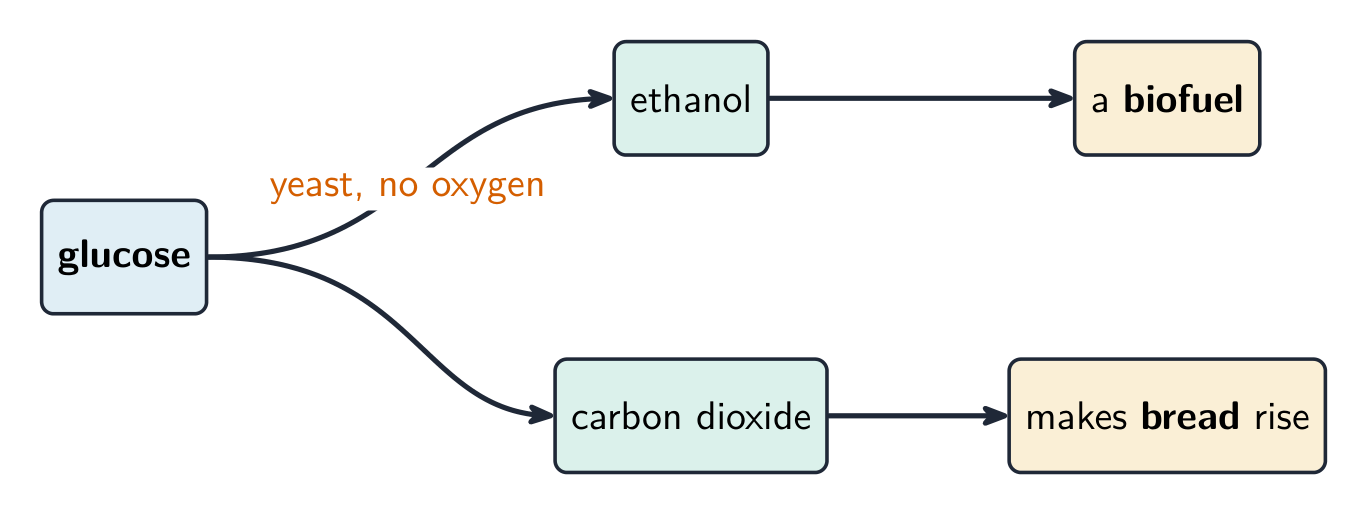
Yeast makes ethanol (a biofuel) and carbon dioxide (which makes bread rise)
Modificação genética
A useful gene from one organism is put into another so it makes a wanted product.
GM bacteria are widely used to make:
Dificuldade 1/5 · Moedas 100 + pequeno bônus na primeira conclusão hoje
GM bacteria make insulin for diabetics.
Making medicines
- GM bacteria make human insulin for people with diabetes — fast, cheap and in large amounts.
- Before GM, insulin had to be extracted from animals.
GM crops can be made to be: (Select all that apply.)
Dificuldade 2/5 · Moedas 140 + pequeno bônus na primeira conclusão hoje
GM improves crops; it would not make them unable to grow.
Genetic modification changes an organism faster and more precisely than selective breeding.
Dificuldade 1/5 · Moedas 100 + pequeno bônus na primeira conclusão hoje
GM inserts one chosen gene directly.
GM crops 转基因作物
- GM crops can be made pest-resistant 抗虫的, higher-yielding, or richer in vitamins.
- Concerns include effects on wildlife and the spread of modified genes.
GM is precise; selective breeding is not. GM inserts a single chosen gene directly, so the change is fast and exact. Selective breeding mixes all the parents' genes over many generations. Both change organisms, by very different routes.
Worked example: bacteria that make insulin
Describe how bacteria are modified to make human insulin for people with diabetes.
- The human insulin gene is cut out of DNA using restriction enzymes, which leave sticky ends. A bacterial plasmid is cut with the same enzyme, so its sticky ends match.
- DNA ligase joins the gene into the plasmid. The plasmid is put back into a bacterium, which is grown in a fermenter. Every time the bacterium divides it copies the gene, and the bacteria make human insulin, which is extracted and purified.
What is the job of DNA ligase in genetic modification?
Dificuldade 1/5 · Moedas 100 + pequeno bônus na primeira conclusão hoje
Restriction enzymes cut; ligase joins the sticky ends together.
The gene and the plasmid are cut with the same restriction enzyme so that their sticky ends match.
Dificuldade 1/5 · Moedas 100 + pequeno bônus na primeira conclusão hoje
Matching sticky ends pair up, letting the gene fit into the plasmid.
You've got it
- genetic modification cuts a useful gene and inserts it into another organism
- GM bacteria make human insulin quickly and cheaply
- GM crops can be pest-resistant or higher-yielding; concerns remain about wildlife and gene spread
Write from a cut gene
- A useful gene is cut out of one organism.
- It is inserted into a crop plant so insects damage it less.
What is this process, and what concern remains?
Moving a gene between organisms is genetic modification.
How does genetic modification change an organism?
Dificuldade 1/5 · Moedas 100 + pequeno bônus na primeira conclusão hoje
The new gene is the modification.