Biotechnology and genetic modification
Introduzido| English | Significado |
|---|---|
| biotechnology/ˌbaɪəʊtekˈnɒlədʒi/ | biotecnologia |
| genetic modification/dʒɪˈnetɪk ˌmɒdɪfɪˈkeɪʃn/ | modificação genética |
| GM organism/ˌdʒiː ˈem ˈɔːɡənɪzəm/ | organismo GM |
Putting living things to work
- Humans have long used living organisms — especially microbes — to make useful products.
- This is biotechnology 生物技术, and modern versions can even rewrite an organism's genes.
Genetic modification route
Follow the main steps from useful gene to modified organism.
Microbes are useful in biotechnology because they:
Dificuldade 1/5 · Moedas 100 + pequeno bônus na primeira conclusão hoje
Fast reproduction and easy growth make microbes ideal.
Why microbes are useful
- Bacteria and fungi reproduce very fast, are easy to grow, and make useful substances.
- They can be grown in large tanks to make food, medicines and fuels.
Genetic modification involves:
Dificuldade 1/5 · Moedas 100 + pequeno bônus na primeira conclusão hoje
GM transfers a gene between organisms.
Bacteria can be genetically modified to make:
Dificuldade 1/5 · Moedas 100 + pequeno bônus na primeira conclusão hoje
GM bacteria produce human insulin for diabetics.
Changing an organism's genes by inserting a gene from another is genetic ______.
Dificuldade 1/5 · Moedas 100 + pequeno bônus na primeira conclusão hoje
GM creates organisms with new, useful products.
Genetic modification 基因改造
- Genetic modification (GM) changes an organism's genes by inserting a gene from another organism.
- A GM organism 转基因生物 then makes a new, useful product (e.g. bacteria making human insulin).
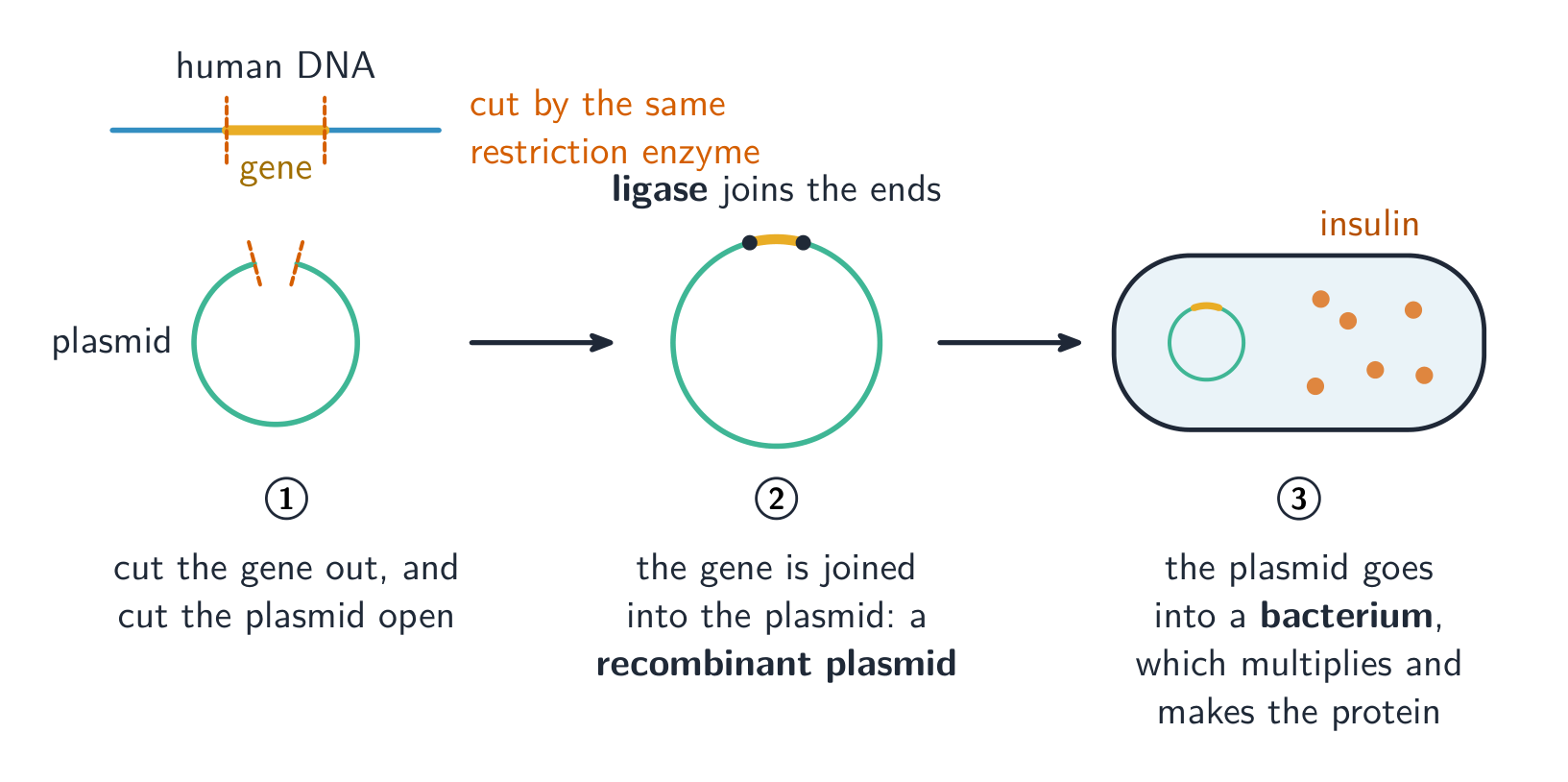
A human gene is joined into a plasmid, then bacteria make the human protein
Genetic modification raises ethical and environmental concerns as well as offering benefits.
Dificuldade 1/5 · Moedas 100 + pequeno bônus na primeira conclusão hoje
Both benefits and concerns must be weighed.
Benefits and concerns
- Benefits: medicines, higher crop yields, pest-resistant plants.
- Concerns: effects on wild species, ethics, and unknown long-term impacts.
GM transfers a gene between organisms. A useful gene (e.g. for human insulin) is inserted into bacteria, which then make that product. The organism's own DNA is deliberately changed — unlike selective breeding.
Worked example: insulin from bacteria
Put the steps for making human insulin with bacteria in order, and say why bacteria are used.
- The human insulin gene is cut out of human DNA with restriction enzymes. A bacterial plasmid is cut open with the same enzymes, and ligase joins the gene into it. The plasmid is put back into a bacterium.
- The bacteria are grown in a fermenter: they divide quickly, each copy carries the gene, and they make human insulin, which is then purified. Bacteria are used because they reproduce fast, are cheap to grow, and the insulin is identical to human insulin.
Which enzyme joins the insulin gene into the plasmid?
Dificuldade 1/5 · Moedas 100 + pequeno bônus na primeira conclusão hoje
Restriction enzymes cut DNA; ligase joins the cut ends together.
A crop given a gene for making its own insecticide needs less pesticide spraying.
Dificuldade 1/5 · Moedas 100 + pequeno bônus na primeira conclusão hoje
The plant kills insects that eat it, so farmers spray less, though resistant insects may evolve.
You've got it
- biotechnology uses living organisms (often microbes) to make useful products
- microbes are useful because they reproduce fast and are easy to grow
- genetic modification inserts a gene from one organism into another (e.g. insulin-making bacteria)
Write from this case
- A human gene for insulin is inserted into a bacterium.
- The bacterium divides many times.
What is this technology, and why are microbes useful for it?
A copied gene in a fast-growing microbe makes the protein.
Inserting a human insulin gene into a bacterium is what?
Dificuldade 1/5 · Moedas 100 + pequeno bônus na primeira conclusão hoje
The gene is moved into a different organism.