Plastics and greenhouse gases
Introduzido| English | Significado |
|---|---|
| greenhouse gases/ˈɡriːnhaʊs ˈɡæsɪz/ | gases de efeito estufa |
| non-biodegradable/nɒn ˌbaɪəʊdɪˈɡreɪdəbl/ | não biodegradável |
| methane/ˈmiːθeɪn/ | metano |
| global warming/ˈɡləʊbl ˈwɔːmɪŋ/ | aquecimento global |
| microplastics/ˌmaɪkrəʊˈplæstɪks/ | microplásticos |
Pollution that lingers
- Some of the waste humans produce stays in the environment for a very long time.
- Two big problems are plastics and greenhouse gases 温室气体.
Pollution impact route
Trace how human materials create long-term environmental effects.
Most plastics are a problem because they are:
Dificuldade 1/5 · Moedas 100 + pequeno bônus na primeira conclusão hoje
Non-biodegradable plastics persist and harm wildlife.
Plastic that breaks into tiny pieces that persist in the environment is called ______.
Dificuldade 1/5 · Moedas 100 + pequeno bônus na primeira conclusão hoje
Microplastics spread through food chains.
Plastic pollution
- Most plastics are non-biodegradable 不可降解 — they don't rot away.
- They build up in oceans, harming wildlife that eats or gets tangled in them.
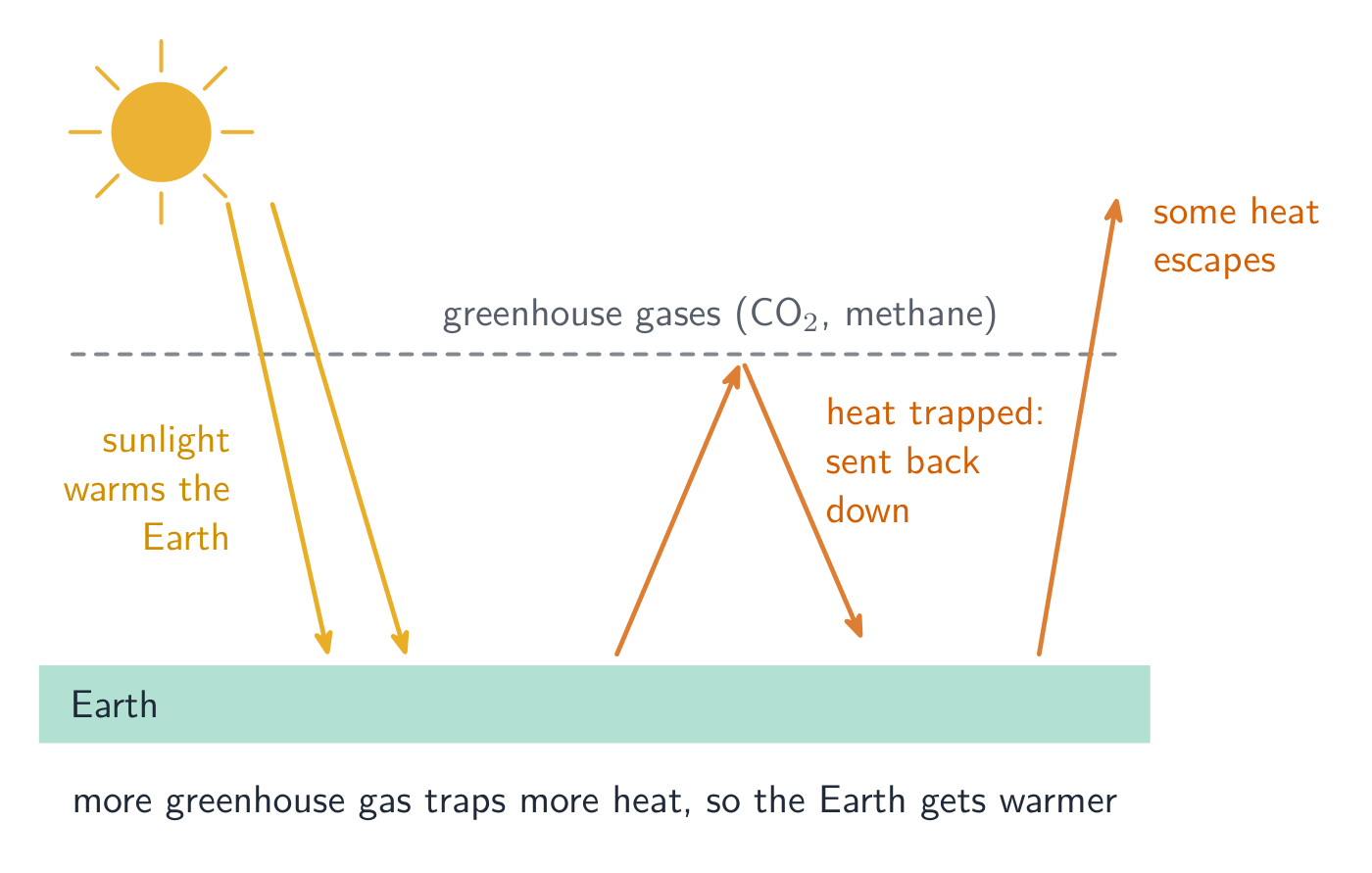
Greenhouse gases trap heat leaving the Earth, so the Earth gets warmer
Which are greenhouse gases? (Select all that apply.)
Dificuldade 2/5 · Moedas 140 + pequeno bônus na primeira conclusão hoje
CO₂ and methane trap heat; oxygen and nitrogen do not.
Greenhouse gases cause global warming by:
Dificuldade 1/5 · Moedas 100 + pequeno bônus na primeira conclusão hoje
They trap heat — the greenhouse effect.
Greenhouse gases
- Carbon dioxide (from burning fuels) and methane 甲烷 trap heat in the atmosphere.
- This greenhouse effect is making the Earth warmer — global warming 全球变暖.
Global warming can cause ice to melt and sea levels to rise.
Dificuldade 1/5 · Moedas 100 + pequeno bônus na primeira conclusão hoje
Warming threatens habitats and food supplies.
Effects of climate change
- Rising temperatures cause melting ice, rising sea levels, and changing weather.
- This threatens habitats, food supplies and many species.
Non-biodegradable doesn't mean it disappears. Plastic just breaks into smaller and smaller pieces (microplastics 微塑料) that persist for centuries and spread through food chains.
Worked example: two greenhouse gases
Name a human source of carbon dioxide and of methane, and explain how both lead to climate change.
- Carbon dioxide: burning fossil fuels in power stations and vehicles, and deforestation. Methane: cattle (from digestion), rice paddy fields and rotting waste in landfill.
- Both are greenhouse gases: they absorb heat (infrared) radiated from the Earth's surface and send some of it back, so the Earth warms. This enhanced greenhouse effect brings rising sea levels, more extreme weather and changes in where species can live.
Which is a major source of methane?
Dificuldade 1/5 · Moedas 100 + pequeno bônus na primeira conclusão hoje
Microbes in a cow's gut make methane, which the animal releases.
Most plastics are non-biodegradable, so decomposers cannot break them down and they stay in the environment for many years.
Dificuldade 1/5 · Moedas 100 + pequeno bônus na primeira conclusão hoje
Microbes have no enzymes to digest most plastics, so they build up and harm wildlife.
You've got it
- most plastics are non-biodegradable, building up and harming wildlife
- CO₂ and methane are greenhouse gases that trap heat → global warming
- climate change melts ice, raises sea levels and threatens habitats and food
Write from methane and plastic
- A landfill releases methane.
- Plastic bags remain in a hedge for years.
Why does the methane matter, and why does the plastic persist?
Both wastes last in different ways, one in the air and one as litter.
Why do many plastics accumulate in habitats?
Dificuldade 1/5 · Moedas 100 + pequeno bônus na primeira conclusão hoje
Microbes do not break most plastics down.