Fluxo de energia
Introduzido| English | Significado |
|---|---|
| producers/prəˈdjuːsəz/ | produtores |
| photosynthesis/ˌfəʊtəʊˈsɪnθəsɪs/ | fotossíntese |
| food chain/fuːd tʃeɪn/ | cadeia alimentar |
| consumers/kənˈsuːməz/ | consumidores |
Where all the energy comes from
- Almost all the energy in living things can be traced back to one source: the Sun.
- Following that energy through an ecosystem is the heart of ecology.
The original source of energy for almost all ecosystems is the:
Dificuldade 1/5 · Moedas 100 + pequeno bônus na primeira conclusão hoje
Producers capture the Sun's energy.
Producers 生产者 capture the energy
- Producers (green plants) capture light energy by photosynthesis 光合作用.
- They turn it into chemical energy stored in glucose — the food that feeds everything else.
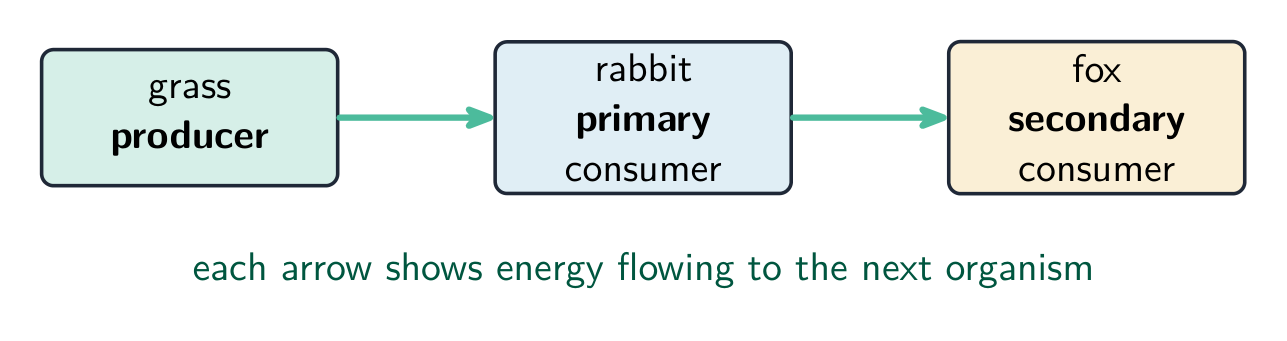
A food chain 食物链: arrows show energy passing from producer to consumers 消费者
Energy flow through a food chain
Energy from the Sun enters living things through plants, then passes along the food chain — losing a lot at each step.
Producers capture energy by:
Dificuldade 1/5 · Moedas 100 + pequeno bônus na primeira conclusão hoje
Green plants photosynthesise to store energy.
Green plants that make their own food and start a food chain are called ______.
Dificuldade 1/5 · Moedas 100 + pequeno bônus na primeira conclusão hoje
Producers are the first link in a food chain.
Energy passes on
- Consumers get their energy by eating producers or other consumers.
- Energy flows from the Sun → producers → consumers along a food chain.
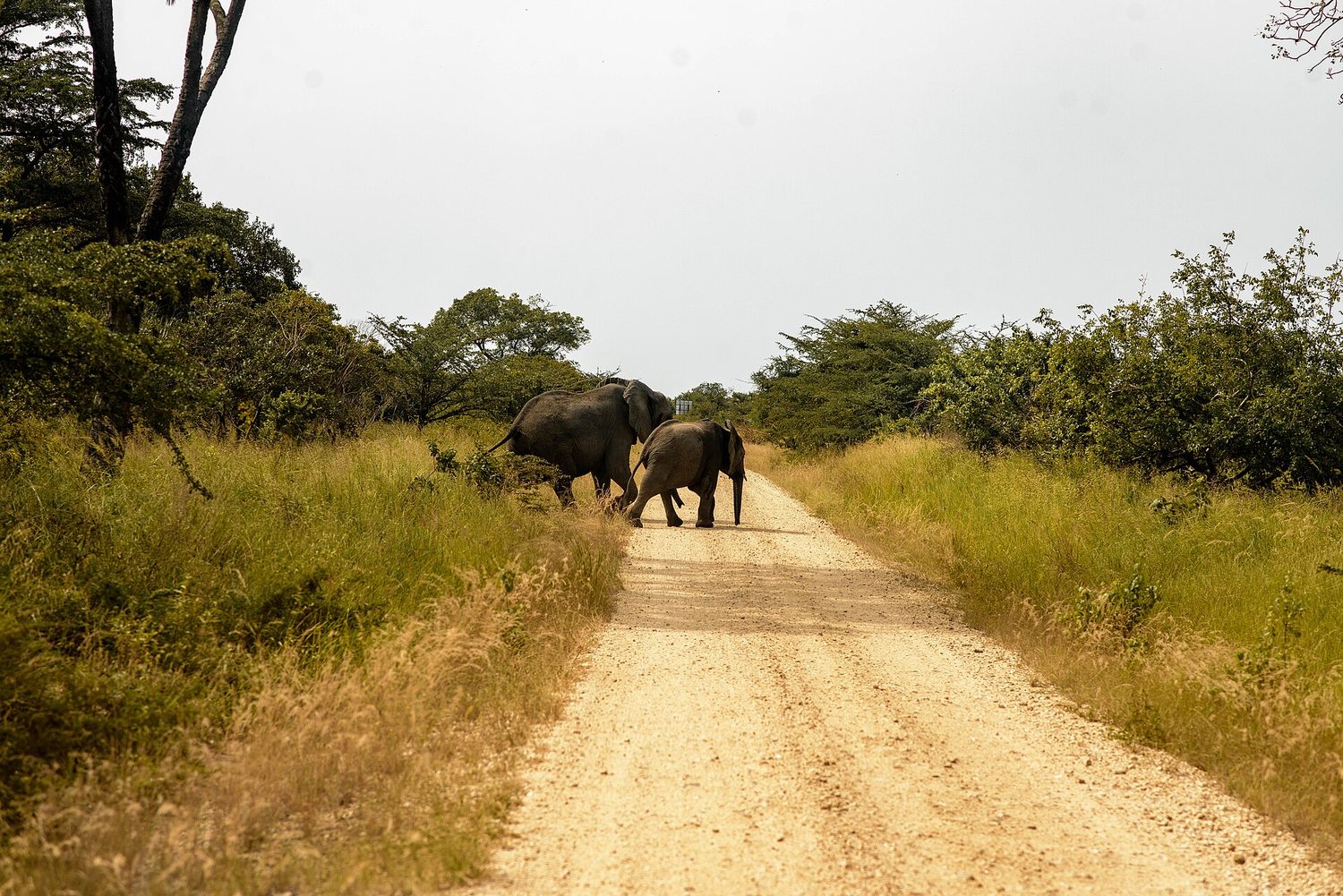
A savanna ecosystem: organisms linked by feeding relationships
Energy is lost between stages of a food chain mainly as:
Dificuldade 1/5 · Moedas 100 + pequeno bônus na primeira conclusão hoje
Respiration, movement and waste lose energy as heat.
Energy is recycled within an ecosystem, just like nutrients.
Dificuldade 1/5 · Moedas 100 + pequeno bônus na primeira conclusão hoje
False. Energy flows through an ecosystem and is lost as heat at each level, so it must be resupplied by the Sun. Only nutrients are recycled.
Energy is lost at each step
- At every stage, energy is lost as heat (from respiration), movement and waste.
- So less energy is available the further along the chain you go.
Energy flows; it doesn't cycle. Unlike nutrients (carbon, nitrogen), energy is lost at each step and must be constantly resupplied by the Sun. It is not recycled.
Worked example: how much energy gets through?
In a field, grass captures 20 000 kJ of energy per square metre each year. Rabbits get 2000 kJ of it, and foxes get 200 kJ from the rabbits. Find the efficiency of each transfer.
- Grass → rabbit: $\dfrac{2000}{20\,000} \times 100 = 10\%$. Rabbit → fox: $\dfrac{200}{2000} \times 100 = 10\%$.
- About 90% is lost at each step: heat from respiration, movement, and parts not eaten or not digested (bones, fur, faeces). That is why food chains rarely have more than four or five links.
Caterpillars take in 1500 kJ from leaves; the birds that eat them get 150 kJ. What is the percentage efficiency of this transfer?
Dificuldade 2/5 · Moedas 140 + pequeno bônus na primeira conclusão hoje
$\dfrac{150}{1500} \times 100 = 10\%$.
Why can a field feed more people growing crops for them to eat than raising cattle on the same crops?
Dificuldade 1/5 · Moedas 100 + pequeno bônus na primeira conclusão hoje
Feeding crops to cattle loses about 90% of the energy before humans eat it; a shorter chain passes on more.
You've got it
- nearly all energy comes from the Sun, captured by producers (photosynthesis)
- consumers get energy by eating; energy flows Sun → producers → consumers
- energy is lost at each step (heat, movement, waste) — it flows, it doesn't cycle
Write from this case
- A plant captures light.
- A herbivore eats the plant and loses heat.
Where does the energy enter, and why is it not recycled like carbon?
Lost heat does not return as usable food energy.
Which statement matches energy in a food chain?
Dificuldade 1/5 · Moedas 100 + pequeno bônus na primeira conclusão hoje
Energy passes along and leaks away as heat.