Seu plano de estudos · Continuar · Revisar →
首先 … 其次 … 最后 (first, second, finally)
IntroduzidoSua posição salva fica neste navegador. Retomar não conclui a lição nem responde às perguntas.
Three steps to better Chinese
- A younger student asks you how to learn Chinese well. You give three tips in order.
- first首先need to要a lot多listen听,second其次need to要a lot多speak说,finally最后need to要to keep at; to insist坚持。 — "First, listen a lot; second, speak a lot; finally, keep going."
- Goal: put points in order in speech and writing with first首先 … second其次 … finally最后 ….
first首先 … second其次 … finally最后
- first首先 (shǒuxiān) = first, second其次 (qícì) = second / next, finally最后 (zuìhòu) = finally. Each starts its own point.
- They are common in short essays and when giving advice or steps.
first首先need to要a lot多listen听,second其次need to要a lot多speak说。
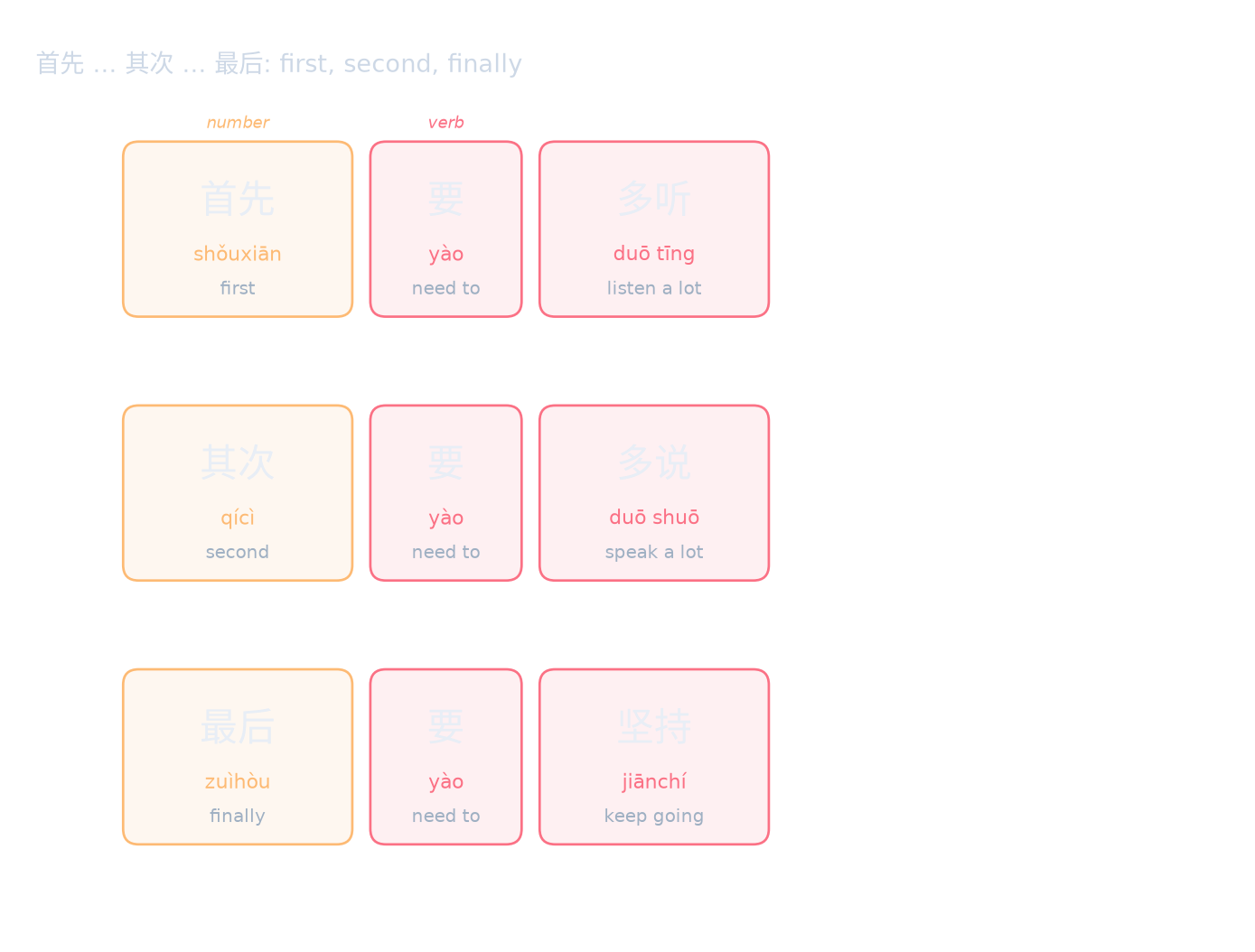
Put the words in the order they are used in a list.
Dificuldade 3/5 · Moedas 200 + pequeno bônus na primeira conclusão hoje
首先 (first), 其次 (second), 最后 (finally).
Complete: “First, listen a lot; second, speak a lot.” 首先要多听,____要多说。
Dificuldade 1/5 · Moedas 100 + pequeno bônus na primeira conclusão hoje
其次 = second, the next point.
More than three points
- For more steps, add then / after然后 or then; next接着: first首先to wash one's hands洗手,then / after然后切菜,then; next接着to stir-fry炒菜,finally最后to put放condiment调料。 — "First wash your hands, then cut the vegetables, next fry them, and finally add the seasoning."
- first首先 can also introduce the most important point: first首先,I我need to要thank感谢everyone大家。 — "First of all, I'd like to thank everyone."
first of all首先,I我want to要thank感谢everyone大家。
首先,我要感谢大家 means "First of all, I'd like to thank everyone."
Dificuldade 1/5 · Moedas 100 + pequeno bônus na primeira conclusão hoje
首先 can introduce the first and most important point.
second其次 means "second", not "after that in time"
- second其次 ranks points (the second reason, the second step); for "then" in a story, use then / after然后: ✓ I我to eat吃(completed / change)了breakfast早饭,then / after然后to go去to go to school上学。 ✗ I我to eat吃(completed / change)了breakfast早饭,second其次to go去to go to school上学.
- first首先 starts a list; don't use it for "at first (but later)": ✓ I我to start开始not不habit习惯,later; afterwards后来habit习惯(completed / change)了。 ✗ I我first首先not不habit习惯,later; afterwards后来habit习惯(completed / change)了.
“I ate breakfast, then went to school.” (a story) Which word fits? 我吃了早饭,____去上学。
Dificuldade 1/5 · Moedas 100 + pequeno bônus na primeira conclusão hoje
A favor "then" in a story, use 然后. 其次 ranks points.
“At first I wasn't used to it; later I got used to it.” Which is right?
Dificuldade 1/5 · Moedas 100 + pequeno bônus na primeira conclusão hoje
“At first … later” is 开始 … 后来. 首先 starts a list.
first首先 or first先?
- first先 goes after the subject, before the verb: I我first先to wash one's hands洗手。 — "I'll wash my hands first."
- first首先 usually starts the point (often before the subject) and sounds more like a list or speech.
Recap
- first首先 … ,second其次 … ,finally最后 … = first, second, finally (a list of points or steps).
- then / after然后 for "then" in a story; to start开始 … later; afterwards后来 for "at first … later".
Read the full reference: HSK 4 grammar — Conjunctions.
A friend asks how to make a good first impression at a job interview. Give three tips with 首先, 其次 and 最后.
Your answer need not copy the model. A partner or teacher must hear the spoken response to comment on pronunciation.