Absolutism in Practice
Introduzido| English | Significado |
|---|---|
| absolutism/ˈæbsəluːtɪzəm/ | A system in which a monarch claims full power, usually from God, not limited by any parliament. |
| intendant | A royal official sent to govern a French province on the king's behalf. |
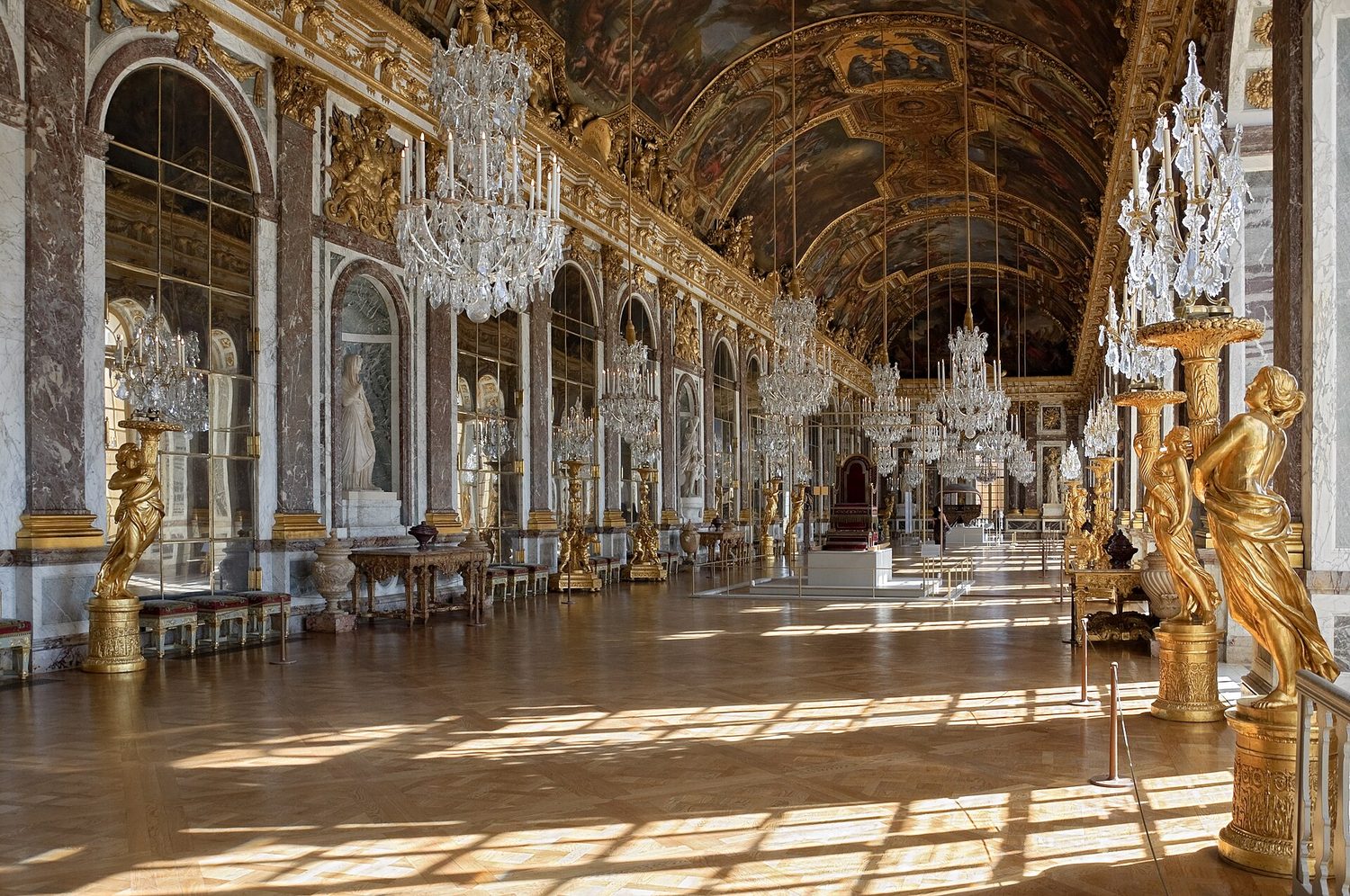
The king's morning, Versailles, 1682
- In 1682, Louis XIV moved his court to Versailles. Each morning, nobles competed for the honour of handing the king his shirt during the lever, the ceremony of his getting up. The greatest nobles in France now spent their time at court, far from their own lands and soldiers.
- Absolute monarchs claimed full power — but in practice they made a bargain with their nobles.
How did Versailles help Louis XIV control the nobles?
Dificuldade 1/5 · Moedas 100 + pequeno bônus na primeira conclusão hoje
Close and watched.
The bargain with the nobility
- Under absolutism 专制主义, the monarch claimed authority from God and was not bound by any parliament.
- But rulers kept nobles' privileges — tax exemptions, rank and land — in return for loyalty and service at court or in the army.
Absolute monarchs kept nobles' privileges in return for loyalty.
Dificuldade 1/5 · Moedas 100 + pequeno bônus na primeira conclusão hoje
The bargain.
France: four kinds of control
- Officials: royal intendants 总督 governed the provinces for the king. Money: Colbert, finance minister from 1665, promoted trade and industry.
- Religion: Louis revoked the Edict of Nantes in 1685, and about 200 000 Huguenots fled France. Court: Versailles kept the nobles close and watched.
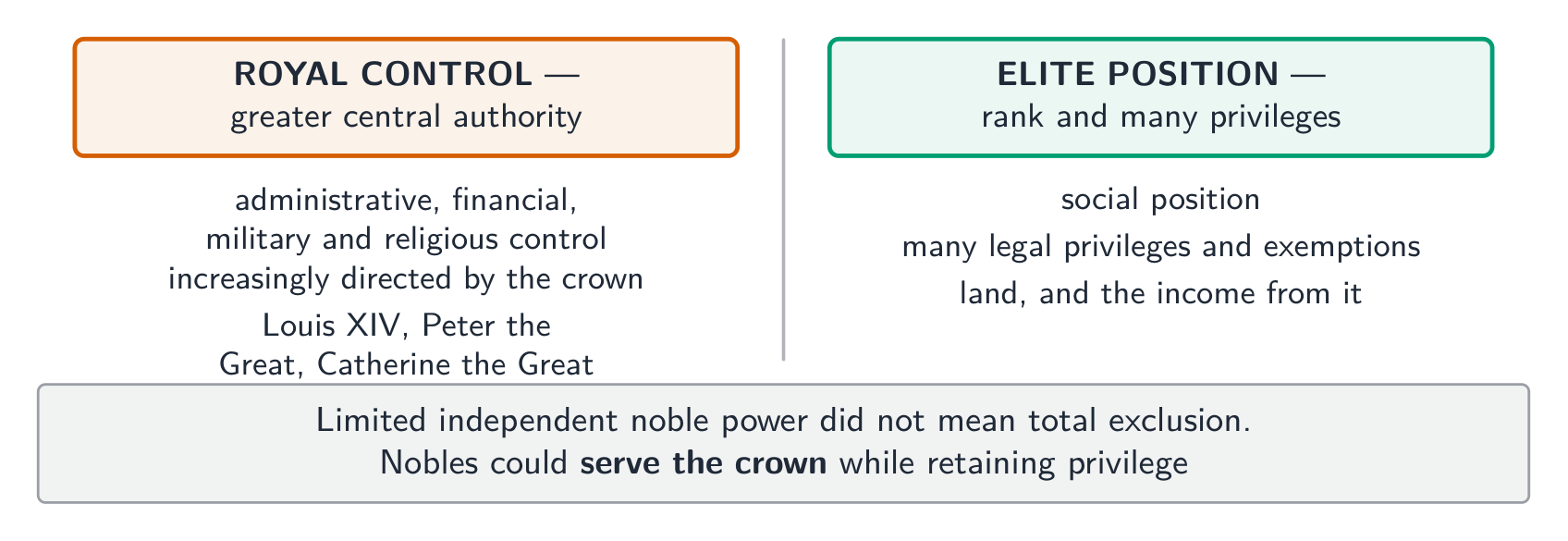
Taken, preserved, or transformed?
Sort each element of absolutist rule.
Match each measure to its kind of control.
Dificuldade 2/5 · Moedas 140 + pequeno bônus na primeira conclusão hoje
Four kinds of control.
About how many Huguenots fled France after 1685?
Dificuldade 2/5 · Moedas 140 + pequeno bônus na primeira conclusão hoje
About 200 000.
Worked example: Peter the Great's Russia
- Westernization: Peter, tsar from 1682, travelled to the Netherlands and England in 1697–98 to learn shipbuilding, and ordered nobles to shave their beards and wear Western clothes.
- New capital: from 1703 he built St Petersburg on the Baltic, his "window on the West".
- Service: the Table of Ranks (1722) made nobles' status depend on service to the state.
Which were policies of Peter the Great?
Dificuldade 2/5 · Moedas 140 + pequeno bônus na primeira conclusão hoje
Serfs stayed unfree.
Comparing the two
- Louis used ceremony and court life to control nobles; Peter used force and compulsory service.
- Both built large armies and kept the peasants as the main taxpayers.
The limits
- In France, regional courts called parlements could still delay royal laws. In Russia, the serfs — most of the population — gained nothing.
- Louis XIV's wars left France with huge debts.
Absolutism did not mean the king could do anything. Monarchs depended on nobles, officials and taxes. Their power was greater than before but still had limits.
Absolute monarchs had no practical limits on their power.
Dificuldade 1/5 · Moedas 100 + pequeno bônus na primeira conclusão hoje
They depended on nobles and taxes.
Absolute monarchs such as Louis XIV and Peter the Great claimed unlimited authority, centralized government, controlled religion and built armies. They kept the loyalty of nobles by protecting their privileges, and their power still had practical limits.
Compare how Louis XIV and Peter the Great controlled their nobles.
Comparison.