Origem da Vida na Terra
Introduzido| English | Significado |
|---|---|
| organic molecules/ɔːˈɡænɪk ˈmɒlɪkjuːlz/ | moléculas orgânicas |
Where did the first life come from?
- Natural selection explains how life changed — but not how it first began.
- The earliest cells appeared on Earth billions of years ago.
- Before them, there was only chemistry, no biology.
- How that chemistry became the first living cell is one of science's great questions.
A very different young Earth
- Early Earth was hot, with volcanoes, lightning, and no free oxygen.
- Its air held simple gases, and its surface held water.
- These provided the ingredients and the energy for reactions.
- The stage was set for chemistry to become complex.
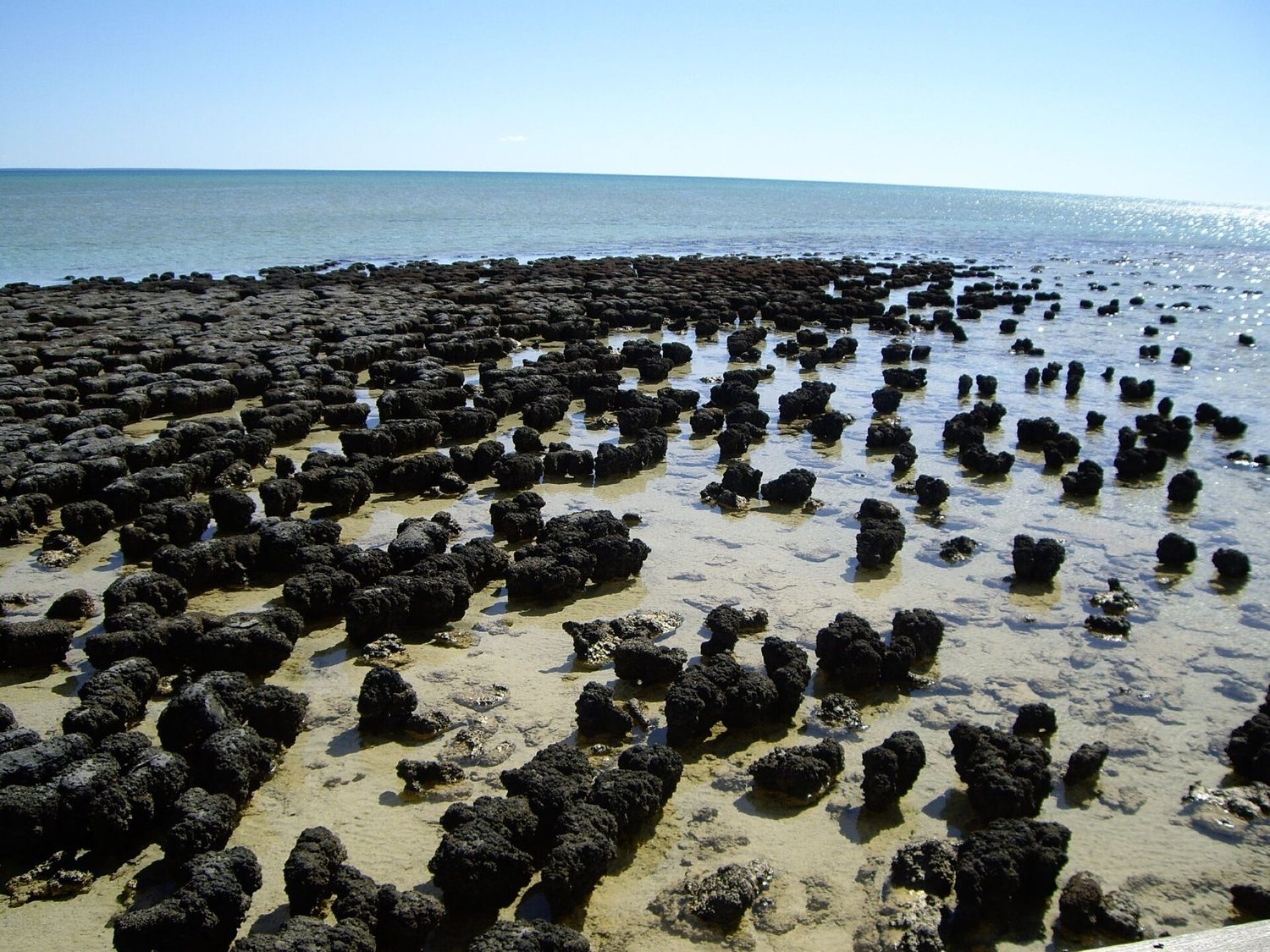
Stromatolites: layered microbial mats are among the oldest evidence of life on Earth
O que a Terra primitiva forneceu que poderia impulsionar reações químicas?
Dificuldade 1/5 · Moedas 100 + pequeno bônus na primeira conclusão hoje
A Terra primitiva tinha energia de raios, vulcões e luz solar — mas pouco oxigênio livre e nenhuma vida ainda.
Building organic molecules
- Given energy, simple gases can react to form small organic molecules 有机分子.
- The famous Miller-Urey experiment showed this in the lab, making amino acids.
- Over time, these small molecules could join into larger polymers, including RNA.
- Step by step, the chemistry grew more life-like.
Da química à primeira célula
Passe por como produtos químicos simples na Terra primitiva podem ter se acumulado para formar as primeiras células vivas.
O experimento Miller-Urey mostrou que as condições da Terra primitiva poderiam formar…
Dificuldade 1/5 · Moedas 100 + pequeno bônus na primeira conclusão hoje
Miller e Urey produziram moléculas orgânicas (aminoácidos) a partir de gases simples e energia — um primeiro passo crucial.
The first cells
- Molecules that could copy themselves had a huge advantage.
- Wrapped inside simple membranes, they formed the first cell-like structures.
- Once such a structure could copy itself, life — and natural selection — could begin.
- From that first cell, all of today's diversity slowly branched out.
Pensa-se que a vida tenha se construído gradualmente: pequenas moléculas, depois polímeros, depois células.
Dificuldade 1/5 · Moedas 100 + pequeno bônus na primeira conclusão hoje
Os passos se acumulam: moléculas simples, depois polímeros maiores, depois células auto-copiadoras envoltas em membrana.
Assim que as primeiras células existiram, a diversidade da vida surgiu através da seleção natural ____.
Dificuldade 1/5 · Moedas 100 + pequeno bônus na primeira conclusão hoje
A origem da primeira célula é separada da seleção natural, que então produziu toda a diversidade posterior.
Selecione todas as afirmações verdadeiras sobre a origem da vida.
Dificuldade 2/5 · Moedas 140 + pequeno bônus na primeira conclusão hoje
Pensa-se que a vida tenha se construído gradualmente, não aparecido instantaneamente. As outras três estão corretas.
This lesson is about the origin of the first life — a chemistry question. It is separate from natural selection, which explains the diversity of life after the first cell existed. Do not use "evolution" to mean the origin of life itself.
The Miller-Urey experiment:
- In 1953, scientists sealed simple gases and water in a flask and added sparks (like lightning).
- After days, the flask contained amino acids — the building blocks of proteins.
- It showed that life's ingredients can form from non-living chemistry, given energy.
The origin of life asks how the first cell arose from chemistry. On early Earth, energy drove simple gases to form organic molecules (shown by Miller-Urey), which built up into polymers and eventually membrane-enclosed, self-copying cells. This is a separate question from natural selection, which then produced all later diversity.
Write from this case
- A lab sparks inorganic gases like those proposed for early Earth.
- No cells are put in the flask.
Quais monômeros biológicos podem se formar?
A síntese abiótica pode produzir aminoácidos.
O que esse tipo de experimento com faísca produziu?
Dificuldade 1/5 · Moedas 100 + pequeno bônus na primeira conclusão hoje
Monômeros formados. Células não.