Photosynthesis · Fotossíntese
| English | Português |
|---|---|
| photosynthesis/ˌfəʊtəʊˈsɪnθəsɪs/ | fotossíntese |
| chlorophyll/ˌklɔːrəʊˈfɪl/ | clorofila |
| Calvin cycle/ˈkælvɪn ˈsaɪkl/ | ciclo de Calvin |
Turning light into food
- Plants do something almost magical: they build food out of thin air and sunlight.
- They take in carbon dioxide and water and capture the energy in light.
- From these they make glucose, storing the sun's energy in a sugar.
- This process — photosynthesis — feeds almost all life on Earth.
Transformando luz em alimento
- As plantas fazem algo quase mágico: constroem alimentos do ar e da luz solar.
- Elas absorvem dióxido de carbono e água e capturam a energia da luz.
- Delas, produzem glicose, armazenando a energia do sol em um açúcar.
- Esse processo — fotossíntese — alimenta quase toda a vida na Terra.
The overall reaction
- Photosynthesis 光合作用 combines carbon dioxide, water, and light energy.
- The products are glucose (sugar) and oxygen.
- $6\text{CO}_2 + 6\text{H}_2\text{O} \xrightarrow{\text{light}} \text{C}_6\text{H}_{12}\text{O}_6 + 6\text{O}_2$.
- The green pigment chlorophyll 叶绿素 captures the light.
A reação geral
- Fotossíntese 光合作用 combina dióxido de carbono, água e energia luminosa.
- Os produtos são glicose (açúcar) e oxigênio.
- $6\text{CO}_2 + 6\text{H}_2\text{O} \xrightarrow{\text{light}} \text{C}_6\text{H}_{12}\text{O}_6 + 6\text{O}_2$.
- O pigmento verde clorofila 叶绿素 captura a luz.
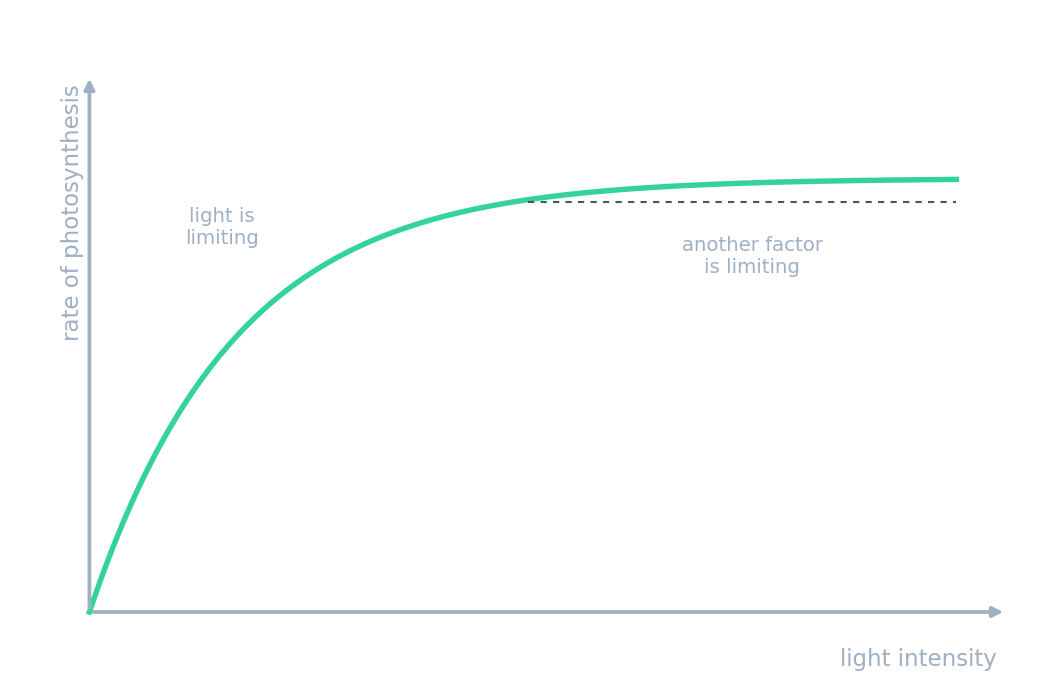
What does a plant use as raw materials for photosynthesis? · O que uma planta usa como matéria-prima para a fotossíntese?
Photosynthesis · Fotossíntese uses carbon dioxide + water + light energy to make glucose and oxygen. · Fotossíntese usa dióxido de carbono + água + energia luminosa para produzir glicose e oxigénio.
Stage 1: the light reactions
- In the light reactions, chlorophyll absorbs sunlight.
- The energy splits water, releasing oxygen as a by-product.
- It also makes the energy carriers ATP and NADPH.
- These carriers power the next stage.
Etapa 1: as reações luminosas
- Nas reações luminosas, a clorofila absorve a luz solar.
- A energia divide a água, liberando oxigênio como subproduto.
- Também produz os transportadores de energia ATP e NADPH.
- Esses transportadores alimentam a etapa seguinte.
How photosynthesis works · Como funciona a fotossíntese
Step through the two stages — light reactions capture energy, then the Calvin cycle builds sugar from CO₂. · Passo a passo pelas duas etapas — as reações luminosas capturam energia, depois o ciclo de Calvin constrói açúcar a partir do CO₂.
The green pigment that absorbs light for photosynthesis is ____. · O pigmento verde que absorve a luz para a fotossíntese é ____.
Chlorophyll in the chloroplasts captures the light energy that drives the whole process. · Clorofila nos cloroplastos captura a energia luminosa que impulsiona todo o processo.
Where does the oxygen released by photosynthesis come from? · De onde vem o oxigénio liberado pela fotossíntese?
Light energy splits water, and the oxygen atoms are released as O₂. · A energia luminosa divide a água, e os átomos de oxigênio são liberados como O₂.
Stage 2: the Calvin cycle
- The Calvin cycle 卡尔文循环 does not need light directly.
- It uses the ATP and NADPH to fix carbon dioxide into sugar.
- Carbon atoms from CO₂ are built up into glucose.
- So light energy ends up stored in a stable sugar.
Etapa 2: ciclo de Calvin
- O ciclo de Calvin 卡尔文循环 não precisa de luz diretamente.
- Usa o ATP e o NADPH para fixar o dióxido de carbono em açúcar.
- Átomos de carbono do CO₂ são construídos em glicose.
- Assim, a energia luminosa termina armazenada em um açúcar estável.
Photosynthesis has two stages: the light reactions and the Calvin cycle. · A fotossíntese tem duas etapas: as reações luminosas e o ciclo de Calvin.
The · A light reactions capture energy; the Calvin cycle uses it to build sugar from CO₂. · As reações luminosas capturam energia; o ciclo de Calvin usa essa energia para construir açúcar a partir de CO₂.
Select all · todos true statements about photosynthesis. · Selecione todas as afirmações verdadeiras sobre a fotossíntese.
Photosynthesis needs light, so it does not happen in the dark. The other three are correct. · A fotossíntese precisa de luz, então não ocorre no escuro. As outras três estão corretas.
Photosynthesis is two stages, not one. The light reactions capture energy; the Calvin cycle uses it to build sugar. The Calvin cycle needs the products of the light reactions, so it cannot run for long in the dark.
A fotossíntese tem duas etapas, não uma. As reações luminosas capturam energia; o ciclo de Calvin usa essa energia para construir açúcar. O ciclo de Calvin precisa dos produtos das reações luminosas, então não pode funcionar por muito tempo no escuro.
Why the world depends on a leaf:
- Almost every food chain starts with a photosynthesising plant.
- The oxygen you breathe was released by splitting water in a leaf.
- Even coal and oil are ancient sunlight, captured by photosynthesis long ago.
Por que o mundo depende de uma folha:
- Quase todas as cadeias alimentares começam com uma planta fotossintetizante.
- O oxigênio que você respira foi liberado pela divisão da água em uma folha.
- Até mesmo carvão e petróleo são luz solar antiga, capturada pela fotossíntese há muito tempo.
Photosynthesis turns carbon dioxide, water, and light into glucose and oxygen, using chlorophyll to capture the light. It has two stages: the light reactions make ATP and NADPH (and release oxygen), and the Calvin cycle uses them to build sugar from CO₂.
Fotossíntese transforma dióxido de carbono, água e luz em glicose e oxigênio, usando clorofila para capturar a luz. Tem duas etapas: as reações luminosas produzem ATP e NADPH (e liberam oxigênio), e o ciclo de Calvin os usa para construir açúcar a partir de CO₂.