Business structure and liability
Introduzido| English | Significado |
|---|---|
| legal structure/ˈliːɡl ˈstrʌktʃə/ | estrutura jurídica |
| liable/ˈlaɪəbl/ | responsável |
| sole trader/səʊl ˈtreɪdə/ | empresário individual |
| unlimited liability/ʌnˈlɪmɪtɪd ˌlaɪəˈbɪlɪti/ | responsabilidade ilimitada |
| partnership/ˈpɑːtnəʃɪp/ | sociedade |
| shareholders/ˈʃeəhəʊldəz/ | acionistas |
| limited liability/ˈlɪmɪtɪd ˌlaɪəˈbɪlɪti/ | responsabilidade limitada |
| incorporated/ɪnˈkɔːpəreɪtɪd/ | incorporado |
| assets/ˈæsets/ | ativos |
| float/fləʊt/ | cotação |
| stock exchange/stɒk eksˈtʃeɪndʒ/ | bolso de valores |
| regulation/ˌreɡjʊˈleɪʃn/ | regulamentação |
| takeover/ˈteɪkəʊvə/ | aquisição |
Who owns it — and who pays if it fails?
- Two friends running a market stall and a giant like Apple are both "businesses" — but legally they're worlds apart.
- The legal structure 法律结构 decides who owns the firm, who controls it, and who is liable 负有责任 for its debts.
Choose the ownership form
Compare ownership, control and liability in real business types.
A sole trader has:
Dificuldade 1/5 · Moedas 100 + pequeno bônus na primeira conclusão hoje
A sole trader is not incorporated, so liability is unlimited.
The main legal forms
- Sole trader 个体经营者: one owner, easy to set up, keeps all profit — but unlimited liability 无限责任.
- Partnership 合伙企业: 2+ owners share capital, skills and risk; usually still unlimited liability.
- Private limited company (Ltd) and public limited company (plc): owned by shareholders 股东, with limited liability 有限责任.
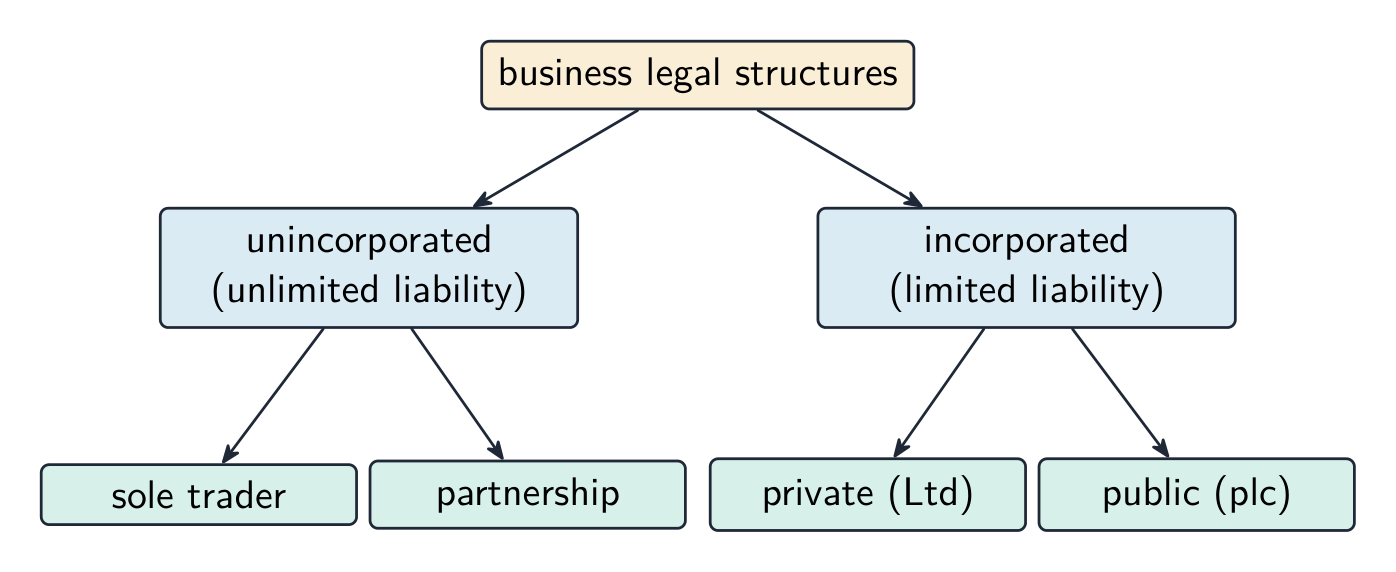
Legal forms split by liability: unincorporated and incorporated 注册成立的
Limited liability means shareholders:
Dificuldade 1/5 · Moedas 100 + pequeno bônus na primeira conclusão hoje
Their loss is capped at their investment.
An incorporated company has no legal identity separate from its owners.
Dificuldade 1/5 · Moedas 100 + pequeno bônus na primeira conclusão hoje
False. Incorporation creates a separate legal person that can own assets, sue and be sued. This is what makes limited liability possible for shareholders.
When owners risk their personal assets for business debts, they have ______ liability.
Dificuldade 1/5 · Moedas 100 + pequeno bônus na primeira conclusão hoje
Sole traders and ordinary partnerships have unlimited liability.
Limited vs unlimited liability
- Unlimited liability: the owner is personally responsible for all debts — even their house is at risk.
- Limited liability: shareholders can lose only what they invested — their personal assets 资产 are protected.
Limited liability needs a separate legal identity. Only an incorporated business (Ltd or plc) is legally separate from its owners. A sole trader or ordinary partnership is not, so its owners carry unlimited liability.

A company headquarters: businesses range from sole traders to giant public limited companies
A key feature of a public limited company (plc) is that it can:
Dificuldade 1/5 · Moedas 100 + pequeno bônus na primeira conclusão hoje
A plc can float shares publicly, raising large capital but facing more scrutiny.
Ltd vs plc
- A private company (Ltd) cannot sell shares to the public; shares are sold privately.
- A public company (plc) can float 上市 shares on the stock exchange 证券交易所 — raising large sums, but facing more regulation 监管 and a risk of takeover 收购.
Worked example: should the partners incorporate?
Two partners run a growing building firm with unlimited liability. They need £200,000 for new machinery and fear a big contract could go wrong. Should they become a private limited company?
- For: limited liability protects their homes if the firm fails; the company has a separate legal identity, so it can sign contracts and borrow in its own name; selling shares to family or a business angel can raise the £200,000.
- Against: set-up costs and annual accounts must be filed publicly; new shareholders mean shared control and profits. Judgement: with large risks and capital needs, Ltd status is likely worth the extra paperwork.
Which form of business can sell shares to the public on a stock exchange?
Dificuldade 1/5 · Moedas 100 + pequeno bônus na primeira conclusão hoje
Only a plc can float its shares.
Because anyone can buy its shares, a plc risks a takeover.
Dificuldade 1/5 · Moedas 100 + pequeno bônus na primeira conclusão hoje
A rival can buy enough shares to gain control.
You've got it
- legal forms: sole trader, partnership, Ltd, plc
- unlimited liability risks personal assets; limited liability caps loss at the investment
- only incorporated firms (Ltd/plc) are legally separate and have limited liability
Write from a loss capped at 8000
- A shareholder paid 8000 for shares in a private limited company.
- The company fails owing 40000. Say how much that shareholder can lose.
A shareholder invested 8000 in a private limited company. The company fails owing 40000. What is the most that shareholder can lose, and why?
Limited liability stops the loss at the investment.
What is the most this shareholder can lose?
Dificuldade 1/5 · Moedas 100 + pequeno bônus na primeira conclusão hoje
The investment is the cap for a limited company. Other options — 40000 (the whole company debt); 0 (because a company failure never costs an owner anything).