Writing a report
IntroducedWhat a report does
- A report gives information to a person in charge.
- It describes an event or situation, then suggests what to do.
- Keep the tone factual and clear — it is not a story.
A report can recommend action without pretending to be a detective novel.
A report is written for a person in ___ (someone above you).
A person 'in charge' is a manager or leader.
Use headings
- Break the report into short sections with headings.
- For example: Introduction, Problems, Recommendation.
- Headings help the reader find information fast.
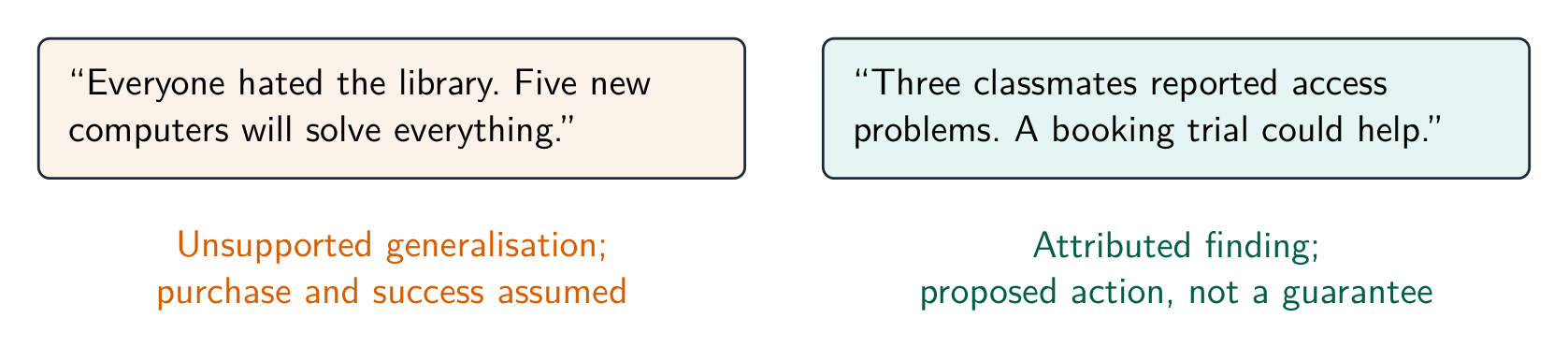
A report gives facts the reader can use, not a story
What helps a reader find information in a report quickly?
Headings split the report into easy-to-scan sections.
Facts, then advice
- First give the facts; keep your opinion out of this part.
- A good recommendation is an action: who should do what, and when.
- End with one clear recommendation.
Fact or opinion?
The facts section takes only checkable statements; feelings wait for the recommendation.
In a report, you should mix facts and opinions in the same part.
Keep facts and recommendations separate.
Write one sentence recommending an improvement for your school. Start with 'I recommend'.
Example: 'I recommend that the school opens the library at lunchtime.'
From survey to report line
- Your notes: canteen queue 25 min · 40 of 60 students skip lunch · two tills, one open.
- Facts section: "A survey of 60 students found that 40 regularly skip lunch because the queue takes 25 minutes."
- No feelings yet — numbers, plainly stated, in the right section.
- Recommendation: "I recommend opening the second till at 12:00." — one action, crystal clear.
Match each report section to what belongs inside it.
Every sentence should live in the section built for it — facts never mix with advice.
- A report is factual and for a person in charge.
- Use short headings to organise it.
- Facts first, then a clear recommendation.