Fiscal policy
Introduced| English | Meaning |
|---|---|
| fiscal policy/ˈfɪskl ˈpɒlɪsi/ | Government decisions about taxation and spending used to influence economic activity. |
| government spending/ˈɡʌvənmənt ˈspendɪŋ/ | Expenditure by government on goods, services, transfers and other activities. |
| taxation/tækˈseɪʃn/ | The collection of compulsory payments by government from individuals or organisations. |
| budget balance/ˈbʌdʒɪt ˈbæləns/ | budget balance |
| expansionary/ekˈspænʃənəri/ | Describing an economic policy intended to increase aggregate demand or economic activity. |
| budget deficit/ˈbʌdʒɪt ˈdefɪsɪt/ | The amount by which spending exceeds revenue over a given period. |
| contractionary/kənˈtrækʃənəri/ | Describing an economic policy intended to reduce aggregate demand or restrain economic activity. |
| indirect tax/ɪndaɪˈrekt tæks/ | A tax on spending or transactions, usually collected by a seller and included in the price paid by a buyer. |
| direct tax/daɪˈrekt tæks/ | A tax imposed directly on a person's or organisation's income, profit or wealth. |
Spending and taxing the economy
- A government collects taxes and spends on schools, roads and hospitals. By changing how much, it can steer the whole economy.
- That is fiscal policy 财政政策.
Fiscal policy uses:
Difficulty 1/5 · 100 coins + a small bonus on first completion today
Fiscal policy works through the government budget.
The gap between government spending and tax revenue is the budget ______.
Difficulty 1/5 · 100 coins + a small bonus on first completion today
Spending above revenue is a deficit; below it, a surplus.
The two levers
- Government spending 政府支出 — on public services, investment and benefits.
- Taxation 税收 — direct (on income, profit) and indirect (on goods, like VAT).
- The gap between them is the budget balance 预算平衡.
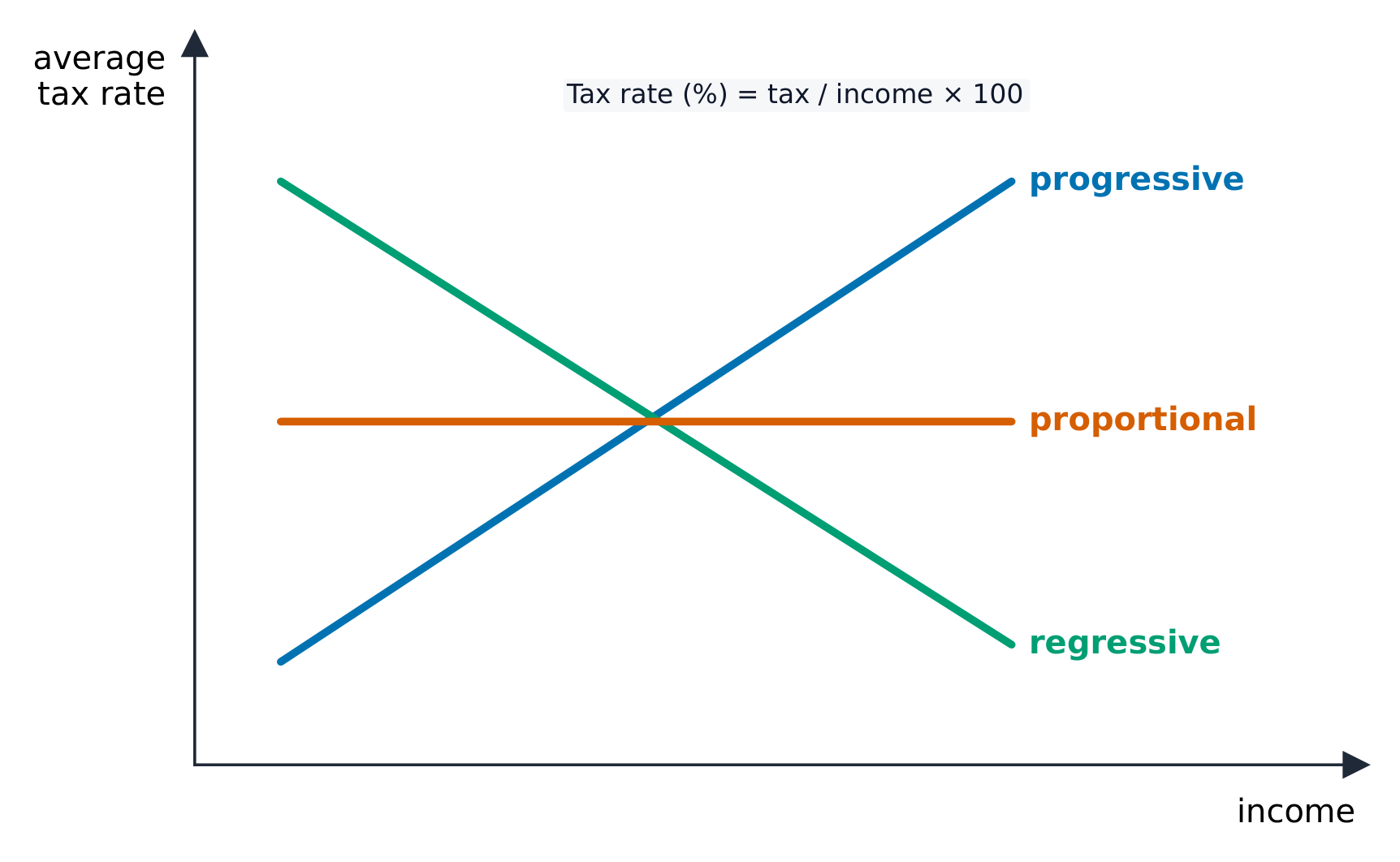
Progressive, regressive and proportional taxes
Fiscal policy shifts AD
Spending more or taxing less shifts aggregate demand right — raising output, but also the price level.
Expansionary fiscal policy involves:
Difficulty 1/5 · 100 coins + a small bonus on first completion today
It boosts demand by spending more or taxing less.
Expansionary 扩张性的 fiscal policy
- To boost a weak economy: spend more and/or cut taxes.
- This raises demand, output and jobs — but may widen the budget deficit 预算赤字 and stoke inflation.
Which is a direct tax?
Difficulty 1/5 · 100 coins + a small bonus on first completion today
Income tax is paid directly on income — a direct tax.
Raising taxes is a contractionary fiscal policy used to cool an economy.
Difficulty 1/5 · 100 coins + a small bonus on first completion today
Higher taxes reduce demand, curbing inflation.
Contractionary 紧缩性的 fiscal policy
- To cool an overheating economy: spend less and/or raise taxes.
- This curbs demand and inflation — but can slow growth and cost jobs.
Direct vs indirect tax 间接税. A direct tax 直接税 is paid straight to the government on income or profit (income tax). An indirect tax is added to a good's price and collected by sellers (VAT, duties).
You've got it
- fiscal policy = government spending and taxation
- expansionary (spend more / tax less) boosts demand; contractionary does the opposite
- direct taxes hit income/profit; indirect taxes are added to prices