Cash-flow forecasting and working capital
Introduced| English | Meaning |
|---|---|
| cash flow/kæʃ fləʊ/ | The movement of money into and out of a business over time. |
| inflows/ˈɪnfləʊz/ | inflows |
| outflows/aʊtˈfləʊz/ | outflows |
| net cash flow/net kæʃ fləʊ/ | Inflows − outflows. |
| cash-flow forecast/kæʃ fləʊ ˈfɔːkæst/ | An estimate of future cash inflows, outflows and balances over a specified period. |
| working capital/ˈwɜːkɪŋ ˈkæpɪtl/ | A common cause of business failure. |
| current assets/ˈkʌrənt ˈæsets/ | Assets expected to be used, sold or converted into cash within the normal operating cycle or a year. |
| current liabilities/ˈkʌrənt ˌlaɪəˈbɪlɪtiz/ | Obligations expected to be settled within the normal operating cycle or a year, as defined in the accounting framework used. |
Cash is king
- A business can be making sales yet still run out of money to pay this week's bills.
- Cash flow 现金流 — money in and out — must be managed carefully, especially day to day.
Inflows are 40 and outflows are 52. What is the net cash flow?
Difficulty 2/5 · 140 coins + a small bonus on first completion today
Net cash flow = 40 − 52 = −12.
Cash inflows 流入 and outflows 流出
- Inflows: cash coming in (sales receipts, loans).
- Outflows: cash going out (wages, suppliers, rent).
- Net cash flow 净现金流 = inflows − outflows.
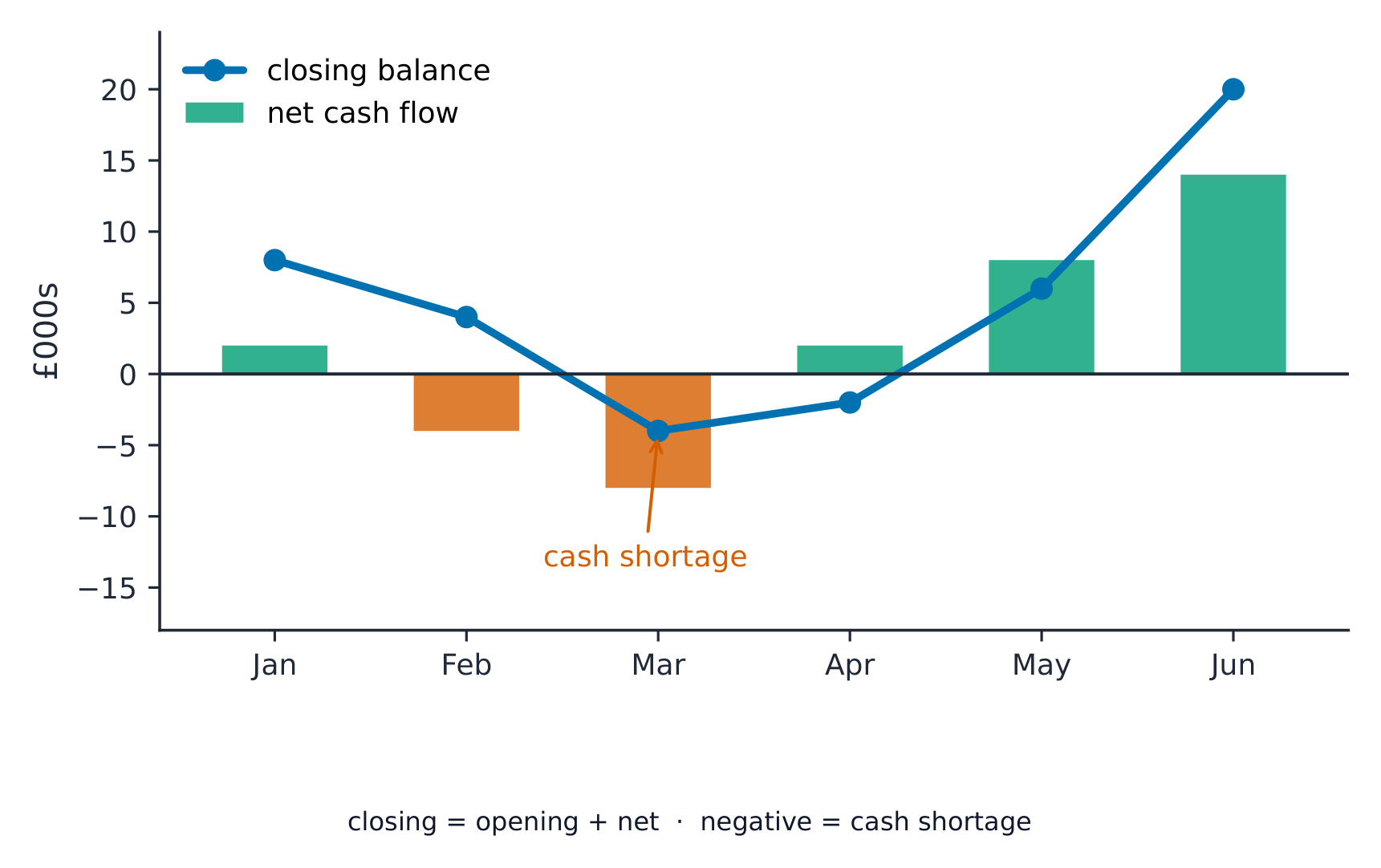
A cash-flow forecast 现金流预测 tracks the closing balance each month
Cash-flow forecasting
A forecast of cash in and out each month warns a business of a cash shortage before it strikes.
Opening balance 15, net cash flow −6. What is the closing balance?
Difficulty 2/5 · 140 coins + a small bonus on first completion today
Closing = opening + net cash flow = 15 + (−6) = 9.
The main purpose of a cash-flow forecast is to:
Difficulty 1/5 · 100 coins + a small bonus on first completion today
It flags cash shortages early.
The cash-flow forecast
- A cash-flow forecast predicts inflows and outflows month by month.
- It warns when the business might run short, so finance can be arranged in advance.
Worked example. Opening balance 8, inflows 30, outflows 35 → net cash flow = 30 − 35 = −5. Closing balance = 8 − 5 = 3. A small but positive balance — watch it carefully.
Build the six-month forecast
Drag the monthly cash in, cash out and the one-off oven purchase — does the bakery stay out of the red all six months?
A profitable business can still run out of cash.
Difficulty 1/5 · 100 coins + a small bonus on first completion today
Profit is not cash — credit sales and stock tie up money.
Working capital equals current assets minus current ______.
Difficulty 1/5 · 100 coins + a small bonus on first completion today
It is the cash available for short-term needs.
Working capital 营运资金
- Working capital = current assets 流动资产 − current liabilities 流动负债: cash to meet short-term needs.
- Too little working capital is a common cause of business failure.
Profit is not the same as cash. A sale made on credit adds to profit at once but brings no cash until the customer pays. A profitable business can still run out of cash.
You've got it
- net cash flow = inflows − outflows; the forecast predicts it month by month
- it warns of shortages early so finance can be arranged
- working capital = current assets − current liabilities; profit ≠ cash
Write from a net cash flow of 17
- Inflows are 65 and outflows are 48. The opening balance is 10.
- Find the net cash flow and the closing balance. A credit sale is not cash yet.
Inflows are 65, outflows are 48 and the opening balance is 10. What are the net cash flow and the closing balance, and why can a profitable credit sale still leave the firm short of cash?
Net cash flow is inflows minus outflows. Closing balance is the opening balance plus that net flow.
What is the net cash flow?
Difficulty 1/5 · 100 coins + a small bonus on first completion today
65 minus 48 is 17. Adding the opening balance of 10 gives the closing balance of 27. Other options — Minus 12 (the lesson example's result for inflows of 40 and outflows of 52); 27 (the closing balance).