Immunity and vaccination
Introduced| English | Meaning |
|---|---|
| immune system/ɪˈmjuːn ˈsɪstəm/ | The cells, tissues and processes that defend an organism against pathogens and other harmful or foreign material. |
| vaccine/vækˈsiːn/ | A preparation that trains the immune system to recognise an antigen and develop protective immune memory. |
| phagocytes/ˈfæɡəsaɪts/ | Immune cells that engulf and digest pathogens or other particles. |
| lymphocytes/ˈlɪmfəsaɪts/ | A type of white blood cell involved in immune responses, including B cells and T cells. |
| antibodies/ˈæntɪbɒdiz/ | Proteins made by immune cells that bind to specific antigens. |
| memory cells/ˈmeməri selz/ | A long-lived immune cell that enables a faster or stronger response when the same antigen is encountered again. |
| antigens/ˈæntɪdʒenz/ | A molecule or molecular feature recognised by the immune system that can trigger a specific immune response. |
| immunity/ɪˈmjuːnɪti/ | immunity |
The body fights back
- If pathogens get past the barriers, the body's immune system 免疫系统 takes over.
- White blood cells are the soldiers — and vaccines 疫苗 train them in advance.
Phagocytes defend the body by:
Difficulty 1/5 · 100 coins + a small bonus on first completion today
Phagocytes engulf pathogens; lymphocytes make antibodies.
Two kinds of white blood cell
- Phagocytes 吞噬细胞 engulf and digest pathogens.
- Lymphocytes 淋巴细胞 make antibodies 抗体 — proteins that lock onto a specific pathogen.
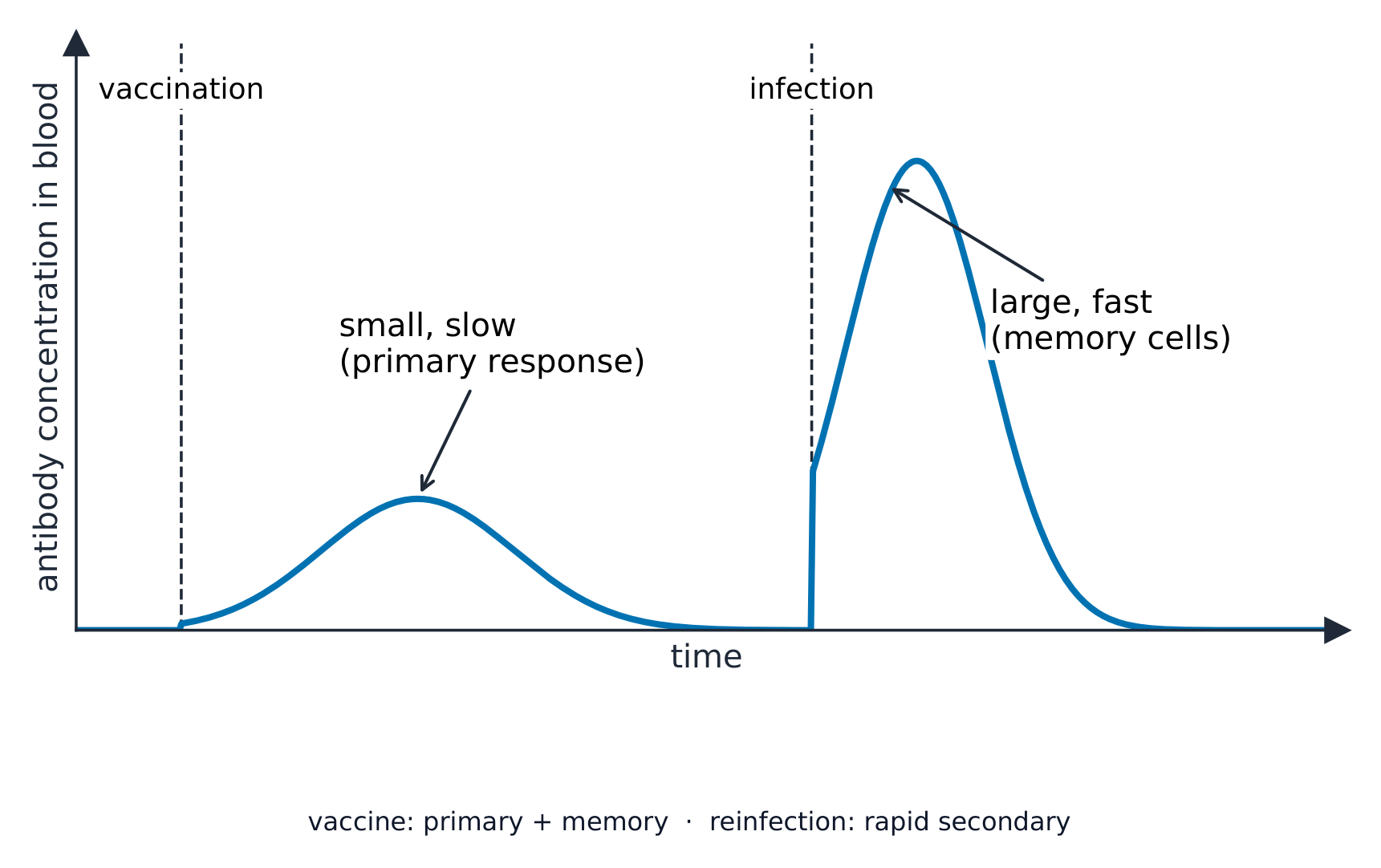
After vaccination, memory cells 记忆细胞 give a fast, large response if the real pathogen arrives
The immune response
White blood cells recognise and destroy pathogens, and remember them so you are immune next time.
Antibodies are made by:
Difficulty 1/5 · 100 coins + a small bonus on first completion today
Lymphocytes produce antibodies.
Memory cells let the body respond faster to a pathogen it has met before.
Difficulty 1/5 · 100 coins + a small bonus on first completion today
This is the basis of immunity.
Antibodies recognise the markers on a pathogen called ______.
Difficulty 1/5 · 100 coins + a small bonus on first completion today
Each antibody fits a specific antigen.
Antibodies and memory
- Each antibody fits one pathogen's antigens 抗原, marking it for destruction.
- After an infection, memory cells remain — so a second attack is defeated faster. This is immunity 免疫.

Cholera toxin pulls water into the gut by osmosis, causing diarrhoea and dehydration
A vaccine protects you by:
Difficulty 1/5 · 100 coins + a small bonus on first completion today
It safely primes the immune system.
Vaccination
- A vaccine contains a harmless form of a pathogen (or its antigens).
- It triggers antibody production and memory cells without causing the disease — so you're protected.
Worked example. A measles vaccine introduces harmless measles antigens. Lymphocytes make antibodies and memory cells. If real measles arrives later, memory cells respond so fast that you never get ill.

Pathogens spread by direct contact or indirectly
You've got it
- phagocytes engulf pathogens; lymphocytes make antibodies
- antibodies fit a pathogen's antigens; memory cells give long-term immunity
- a vaccine triggers immunity safely, without causing the disease