Protectionism
Introduced| English | Meaning |
|---|---|
| protectionist/prəˈtekʃənɪst/ | protectionist |
| tariff/ˈtærɪf/ | A tax imposed on imported goods. |
| quota/ˈkwəʊtə/ | A fixed limit on the quantity of a good that may be produced, sold or imported. |
| subsidy/ˈsʌbsɪdi/ | Financial assistance, usually from government, that reduces costs or supports a particular activity. |
| infant industries/ˈɪnfənt ˈɪndʌstriz/ | infant industries |
| dumping/ˈdʌmpɪŋ/ | Selling exports at a price below the comparable home-market price or an appropriate cost benchmark. |
| retaliation/rɪˌtælɪˈeɪʃn/ | A response against another party's action, such as imposing trade restrictions after a partner introduces tariffs. |
| world welfare/wɜːld ˈwelfeə/ | world welfare |
Walls around a market
- Governments often shield home industries from foreign competition — with taxes on imports, limits on quantities, or subsidies to local firms.
- These protectionist 贸易保护主义的 tools help some, hurt others, and almost always reduce total welfare.
A tariff is:
Difficulty 1/5 · 100 coins + a small bonus on first completion today
A tariff is an import tax; a quota is a quantity limit; a subsidy pays home firms.
Match each protectionist tool to its definition.
Difficulty 2/5 · 140 coins + a small bonus on first completion today
Three classic tools: tax, quantity limit, and producer support.
A physical limit on the quantity of a good that may be imported is called a ______.
Difficulty 1/5 · 100 coins + a small bonus on first completion today
A quota caps the import quantity (vs a tariff, which taxes it).
The main tools
- Tariff 关税: a tax on imports — raises their price, cuts the quantity imported.
- Quota 配额: a physical limit on the quantity imported.
- Subsidy 补贴: payment to domestic firms so they can undercut imports.
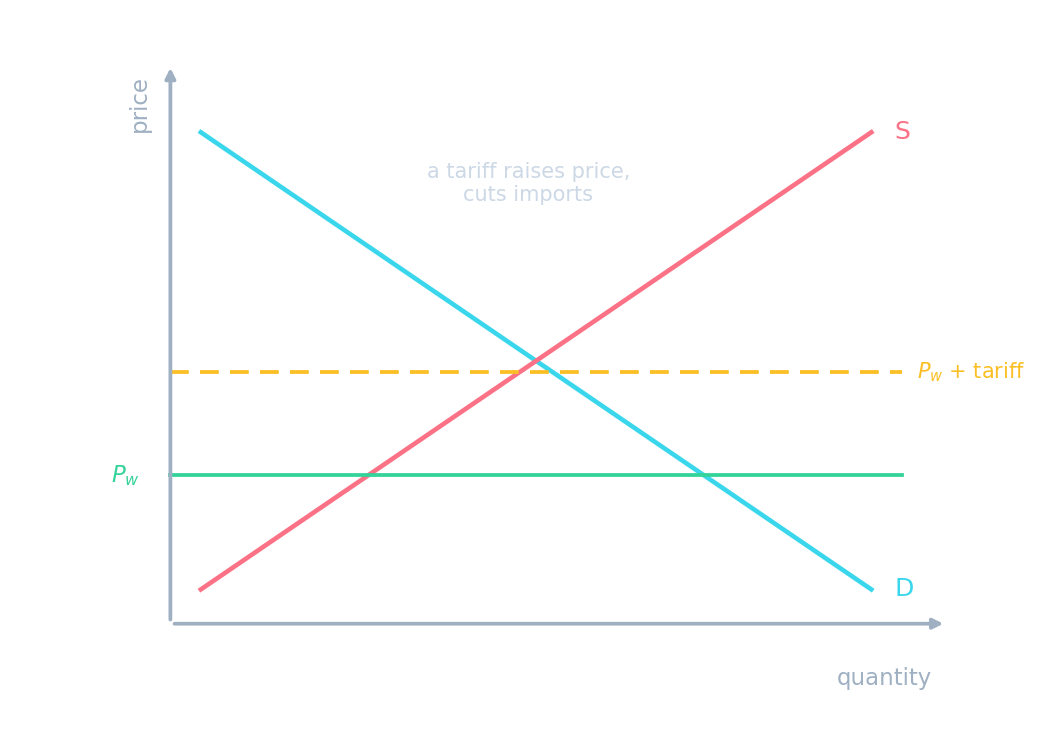
A tariff lifts the price from the world price (Pw) to Pw + tariff, so consumers buy less and imports fall.
Protectionism in the market
A tariff or quota shifts effective supply and raises the domestic price, protecting home producers but costing consumers. Shift the lines to see it.
The "infant industry" argument says protection should be used to:
Difficulty 1/5 · 100 coins + a small bonus on first completion today
Temporary protection while a young industry achieves economies of scale.
Arguments for protection
- Protect infant industries 幼稚产业 until they can compete,
- guard against dumping 倾销 (foreign goods sold below cost),
- save jobs in declining industries, and raise government revenue (tariffs).
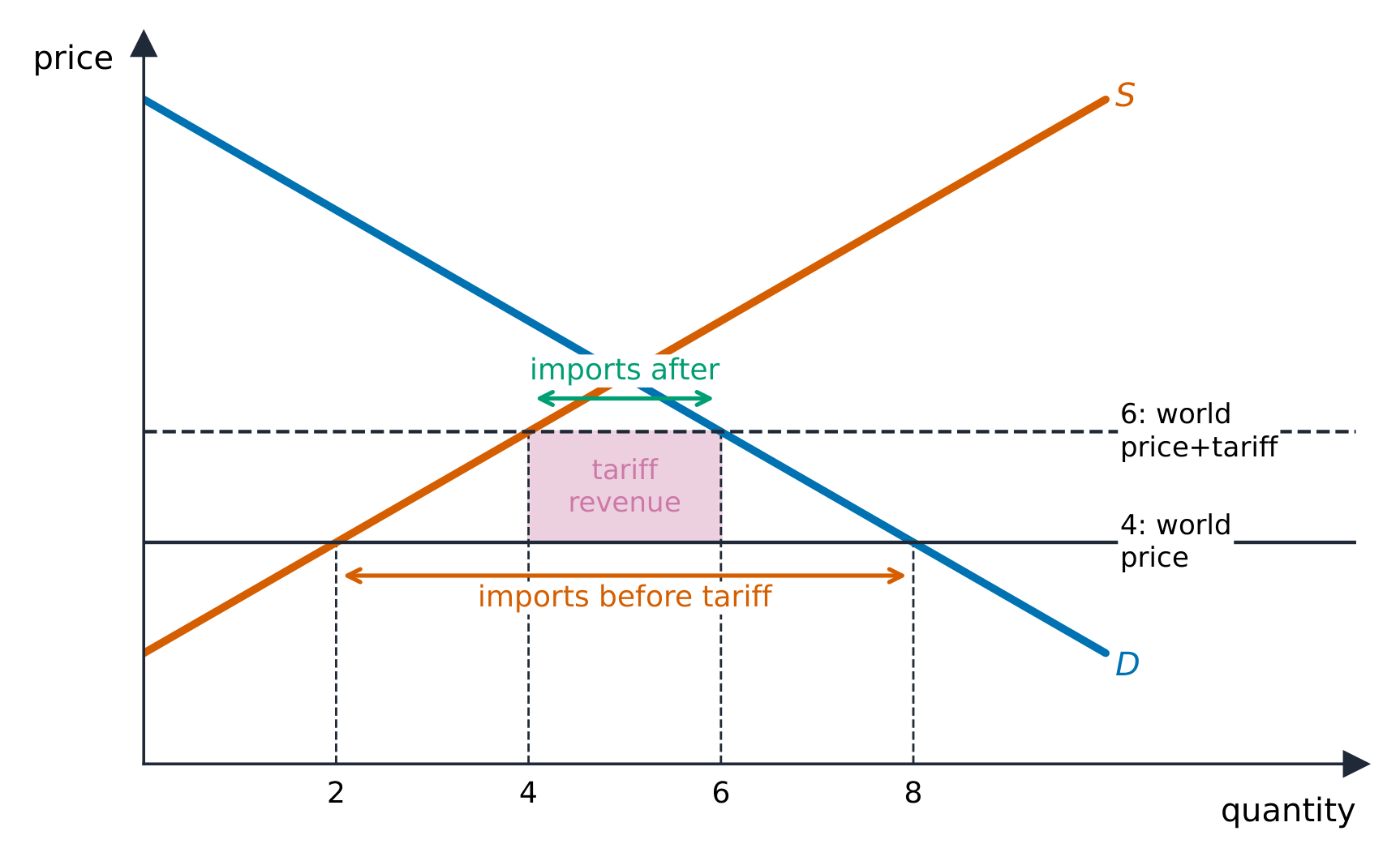
A tariff raises domestic supply, cuts demand, and shrinks imports
Protectionism tends to raise prices for domestic consumers.
Difficulty 1/5 · 100 coins + a small bonus on first completion today
Tariffs and quotas reduce competition and raise prices.
Arguments against
- Higher prices and less choice for consumers,
- inefficiency (protected firms don't improve),
- risk of retaliation 报复 and trade wars,
- net loss of world welfare 世界福利 (lost gains from trade).
A tariff helps producers but hurts consumers more. Domestic firms and the government gain, but consumers lose more than that — leaving a net welfare loss.

Three tools of protection: tariffs, quotas and subsidies
You've got it
- tools: tariff (import tax), quota (quantity limit), subsidy (to home firms)
- arguments for: infant industry, anti-dumping, jobs, revenue
- arguments against: higher prices, inefficiency, retaliation, net welfare loss