Your learning plan · Continue · Review →
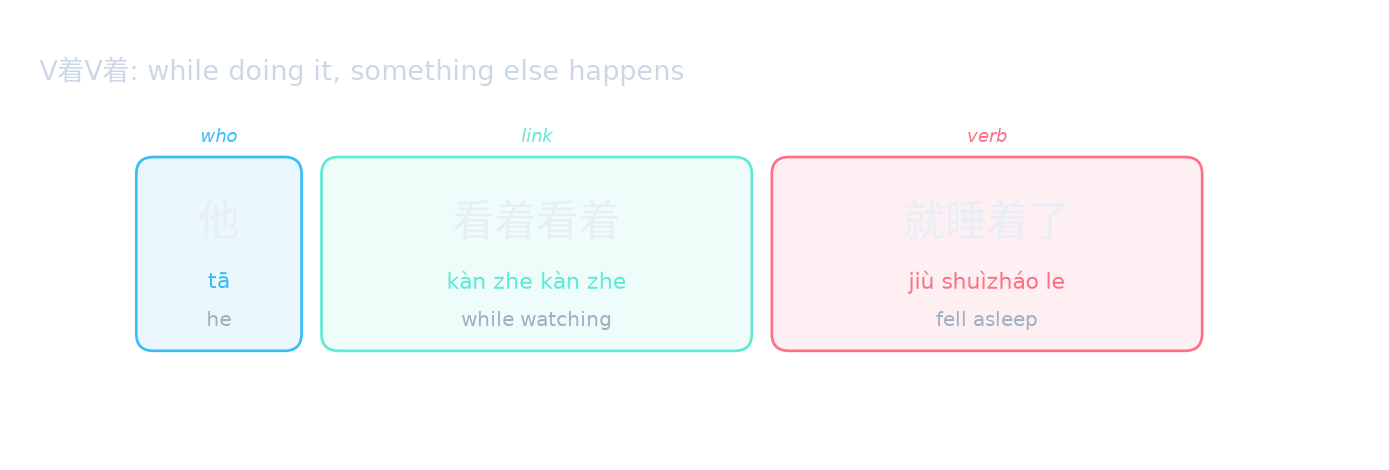
V 着 V 着 就 … 了 (while …-ing, suddenly)
도입됨저장된 위치는 이 브라우저에 유지됩니다. 계속하기는 수업을 완료하거나 질문에 답하는 것이 아닙니다.
Asleep in front of the TV
- Your dad was watching a film after dinner. When you came back, he was snoring.
- he他watches看(ongoing)着watches看(ongoing)着then就to fall asleep睡着(completed / change)了。 — "He was watching and watching, and then he fell asleep."
V (ongoing)着 V (ongoing)着 then就 + new event + (completed / change)了
- V(ongoing)着V(ongoing)着,then就…(completed / change)了 = while doing V (for a while), something new happened without planning.
- The first action continues; the second appears suddenly.
she她talk说(ongoing)着talk说(ongoing)着then就cry哭了。
Complete: “While reading, she fell asleep.” 她看着看着____睡着了。
난이도 1/5 · 100 코인 + 오늘 첫 완료 시 소액 보너스
V着V着就 + new event + 了.
Stories and surprises
- we我们walk走(ongoing)着walk走(ongoing)着,then就get lost迷路(completed / change)了。 — "We were walking along, and before we knew it we were lost."
- child孩子Taiwan pr.玩(ongoing)着Taiwan pr.玩(ongoing)着then就笑了起来。 — "While playing, the child started laughing."
we我们walk走(ongoing)着walk走(ongoing)着then就get lost迷路了。
Build: “We were walking, and before we knew it we were lost.”
난이도 3/5 · 200 코인 + 오늘 첫 완료 시 소액 보너스
Subject + V着V着 + 就 + result + 了.
One-syllable verb, past events
- Use a one-syllable verb, repeated with (ongoing)着 each time: watches看(ongoing)着watches看(ongoing)着, not to take a look at看看(ongoing)着(ongoing)着.
- It describes what happened in the past (a story), so the second part ends with (completed / change)了.
Which form is correct?
난이도 1/5 · 100 코인 + 오늘 첫 완료 시 소액 보너스
Verb + 着 + verb + 着 + 就 shows that while doing one thing, something else happened: 他走着走着就到了 “He kept walking and before he knew it he had arrived.”
Versus while一边…while一边…
- while一边…while一边… = two actions at once, both planned: while一边eating吃while一边watches看.
- V(ongoing)着V(ongoing)着then就… = a new event slips in while one action goes on: eating吃(ongoing)着eating吃(ongoing)着then就to fall asleep睡着(completed / change)了.
he他while一边eating吃(also)一边watches看TV电视。
V着V着就… describes two planned actions done together.
난이도 1/5 · 100 코인 + 오늘 첫 완료 시 소액 보너스
That is 一边…一边…; V着V着就 has an unplanned new event.
Recap
- V(ongoing)着V(ongoing)着,then就 + new event + (completed / change)了 = while doing V, (unexpectedly) …
- One-syllable verb, past story, (completed / change)了 at the end. while一边…while一边… = two planned actions.
Read the full reference: HSK 4 grammar — Verb phrases.
Your dad was watching a film after dinner. When you came back, he was snoring. Close the examples. Say a Mandarin response, then write it in Chinese. Explain briefly in English what the lesson’s pattern adds. Compare with the model, then change one detail and try again.
This is supported productive practice. Compare meaning and structure; your answer need not copy the model. A partner or teacher must hear the spoken response to comment on pronunciation.