본문 바로가기

협업형 오리지널 연극 · 창작, 앙상블 및 평가

국제바칼로레이트 · IB Diploma · Theatre · SL · 주제 3

이 주제용 영상 수업 영상 페이지 열기
2:33

협업형 오리지널 연극

협업 창작은 시작 지점에서 시작하여 의도를 형성하고, devising을 통해 소재를 생성하며, 공연에서 이를 테스트한 후 평가한다.

영어 내레이션 · 영어 + 중국어 자막 burned-in

3.1

협업적 원작 극

IB Diploma Programme Theatre SL (first assessment 2024; current guide). Collaboratively creating original theatre is shared by SL and HL: an ensemble of theatre-makers formulates intentions, examines how intentions are realised in collaboration, and creates original performance work inspired by a starting point. This handout teaches the devising craft - from starting point through ensemble process to performance and evaluation. All worked examples are original.

협업적 창작에 필수 지식:

가족 내용
앙상블 역할, 합의, 피드백: 협업이 어떻게 구성되는지
평가 의도가 관객에게 전달되었는가? 느낌보다는 증거
기획 워크숍 방법: 이미지 극장, 즉흥극, 공간 내 글쓰기
앙상블 역할, 합의, 피드백: 협력이 어떻게 구성되는지
평가 의도가 관객에게 전달되었는가? 느낌 대신 증거
English 한국어
starting point/ˈstɑːtɪŋ pɔɪnt/ 시작점
intention/ɪnˈtenʃn/ 창작 의도
ensemble/ɒnˈsɒmbl/ 앙상블
performance/pəˈfɔːməns/ 연기
3.2

시작점과 의도

시작점은 씨앗: 사진, 뉴스 기사, 물체, 시, 질문, 기억 — 엔ensemble이 심문하기로 합의한 어떤 것이라도 됨. 기술은 묘사가 아닌 심문임: 시작점은 그것이contains(사실, 긴장, 침묵), CONNECTS to(누구의 이야기, 어떤 구조, 어떤 관객), 그리고 극장에 DEMANDs(왜 이를 연기로 해야 하고 에세이로 써서는 안 되는가)를 묻는다. 심문에서 의도가 도출됨: 이 작품은WHAT FOR — 주제(

Worked example. Starting point: a pile of confiscated border-crossing objects (shoes, a child's drawing, a phone). The interrogation: the objects are silent (their owners absent), the tension is presence-through-absence, the demand is that the audience handle what the owners cannot carry. Intention: “the audience leaves having held something they could not keep.” Every scene generated must be tested: does it make absence handleable?

시작점, 질문, 의도 및 소재 상자, 의도와 소재가 서로 검증하는 모습
시작점을 질문하고 의도를 작성한 뒤, 모든 장면을 의도에 따라 검증하십시오; 의도는 변경될 수도 있습니다.
3.3

창작 과정

Devising generates material in the room rather than interpreting a written text. The generating methods: Image theatre (ensembles build still images (sculpted bodies) and the images are re-sculpted against the intention; fast, wordless, exposes staging instantly); IMPROVISATION (structured play that generates scenes — with rules that keep the intention in the room: “every improvisation ends with an object left behind”); WRITING IN THE ROOM (monologues, lists, letters generated from the material, then edited by the ensemble); and PHYSICAL/VOCAL COMPOSITION (transferring found material into the body — a rhythm from the objects, a choral list, a repeated gesture). The material accumulates on the wall; the shaping phase selects and orders it against the intention, building the piece's SPINE (its own through-line, topic 01's read now applied to the ensemble's own work).

Worked example, continued. Image theatre generates “the line at the fence”; improvisation generates the guard who cannot stop apologising; writing generates the owner's letters read by strangers. Shaping orders them: the audience enters past the objects; the letters are given to them; the piece ends when every object has been held and put down.

English 한국어
image theatre/ˈɪmɪdʒ ˈθɪətə/ 이미지 극장
3.4

Ensemble, performance and evaluation

The ensemble is structured collaboration, not a friendship: agreed ROLES (facilitator rotates; the scribe keeps the wall; the timekeeper protects the clock), working AGREEMENTS (how decisions happen, how disagreement is voiced, what is said at the end of each session), and FEEDBACK protocols (specific, behavioural, about the work not the person — “the third image repeated the first; cut or change”). The classic collaborative failures have names: the director-in-disguise (one member's vision silently governing), the polite silence (agreement without scrutiny — the enemy of original work) and the workshop loop (generating endlessly, never shaping). The performance is the test: the audience either receives the intention or not. EVALUATION gathers evidence — what the audience DID (held, put down, kept talking at the door), what worked in performance against intention, what the process taught about collaboration itself — and owns what failed. The reflective weight the marks assign falls here: process and product are evaluated together.

3.5

체크리스트

  • 시작점의 검증 (포함, 연결, 요구), 설명되지 않음; 의도는 수행적 목표로, 작성되고, 검증되며, 수정됨(의도).
  • 창작 방법: 이미지 극, 규칙에 따른 즉흥연기, 공간 속 글쓰기, 신체/음성 구성; 자료가 축적된 후 작품의 뼈대로 다듬어짐(창작극).
  • 앙상블 구조: 역할 순환, 합의, 피드백 프로토콜; 명명된 세 가지 실패(앙상블).
  • 의도의 검증으로서의 퍼포먼스; 관객 증거를 통한 평가, 프로세스가 제품과 함께 소유됨 (평가).
  • 작업된 경계 객체 작품: 해부, 의도, 생성된 장면 및 형성된 질서 이해 (작업됨).

경계 메모: 협업 프로젝트는 제작, 공연 및 평가를 통합하여 평가받으며, 앙상블의 반성이 실제 중량을 가진다. 모든 해설 예시는 원본이다.

작업된 평가 문장. "침묵이 기능했다: 두 번째 정지 시 관객 3명이 몸을 기울였고, 한 명이 직접 질문에 대놓고 답했다 — 하지만 결말의 의미는 전달되지 않았고, 추후 묻혔으며, 입증되지 않았다." 증거가 먼저, 판단이 나중, 한계가 명시됨: 이러한 문장에 대한 평가 기준을 지불해야 하며, "우리는 잘 갔다고 생각한다"와 같은 표현은 불합격임.

지원 준비: 창작 및 기여

범위 및 전제 조건

IB 연극 첫 번째 평가 2024. 교사가 필요시 previously unstudied 극본 텍스트, 전통 및 이론가를 승인합니다. 실제 연습, 공연 및 녹화된 발표는 학교 관리 하의 과제로 남습니다.

매핑된 준비 결과: ib_theatre_sl.3.1, ib_theatre_sl.3.2. 일치하는 네이티브 레슨을 먼저 읽으십시오. 실제 승인된 선택, 증거 및 최종 학습자 작품은 별개로 유지됩니다.

출처 어휘

ensemble; devising.

설명 및worked 방법

Devising(창작)은 공동 탐구를 통해 독창적인 소재를 선정합니다. 의도, 시도, 피드백, 결정 및 결과를 연결해 두십시오. 개인 평가에서는 학습자가 ensemble(앙상블) 내에서 실제로 어떤 부분을 기여했는지 명시해야 합니다.

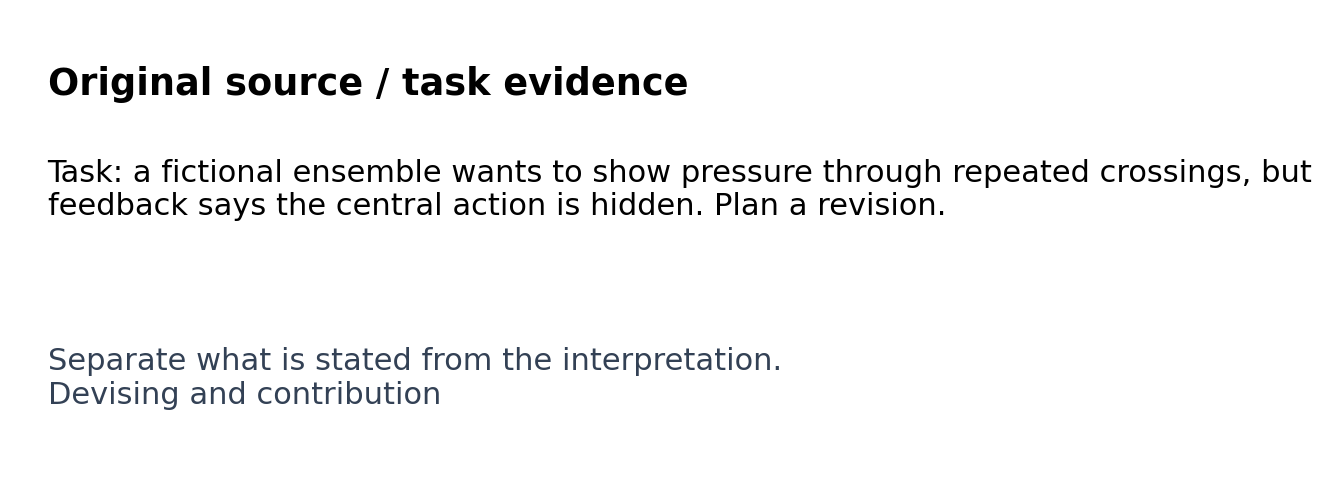
Devising and contribution에 대한 원본 교실 증거 패널

과제: 허구의 Ensemble(앙상블)가 반복적인 이동으로 긴장감을 표현하고자 하지만, 피드백에 따르면 중심 행동이 가려져 있습니다. 수정 계획을 수립하십시오.

의도된 긴장감을 유지하면서 이동 횟수를 줄이거나 타이밍/시야각을 변경해 보십시오. 실제 관객의 가시성과 표현적 효과를 비교하고, 누가 이 선택을 제안하고 테스트하며 다듬었는지를 식별하십시오.

독립적 전이

이동 횟수를 줄이면 행동이 명확해지지만 긴장감이 약해집니다. 추가적인 Devising(창작) 테스트를 제안하십시오.

모형 독독하기 전에 독립적으로 시도하십시오.

검증된 원본 모델

중심 행동을 가리지 않으면서 이동 타이밍, 간격 또는 초점을 변화시키고, 실제 관객의 가시성과 표현적 반응을 비교하십시오. 개인의 기여와 Ensemble(앙상블)의 결정을 문서화하십시오. 이 트레이드오프는 단순한 명확성에 대한 자동 선호가 아니라, 공동 의도와 대조되는 증거에 기반해야 합니다.

이것들은 작성된 형성적 기대이며 공식 IB 기술이 아닙니다. 증거와 자료적 한계를 가진 다른 타당한 논증은 수용하십시오.

출처 및 과제 보유

이 보충 자료는 해당 과정의 이 부분에 대한 방법을 가르칩니다. 전체 평가 기준과 학교에서 선택한 모든 텍스트는 담당 교사로부터 나옵니다.

이 주제에 대한 인터랙티브 수업

즉시 체크 기능 exercises를 통해 단계별로 진행하세요.

국제바칼로레이트 · IB Diploma · Theatre · SL 내 추가 주제

로그인 또는 계정 만들기

IGCSE, A-Level & AP