Impact of computing · 컴퓨팅의 영향
Computing changes the world
- Computing affects almost every part of life: school, work, health, money, and friends.
- The same tool can bring benefits (good effects) and harms (bad effects).
- A good computer scientist thinks about both sides, not just the cool features.
컴퓨팅이 세상을 바꾸다
- 컴퓨팅은 학교, 업무, 건강, 금융, 친구 관계 등 삶의 거의 모든 부분에 영향을 미칩니다.
- 동일한 도구는 **이익(Benefits, 좋은 영향)**과 **해(Harms, 나쁜 영향)**를 모두 가져올 수 있습니다.
- 훌륭한 컴퓨터 과학자는 멋진 기능뿐만 아니라 **양쪽(Coexist, 양면)**을 모두 고려합니다.
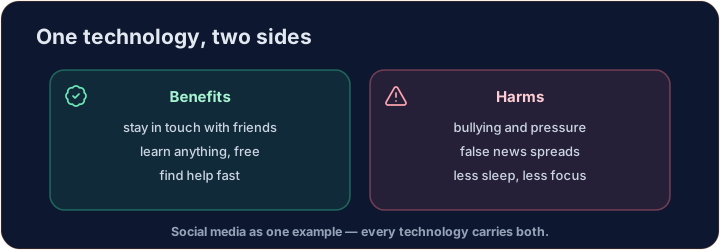
One technology, two sides:

  Social media
    Benefit: stay in touch, share, learn
    Harm:    bullying, false news, less sleep
Benefits and harms together
- A benefit for one group can be a harm for another.
- Example: an app that suggests videos keeps you watching (benefit for the company) but can waste your time (harm for you).
- Always ask: who gains, who loses, and what could go wrong?
이익과 해의 공존
- 한 집단에 대한 이익은 다른 집단에 대한 해가 될 수 있습니다.
- 예시: 동영상을 추천하는 앱은 사용자를 시청하게 만들어 기업에게는 이익이지만, 사용자의 시간을 낭비시키는 해가 됩니다.
- 항상 물어야 합니다: 누가 이득을 보며, 누가 손해를 보고, 무엇이 잘못될 수 있을까?
The digital divide
- The digital divide is the gap between people who have good access to computing and those who do not.
- Causes include money, where you live (no fast Internet), and not having training.
- This is unfair: people without access miss out on school, jobs, and information.
디지털 격차
- **디지털 격차(Digital Divide)**는 컴퓨팅에 접근할 수 있는 사람들과 그렇지 못한 사람들 사이의 차이를 의미합니다.
- 원인으로는 비용, 거주地的(빠른 인터넷 없음), 그리고 교육 훈련 부족 등이 포함됩니다.
- 이는 불공정합니다: 접근하지 못하는 사람들은 학교, 취업, 정보에서 소외됩니다.
Bias in computing
- Bias means an unfair result that favors one group over another.
- Software learns from data. If the data is unfair or incomplete, the results can be unfair too.
- Example: a face tool trained mostly on one kind of face may work badly for other people.
컴퓨팅에서의 편향(Bias)
- **편향(Bias)**은 한 집단을 다른 집단보다 불공정하게 우대하는 결과를 뜻합니다.
- 소프트웨어는 **데이터(Data)**로부터 학습합니다. 데이터가 불공정하거나 불완전하면, 결과 역시 불공정해질 수 있습니다.
- 예시: 한 종류의 얼굴 위주로 학습된 얼굴 도구가 다른 사람들에게는 제대로 작동하지 않을 수 있습니다.
Biased data  ->  biased results

  Training data:  mostly group A faces
  Result:         works well for A, poorly for B
Intellectual property and licensing
- Intellectual property (IP) is creative work people make: code, music, art, writing.
- A license is the rules for how others may use that work. Using work without permission can break the law.
- Open source software shares its code so others may read and reuse it; Creative Commons licenses let creators say "you may share this, with these conditions".
지적 재산권 및 라이선스
- 지적 재산권(IP) 은 사람들이 창작한 작품으로, 코드, 음악, 예술, 글쓰기 등을 포함합니다.
- 라이선스는 타인이 해당 작품을 사용할 수 있는 규칙입니다. 허락 없이 작품을 사용하면 법적 위반이 될 수 있습니다.
- 오픈 소스 소프트웨어는 코드를 공개하여 다른 사람이 읽거나 재사용할 수 있게 하며, 크리에이티브 커먼즈 라이선스는 크리에이터가 "다음 조건 하에 이 작품을 공유할 수 있다"고 명시할 수 있게 합니다.
Privacy and PII
- PII means Personally Identifiable Information: data that points to a real person.
- Examples: full name, home address, phone number, ID number, exact location.
- Once data is online it is hard to take back, and apps may collect more than you expect. Share carefully.
개인정보 및 PII
- PII는 개인 식별 정보(Personally Identifiable Information) 의 약자로, 특정 실존인을 식별할 수 있는 데이터를 의미합니다.
- 예시: 전체 이름, 주소, 전화번호, ID 번호, 정확한 위치 등.
- 데이터가 온라인에 올라가면 회수가 어렵고, 앱이 예상보다 많은 정보를 수집할 수 있습니다. 신중하게 공유하십시오.
Safe computing
- Use a strong, unique password for important accounts (long, mixed, not reused).
- Watch out for phishing: fake messages that trick you into giving passwords or money. Check the sender; do not click strange links.
- Keep software updated, and think before you post personal data.
안전한 컴퓨팅
- 중요한 계정은 강력하고 고유한 비밀번호(길고,mixed,재사용하지 않음)를 사용하십시오.
- 피싱(Phishing) 을 주의하십시오: 비밀번호나 돈을 속여 내게 하는 가짜 메시지입니다. 발신자를 확인하고 이상한 링크를 클릭하지 마십시오.
- 소프트웨어를 최신 상태로 유지하고, 개인 데이터를 게시하기 전에 신중히 생각하십시오.
Key words
- Digital divide: the gap in access to computing.
- Bias: an unfair result, often from unfair data.
- Intellectual property / license: who owns creative work and how it may be used.
- PII / privacy: personal data, and protecting it.
- Phishing: fake messages that try to steal your information.
핵심 용어
- 디지털 격차(Digital divide): 컴퓨팅에 대한 접근의 격차를 뜻합니다.
- 편향(Bias): 부당한 결과로, 주로 불공정한 데이터에서 발생합니다.
- 지적 재산권 / 라이선스: 창작물의 소유주와 사용 방법.
- PII / 개인정보: 개인정보 및 보호 방법.
- 피싱: 정보를 도모하려는 가짜 메시지.
Common mistakes
- Weigh both the benefits and the harms (bias, privacy, unequal access).
- The digital divide is the gap in access to technology.
흔한 실수
- 편향, 개인정보, 불균형한 접근과 같은 혜택과 해악을 모두 고려하십시오.
- 디지털 격차는 기술에 대한 접근의 격차입니다.
Now you try
- These tasks turn the ideas above into code: PII, bias, and password safety.
- Press Check answer to test your code.
이제 직접 해보기
- 이 과제들은 위의 개념들을 코드로 구현하는 것입니다: PII, 편향, 비밀번호 안전성.
- Answer 확인 버튼을 눌러 코드를 테스트하세요.
PII is data that points to a real person. You are given a record fields (a dict like {"name": ..., "color": ..., "phone": ...}) and a set pii_names of PII field names. Write count_pii(fields, pii_names) that returns how many of the record's keys are PII. · PII(개인 식별 정보)는 실제 사람을 가리키는 데이터입니다. 기록 fields({"name": ..., "color": ..., "phone": ...}와 같은 사전)와 PII 필드 이름의 집합 pii_names이 주어졌습니다. 기록의 키 중 PII에 해당하는 개수를 반환하는 count_pii(fields, pii_names)을 작성하세요.
Click Run to see the output here. · 출력을 보려면 '실행'을 클릭하세요.
Software can be biased if it works better for one group than another. Write accuracy_gap(correct_a, total_a, correct_b, total_b) that returns group A's accuracy minus group B's accuracy, as a decimal. Example: accuracy_gap(90, 100, 60, 100) is 0.3. · 소프트웨어가 한 그룹에 대해 다른 그룹보다 더 잘 작동하면 편향이 있을 수 있습니다. accuracy_gap(correct_a, total_a, correct_b, total_b)을 작성하여 그룹 A의 정확도에서 그룹 B의 정확도를 뺀 소수 값을 반환하세요. 예: accuracy_gap(90, 100, 60, 100)은 0.3입니다.
Click Run to see the output here. · 출력을 보려면 '실행'을 클릭하세요.
A password is strong when it is at least 12 characters and is not in the list of common passwords. Write is_strong(password, common) returning True or False. Example: with common = ["password", "123456"], is_strong("correcthorsebattery", common) is True. · 비밀번호가 강력하기 위해서는 최소 12 자以上的且不在常见密码列表中。编写is_strong(password, common)返回True或False。示例:使用common = ["password", "123456"],is_strong("correcthorsebattery", common)是True。
Click Run to see the output here. · 출력을 보려면 '실행'을 클릭하세요.