- recall the reactions by which halogenoarenes can be produced: substitution of an arene with $\text{Cl}_2$ or $\text{Br}_2$ in the presence of a catalyst, $\text{AlCl}_3$ or $\text{AlBr}_3$ to form a halogenoarene, exemplified by benzene to form chlorobenzene and methylbenzene to form 2-chloromethylbenzene and 4-chloromethylbenzene
- explain the difference in reactivity between a halogenoalkane and a halogenoarene as exemplified by chloroethane and chlorobenzene
Halogen compounds
A-Level Chemistry · Topic 31
 7:56
7:56
Halogen compounds (A2)
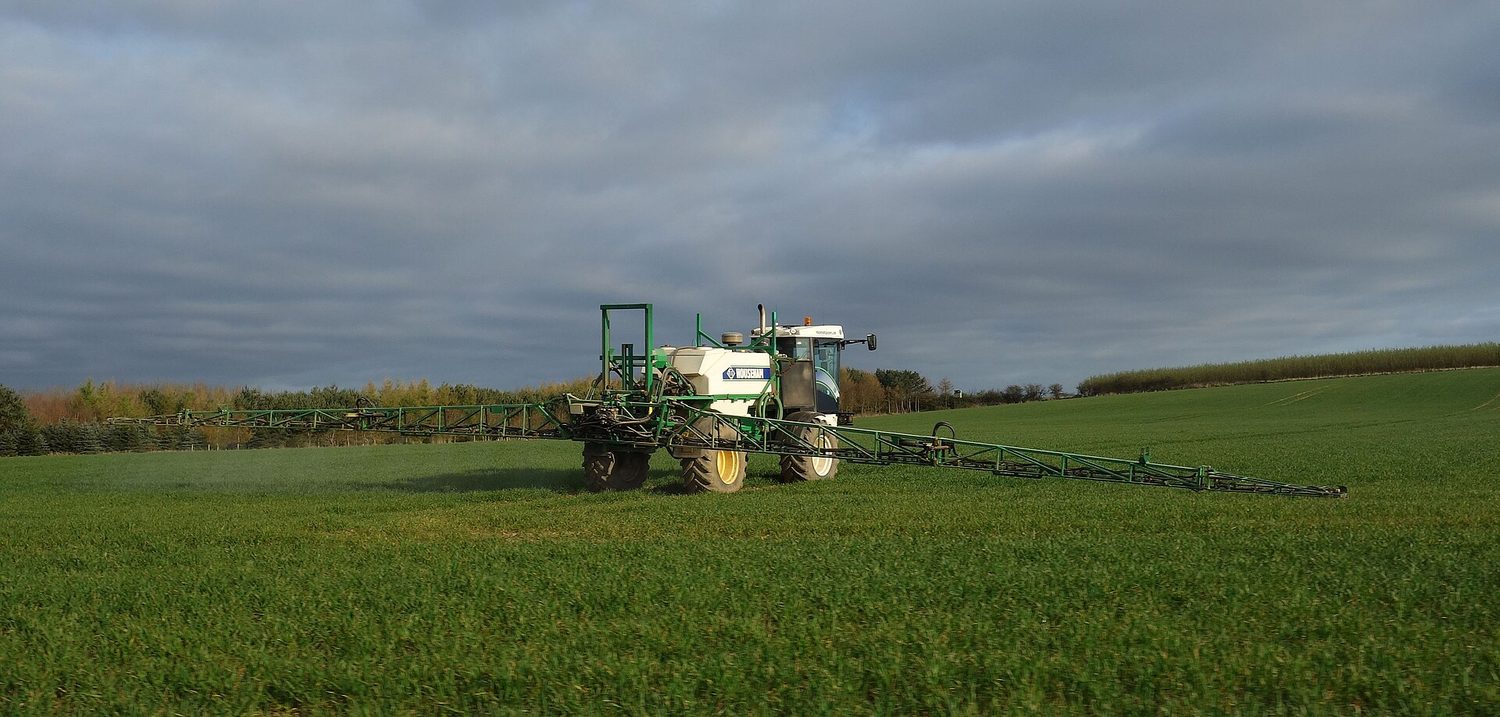
A farmer sprays a field. Many of the pesticides and weedkillers in that tank are halogenoarenes: a chlorine atom bonded straight onto a benzene ring. Now look…
English narration · English + 中文 subtitles burned in
31.1
Making halogenoarenes

Syllabus
Source: Cambridge International syllabus
A halogenoarene 卤代芳烃 (also called an aryl halide) is formed when an arene 芳烃 reacts with $\text{Cl}_2$ or $\text{Br}_2$, using $\text{AlCl}_3$ or $\text{AlBr}_3$ as a catalyst 催化剂. This is the electrophilic substitution from the arenes topic — the halogen replaces a hydrogen on the ring.
- benzene gives chlorobenzene.
- methylbenzene gives 1-chloro-2-methylbenzene and 1-chloro-4-methylbenzene (the methyl group directs the chlorine to positions 2 and 4).
Explore
Halogenoarene lab
Compare halogenoarenes with halogenoalkanes.
Vocabulary
Train
| English |
|---|
| halogenoarene/ˈheɪləʊdʒnɔːren/ |
| arene/ˈæren/ |
| catalyst/ˈkætəlɪst/ |
31.1
Why a halogenoarene is less reactive than a halogenoalkane

Compare chloroethane (a halogenoalkane 卤代烷) with chlorobenzene (a halogenoarene).
A halogenoalkane reacts easily by nucleophilic substitution 亲核取代: its C–Cl bond is polar, so a nucleophile can attack the slightly positive carbon and push the halogen out.
A halogenoarene is very unreactive towards nucleophilic substitution. There are two reasons:
- a lone pair 孤对电子 on the chlorine overlaps sideways with the delocalised 离域 ring of electrons. This gives the C–Cl bond partial double-bond character, making it shorter and stronger, so it is much harder to break.
- the electron-rich ring repels an approaching nucleophile 亲核试剂.
So chlorobenzene does not react with nucleophiles such as $\text{OH}^-$ under normal conditions, while chloroethane does.
Vocabulary
Train
| English |
|---|
| halogenoalkane/ˈheɪləʊdʒnəʊlkeɪn/ |
| nucleophilic substitution/ˌnjuːklɪəˈfɪlɪk ˌsʌbstɪˈtjuːʃn/ |
| lone pair/ləʊn peə/ |
| delocalised/dɪˈlɒkəlaɪzd/ |
| nucleophile/ˈnjuːklɪɒfaɪl/ |
31.1
Exam tips
- A halogenoarene is less reactive than a halogenoalkane: the lone pair delocalises into the ring, giving the $\text{C-X}$ bond partial double-bond character.
- Distinguish a halogen on the ring (needs a catalyst, unreactive to substitution) from one on a side chain (reacts like a halogenoalkane).
Interactive lessons on this topic
Work through it step by step, with instant-check exercises.