| English | 意味 |
|---|---|
| gross domestic product/ɡrəʊs dəˈmestɪk ˈprɒdʌkt/ | 国内総生産(GDP) |
| market value/ˈmɑːkɪt ˈvæljuː/ | 市場価値 |
| final goods/ˈfaɪnl ɡʊdz/ | 最終財 |
| circular flow model/ˈsɜːkjʊlə fləʊ ˈmɒdl/ | 循環流動モデル |
| households/ˈhaʊshəʊldz/ | 世帯 |
| firms/fɜːmz/ | 企業 |
| government/ˈɡʌvənmənt/ | 政府 |
| intermediate goods/ˌɪntəˈmiːdɪət ɡʊdz/ | 中間財 |
| double-count/ˈdʌbl kaʊnt/ | 重複計上 |
| used goods/juːzd ɡʊdz/ | 中古品 |
| purely financial transactions/ˈpjʊəli faɪˈnænʃl trænˈsækʃnz/ | 純金融取引 |
一国経済を表す一つの数値
- 一国の生産額のような巨大なものをどう測るか?
- 一年間に生産されたすべてのものの価値を合計する。
- その一つの数値が国内総生産(GDP)である。
- 一个简单的モデル shows why a nation's output and its income are the same thing. (注:原文混在のため日本語化)一个简单的モデルは、一国の生産額と所得が同一である理由を示している。
循環流
- GDPとは、ある国で一年間に生産された所有最終財・サービスの市場価値の総計である。
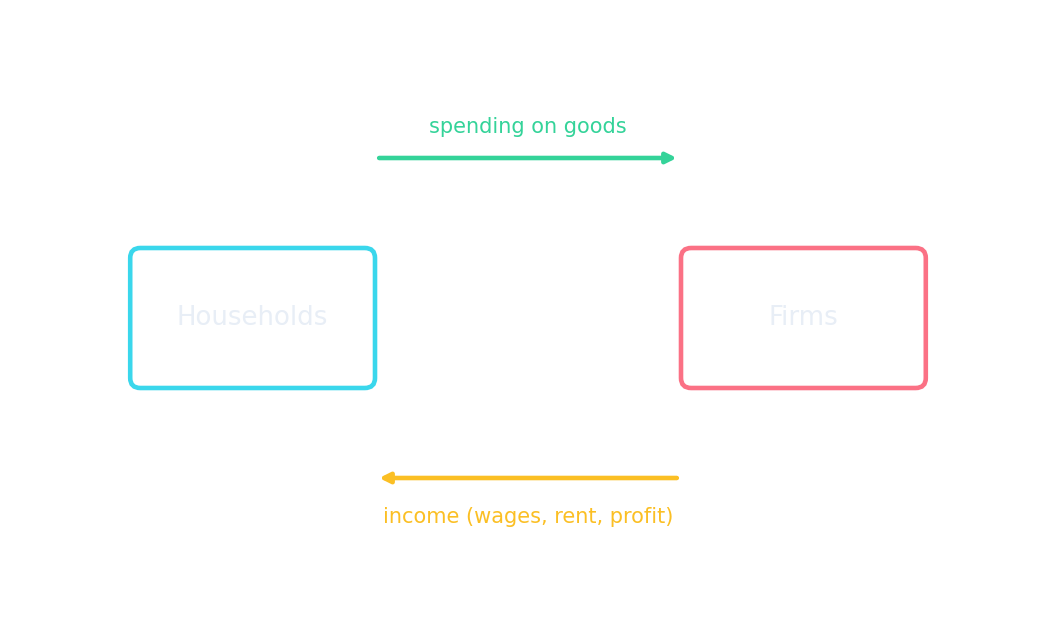
- 循環流モデルは、家計、企業、政府間の資金の流れを追跡する。
- 家計は資源を企業に販売して所得を得、企業は財を生産してそれを再び販売する。
- 支出される的每一ドルは収入される每一ドル — つまり総支出は総所得に等しい。
GDP is the market value of all ______ goods and services produced in a country in a year.
難易度 1/5 · 100 コイン + 今日初回完了時に小ボーナス付与
Only final goods count, so we don't double-count the intermediate parts.
In the circular flow, total spending equals total income.
難易度 1/5 · 100 コイン + 今日初回完了時に小ボーナス付与
Every dollar a household spends becomes a dollar of income for a firm's workers or owners.
Match each way of measuring GDP to what it adds up.
難易度 2/5 · 140 コイン + 今日初回完了時に小ボーナス付与
All three give the same GDP, because spending = income = value created.
GDPに含まれないもの
- 中間財 — 別の財を作るために消費されるもの(パン屋の小麦粉);最終的なパンのみがカウントされ、否则我们 重複計上する。
- 中古品 — 再販は、物品が新品だった時にすでにカウントされている。
- 純粋な金融取引 — 株式の売買は金を移動させるだけで、新たな生産物にはならない。
Does it count in GDP?
GDP counts only final goods and services made this year. Intermediate goods, used goods, and financial trades are excluded.
Select all that are excluded from GDP.
難易度 2/5 · 140 コイン + 今日初回完了時に小ボーナス付与
Intermediate, used, and financial transactions are excluded; a new final good counts.
支出アプローチ
- 最終財への全支出を合計する:$GDP = C + I + G + (X - M)$。
- $C$ は消費、$I$ 投資、$G$ 政府支出、$X$ 輸出、$M$ 輸入。
- 輸入を差し引くのは、それらは国外で生産されたものであり、国内での生産ではないからである。
- 計算例。 $C = 700$、$I = 200$、$G = 300$、$X = 150$、$M = 100$ を用いて:$GDP = 700 + 200 + 300 + 50 = 1250$ 億ドル。
With C = 700, I = 200, G = 300, exports X = 150, and imports M = 100, what is GDP?
難易度 2/5 · 140 コイン + 今日初回完了時に小ボーナス付与
GDP = C + I + G + (X − M) = 700 + 200 + 300 + (150 − 100) = 1250.
In GDP = C + I + G + (X − M), why do we subtract imports (M)?
難易度 1/5 · 100 コイン + 今日初回完了時に小ボーナス付与
Spending on imports is included in C, I, or G, but the output was made abroad — so we subtract it.
GDP は、ある国で一年間に生産された所有最終財の市場価値の総計である。循環流はなぜ総支出が総所得に等しいかを示している。支出アプローチで測定する:$GDP = C + I + G + (X - M)$、中間財、中古品、および金融取引を除く。