Impact of computing · コンピューティングの影響
Computing changes the world
- Computing affects almost every part of life: school, work, health, money, and friends.
- The same tool can bring benefits (good effects) and harms (bad effects).
- A good computer scientist thinks about both sides, not just the cool features.
コンピューティングが世界を変える
- コンピューティングは、学校、仕事、健康、お金、友人など、生活のほぼあらゆる側面に影響を与えています。
- 同一のツールは、利益(良い効果)と害(悪い効果)の両方をもたらすことがあります。
- 優れたコンピューターサイエンティストは、クールな機能だけでなく、両面について考えます。
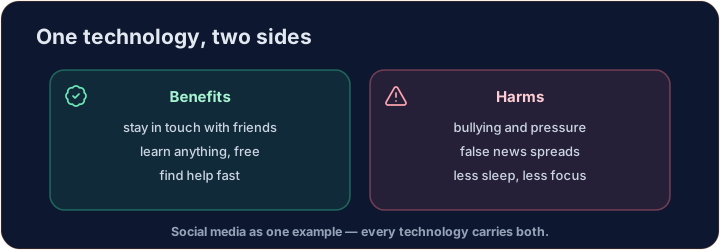
One technology, two sides:

  Social media
    Benefit: stay in touch, share, learn
    Harm:    bullying, false news, less sleep
Benefits and harms together
- A benefit for one group can be a harm for another.
- Example: an app that suggests videos keeps you watching (benefit for the company) but can waste your time (harm for you).
- Always ask: who gains, who loses, and what could go wrong?
利益と害の共存
- あるグループにとっての利益が、別のグループにとっては害となることがあります。
- 例:動画の推奨アプリは、ユーザーを視聴し続けさせることで企業には利益をもたらしますが、ユーザーの時間を無駄にするという害もあります。
- いつも問いかけてください:誰が得をし、誰が損をし、何が失敗する可能性があるか?
The digital divide
- The digital divide is the gap between people who have good access to computing and those who do not.
- Causes include money, where you live (no fast Internet), and not having training.
- This is unfair: people without access miss out on school, jobs, and information.
デジタルディバイド
- デジタルディバイドとは、コンピューティングへのアクセスが良好な人々とそうでない人々の間の格差を指します。
- 原因には、経済的な要因、住んでいる場所(高速インターネットがない)、およびトレーニングの不足が含まれます。
- これは不公平です。アクセスできない人々は、教育、就職、情報から排除されます。
Bias in computing
- Bias means an unfair result that favors one group over another.
- Software learns from data. If the data is unfair or incomplete, the results can be unfair too.
- Example: a face tool trained mostly on one kind of face may work badly for other people.
コンピューティングにおけるバイアス
- バイアスとは、特定のグループに有利に働き、他を不利にする不公正な結果を指します。
- ソフトウェアはデータから学習します。データが不公正または不完全である場合、結果もまた不公正になる可能性があります。
- 例:ある種の顔のみで訓練された顔検出ツールは、他の人に対しては正しく動作しないことがあります。
Biased data  ->  biased results

  Training data:  mostly group A faces
  Result:         works well for A, poorly for B
Intellectual property and licensing
- Intellectual property (IP) is creative work people make: code, music, art, writing.
- A license is the rules for how others may use that work. Using work without permission can break the law.
- Open source software shares its code so others may read and reuse it; Creative Commons licenses let creators say "you may share this, with these conditions".
知的財産とライセンス
- 知的財産(IP)とは、人が創造した作品のことです:コード、音楽、芸術、著作物など。
- ライセンスとは、その作品を他者が如何使用するかを定めるルールです。許可なく作品を使用することは、法律に違反する可能性があります。
- オープンソースソフトウェアはコードを公開し、他者が読み取って再利用できるようにします。クリエイティブ・コモンズのライセンスでは、創作者が「この条件を満たせば共有してもよい」と宣言できます。
Privacy and PII
- PII means Personally Identifiable Information: data that points to a real person.
- Examples: full name, home address, phone number, ID number, exact location.
- Once data is online it is hard to take back, and apps may collect more than you expect. Share carefully.
プライバシーとPII
- PIIとは個人情報(Personally Identifiable Information)の略で、特定の個人を特定できるデータを指します。
- 例:氏名、自宅住所、電話番号、ID番号、正確な位置情報など。
- 一度データがオンラインに公開されると取り戻すことが難しく、アプリが想定以上に多くの情報を収集することがあります。注意して共有してください。
Safe computing
- Use a strong, unique password for important accounts (long, mixed, not reused).
- Watch out for phishing: fake messages that trick you into giving passwords or money. Check the sender; do not click strange links.
- Keep software updated, and think before you post personal data.
セキュアコンピューティング
- 重要なアカウントには、強力で固有のパスワード(長く、数字・文字の混合、使い回しなし)を使用してください。
- フィッシングに注意してください:パスワードや金銭を騙し取るための偽メッセージです。送信者を確認し、怪しいリンクをクリックしないでください。
- ソフトウェアを最新の状態に保ち、個人データを投稿する前に考えましょう。
Key words
- Digital divide: the gap in access to computing.
- Bias: an unfair result, often from unfair data.
- Intellectual property / license: who owns creative work and how it may be used.
- PII / privacy: personal data, and protecting it.
- Phishing: fake messages that try to steal your information.
重要用語
- デジタルディバイド:コンピューティングへのアクセスにおける格差のこと。
- バイアス:不公平な結果であり、多くの場合、不公平なデータから生じます。
- 知的財産 / ライセンス:創造的な作品の所有権と使用方法。
- PII / プライバシー:個人情報とその保護方法。
- フィッシング:情報を盗もうとする偽メッセージ。
Common mistakes
- Weigh both the benefits and the harms (bias, privacy, unequal access).
- The digital divide is the gap in access to technology.
よくあるミス
- 利益と害(バイアス、プライバシー、アクセスの不均等)の両方を考慮してください。
- デジタルディバイドとは、技術へのアクセスにおける格差のこと。
Now you try
- These tasks turn the ideas above into code: PII, bias, and password safety.
- Press Check answer to test your code.
あなたも試してみよう
- これらのタスクは、上記の概念をコードに変換します:PII、バイアス、パスワードの安全性。
- 回答を確認 を押してコードを試してください。
PII is data that points to a real person. You are given a record fields (a dict like {"name": ..., "color": ..., "phone": ...}) and a set pii_names of PII field names. Write count_pii(fields, pii_names) that returns how many of the record's keys are PII. · PII は特定の個人を指し示すデータです。レコード fields ( {"name": ..., "color": ..., "phone": ...} のような辞書)と、PIIフィールド名の集合 pii_names が与えられています。レコードのキーのうちPIIであるものを 返す count_pii(fields, pii_names) を書いてください。
Click Run to see the output here. · 実行ボタンをクリックして出力を確認してください。
Software can be biased if it works better for one group than another. Write accuracy_gap(correct_a, total_a, correct_b, total_b) that returns group A's accuracy minus group B's accuracy, as a decimal. Example: accuracy_gap(90, 100, 60, 100) is 0.3. · ソフトウェアは、あるグループに対して他より良く機能する場合、バイアスがあると言えます。accuracy_gap(correct_a, total_a, correct_b, total_b)を記述し、グループAの精度からグループBの精度を引いた値(小数)を返してください。例:accuracy_gap(90, 100, 60, 100)は0.3です。
Click Run to see the output here. · 実行ボタンをクリックして出力を確認してください。
A password is strong when it is at least 12 characters and is not in the list of common passwords. Write is_strong(password, common) returning True or False. Example: with common = ["password", "123456"], is_strong("correcthorsebattery", common) is True. · パスワードが強いとは、少なくとも12文字以上あり、かつ一般的なパスワードのリストに含まれないことを指します。is_strong(password, common)を記述し、TrueまたはFalseを返してください。例:common = ["password", "123456"]の場合、is_strong("correcthorsebattery", common)はTrueです。
Click Run to see the output here. · 実行ボタンをクリックして出力を確認してください。