Akun berjalan neraca pembayaran
Diperkenalkan 9:00
Perdagangan internasional dan globalisasi
Melihat sekeliling ruangan Anda. Telepon di tangan Anda, kopi dalam cangkir Anda, pakaian yang Anda kenakan — hampir tidak ada dari semuanya yang dibuat di sini. Semua itu datang melalui laut, dalam baja…
Narasi bahasa Inggris · takarir bahasa Inggris dan 中文 yang dapat dipilih
In this lesson
| English | Makna |
|---|---|
| balance of payments/ˈbæləns ɒv ˈpeɪmənts/ | neraca pembayaran |
| current account/ˈkʌrənt əˈkaʊnt/ | akun berjalan |
| exports/ˈekspɔːts/ | ekspor |
| imports/ɪmˈpɔːts/ | impor |
| deficit/ˈdefɪsɪt/ | defisit |
| surplus/ˈsɜːpləs/ | |
| competitiveness/kəmˈpetɪtɪvnəs/ | daya saing |
A country's spending diary
- Just as a household tracks money in and out, a country records every payment to and from the rest of the world.
- The record is the balance of payments 国际收支, and its heart is the current account 经常账户.
Arus akun berjalan
Lacak ekspor, impor, dan arus pendapatan ke dalam akun berjalan.
Manakah yang merupakan bagian dari akun berjalan? (Pilih semua yang berlaku.)
Kesulitan 2/5 · 140 koin + bonus kecil pada penyelesaian pertama hari ini
Akun berjalan mencakup barang, jasa, pendapatan, dan transfer.
What's in the current account
- Trade in goods: exports 出口 and imports 进口 of physical products.
- Trade in services: tourism, banking, shipping.
- Income (from investments abroad) and transfers (aid, remittances).
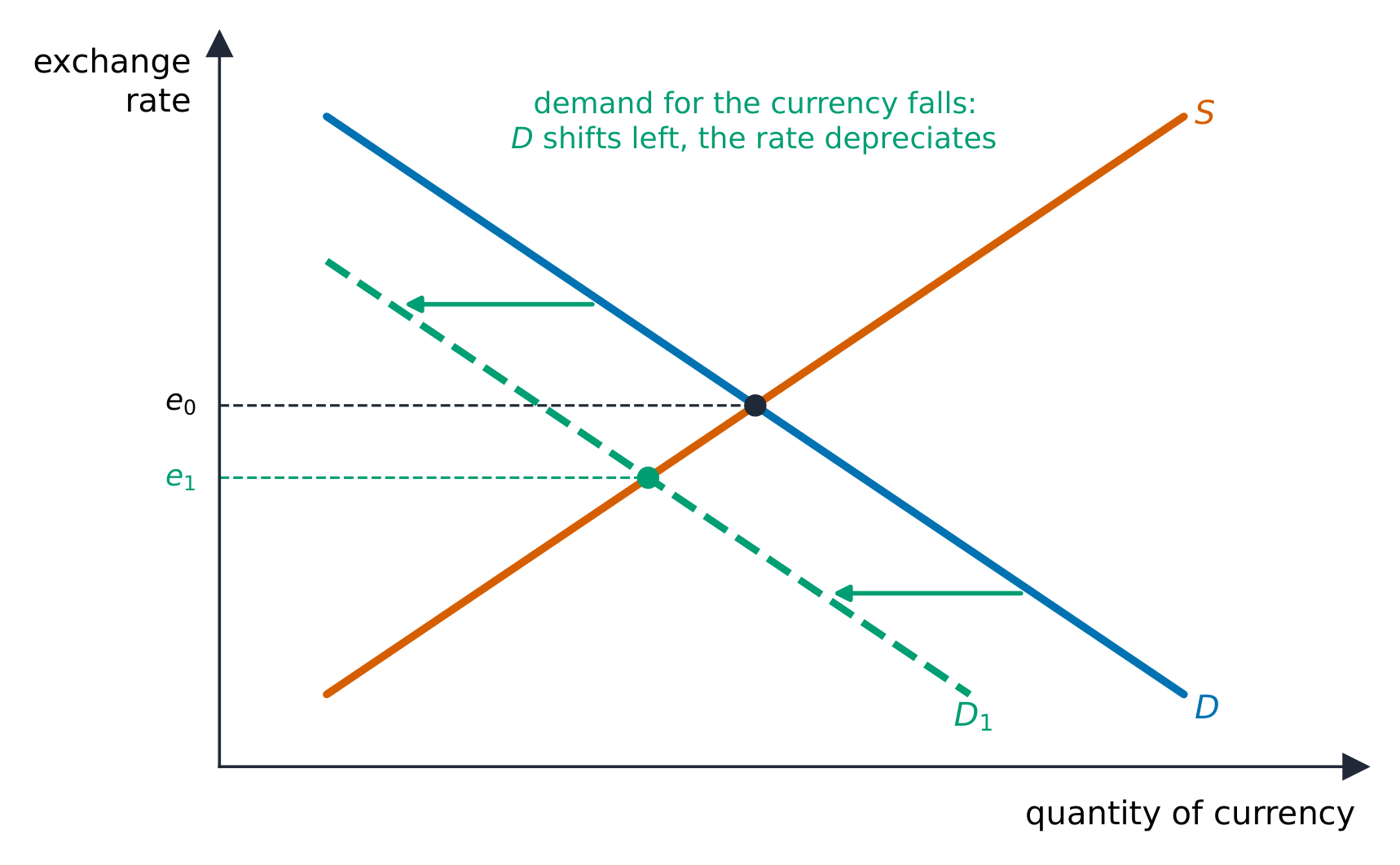
A floating exchange rate and a depreciation
Suatu negara mengekspor 120 dan mengimpor 150 barang dan jasa. Berap defisitnya?
Kesulitan 2/5 · 140 koin + bonus kecil pada penyelesaian pertama hari ini
150 − 120 = defisit 30.
Surplus akun berjalan berarti sebuah negara:
Kesulitan 1/5 · 100 koin + bonus kecil pada penyelesaian pertama hari ini
Surplus berarti penerimaan melebihi pengeluaran.
Ketika suatu negara mengimpor lebih banyak daripada yang diekspor secara keseluruhan, akun berjalannya berada dalam ______.
Kesulitan 1/5 · 100 koin + bonus kecil pada penyelesaian pertama hari ini
Pengeluaran melebihi penerimaan.
Deficit 赤字 and surplus 过剩
- A deficit: the country pays out more than it earns (imports > exports, broadly).
- A surplus: it earns more than it pays out.
Worked example. A country exports 80 of goods and services but imports 100. Its current account shows a deficit of 20 — it is buying more from abroad than it sells.
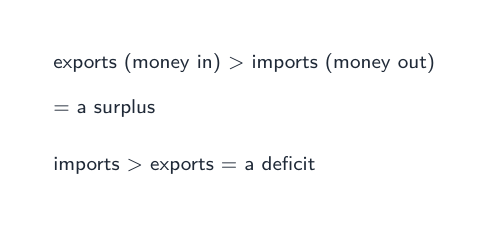
Exports above imports is a surplus; below is a deficit
Defisit akun berjalan yang besar dan berkelanjutan harus dibiayai dengan pinjaman atau penjualan aset.
Kesulitan 1/5 · 100 koin + bonus kecil pada penyelesaian pertama hari ini
Hal ini tidak dapat berlangsung tanpa pendanaan.
Why it matters
- A large, lasting deficit must be funded by borrowing or selling assets — not sustainable forever.
- Causes include low competitiveness 竞争力, a strong currency, or high domestic demand for imports.
A deficit isn't automatically "bad". A growing economy may import heavily for a while. The worry is a large, persistent deficit that has to be financed by ever more borrowing.
You've got it
- the current account records trade in goods and services, plus income and transfers
- a deficit = paying out more than earning; a surplus = the reverse
- a large, persistent deficit is the real concern — it must be financed
Write from the data: find the current-account deficit
- Exports of goods and services are 90. Imports are 140.
- Find the current-account balance.
Sebuah negara mengekspor 90 barang dan jasa serta mengimpor 140. Berapakah neraca akun berjalan pada perdagangan ini?
140 dikurangi 90 sama dengan 50.
Berapa hasil akun berjalan?
Kesulitan 1/5 · 100 koin + bonus kecil pada penyelesaian pertama hari ini
Impor melebihi ekspor sebesar 50.