Rencana belajar Anda · Lanjut · Tinjau →
Kelengkapan hasil 住 / 开 / 出来
DiperkenalkanPosisi tersimpan Anda tetap berada di browser ini. Melanjutkan tidak menyelesaikan pelajaran atau menjawab pertanyaannya.
 5:44
HSK 5 Tata Bahasa 18: Pelengkap (Complements)
Kata sifat diikuti oleh 得 kemudian diikuti oleh 很, 不得了, 要命, atau 不行. 不得了 berarti hingga tingkat yang tak masuk akal; 要命 berarti hingga mati (lugas); 不行 berarti sangat buruk (lugas). Pola: 形容词…
Penjelasan bahasa Inggris + contoh Mandarin · caption mengikuti teks yang diucapkan
In this lesson
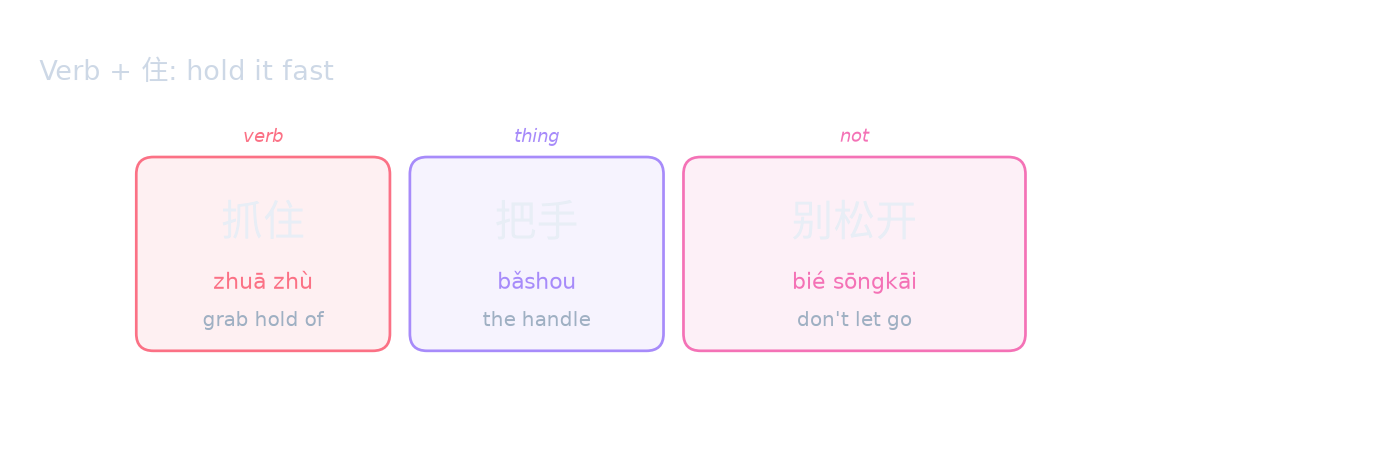
Hold on tight
- You are helping your little sister learn to ride a bike.
- to grab hold of抓住handle把手,don't别to release松开! — "Hold on to the handlebars, don't let go!"
- Goal: use the result complements to live / (firmly: 抓住, 记住)住, to open; to drive开 and (make out)出来.
Verb + to live / (firmly: 抓住, 记住)住 = fix, hold firmly
- to live / (firmly: 抓住, 记住)住 makes the result stable: to grab hold of抓住 (grab hold), remember记住 (memorise), to stop / stand still站住 (stop), to stop拦住 (block).
- remember记住my我(modifier / structural particle)的phone电话number号码。 — "Remember my phone number."
please请remember记住my我的phone电话number号码。
Complete: “Remember: the meeting is at nine.” 记____:会议九点开始。
Kesulitan 1/5 · 100 koin + bonus kecil pada penyelesaian pertama hari ini
记住 = remember (fix in memory).
Verb + to open; to drive开 / (make out)出来
- to open; to drive开 = open or separate: to open打开 (open), to pull open拉开 (pull open), to leave走开 (go away).
- (make out)出来 = come out, emerge, or be recognised: want / think / miss想(make out)出来 (come up with), see看(make out)出来 (tell, make out), to write写(make out)出来 (write out).
I我see看(make out)出来he他not不happy高兴。
Match each verb to its meaning.
Kesulitan 2/5 · 140 koin + bonus kecil pada penyelesaian pertama hari ini
住 fixes, 开 separates, 出来 brings out.
Potential forms
- can't remember记不住 = can't remember; to hit / play / make (a call)打not不to open; to drive开 = can't open; want / think / miss想not不(make out)出来 = can't think of it.
- (make out)出来 can split around an object: want / think / miss想out / to happen出一个means办法to come来 / want / think / miss想(make out)出来一个means办法 — "Come up with a solution."
- not不 goes between the verb and the complement for "can't": ✓ my我to hit / play / make (a call)打not不to open; to drive开bottle瓶子。 — "I can't open the bottle." (my我not不to open打开bottle瓶子 = "I won't open the bottle.")
“I can't open this bottle.” Which is correct?
Kesulitan 1/5 · 100 koin + bonus kecil pada penyelesaian pertama hari ini
Potential complement: 打不开.
see看(make out)出来 versus saw看见
- saw看见 = see (with the eyes): my我saw看见he他(completed / change)了 — "I saw him."
- see看(make out)出来 = work out, notice from clues: my我see看(make out)出来he他at / in在to lie说谎 — "I could tell he was lying."
I我saw看见him他了。
看出来 and 看见 mean the same.
Kesulitan 1/5 · 100 koin + bonus kecil pada penyelesaian pertama hari ini
看见 = see; 看出来 = work out from clues.
Recap
- to live / (firmly: 抓住, 记住)住 = fix firmly (remember记住, to grab hold of抓住); to open; to drive开 = open / apart / away (to open打开, to depart离开); (make out)出来 = come out / be recognised (want / think / miss想(make out)出来, see看(make out)出来).
- Potential: can't remember记不住, to hit / play / make (a call)打not不to open; to drive开, want / think / miss想not不(make out)出来.
Read the full reference: HSK 5 grammar — Complements.
You are helping your little sister learn to ride a bike. Close the examples. Say a Mandarin response, then write it in Chinese. Explain briefly in English what the lesson’s pattern adds. Compare with the model, then change one detail and try again.
This is supported productive practice. Compare meaning and structure; your answer need not copy the model. A partner or teacher must hear the spoken response to comment on pronunciation.