Rencana belajar Anda · Lanjut · Tinjau →
很 + Verb (kata kerja perasaan dengan 很)
DiperkenalkanPosisi tersimpan Anda tetap berada di browser ini. Melanjutkan tidak menyelesaikan pelajaran atau menjawab pertanyaannya.
 4:29
HSK 3 Tata Bahasa 3: Kata Kerja, Kemampuan & Pelengkap
Topik ini membahas apa yang dilaporkan oleh kata kerja. 着 (zhe) mempertahankan suatu keadaan. 了 (le) di akhir kalimat mengumumkan perubahan: hal itu kini benar. Pelengkap hasil melaporkan…
Penjelasan bahasa Inggris + contoh Mandarin · caption mengikuti teks yang diucapkan
In this lesson
How much do you like it?
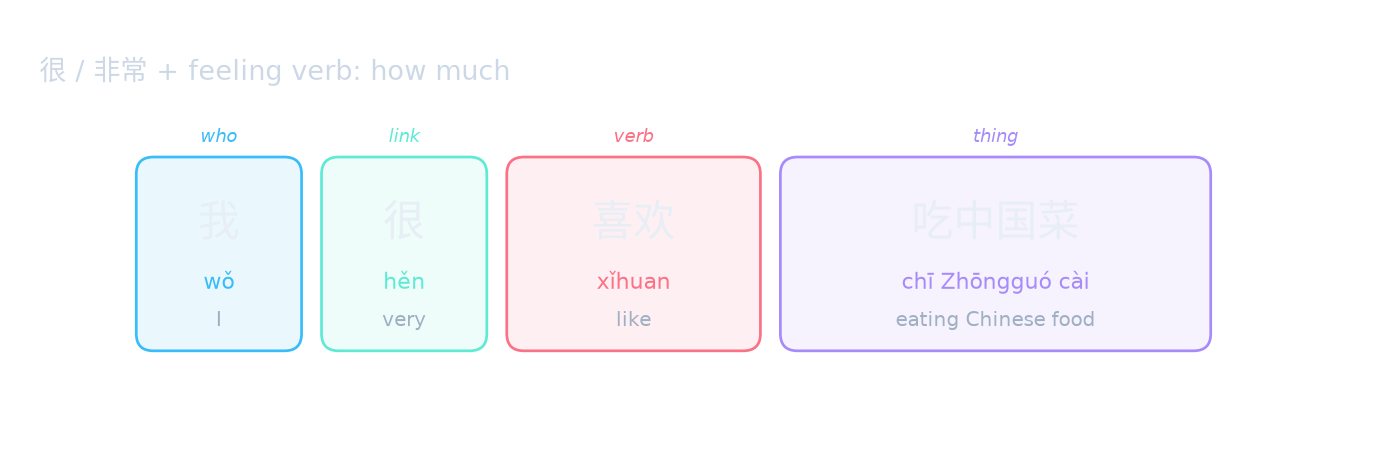
- A new friend asks whether you like Chinese food. You really do.
- I我very much很to like喜欢to eat吃China中国dish (of food); vegetable菜。 Wǒ hěn xǐhuan chī Zhōngguó cài. — "I really like Chinese food."
- Goal: say how much you like, want or worry about something with very much很 / very非常 / most最 / 不太 + a feeling verb.
very much很 + feeling verb
- Verbs of feeling and wanting take degree words just like adjectives: very much很to like喜欢, very much很miss想, very much很anxious担心, very much很hope希望, very much很to love爱.
- very much很 goes right before the verb: I我very much很homesick想家 — "I miss home very much."
I我very much很miss想home家。
Complete: “I miss my mum very much.” 我____想我妈妈。
Kesulitan 1/5 · 100 koin + bonus kecil pada penyelesaian pertama hari ini
Feeling verbs such as 想 take 很.
Other degree words work too
- I我very非常anxious担心he他。 — "I'm extremely worried about him."
- we我们all都very much很hope希望you你can能come来。 — "We all very much hope you can come."
we我们all都very much很hope希望you你can能come来。
Build: “We all very much hope you can come.”
Kesulitan 3/5 · 200 koin + bonus kecil pada penyelesaian pertama hari ini
都 + 很 + feeling verb + clause.
you你to like喜欢sports / to exercise运动(yes/no ?)吗? Answers from most to least
| Answer | Meaning |
|---|---|
| I我most最to like喜欢踢足球。 | Football is my favourite. |
| I我very非常to like喜欢sports / to exercise运动。 | I love sport. |
| I我very much很to like喜欢。 | I like it a lot. |
| I我not不too太to like喜欢。 | I don't really like it. (polite) |
| I我a little一点儿also也not不to like喜欢。 | I don't like it at all. |
- 不太 is the polite way to say no; a little一点儿also也not不 is strong.
Your host asks if you like spicy food. You don't, but you want to be polite. What do you say?
Kesulitan 1/5 · 100 koin + bonus kecil pada penyelesaian pertama hari ini
不太喜欢 is a soft, polite no.
Feeling verbs only
- Ordinary action verbs do not take very much很: very much很to eat吃, very much很to run跑, very much很to go去 are wrong. Say to eat吃(degree marker)得very much很many; much多, to run跑(degree marker)得very much很fast; soon快.
- Put very much很 before the verb, not the object: very much很to like喜欢this这本书, not to like喜欢very much很this这本书.
Which sentence is correct?
Kesulitan 1/5 · 100 koin + bonus kecil pada penyelesaian pertama hari ini
很 + feeling verb is correct; an action verb such as 吃 does not take 很.
very much很miss想 + Verb = really want to
- miss想 + another verb means "want to"; very much很miss想 strengthens it: I我very much很miss想to go去to take a look at看看。 — "I'd really like to go and have a look."
- very much很good at会 + Verb = "be good at": he他very much很good at会cooking做饭 — "He's a great cook."
he他very很good at会cooking做饭。
他很会做饭 means “He is very good at cooking.”
Kesulitan 1/5 · 100 koin + bonus kecil pada penyelesaian pertama hari ini
很会 + verb = be good at doing it.
Recap
- very much很 + feeling verb (to like喜欢, miss想, anxious担心, hope希望, to love爱) = like / want / worry … very much.
- Action verbs do not take very much很; use a (degree marker)得 complement instead. very much很good at会 = good at.
Read the full reference: HSK 3 grammar — Verb phrases.
A new friend asks whether you like Chinese food. You really do. Close the examples. Say a Mandarin response, then write it in Chinese. Explain briefly in English what the lesson’s pattern adds. Compare with the model, then change one detail and try again.
This is supported productive practice. Compare meaning and structure; your answer need not copy the model. A partner or teacher must hear the spoken response to comment on pronunciation.