Maritime Empires Established
Diperkenalkan| English | Makna |
|---|---|
| chattel slavery/ˈtʃætl ˈsleɪvəri/ | Perbudakan barang |
| indentured servitude/ˌɪnˈdentʃəd ˈsɜːvɪtjuːd/ | Hamba kontrak |
Trading posts, and states that resisted them
- Europeans established new trading posts in Africa and Asia, which proved profitable for the rulers and merchants involved in new global trade networks.
- Some Asian states sought to limit the disruptive economic and cultural effects of European-dominated long-distance trade by adopting restrictive or isolationist trade policies — Ming China and Tokugawa Japan.
- So restriction is a policy choice with a stated reason, not an absence of policy.
Select semua the states the CED names as adopting restrictive or isolationist trade policies.
Kesulitan 2/5 · 140 koin + bonus kecil pada penyelesaian pertama hari ini
Asante and Kongo grew by participating in the networks.
Rivalry drove the empires
- Driven largely by political, religious and economic rivalries, European states established new maritime empires, including the Portuguese, Spanish, Dutch, French and British.
- The CED's causes are the same three that drove land-empire rivalries in 3.1.
- So the difference between land and maritime empires is the method, not the motive.
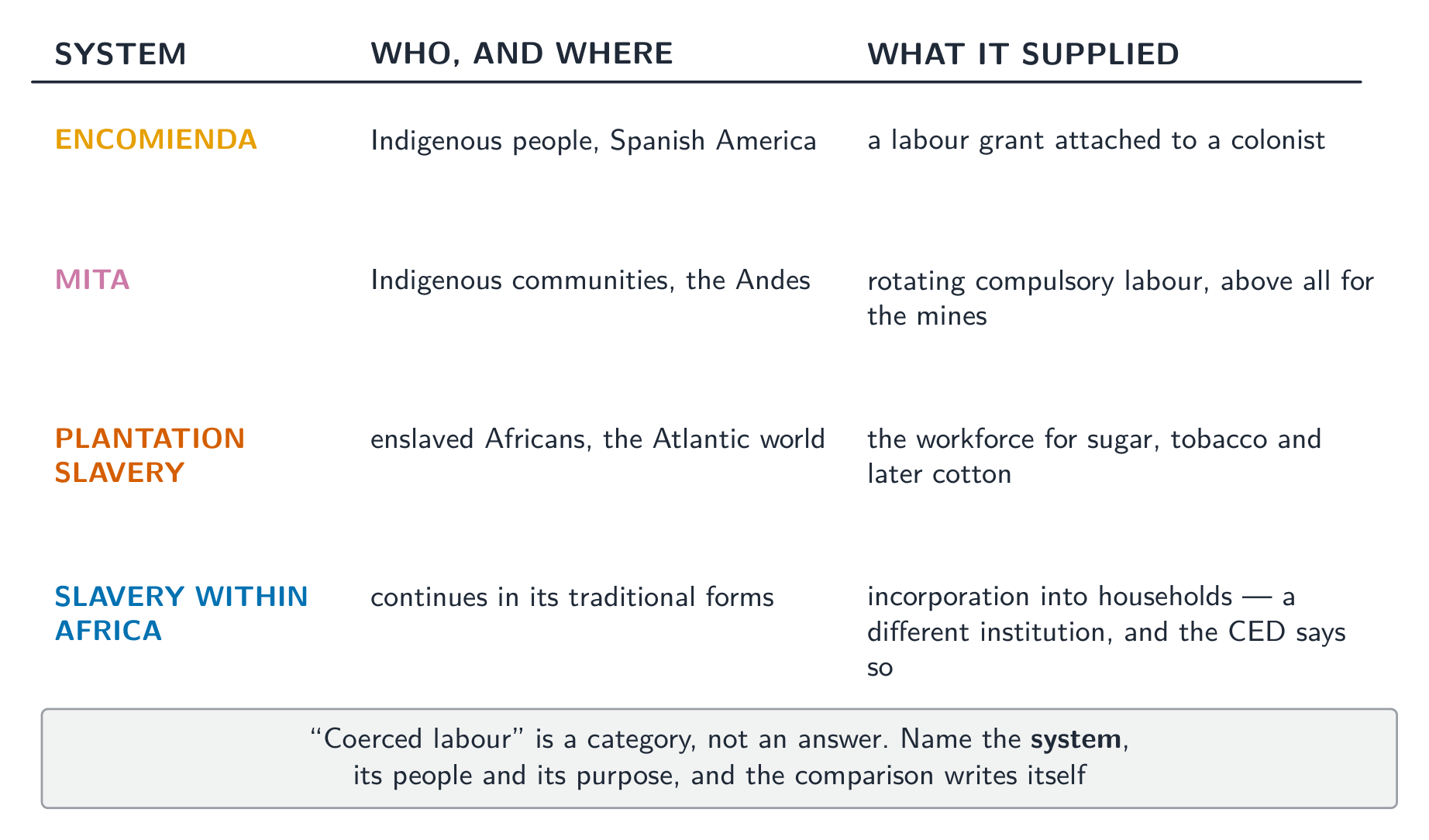
Four coerced-labour systems distinguished by who, where, and what each supplied
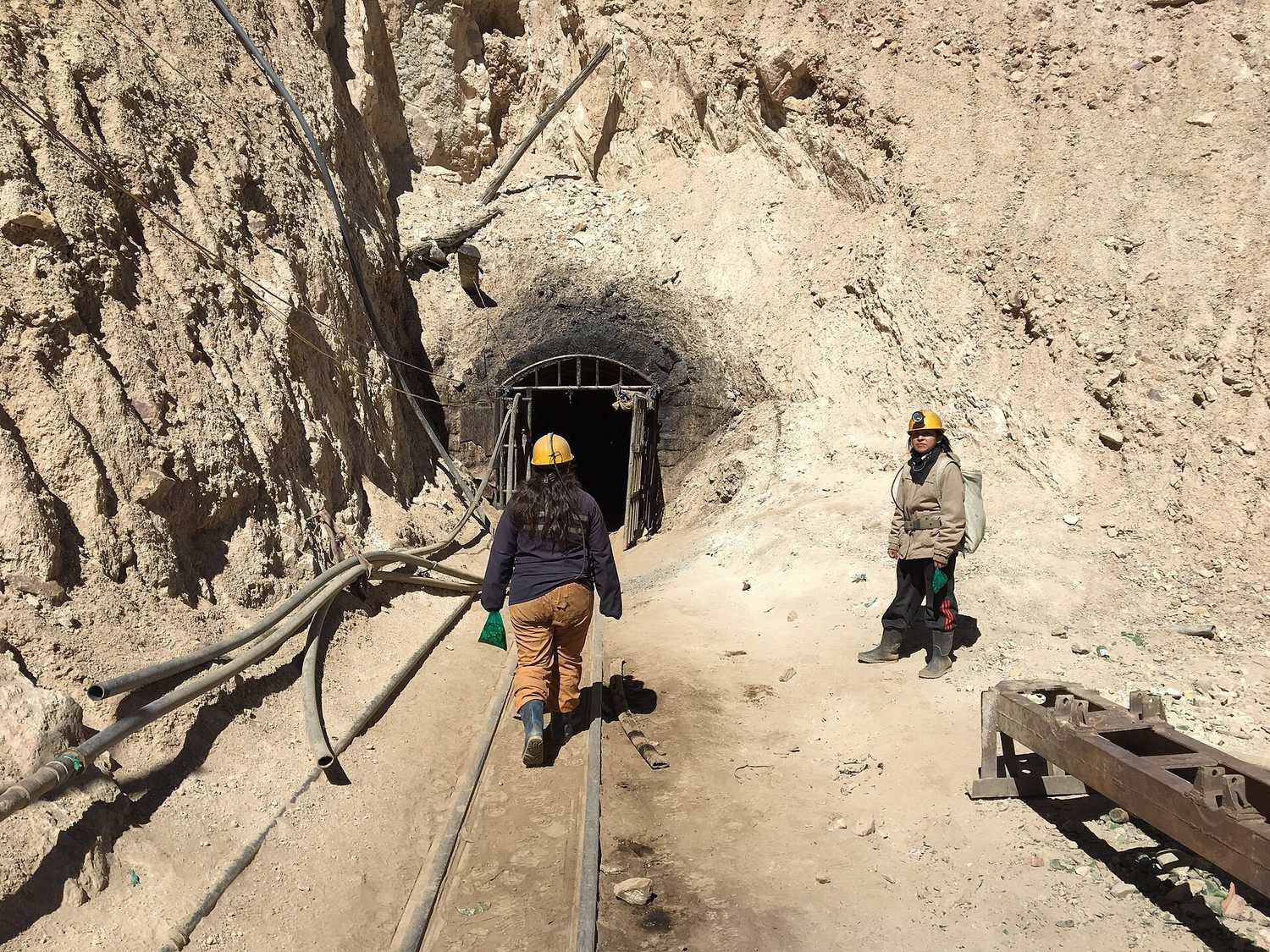
Cerro Rico at Potosi- the mountain the mita labour system was organised to work
Select semua the rivalries the CED says drove maritime empires.
Kesulitan 2/5 · 140 koin + bonus kecil pada penyelesaian pertama hari ini
The same three that drove land-empire rivalries in 3.1.
African states grew on the same networks
- The expansion of maritime trading networks fostered the growth of states in Africa, including the Asante and the Kingdom of the Kongo, whose participation in trading networks led to an increase in their influence.
- This is unit 2's sentence — networks foster states — applied to the Atlantic.
- African polities are participants with their own interests here, which is the point of the CED including them.
Which response to the new networks is this?
Sort each state or system by what it did.
European merchants replaced Asian merchants in the Indian Ocean.
Kesulitan 1/5 · 100 koin + bonus kecil pada penyelesaian pertama hari ini
Existing networks continued to flourish dan included Asian merchants.
European arrival restructured Indian Ocean trade; it did not replace it. The CED says existing networks continued to flourish and included intra-Asian trade and Asian merchants — Swahili Arabs, Omanis, Gujaratis, Javanese. An answer in which Europeans take over Asian commerce contradicts the sentence it is meant to be using.
Select semua the new labour systems the CED names in the Americas.
Kesulitan 2/5 · 140 koin + bonus kecil pada penyelesaian pertama hari ini
The mit'a is an existing system that colonial economies reused.
Asian trade did not stop
- Despite some disruption and restructuring due to the arrival of Portuguese, Spanish and Dutch merchants, existing trade networks in the Indian Ocean continued to flourish and included intra-Asian trade and Asian merchants.
- The CED names Swahili Arabs, Omanis, Gujaratis and Javanese.
- So European arrival is a restructuring of an existing system, not a replacement of it.
The growth of the ____ economy increased demand for enslaved labour in the Americas.
Kesulitan 1/5 · 100 koin + bonus kecil pada penyelesaian pertama hari ini
Leading to significant demographic, social and cultural changes.
Labour systems: old, borrowed and new
- Newly developed colonial economies in the Americas largely depended on agriculture, utilised existing labour systems, including the Incan mit'a, and introduced new labour systems including chattel slavery 动产奴隶制, indentured servitude 契约劳工 and encomienda and hacienda systems.
- Meanwhile enslavement in Africa continued in its traditional forms, including household incorporation and export to the Mediterranean and Indian Ocean.
- And the growth of the plantation economy increased the demand for enslaved labour in the Americas, leading to significant demographic, social and cultural changes.
Ming China and Tokugawa Japan restrict trade for a stated reason: to limit the disruptive economic and cultural effects of a European-dominated network. That is a state deciding what it is willing to be connected to — the same calculation the Asante and Kongo made in the other direction by joining.
European trading posts proved profitable, while Ming China and Tokugawa Japan restricted trade to limit disruption. Political, religious and economic rivalries drove new maritime empires. Networks fostered African states (Asante, Kongo). Indian Ocean trade continued to flourish with Asian merchants. American colonies used existing labour systems (mit'a) and new ones — chattel slavery, indentured servitude, encomienda and hacienda.
Write from Japan limiting Europeans
- Portuguese and other Europeans reached Japan.
- The Tokugawa shogunate later confined European trade to a narrow permission.
Did every Asian state become a European colony?
Some governments chose how far Europeans could enter.
What did Tokugawa Japan do about European access?
Kesulitan 1/5 · 100 koin + bonus kecil pada penyelesaian pertama hari ini
The shogunate restricted Europeans instead of being conquered.