Lompat ke konten
Materi

International Baccalaureate · IB Diploma · Language ab initio · SL

  • 1

    Identitas; organisasi sosial · Pengantar dan kesesuaian bahasa Spanyol

    Program pembelajaran segera hadir

    Lembar Kerja

    Cakupan dan prasyarat

    Penilaian pertama IB Bahasa ab initio 2020; Fokus Spanyol. Referensi tambahan ini hanya mencakup hasil persiapan yang tercantum. Pilihan sekolah, prosedur panduan lengkap, dan pertunjukan langsung atau terekam yang diperlukan adalah terpisah.

    • Perkenalkan diri menggunakan ser dan llamarse
    • Gunakan kesesuaian jenis/kelompok dan pertanyaan dasar dengan akurat

    Prasyarat: Kosakata yang disediakan; tunggal dan jamak; pertanyaan dan respons.

    Jelaskan dan pilih metode

    Me llamo memberikan nama Anda; soy mendeskripsikan identitas atau peran. ¿Cómo te llamas? menanyakan nama seseorang yang akrab.

    Kata sifat bahasa Spanyol sering berkesesuaian dalam jenis kelamin dan jumlah: un libro nuevo, dos casas nuevas.

    Me llamo memberikan nama; soy menjelaskan identitas atau peran. "Me llamo Inés. Soy estudiante." Jawab pertanyaan nama dengan me llamo, bukan konstruksi kata per kata bahasa Inggris. Kesesuaian : la casa nueva; las casas nuevas. Estudiante tidak mendapatkan akhiran -a yang dibuat-buat dalam "soy estudiante". Gunakan model-model ini dengan kata-kata yang disediakan sebelum dipindahkan ke orang atau benda lain.
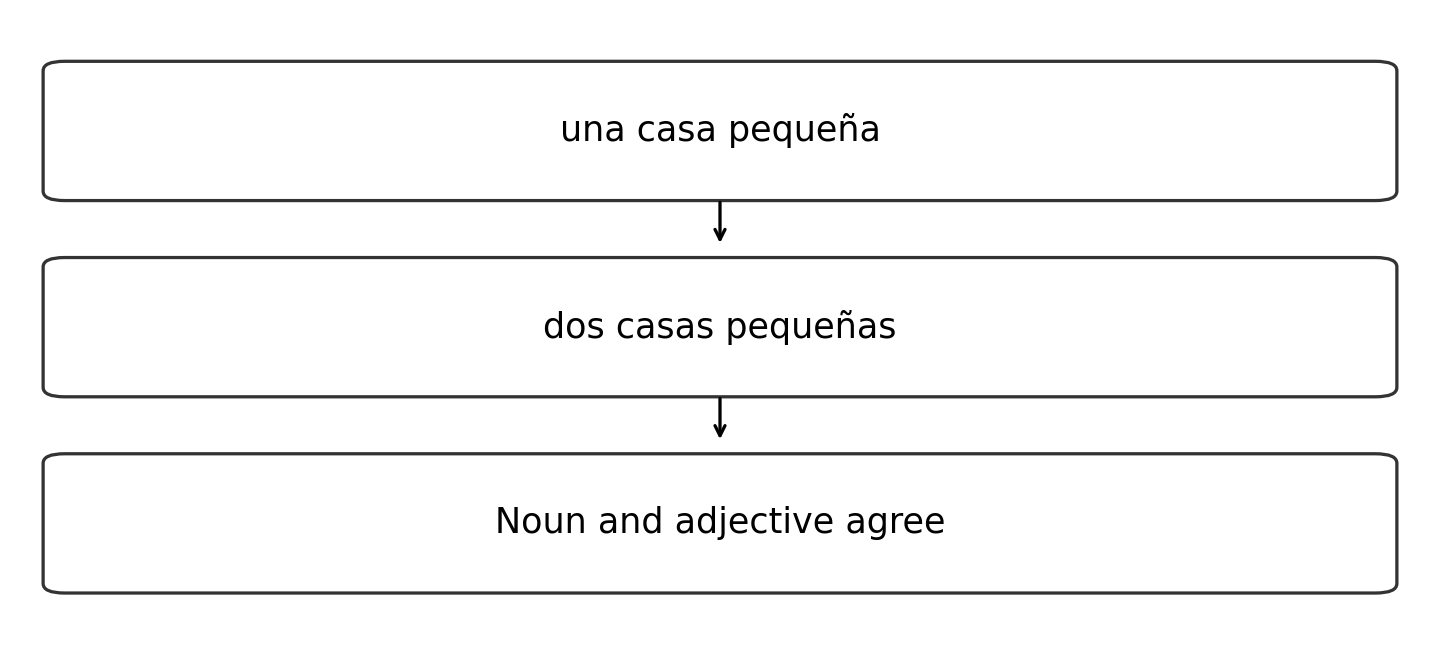
    Diagram asli hubungan contoh penyelesaian; bacalah seluruh kata-kata dan kualifikasinya.
    Diagram asli hubungan contoh penyelesaian; bacalah seluruh kata-kata dan kualifikasinya.

    Contoh yang sudah dikerjakan: Soy estudiante berfungsi tanpa menambahkan akhiran jenis kepada estudiante dalam frasa ini. La casa es nueva menggunakan kata sifat feminin tunggal. Ubah menjadi las casas son nuevas ketika baik kata benda maupun deskripsi menjadi jamak.

    Konteks asli lengkap

    Penukaran bahasa Spanyol asli: — Hola. ¿Cómo te llamas? — Me llamo Inés. Soy estudiante. ¿Y tú? — Me llamo Pablo. Soy estudiante también. Vivo en una casa pequeña. — Yo vivo en una casa pequeña también. Tengo dos libros nuevos. Kosakata: también = juga; vivo = saya tinggal; pequeña = kecil; tengo = saya punya; libro = buku; nuevo = baru.

    Praktik mandiri dan penalaran yang diverifikasi

    Transfer 1

    Perkenalkan diri dengan nama dan peran, lalu tanyakan nama pasangan Anda. Gunakan identitas kelas yang dibuat-buat jika diinginkan.

    Penalaran: “Hola. Me llamo Elena. Soy estudiante. ¿Cómo te llamas?” Respons memberikan nama dan peran serta mengajukan pertanyaan yang relevan. Nama lain dapat diterima; evaluasi berfokus pada struktur, bukan nama hafalan yang tepat.

    Transfer 2

    Ubah “una casa pequeña” menjadi dua rumah kecil dan “dos libros nuevos” menjadi satu buku baru. Jelaskan kesesuaian (agreement).

    Penalaran: “Dos casas pequeñas” menggunakan kata benda dan kata sifat feminin jamak. “Un libro nuevo” menggunakan bentuk maskulin tunggal. Kata sifat harus sesuai dengan kata bendanya dalam pola reguler ini; tidak setiap kata sifat atau kata benda mengikuti aturan akhiran yang sama.

    Transfer 3

    Jawab “¿Dónde vives?” menggunakan model, dan ajukan satu pertanyaan lanjutan yang relevan. Jelaskan apa yang harus terjadi agar hal ini menjadi bukti interaksi lisan.

    Penalaran: “Vivo en una casa pequeña. ¿Y tú?” adalah jawaban sederhana yang relevan beserta pertanyaan balik. Mitra langsung harus benar-benar merespons dan peserta harus bereaksi; persiapan yang diketik tidak dapat mensertifikasi interaksi spontan atau pengucapan.

    Batasan dan penggunaan selanjutnya

    Tidak semua kata benda berakhiran memprediksi gender, dan tidak semua kata sifat berubah sesuai gender. Pelajari artikel dan frasa berguna bersama kata-kata; jangan terjemahkan setiap kata bahasa Inggris secara mekanis.

    Semua tugas di sini adalah latihan asli publik dengan panduan yang disusun sendiri. Mereka bukan soal resmi atau diagnostik baru. Tes dan simulasi yang dilindungi tetap terpisah.

    Kartu kosakata makna

    kesesuaian (agreement): Mencocokkan kata kerja atau kata sifat dengan kata benda yang dimilikinya. ser: Kata kerja bahasa Spanyol yang digunakan untuk identitas dan sifat yang bertahan lama.
    Kosa kata
    English Bahasa Indonesia
    agreement/əˈɡriːmənt/ Kesesuaian
    evidence/ˈevɪdəns/ Bukti
    ser Ser
  • 2

    Pengalaman; kehidupan sehari-hari · Rutinitas, waktu dan pesan yang bermaksud dalam bahasa Spanyol

    Program pembelajaran segera hadir

    Lembar Kerja

    English

    Scope and prerequisites

    IB Language ab initio first assessment 2020; Spanish focus. This supplemental reference covers only the listed preparation outcomes. School selections, full-guide procedures and required live or recorded performance are separate.

    • Describe a routine and ask for practical information
    • Write a short message with an appropriate greeting, details and closing

    Prerequisites: Present tense; clock times; greeting and closing.

    Explain and choose the method

    Present-tense verbs describe routines: estudio, vivo, tengo. A las 在……点 ocho gives a clock time.

    A simple message should state why you write, the arrangement and any action needed from the reader.

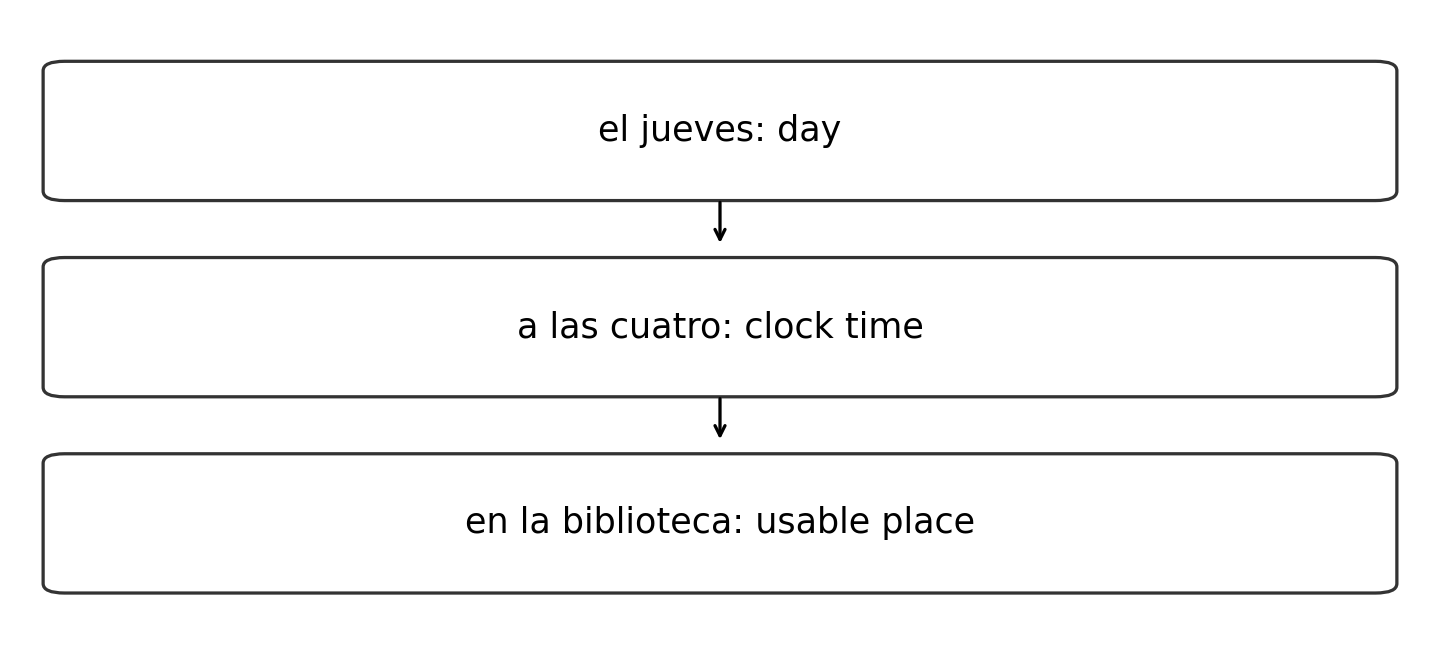
    A purposeful message 实用信息 gives the reader usable arrangements. Include why, day, time, place, needed items and a question or request. “A las cuatro” gives a clock time; “el jueves” gives a day. Two complete original 70–150-word models are in the writing companion. The short phrase alone is not an exam-length response.

    Original diagram of the worked relationship; read the full wording and qualifications.
    Original diagram of the worked relationship; read the full wording and qualifications.

    Existing worked example: Hola, Ana. Nos vemos el jueves a las cuatro en la biblioteca 图书馆. ¿Puedes traer el libro? gives day, time, place and a request. For the current exam, expand the relevant task content within the 70–150-word range instead of repeating the greeting.

    Complete original context

    Original task A: Write a message to Ana inviting her to a study meeting. Describe your usual routine, give day/time/place, say what to bring, and ask her to confirm. Write 70–150 Spanish words.

    Original task B: Write a short blog entry for classmates about a small neighbourhood market visit. Describe what you see, when you go, one preference with a reason, and one practical plan to reduce waste. Write 70–150 Spanish words. These are original practice tasks, not official prompts.

    Independent practice and checked reasoning

    Transfer 1

    Plan task A, then write the whole message. Check greeting, routine, arrangement, request and closing.

    Reasoning: The companion gives a complete original model with all five content cues and a checked word count 字数. Alternatives can use different plausible arrangements if they remain consistent and answer every cue in 70–150 words.

    Hola, Ana:

    ¿Cómo estás? Normalmente tengo clase por la mañana y estudio en casa por la tarde. El jueves quiero estudiar contigo porque tenemos un ejercicio de español. Nos vemos a las cuatro en la biblioteca. La biblioteca está al lado de la escuela y es un lugar tranquilo. Puedes traer tu libro y un lápiz, por favor. Yo llevo mi cuaderno y una lista de preguntas. Después podemos hablar de nuestra rutina y practicar las horas. ¿Puedes venir? Escribe un mensaje para confirmar. Si el jueves no puedes, podemos vernos el viernes a la misma hora.

    Hasta pronto, Elena

    Classroom model: 100 words. Greeting and closing; usual routine; study purpose; Thursday four o'clock library; book/pencil request; own materials; confirmation; consistent Friday alternative.

    Transfer 2

    Write task B. Underline the visible description, preference and reason, and practical waste plan.

    Reasoning: The companion model describes people, fruit and a table; gives Saturday morning; prefers apples because they are easy to carry; and proposes a bag from home and a list to buy only needed food. Other accurate, coherent beginner responses are acceptable.

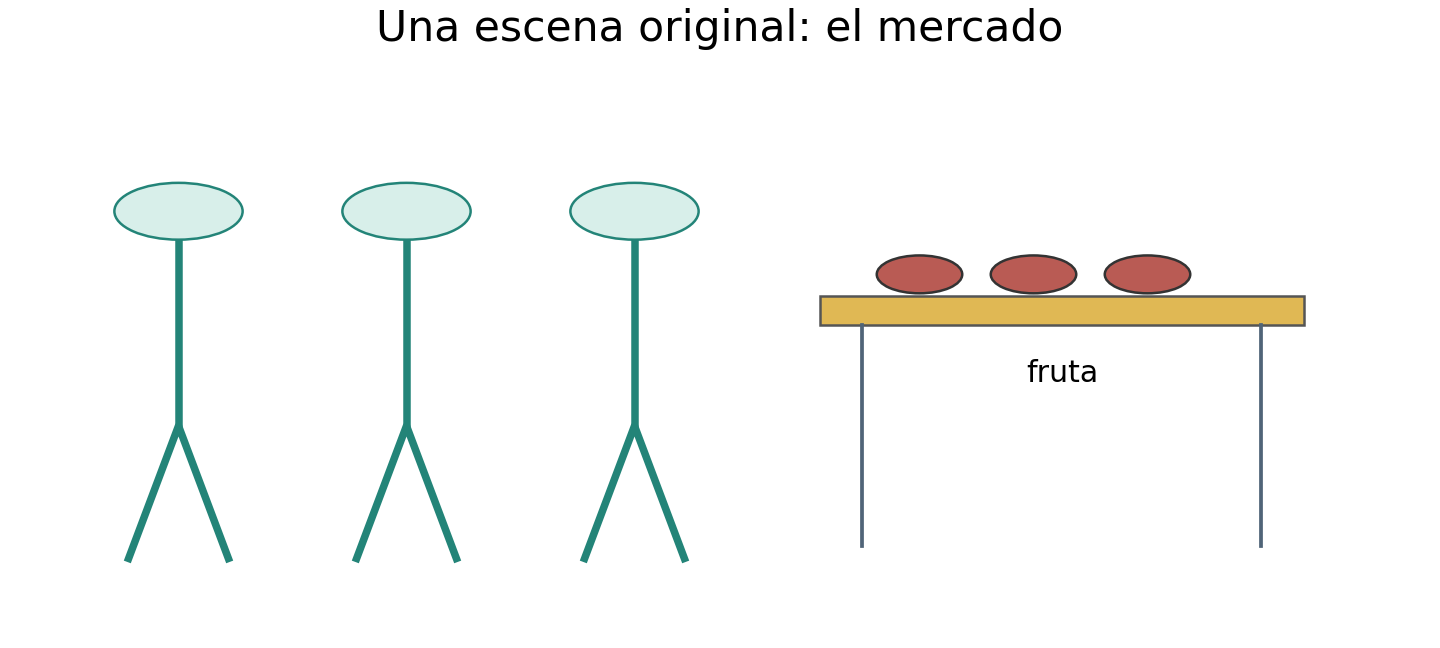
    El sábado voy al mercado de mi barrio por la mañana. En el mercado hay una mesa con fruta y tres personas. Me gusta visitar este lugar porque puedo hablar con los vendedores y comprar comida para mi familia. Prefiero las manzanas porque son fáciles de llevar. Normalmente llevo una bolsa de casa para usar menos plástico. También preparo una lista antes de salir. Así compro solo la comida que necesitamos. La próxima semana quiero ir con mi amiga Ana. Después de comprar, podemos caminar hasta la biblioteca. Es una rutina sencilla, pero para mí es agradable y útil.

    Classroom model: 99 words. Saturday morning; market description; preference and reason; bag/list waste plan; coherent next-week arrangement. Original personal scenario; no national cultural claim.

    Transfer 3

    Repair “Nos vemos jueves cuatro biblioteca” into a usable arrangement and add a polite request for a book.

    Reasoning: “Nos vemos el jueves a las cuatro en la biblioteca. ¿Puedes traer el libro, por favor?” It supplies day, clock-time phrase, location 位置 preposition and a clear request. Do not assume a reader can reconstruct every missing relationship.

    Limits and next use

    The short model is a teaching sentence, not a complete exam-length response. No listening recording is provided here; teacher-supplied Spanish audio and live interaction remain necessary.

    All tasks here are public original practice with authored guidance. They are not official questions or fresh diagnostics. Existing protected tests and mocks remain separate.

    Vocabulary card meanings

    purposeful message: A practical text written to get something done, such as an invitation. biblioteca: The Spanish noun for a place where books are lent. a las: The Spanish pair placed before a plural clock hour. The singular hour uses a different form.

    Kosa kata
    English Bahasa Indonesia
    purposeful message Pesan bermaksud
    word count Jumlah kata
    biblioteca Perpustakaan
    location/ləʊˈkeɪʃn/ Lokasi
    a las A las
  • 3

    Berbagi planet ini; lisan · Deskripsi visual dan perbandingan budaya dalam bahasa Spanyol

    Program pembelajaran segera hadir

    Lembar Kerja

    English

    Scope and prerequisites

    IB Language ab initio first assessment 2020; Spanish focus. This supplemental reference covers only the listed preparation outcomes. School selections, full-guide procedures and required live or recorded performance are separate.

    • Describe visible details with hay 有 and location 位置 language
    • Link a visual to a studied Spanish-speaking context and respond to follow-up

    Prerequisites: Hay; visible detail 细节; location phrases; me gusta/prefiero with reasons.

    Explain and choose the method

    Hay means there is or there are. Location phrases such as al lado de and delante de place objects.

    Build from description to a supported interpretation, then a specific cultural comparison studied in class.

    Use the actual original market illustration. Say “En la imagen hay tres personas y una mesa”. Location phrases include al lado de (beside) and delante de (in front of). “Prefiero las manzanas porque son fáciles de llevar” gives a preference with a reason. The image alone supplies no nationality, relationships or historical origin. A cultural link must come from a specific studied Spanish-speaking context.

    Original diagram of the worked relationship; read the full wording and qualifications.
    Original diagram of the worked relationship; read the full wording and qualifications.

    Existing worked example: En la foto hay tres personas en un mercado 市场. Están al lado de una mesa can describe an original classroom visual. A follow-up about food can use me gusta or prefiero with a reason, while avoiding claims about every Spanish-speaking country.

    Complete original context

    Original teacher-read rehearsal 排练 教师朗读演练 script: “El sábado voy al mercado por la mañana. En el mercado hay tres personas al lado de una mesa. En la mesa hay fruta. Llevo una bolsa de casa porque quiero usar menos plástico. Prefiero las manzanas porque son fáciles de llevar. Después voy a la biblioteca.” Vocabulary: sábado = Saturday; mañana = morning; fruta = fruit; bolsa = bag; menos = less; después = afterwards. Use the supplied market illustration for description. Close this script for teacher-read listening; no recording is supplied or certified.

    Independent practice and checked reasoning

    Transfer 1

    Describe two visible details in Spanish and give one location phrase. Separate description from an unsupported cultural assumption.

    Reasoning: “En la imagen hay tres personas. Hay fruta en la mesa. Las personas están al lado de la mesa.” The picture does not prove the people are Spanish, related or celebrating a particular festival. Describe its actual content rather than guessing an identity.

    Transfer 2

    Answer “¿Qué prefieres y por qué?” and “¿Qué llevas al mercado?” using a coherent short response. Then ask a follow-up.

    Reasoning: “Prefiero las manzanas porque son fáciles de llevar. Llevo una bolsa de casa. ¿Qué prefieres tú?” Accept other accurate preferences with reasons and a relevant follow-up. A live partner response remains necessary for interaction evidence 证据.

    Transfer 3

    After a teacher reads the script with the text closed, state the day, time of day, next place and reason for the bag. Then explain what is still needed for a specific cultural connection 文化联系.

    Reasoning: Saturday; morning; the library afterwards; to use less plastic. A reliable studied source about a named Spanish-speaking place or practice is still needed for cultural comparison. Neither this original picture nor the teacher-read script establishes a national custom. Recording and delivery verification remain pending.

    Limits and next use

    A cultural connection needs a specific place or practice and reliable learning material. Spanish differs from English B; this beginner course does not meet another language's vocabulary, grammar or listening requirements.

    All tasks here are public original practice with authored guidance. They are not official questions or fresh diagnostics. Existing protected tests and mocks remain separate.

    Vocabulary card meanings

    mercado: The Spanish noun for a place where goods are sold. hay: The Spanish word used to say that something is there.

    Kosa kata
    English Bahasa Indonesia
    teacher-read rehearsal Latihan bacaan guru
    cultural connection Kaitan budaya
    rehearsal/rɪˈhɜːsl/ Latihan
    evidence/ˈevɪdəns/ Bukti
    location/ləʊˈkeɪʃn/ Lokasi
    mercado Pasar
    detail/ˈdiːteɪl/ Detail
    hay Hay

Masuk atau buat akun

IGCSE, A-Level & AP