טכנולוגיה ומידה
הוצגThe factory becomes the norm
- Mechanisation and the factory system became the predominant modes of production by 1914.
- Predominant is a measured word — it means most, not all, and 6.2's lagging regions are the remainder.
- The date matters: this is a century-long change, not an event.
'תבניות ייצור דומיננטיות בשנת 1914' פירושו...
רמת קושי 1/5 · 100 מטבעות + בונוס קטן בהשלמה הראשונה היום
אזורים נשארים מאחור ב-6.2.
Railways integrate
- New technologies and means of communication and transportation — including railroads — resulted in more fully integrated national economies, a higher level of urbanisation, and a truly global economic network.
- Three results from one cause, and they operate at three scales: national, urban, global.
- The global one connects back to 3.4's network — the same network, now moving at rail and telegraph speed.
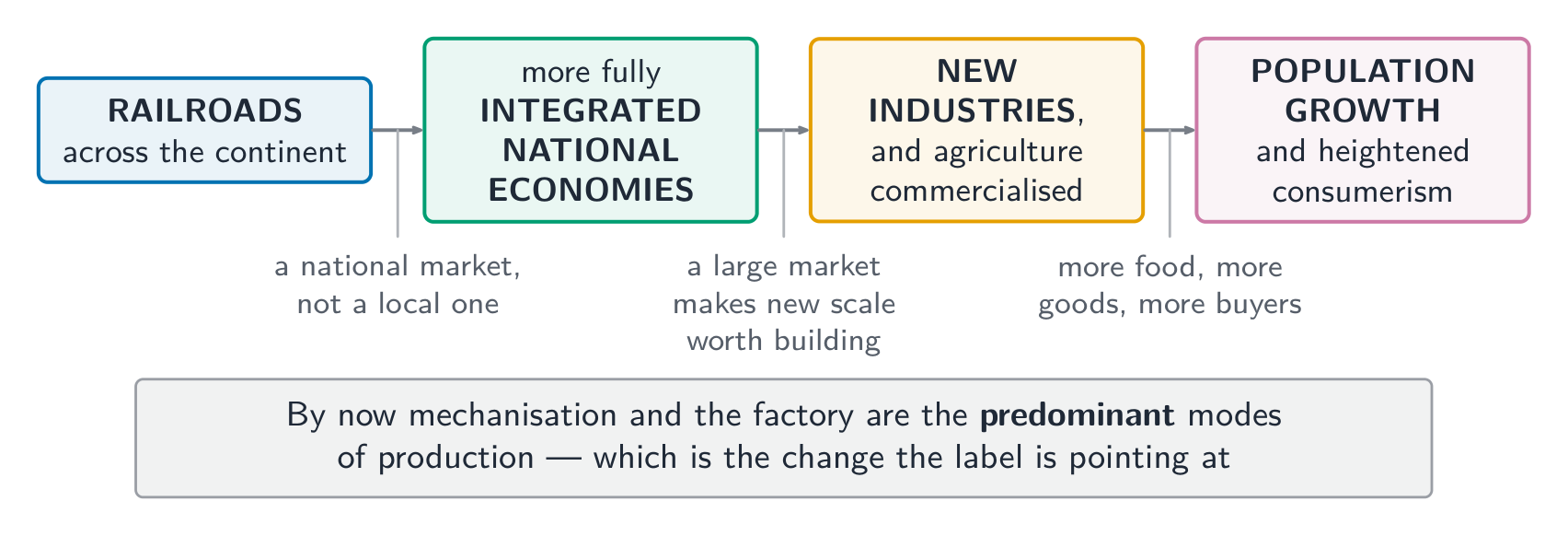
The second industrial wave: railways, integrated national economies, new industries and mass consumption
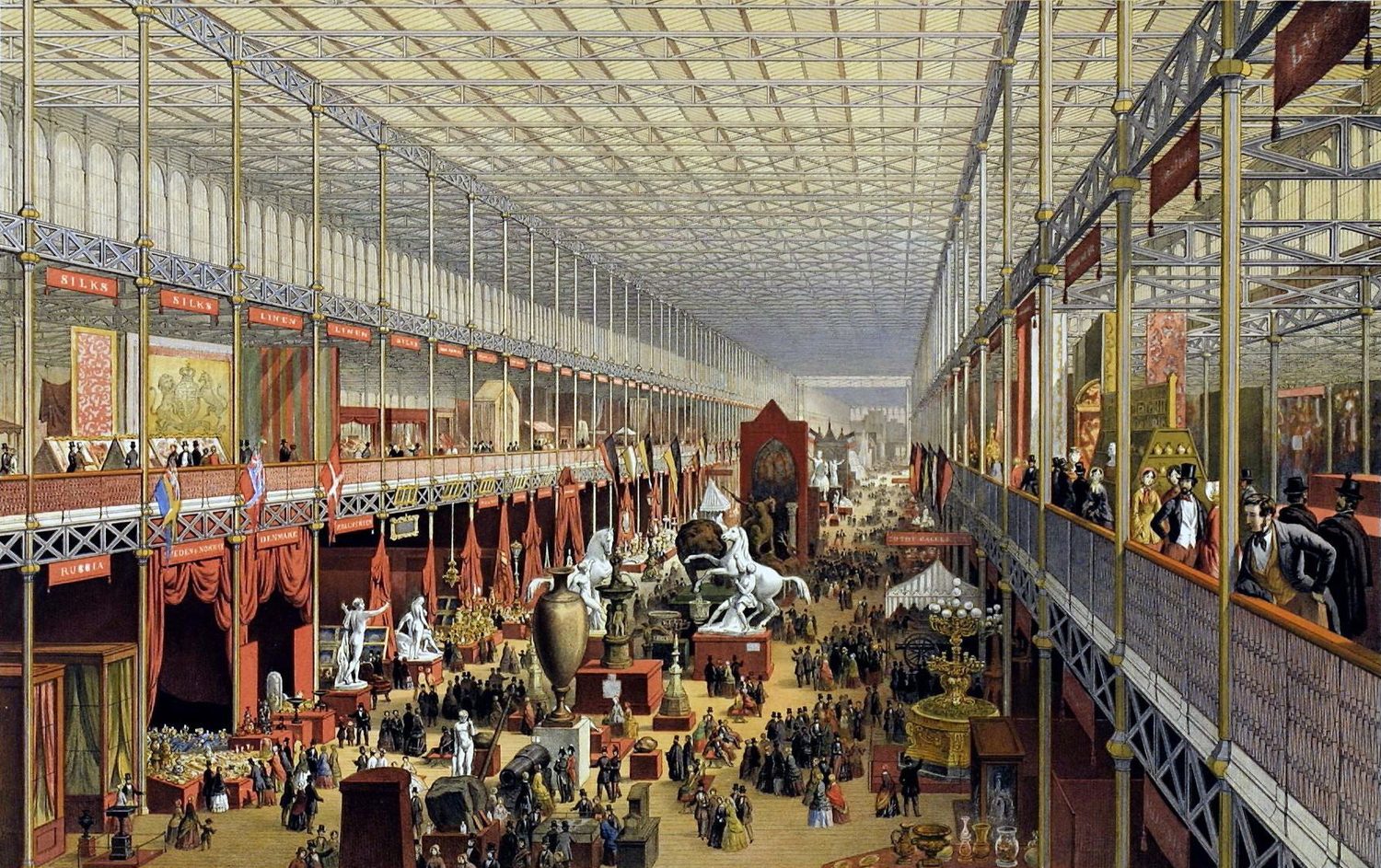
The Crystal Palace, 1851- iron and glass at a scale only industrial production made possible
בחר את כל שלושת התוצאות שה-CED מציג עבור הטכנולוגיות החדשות.
רמת קושי 2/5 · 140 מטבעות + בונוס קטן בהשלמה הראשונה היום
שלוש תוצאות מתסיבה אחת, בשלושה קנה מידות.
A second revolution, and consumers
- During the second industrial revolution (c. 1870-1914), more areas of Europe experienced industrial activity, and industrial processes increased in scale and complexity.
- New, efficient methods of transportation and other innovations created new industries, improved the distribution of goods, increased consumerism, and enhanced quality of life.
- A heightened consumerism developed as a result of the second industrial revolution.
עקוב אחר הגל השני מהרכבות לצריכה
הרכבות משלבות שווקים, השילוב הופך תעשיות חדשות לזמינות, וגדילה עוקבת אחר כך.
במהפכה התעשייתית השנייה, תהליכים תעשייתיים גדלו במידה וב____.
רמת קושי 1/5 · 100 מטבעות + בונוס קטן בהשלמה הראשונה היום
כ-1870–1914, אזורים רבים יותר באירופה חוו activity תעשייתי.
Population growth has an agricultural cause as well as an industrial one. The CED credits it to industrialisation along with better harvests caused in part by the commercialisation of agriculture — dropping the harvests leaves out half of what the sentence says.
בחרו את כולם ההשפעות הדמוגרפיות שמציין ה-CED.
רמת קושי 2/5 · 140 מטבעות + בונוס קטן בהשלמה הראשונה היום
יחסה לתעשייה כמו גם לביקוש טבעי טוב יותר.
Population, and why it grew
- Along with better harvests caused in part by the commercialisation of agriculture, industrialisation promoted population growth, longer life expectancy, and lowered infant mortality.
- Note the shared credit: along with better harvests, and those harvests are in part commercial in origin.
- So population growth has an agricultural cause as well as an industrial one, and the CED will not let you drop either.
ה-CED יחסה את התעלמות הצרכנית המוגברת למהפכה התעשייתית השנייה.
רמת קושי 1/5 · 100 מטבעות + בונוס קטן בהשלמה הראשונה היום
תעשיות חדשות, שיפור בלוגיסטיקה, ושיפור באיכות החיים לצד זאת.
Economic and social change
- Both objectives here run from innovation to change — economic and social, economic and political.
- Economic: integrated national economies, new industries, better distribution, a global network.
- Social: urbanisation, population growth, longer life, consumerism and enhanced quality of life.
A rail line reaches a town. Grain arrives from three hundred miles away at a price the local market has never seen, a factory finds it can now sell nationally, and a letter that took four days takes one. Three scales change at once, from one piece of track.
Mechanisation and the factory system became the predominant modes of production by 1914, and new technologies and transportation — including railroads — resulted in more fully integrated national economies, higher urbanisation, and a truly global economic network. The second industrial revolution (c. 1870-1914) brought greater scale and complexity and heightened consumerism; population growth is credited to industrialisation along with better harvests.