אבסולוטיות במעשה
הוצגThe bargain with the nobility
- Absolute monarchies limited the nobility's participation in governance but preserved the aristocracy's social position and legal privileges.
- That single sentence is the whole political logic of absolutism: power taken, status left.
- It is the exact mirror of 3.2, where the aristocracy kept participation as well.
הסכם האבסולוטיות עם האצולה היה לקחת...
רמת קושי 1/5 · 100 מטבעות + בונוס קטן בהשלמה הראשונה היום
הסבר זה מדוע כל כך הרבה אצולים קיבלו זאת.
France: four kinds of control
- Louis XIV and his finance minister, Jean-Baptiste Colbert, extended the administrative, financial, military and religious control of the central state over the French population.
- Four domains, and they are the same four monopolies 1.5 listed for the new monarchies — now fully realised.
- So absolutism is the completion of a project begun two centuries earlier, not a break from it.
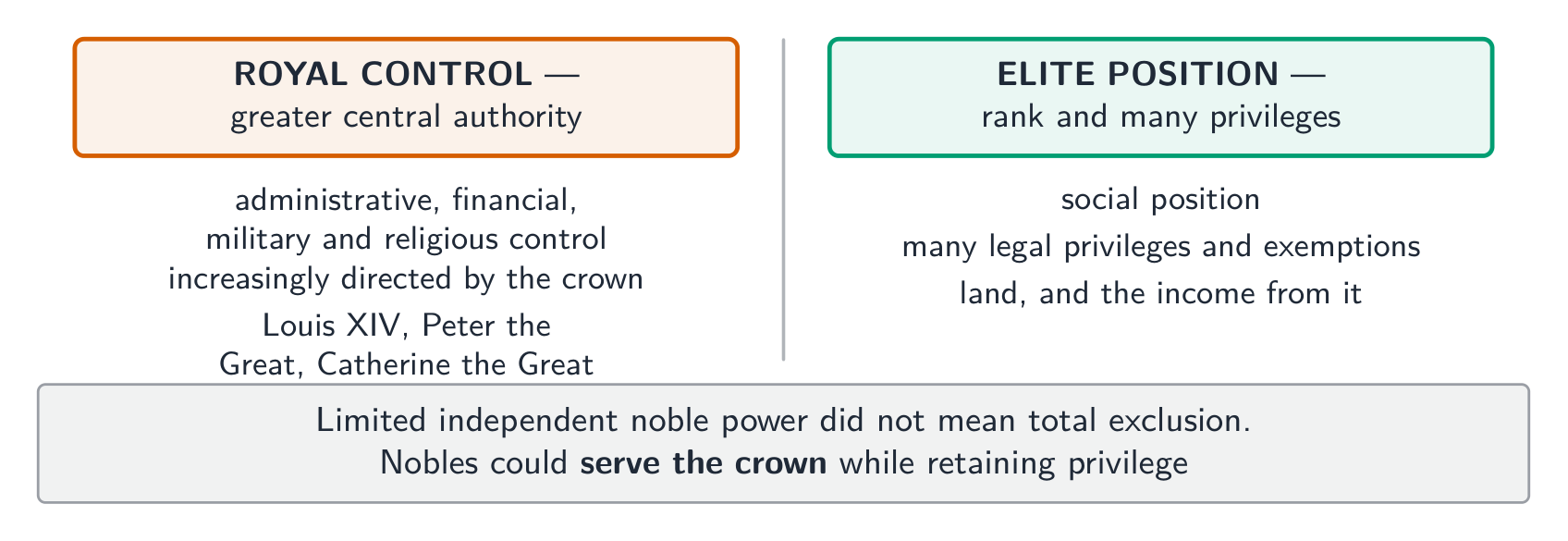
Greater royal control could coexist with aristocratic rank, privilege and service
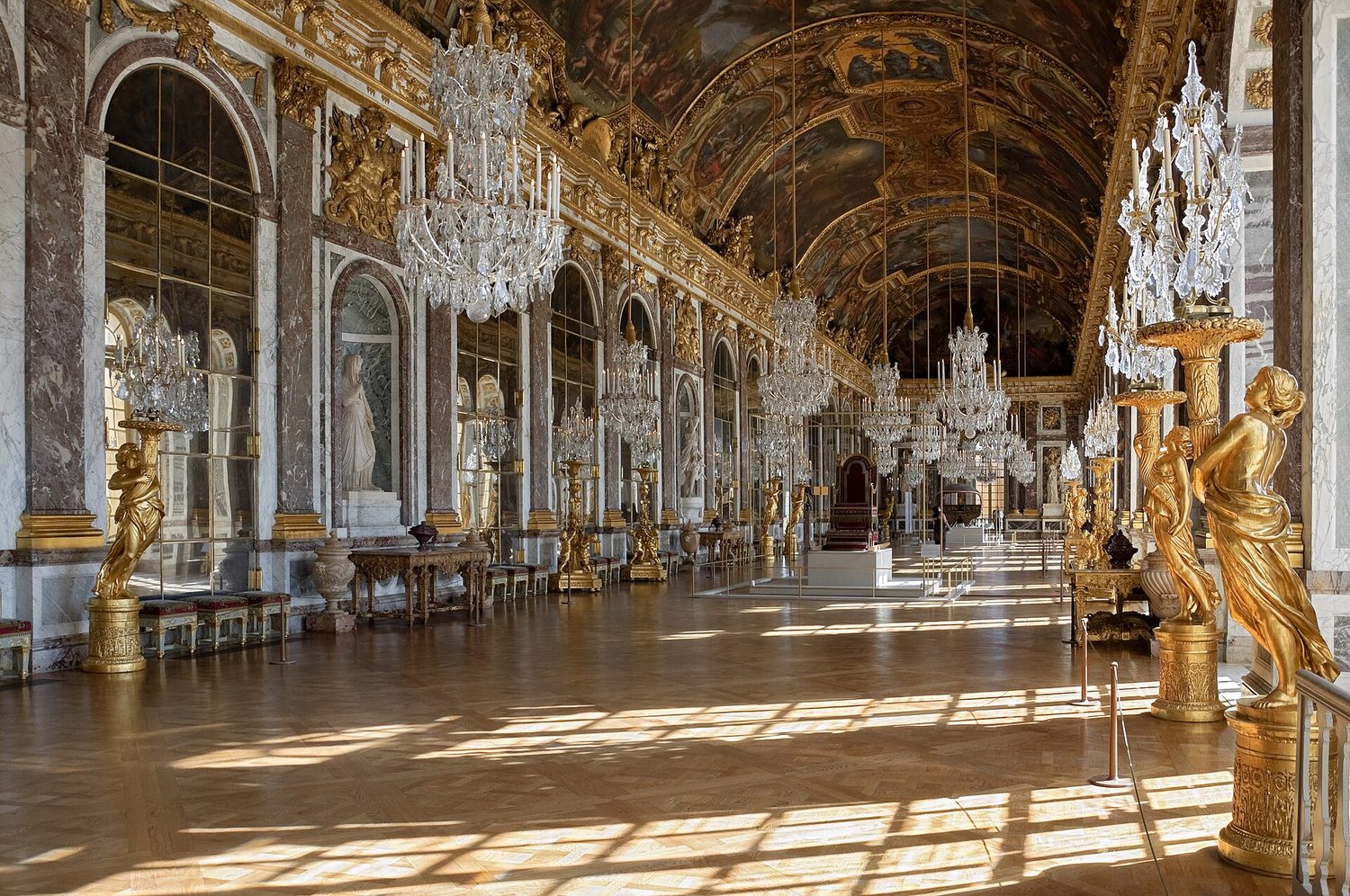
The Hall of Mirrors at Versailles: court architecture and royal authority
בחרו את ארבעת סוגי השליטה שהלואי XIV וקולבר הרחיבו.
רמת קושי 2/5 · 140 מטבעות + בונוס קטן בהשלמה הראשונה היום
אותם ארבעת המונופוליים 1.5 שנזכרו למלוכויות החדשות.
Russia: transformation from above
- Peter the Great "westernised" the Russian state and society, transforming political, religious and cultural institutions; Catherine the Great continued this process.
- The CED puts westernised in quotation marks, which records the term without endorsing it as a description.
- Political, religious and cultural — the reach extends past government into dress, calendar and language.
נלקח, שומר עליו, או הופך?
סדרו כל אלמנט של שלטון אבסולוטי.
ה-CED שם "מערבית" בסימוני ציטוט כדי...
רמת קושי 1/5 · 100 מטבעות + בונוס קטן בהשלמה הראשונה היום
מהלך היסטוריון זהיר, ששווה להבחין בו.
Absolutism took the nobility's power and left its privileges. The CED's sentence is precise — participation in governance limited, social position and legal privileges preserved — so an answer describing absolutism as crushing the aristocracy has reversed half of it.
התאימו כל מקרה לפועל של ה-CED.
רמת קושי 2/5 · 140 מטבעות + בונוס קטן בהשלמה הראשונה היום
אחד הוא אינטנסיפיקציה; השני הוא טרנספורמציה.
Comparing the two absolutisms
- France extended control over an existing administrative structure; Russia rebuilt the structure itself.
- So one is intensification and the other is transformation, and the CED's verbs record the difference: extended versus transforming.
- That distinction is worth a sentence in any 3.8 comparison.
בחרו ב-כל המוסדות שפיוטר הגדול שינה, לפי CED.
רמת קושי 2/5 · 140 מטבעות + בונוס קטן בהשלמה הראשונה היום
ההשפעה נמתחת מעבר לממשלה אל לבוש, לוח שנה ושפה.
Social and political development
- The objective is how absolutist forms of rule affected social and political development.
- Political: centralised administration, standing armies, and a nobility excluded from governance.
- Social: aristocratic privilege preserved, and in Russia cultural institutions deliberately remade.
A nobleman keeps his title, his exemption from a tax and his precedence at court, and no longer decides anything. He is richer in status and poorer in power than his grandfather. That trade is the arrangement the CED's sentence describes, and it explains why so many nobles accepted it.
Absolute monarchies limited the nobility's participation in governance but preserved the aristocracy's social position and legal privileges — power taken, status left. Louis XIV and Colbert extended administrative, financial, military and religious control — 1.5's four monopolies realised. Peter the Great "westernised" the Russian state and society, transforming political, religious and cultural institutions; Catherine the Great continued it.