לותר, קalvin והתגובות
הוצג| English | משמעות |
|---|---|
| Anabaptists/ˈænəbæptɪsts/ | אנאבטיסטים |
Criticism and new doctrine
- Reformers Martin Luther and John Calvin criticised Catholic abuses and established new interpretations of Christian doctrine and practice.
- The CED gives two distinct activities: criticism of abuses and new interpretations.
- Criticism of abuses had a long history; new doctrine is what made this reform unrepairable by reform.
בחר שתי פעילויות שה-CED יחסה ללותר ולקalvin.
רמת קושי 2/5 · 140 מטבעות + בונוס קטן בהשלמה הראשונה היום
עקידה חדשה היא מה שהפך את הפיצול לא בתיקון על ידי רפורמה.
Responses ran further than the reformers intended
- Responses to Luther and Calvin included religious radicals, including the Anabaptists 再洗礼派, and other groups, such as German peasants.
- Once the authority of one institution can be questioned on scriptural grounds, others can be questioned the same way.
- So a reform movement generates positions its founders reject — and the CED records those positions as part of the movement.
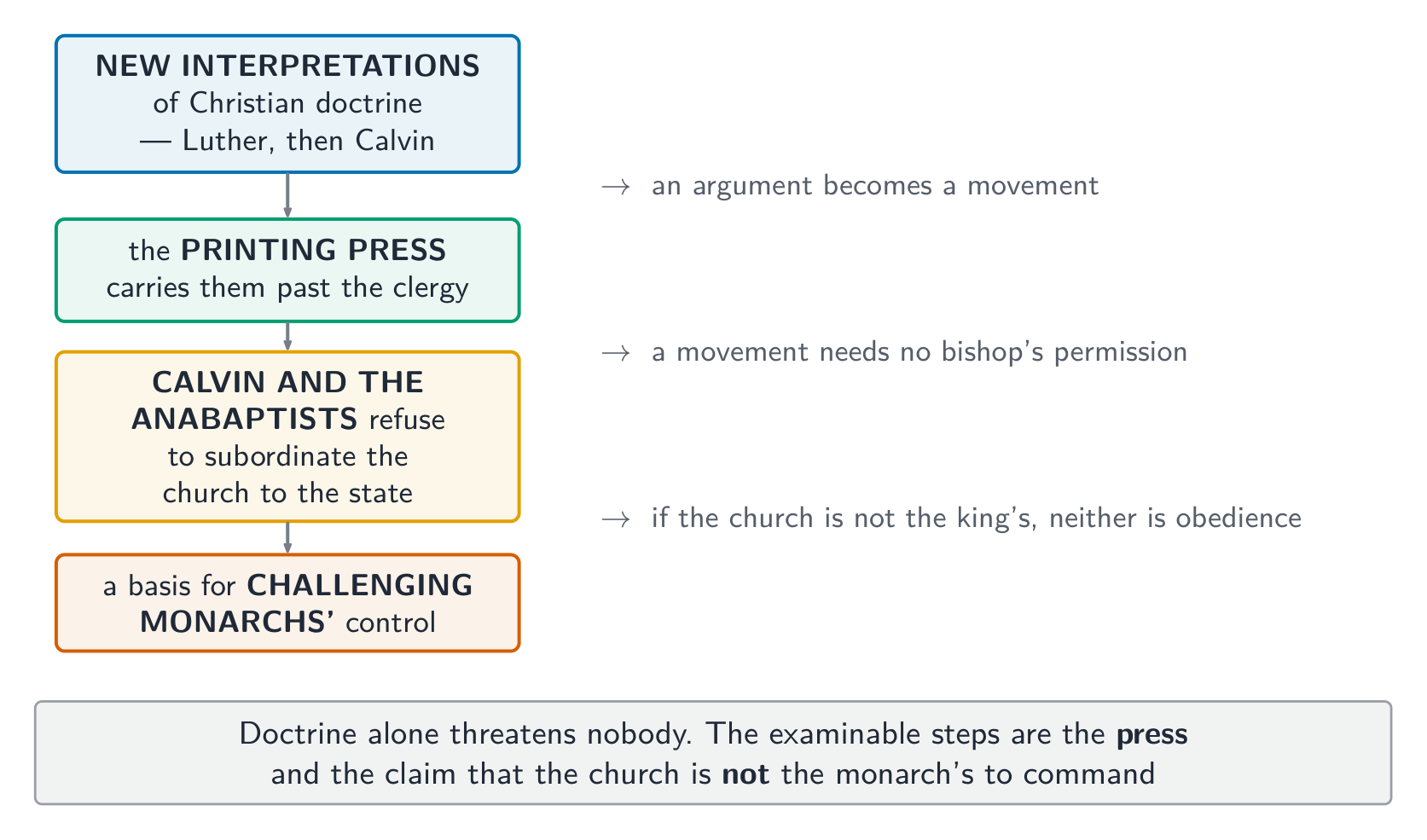
How a doctrinal dispute became a political threat: the press, and the church's independence
בחרו את כל התשובות ש-CED מציין.
רמת קושי 2/5 · 140 מטבעות + בונוס קטן בהשלמה הראשונה היום
היהודאים שייכים לרפורמה הקתולית בשנת ⟦2.5⟧.
Wealth as a sign of favour
- Some Protestant groups sanctioned the notion that wealth accumulation was a sign of God's favour and a reward for hard work.
- Some and sanctioned are both careful: the CED reports that certain groups approved the idea, not that Protestantism caused capitalism.
- It connects unit 2 to unit 1's commercial capitalism without claiming the connection was causal.
לעקוב אחרי דוגמה ולצאת מאיום פוליטי
דוגמה לבדה לא מאיים על אף אחד — הדפוסית והעצמאות הכנסייתית הן השלבים הנדרשים לבחינה.
ה-CED אומר שהפרוטסטנטיות גרמה לקפיטליזם.
רמת קושי 1/5 · 100 מטבעות + בונוס קטן בהשלמה הראשונה היום
הוא אומר שחלק מקבוצות אישרו רעיון – אישור, ולא סיבה.
The CED does not say Protestantism caused capitalism. It says some Protestant groups sanctioned the notion that wealth was a sign of God's favour — that records an approval, not a cause, and stating it as a cause claims far more than the sentence does.
עקידה מסבירה מה התנועה אמרה; טכנולוגיה ו-____ מסבירים מדוע היא החלה להימשך.
רמת קושי 1/5 · 100 מטבעות + בונוס קטן בהשלמה הראשונה היום
הדפסה הפכה בידוד לא אפשרי והנסיכים העניקו הגנה טריטוריאלית.
Why this reform survived
- Earlier reform movements had been suppressed by isolating them geographically.
- Printing (2.3) made isolation impossible, and the princes of 2.4 gave reformers territorial protection.
- So doctrine explains what the movement said; technology and politics explain why it lasted.
תגובות רדיקליות נבעו מכך ש...
רמת קושי 1/5 · 100 מטבעות + בונוס קטן בהשלמה הראשונה היום
השיטה אינה מפסיקה שם שהמחבר שלה התכוון.
How and why beliefs changed
- The objective is how and why religious belief and practices changed from 1450 to 1648.
- How: new interpretations of doctrine, new practice, and radical positions beyond them.
- Why: existing criticism of abuses, humanist method from 1.3, printing from 1.4, and princely interest from 1.5.
Luther argues that a practice lacks scriptural warrant. A peasant leader reads the same argument and asks what scriptural warrant a manorial due has. The method does not stop where its author intended, and the CED records both as responses within one movement.
Luther and Calvin criticised Catholic abuses and established new interpretations of Christian doctrine and practice. Responses included religious radicals such as the Anabaptists and other groups such as German peasants. Some Protestant groups sanctioned the notion that wealth accumulation was a sign of God's favour — an approval reported, not a cause claimed.