מכונת הדפס
הוצג| English | משמעות |
|---|---|
| dissemination/dɪˌsemɪˈneɪʃn/ | התפשטות |
One sentence, enormous consequences
- The invention of printing promoted the dissemination 传播 of new ideas.
- That is the whole Key Concept, which means the exam wants your account of the mechanisms.
- So the work of this subtopic is to say how printing did that, in specific and evidenced steps.
הרעיון המרכזי לתת-נושא זה הוא משפט אחד, שפירושו שהמבחן מבקש...
רמת קושי 1/5 · 100 מטבעות + בונוס קטן בהשלמה הראשונה היום
אמור איך הדפסה הפיצה רעיונות, בשלבים ספציפיים.
Identical copies change what a text is
- A manuscript is copied by hand, so every copy differs slightly and errors accumulate.
- A printed edition produces hundreds of identical copies, so a scholar in one city can cite a page number to a scholar in another.
- That is what makes shared, cumulative scholarship possible — and it is a precondition for both 1.3 and unit 4.
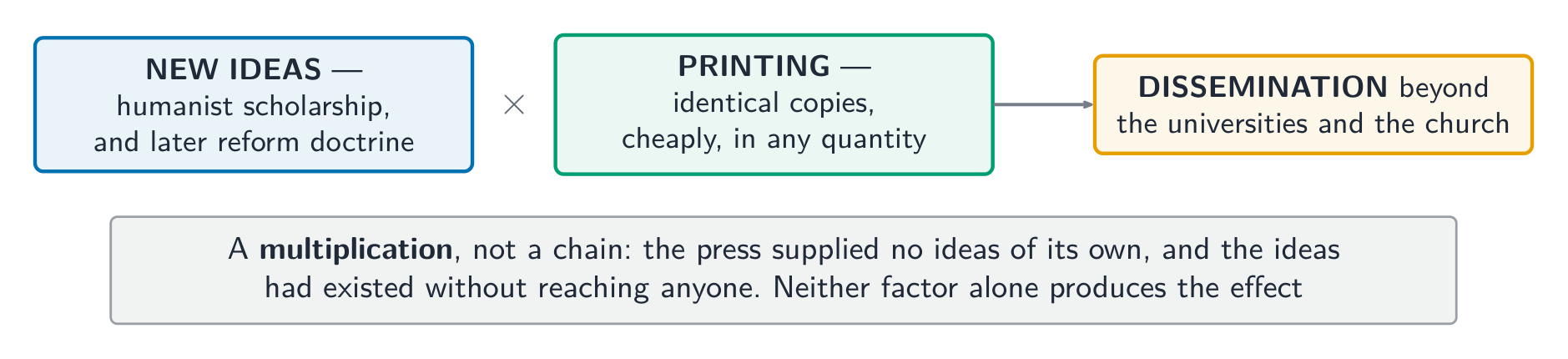
Printing multiplied the ideas rather than supplying them- neither factor works alone
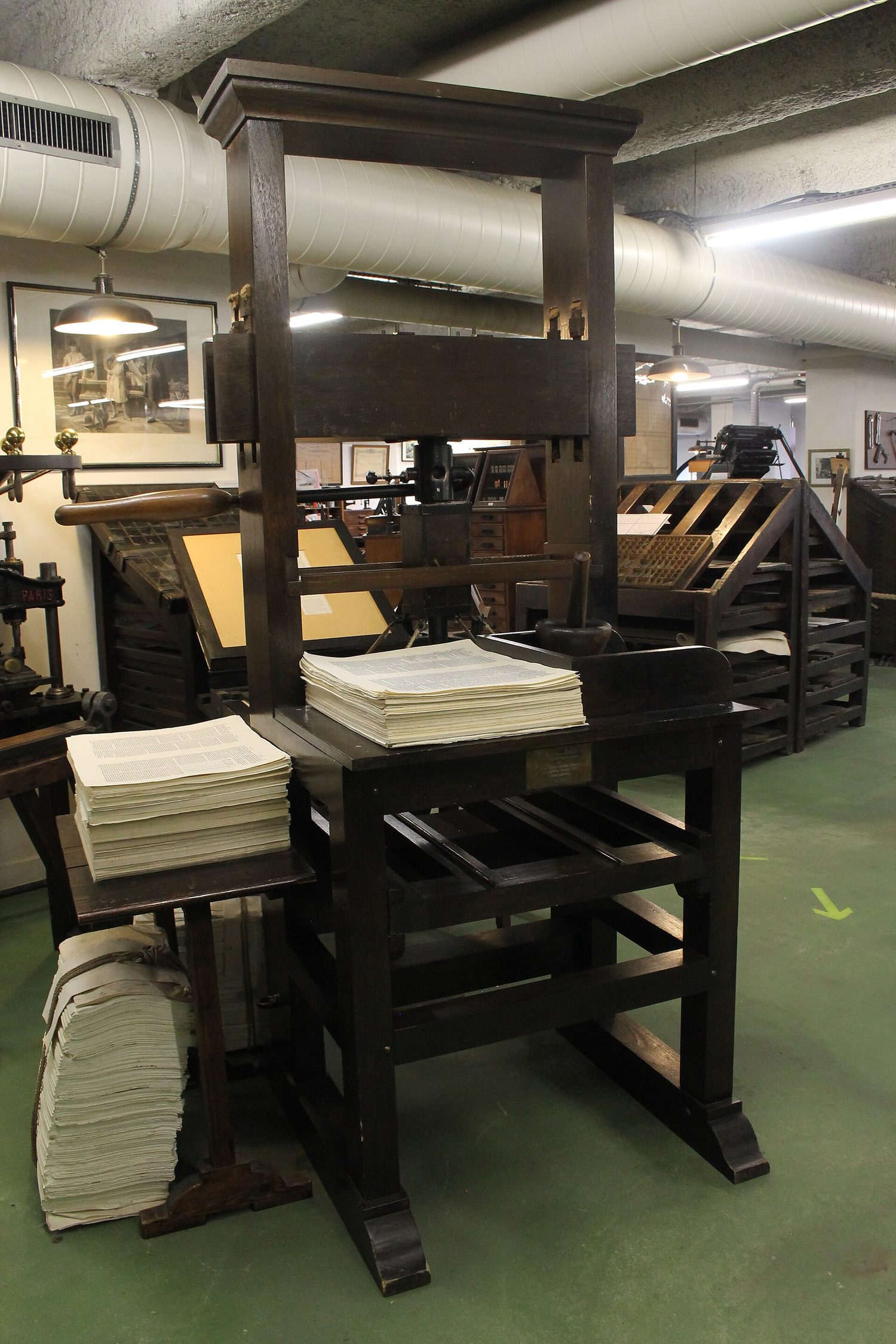
A wooden hand press of Gutenberg's design- the machine behind the amplifier
בחר את כולם המנגנונים שמדגישו שיעור זה.
רמת קושי 2/5 · 140 מטבעות + בונוס קטן בהשלמה הראשונה היום
הובלה אינה מה ששתנה כאן.
Cost, and therefore reach
- Printing lowered the price of a book dramatically, which widened who could own one.
- A wider readership makes writing for that readership worth doing — in vernacular languages as well as Latin.
- So printing changes not only how fast an idea travels but which ideas are written down at all.
להכפיל רעיון באמצעות מכונה
המכונה היא מגבר: היא לא ספקה רעיונות, והרעיונות לא הגיעו לאף אחד בלעדיו.
הדפסה הפיצה ידע אקדמי מדויק בצורה יעילה יותר מטעויות.
רמת קושי 1/5 · 100 מטבעות + בונוס קטן בהשלמה הראשונה היום
הפיצה היא ניטרלית לגבי דיוק — היא פיזרה גם אותה וגם טעות באותה מידה.
Dissemination is neutral about accuracy. Printing spread errors, forgeries and polemic exactly as efficiently as it spread scholarship — which is why the same technology underwrites both the philological correction of texts and the pamphlet wars of unit 2.
העתקים זהים אפשרו לחוקרים להתייחס לאותו ____ במערכות ערים שונות.
רמת קושי 1/5 · 100 מטבעות + בונוס קטן בהשלמה הראשונה היום
הידע האקדמי הצטבר מתחיל בעובדה המצומצמת הזו.
Control became harder
- A manuscript can be suppressed by seizing it; an edition of a thousand cannot.
- So printing shifted the balance between authors and authorities, which matters for 1.2's institutional challenge and for unit 2.
- It also spread errors and forgeries just as efficiently — dissemination is neutral about accuracy.
בחר את כולם התפתחויות מאוחרות עליהן תשובה עשויה להתרחב.
רמת קושי 2/5 · 140 מטבעות + בונוס קטן בהשלמה הראשונה היום
היעד מכסה את מודרני ההיסטוריה האירופית.
Cultural and intellectual developments
- The objective is the influence of the printing press on cultural and intellectual developments in modern European history — note modern, not just 1450–1648.
- So the answer can reach forward: the Reformation, the Scientific Revolution, the Enlightenment and the nineteenth-century press all depend on it.
- Naming a mechanism and then a later development that used it is exactly what the objective invites.
Two scholars in different countries can now argue about the same sentence, because they own the same edition and can cite the same page. Before printing, they would first have had to establish that they were reading the same text at all. Cumulative scholarship begins with that boring fact.
The invention of printing promoted the dissemination of new ideas — the whole Key Concept, so supply the mechanisms yourself: identical copies make cumulative scholarship possible, lower cost widens readership and encourages vernacular writing, and volume makes suppression harder. Dissemination is neutral about accuracy, and the objective covers modern European history, not only 1450–1648.