Tu plan de aprendizaje · Continuar · Revisar →
怪不得 (no wonder)
IntroducidoTu posición guardada se conserva en este navegador. Continuar no completa la lección ni responde sus preguntas.
Eso lo explica
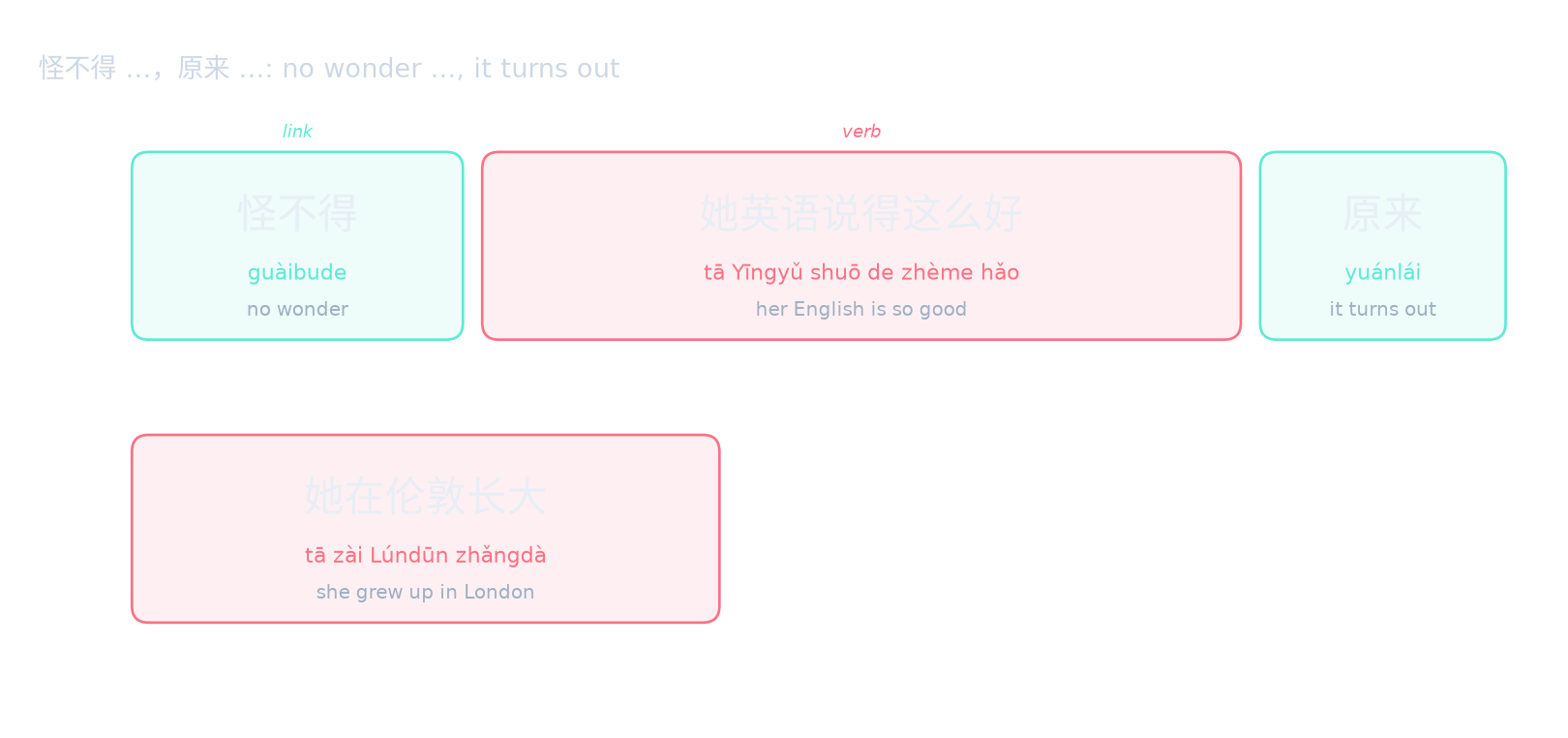
- Tu compañero de clase habla un inglés perfecto y hoy descubres que creció en Londres.
- no wonder怪不得she / her她English (language)英语variant of 说说(degree marker)得so这么good好,so it turns out原来she / her她at / in在London, capital of United…伦敦to grow up长大。 — "No wonder her English is so good — she grew up in London."
no wonder怪不得 + hecho sorprendente (,so it turns out原来 + razón)
- no wonder怪不得 = "no wonder": algo que parecía extraño ahora tiene sentido.
- La razón suele seguir con so it turns out原来, o puede ir antes: so it turns out原来it snowed下雪(completed / change)了,no wonder怪不得so这么cold冷.
so it turns out原来it snowed下雪了,no wonder怪不得so这么cold冷。
Complete: “So it snowed — no wonder it's so cold.” 原来下雪了,____这么冷。
Dificultad 1/5 · 100 monedas + un pequeño bono en el primer intento de hoy
怪不得 + the fact that now makes sense.
Cualquiera de los dos órdenes
- Hecho primero: no wonder怪不得he他not / haven't没to come来,he他to fall ill生病(completed / change)了。 — "No wonder he didn't come — he's ill."
- Razón primero: he他yesterday昨天stayed up熬夜(completed / change)了,no wonder怪不得today今天so这么tired累。 — "He stayed up late last night; no wonder he's so tired today."
he他yesterday昨天stayed up熬夜了,no wonder怪不得today今天so这么tired累。
Build: “He stayed up late; no wonder he's tired.”
Dificultad 3/5 · 200 monedas + un pequeño bono en el primer intento de hoy
Reason, then 怪不得 + fact.
Requiere una razón
- no wonder怪不得 solo tiene sentido cuando la razón es conocida o proporcionada; sin ella, el oyente queda confundido.
- Va al inicio de su cláusula: no wonder怪不得he他…, no he他no wonder怪不得….
难怪 and 怪不得 can both mean “no wonder”.
Dificultad 1/5 · 100 monedas + un pequeño bono en el primer intento de hoy
They are synonyms in this sense.
no wonder怪不得 versus no wonder难怪
- no wonder难怪 significa lo mismo y es muy común: no wonder难怪so这么cold冷.
- no wonder怪不得 también puede significar "no se le puede culpar": 这件matter事no wonder怪不得he他 — "You can't blame him for this."
this这件事can't blame怪不得him他。
What does 这件事怪不得他 mean?
Dificultad 1/5 · 100 monedas + un pequeño bono en el primer intento de hoy
怪不得 + person = can't blame.
Resumen
- no wonder怪不得 + hecho,(so it turns out原来) + razón = no wonder …; igual que no wonder难怪.
- Requiere la razón; no wonder怪不得 + persona = no se les puede culpar.
Lee la referencia completa: Gramática HSK 5 — Patrones de oraciones complejas.
Your classmate speaks perfect English, and today you learn she grew up in London. Close the examples. Say a Mandarin response, then write it in Chinese. Explain briefly in English what the lesson’s pattern adds. Compare with the model, then change one detail and try again.
This is supported productive practice. Compare meaning and structure; your answer need not copy the model. A partner or teacher must hear the spoken response to comment on pronunciation.