Tu plan de aprendizaje · Continuar · Revisar →
差点没: near misses and context
IntroducidoTu posición guardada se conserva en este navegador. Continuar no completa la lección ni responde sus preguntas.
The bus doors close just after you board
- You jump onto the bus, out of breath: I我nearly差点not / haven't没catch赶上the bus车,fortunately幸好driver司机to wait; and so on等(completed / change)了I我。 — "I almost missed the bus; luckily the driver waited for me."
- You caught the bus, but the sentence has not / haven't没 in it. This lesson shows why.
- Goal: read nearly差点 and nearly差点not / haven't没 correctly: did the thing happen or not?
1 · Something bad: nearly差点 = nearly差点not / haven't没
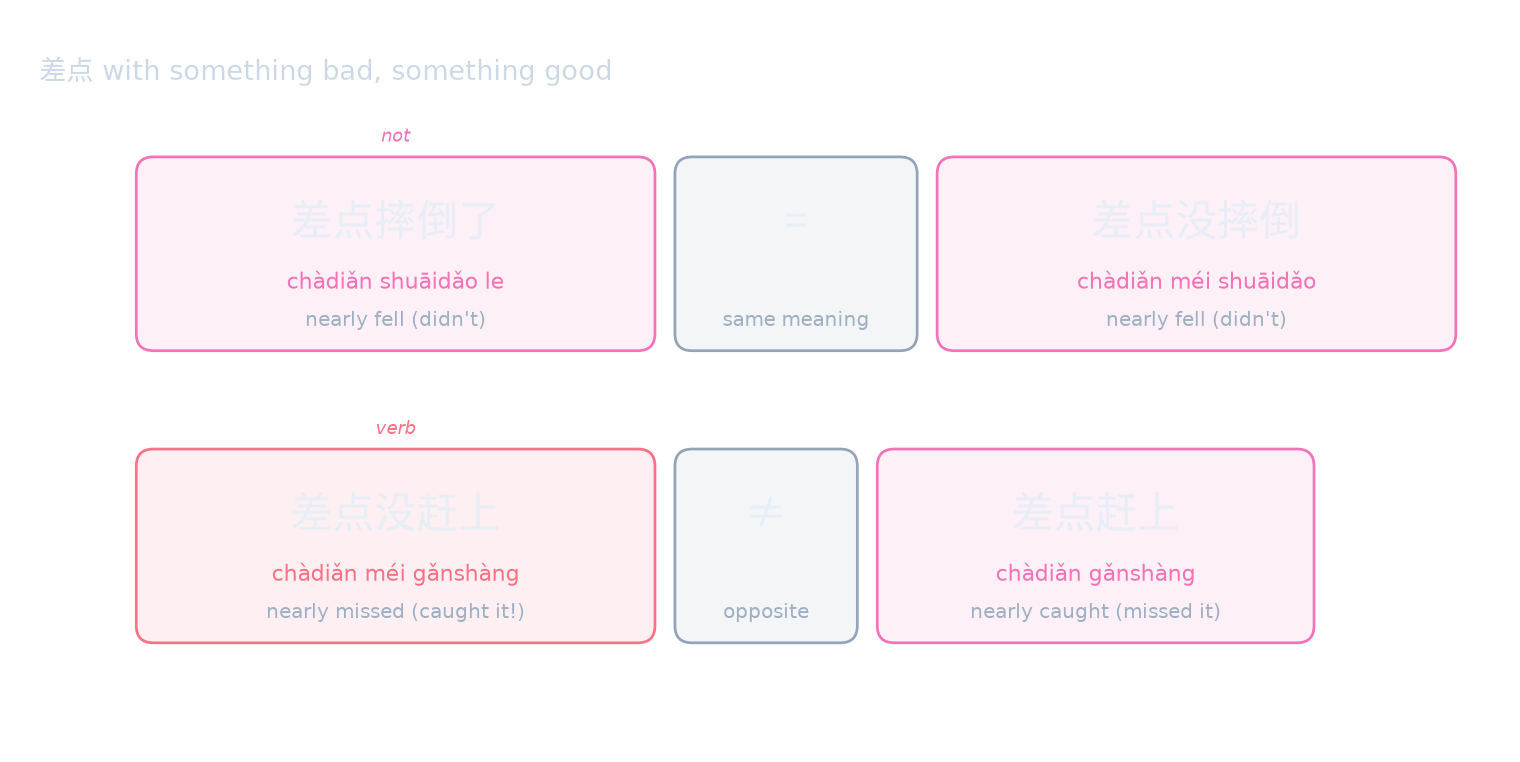
- With something you don't want (fall, be late, forget), both forms mean "nearly happened, but it didn't". Lucky!
- I我nearly差点fall over摔倒(completed / change)了 = I我nearly差点not / haven't没fall over摔倒。 Both: "I nearly fell (but I didn't)." I我nearly差点to forget忘(completed / change)了。 — "I almost forgot (but I remembered)."
I我nearly差点fall over摔倒了。
我差点没摔倒 means the speaker fell over.
Dificultad 1/5 · 100 monedas + un pequeño bono en el primer intento de hoy
Falling is bad, so 差点 and 差点没 both mean "nearly fell, but didn't".
2 · Something good: nearly差点 ≠ nearly差点not / haven't没
- With something you want (catch the bus, pass, buy a ticket), the two forms are opposites.
- nearly差点not / haven't没 + good thing = nearly failed, but succeeded (lucky): I我nearly差点not / haven't没catch赶上the bus车. nearly差点 + good thing = nearly succeeded, but failed (a pity): I我nearly差点catch赶上the bus车,but可是the bus车to go (of car, train etc)开走(completed / change)了。 — "I almost caught the bus, but it drove off."
I我nearly failed to差点没catch赶上the bus车。
我差点没考上大学. Did the speaker get into university?
Dificultad 1/5 · 100 monedas + un pequeño bono en el primer intento de hoy
Getting into university is good. 差点没 + good thing = nearly failed, but succeeded.
我差点买到票了,可是最后一张被别人买走了. Did the speaker get a ticket?
Dificultad 1/5 · 100 monedas + un pequeño bono en el primer intento de hoy
差点 + good thing = nearly succeeded, but failed. The second clause confirms it.
Ask one question first
- Before you read the result, ask: is this thing good or bad for the speaker? Then use the rule above.
- Don't count the not / haven't没 as a simple "not". If the result matters, say it clearly: I我nearly差点not / haven't没catch赶上,fortunately幸好in the end最后catch赶上(completed / change)了。 — "I nearly missed it, but luckily I caught it in the end."
¿Qué resultado se menciona?
Distinga los significados en ejemplos contextuales completos, no mecánicamente correctos ni rechace frases aisladas.
Match each sentence to what actually happened.
Dificultad 2/5 · 140 monedas + un pequeño bono en el primer intento de hoy
Being late is bad; catching the plane is good.
You nearly missed the train but made it. Complete: 我____赶上火车,幸好最后赶上了。
Dificultad 1/5 · 100 monedas + un pequeño bono en el primer intento de hoy
差点没 + good thing = nearly failed, but succeeded.
Recap
- Bad thing: nearly差点 X = nearly差点not / haven't没 X = nearly X, but it didn't happen.
- Good thing: nearly差点not / haven't没 X = nearly failed, but did X (lucky); nearly差点 X = nearly did X, but failed (a pity).
Read the full reference: HSK 5 grammar — Adverbs.
This morning you woke up late, ran, and caught the school bus at the last second. On the bus you nearly fell. Tell a friend both things in Chinese.
Your answer need not copy the model. A partner or teacher must hear the spoken response to comment on pronunciation.